Open the electrician platform to search for “dehumidifiers” and come up with a bunch of obfuscated figures: dewetting, power, water tank capacity, applicable area, noise value, energy efficiency ratio. Every word is known, but together it doesn't know how to choose. Even larger is the difference in the format of the parameters indicated by the different brands, with the words “50 l daily dewetting”, “1. 2 kg/h nominal dewetting”, and “60 l maximum dewetting” — which is it
Take it easy. Parameters, complicated and simple. Essentially, the dehumidifier is a machine that transforms water vapour into liquid water in the air. By understanding its working methods, these parameters are all in place. Today we're not talking, and we're just tearing down the core of the dehumidifier and teaching you how to use these parameters to extrapolate the true level of a machine。
I. Dewetting: don't be fooled by the word “maximum”
This is the easiest place to step on in all parameters, not one。
The standard unit for dewetization is "l/day (l/d) " , which means the amount of water the machine can extract from air within 24 hours. But the question is — under what conditions? The amount of water in the air is directly associated with temperature and humidity, and the higher the temperature and humidity, the more water can be pumped out. So the same machines, at 30 °c/rh 80% (silent and wet sauna) and 27 °c/rh 60% (relatively normal home environment), measured different dehumidity。
The national standard gb/t 19411-2003 provides for two sets of tests:
Many brands write “50 l daily dewett” on commodity titles, and go in and look carefully, with a small note “30°c/rh 80% as measured”. Its nominal dewetization may be only 1. 5 kg/h (approximately 36 l/day) - a direct reduction of 30 per cent. More exaggerating, some brands are marked by extreme conditions of 32°c/rh 90%, which may not add up to 60% of the nominal value。
What's the real deal? Directly ask the client for “nominal dewetting” data, or look at the trade details pages with data that do not clearly indicate the 27°c/rh 60% condition. If the entire page is silent on the notional performance and the whole process is characterized by “maximum dewetting”, the sincerity of the brand is basically a question mark。
What's the nominal job? A simple and rough estimate formula: the applicable area (m2) ≈ nominal dewetting (l/d) x 1. 2 ~ 1. 5. For example, a machine with a nominal dehumidification of 25 l/day is suitable for approximately 30-38 m2. If your living room is 40 m2, it takes at least 30 l/day to dewet nominally。
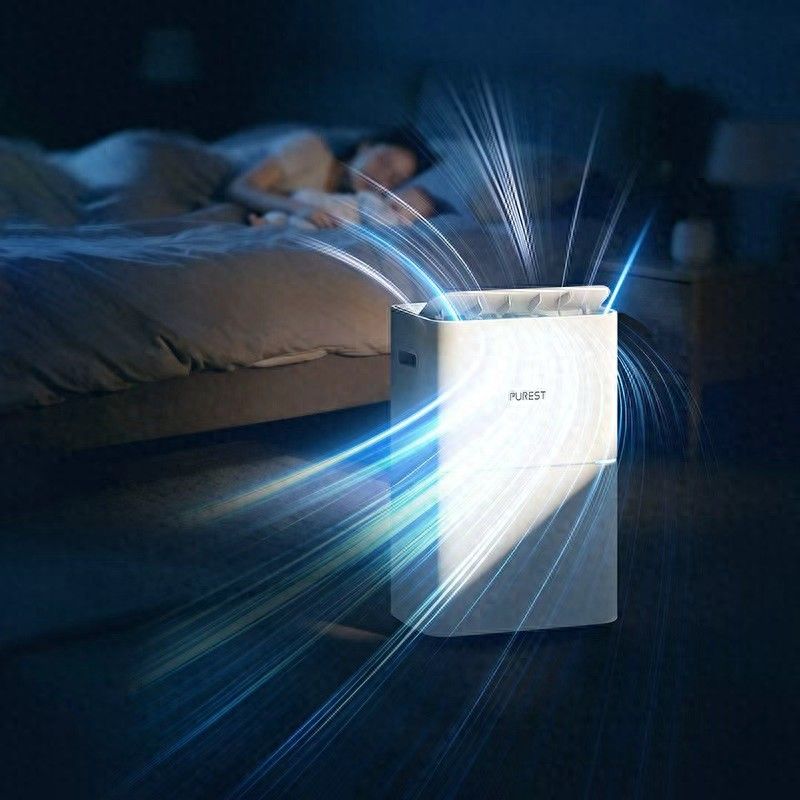
Ii. Noise values: between 35 db and 40 db, sleep quality overnight
The noise of this thing, the numbers are a little bit short, the body is a lot worse. Because an ear's perception of sound is on a numerical scale — about double the volume for every 3 db increase. So a 38db machine is more quiet than a 41db machine, not “almost”, but “too much quiet”。
But noise parameters are easier to play word games than dewetting. Many brand labels are “lower than 35 db”, which is itself an exoneration statement — it may be measured under wind delivery mode (the compressor does not start), or it may have stretched the test distance to 3 m (the national marker is 1 m), or it may have been “aestheticized” with laboratory background noise modification。
What really has a reference value for your bedroom sleep is the measured noise under the condition that the sleeping slot + compressor works。
How do you understand this parameter
A cold knowledge is added: the frequency of noise is more important than the bell. Hf noise (wind whistles, sharp mechanical frictions) is extremely sharp even when the bells are low; low frequency noise (humbles of compressors operating) although high, it sounds white and easily adaptable. So, if you can, go to the sub-linee physical store and listen 100 times more than you can see the parameters。
Iii. Applicable area: miscalculated, machine bought for nothing
The application of this parameter is based on dewetization and does not exist independently. However, many brands write particularly large areas of application, labelled “50-80m2 application”, in fact having only 20 l/day dewetting in nominal terms。
Remember two empirical formulas:
Special reminder: for basements, first floors, northward rooms, houses with low temperature, the actual amount of dehumidity required is 20% - 30% greater than the formula. Since the wet load of these scenes is much higher than in the normal room, the machine will continue to operate at full capacity, both at a cost of electricity and a reduced lifetime。
Power and energy efficiency: saved electricity to buy half a machine
Many people are interested in power consumption, but tend to stare at the stand-alone figure of “power”, ignoring the “energy efficiency ratio” — the core indicator of whether machines are saving power。
Energy efficiency ratio = nominal dewetization (kg/h) ÷ input power (kw). The larger the value, the greater the amount of water to be pumped from each degree of electricity。
According to industry standards, the energy efficiency level for dehumidifiers is classified into five levels:
In other words, a machine with a nominal dewetization of 1. 5 kg/h, with a power input of 1. 1 kw, eer ≈ 1. 36, which is a level 2 energy efficiency, is good, but a typical “electric tiger” if the input power is 1. 4kw, eer ≈ 1. 07, which does not reach a level 3。
Two machines with the same nominal dehumidity, one eer = 1. 5 (class 1) and one eer = 1. 2 (class 3). On a southern return day, assuming 12 hours per day for three consecutive months, the level 1 energy-efficient power savings of approximately 120 degrees compared to level 3 energy efficiency, at 0. 6 yuan/degree, for three months at $72. In five years, the machine saves enough electricity for a new one。
So let's not just look at the price of the machine and put energy efficiency in it, many of the cheap machines are more expensive for years。
V. Water tank capacity and drainage: deciding how many times a day you're in contact with the machine
The water tank capacity is the most easily overlooked parameter, but directly affects daily use experience。
Water tank capacity varies from 2 to 8l, which corresponds to how many times a day you need to pour. In the case of a machine with a nominal dehumidification of 25 l/day, the actual daily drainage may reach 15-20 l in a high-wet environment in the south. If there's only 3l in the water tank, you'll pour 6-7 times a day -- everyone's crazy。
A simple principle: water tank capacity (l) thallium is nominal dewetting (l/d) thallium 6. In other words, a machine with a nominal dehumidification of 30 l/day is sufficient for a water tank of at least 5 l, so that only three or four times a day will be required to pour water (actually in use because of fluctuations in humidity, which does not allow full load discharge)。
But more important than the capacity of the tank, it's drainage:
The three approaches are not absolutely good or bad, and the key is the use of the scenes: the living room is used occasionally and the water tank is enough; the basement is open continuously and the pump or take-over is decisive. Wrong choice. Every day you have a strong experience with a water tank, you'll want to throw it out in minutes。
It's not mysterious. It's easy to get a sense of it
The above five parameters — dewetting, noise values, applicable area, energy efficiency ratio, water tanks and drainage — basically cover all core indicators that require attention when selecting a dehumidifier. To understand this, and look at the details of the commodities page, you can see at first glance where the water is found by marketing techniques like “maximum dewetting 60 l”, “lower than 35 db”, “applying 100 m2”。
Brands with a technological base tend to show greater restraint in the labelling of parameters. For example, brands with manufacturing backgrounds such as pure fit put hard indicators such as nominal dewetting, measured noise values and energy efficiency levels in a prominent position, rather than packaging them with extreme job data. Because consumers who really know how to do it are afraid of lower parameters, they are afraid of not being true. The goal is consumer respect。
Common problems q& a
Q1: what is the difference between “day dewetting” and “nominal dewetting” indicated by the dehumidifier
A: in short, the “nominal dewetting” was measured at 27°c/rh60% standard, which is closer to the real home environment, and the national label requirement had to be marked on the sign; the “maximum dewetting” was measured at 30°c/rh80% or more extreme, with better values but less actually used. The notional dewetting is recognized and the word “maximum” is not applied。
Q2: how is the applicable area of the dehumidifier accurate
A: rough estimate: nominal dewetting (l/d) x 1. 2 ~ 1. 5 for applicable area (m2). More precisely: the applicable area = room volume (m3) x the number of breath breaks (0. 8) ÷ 2. 5. If it is on the first floor, in the basement or in a house with poor temperature, an additional 20 per cent is added on this basis。
Q3: what is the ratio of efficiency of dehumidifiers
A: the eer threshold for energy efficiency at national level 3 is 1. 20, below which is an unqualified product. The threshold for level 1 energy efficiency is 1. 50. The eer ≥ 1. 35 (above level 2) type is preferred for purchase, and the long-term use of electricity efficiency is evident。
Q4: the larger the tank capacity of the dehumidifier, the better
A: the size of the tank is indeed more convenient and the frequency of water recharge is reduced, given the acceptable size and beauty of the machine. But larger water tanks mean more heavy machines and larger land areas. A reasonable balance is that the water tank capacity (l) is nominal dewetting (l/d) ÷6, so it's not too much trouble to pour three to four times a day。
Q5: is the dehumidifier for the inner pump still functioning when the pump is broken
A: the general design is that the failure of the pump does not affect the water in the tank. The pumps are broken, the machines automatically switch to the tank mode, the condensed water is temporarily stored in the tank, and you can still pour the water manually. This means, however, that you have to arrange for repairs as soon as possible, as tanks are usually limited in capacity and cannot support continuous operation for long periods of time。
Q6: why does it feel bigger to buy home than it says
A: the most common reason is that the noise is marked as “silent”, while you open “standard” or “hard” slots. Second, different testing distances can also have an impact (manufacturing more than 1 metre, you could have just 0. 5 metres on the bed). In addition, the machine is placed on wood floors or cabinets with a resonance magnifying noise, and it is suggested that the floor be sequestered by rubber tremors。