I'm going to upgrade the "no food pack" service
“no sweetness, no money”, a phrase that can often be heard by the side of the road, is about to come true on an electric platform。
A change in the “no food package” service code was recently issued and will enter into force on 29 april。
This service, which was first introduced in march this year, applies to specified categories of goods under the category “pet/pet foods and supplies” class。
When a consumer buys a commodity with a relevant label, he or she may initiate a refund application for the reason that the pet does not like to eat during the service。
One month later, the “no-food-free” service added some of the commodities under the subcategory “snacks/nuts/specialty products” with wider application。
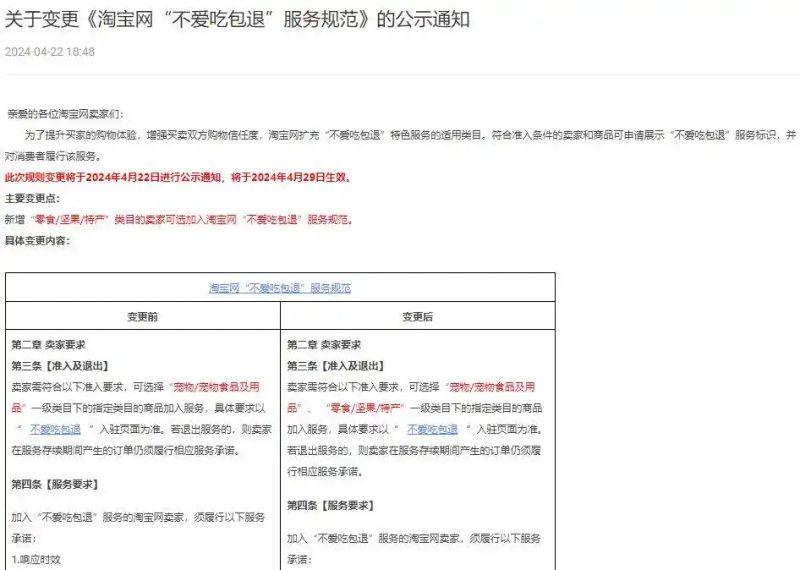
Figure source: poaching platform rules
Specifically, eligible businesses can choose whether to join the service or not, and successful goods can be identified as “no-take-off” services that further enhance consumer trust, buy experience and convert。
From a consumer's point of view, after buying a commodity that is “not contented with a package” and if it does not, an application for post-sale service can be initiated within 15 days of signing and refunds may be made on the basis of a choice of “bad taste/dislike” and a valid certificate (a photograph weighing more than 70 per cent of the original product)。
If the buyer and seller are not in dispute, or if the seller fails to respond for more than 24 hours, the request for service is entered into by default and the refund is made as originally agreed. At the same time, the cost of the refund is borne by the buyer, who should not sell the goods that have been closed for return on a secondary basis
If there is a dispute and the buyer's evidence is true and the seller refuses to refund the money, the platform will award the seller 30 per cent of the value of the refund to the buyer for the purchase order and the maximum amount paid is $100 and not less than $5。
Of course, sellers also have the right not to provide refund services without any liability if the buyer has acted in bad faith or if the quality of the goods has arisen as a result of improper preservation for their own reasons。
It is worth mentioning that, in addition to the “no-go-go-go-go-go” service, a new “test-go-go-go-go” service was introduced。
This service is mainly used for specified categories of goods under the “tea” class, and the commercial participants in the service are required to provide a trial drink at the time of shipment (at least 5 g for tea and at least 50 ml for alcohol)。
If the buyer is not satisfied with the taster's offer, he can apply for a refund if he is fully packed。
Taken together, the new “no-go-go-go” and “no-go-go-go” services that have been added this time may be a major breakthrough in the after-sales experience of the electrician platform, with more products likely to make it much easier to return。

User experience has become a top priority
In the past, while there had been “seven days without cause” to support a consumer's return, an important premise was to keep the commodity intact。
Under article 25 of the consumer's rights protection act, a consumer applying for a “unjustified return” should ensure that the returned goods are in good condition, including “maintaining their original quality, function, the goods themselves, accessories and trademarks fully marked”; and that the “use of the goods beyond the identification and recognition of their quality, functional needs, resulting in a greater impairment of the value of the goods”, is considered to be incomplete and the operator may refuse to return the goods。
That is why, when we buy the internet on a daily basis, some commodities explicitly require “unopened” “handpicks” and so on, without prejudice to secondary sales, to apply for an unjustified return。
From this point of view, the launch of the `no food pack' is of great significance. Goods that have joined this service can be returned even if they have already been decorated by consumers. It is all the more clear that today's treasure hunts are making every effort to improve user experience。
In june of last year, ma yun gave a clear direction in an internal meeting of the group: “return to treasure hunting, return to users, return to the internet”. The new management, comprising cai zhongsin and wu xiaoming, introduced a series of changes on these three themes。
In terms of overall strategy, ali has chosen the focus generator and cloud computing. On the other hand, in the direct face of users, the treasure cat has begun a new round of service upgrades, of which “sale after sale” is a priority。
Thus, in december last year, the first big move after the sale of treasures was the introduction of a “refund only” service. Although in the past, in some post-sales disputes, a “refund only” decision was made after the intervention of the poachers, this time it amounted to an express provision。
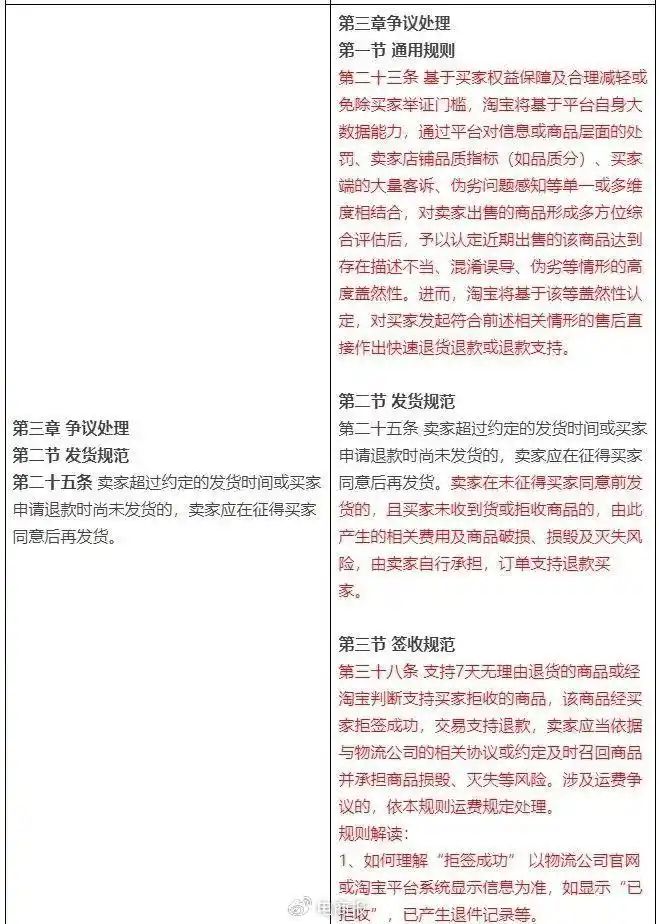
Treasure support for refund only
Specifically, the “refunds only” for treasure-seeking purposes are divided into three main situations: first, those in which the vendor is under-rated or inordinately irregular, and is liable to a mere refund following a complaint; secondly, those in which the buyer is delayed, forced to deliver, etc., and, thirdly, those in which the buyer is directly refusing to accept (the original route back) the goods, and those in which the application is only refunded。
It is also indicated that the full range of assessments, based on the platform's own large data capabilities, combined with multidimensional factors, would be followed by a refund-only determination to ensure that the interests of normal operators are not compromised to the extent possible。
The roll-out of the refund is only the beginning, and the upgrading of user experience with after-sales services has continued。
At the beginning of april this year, cai chongshin, chairman of the board of directors of the ali baba group, said in an investor interview: “when we look internally and reflect on the past few years, we find ourselves lagging behind because we forget who our true clients are.”
“our clients are users of our applications, and we have not given them the best experience. So, to some extent, we are a little self-defeating, and we are not really concerned about where the value is, where we can provide it.”
After the video was released, the interview triggered extensive discussions in the industry. In particular, cai zhongsin has dared to admit that ali “was behind”, which surprised many。
Shortly thereafter, ma yun rarely posted a post in ariane in response to the incident. While confirming the effectiveness of the reform of the new management, mayun also stated: “there are mistakes that are not terrible, no one does not make mistakes, and what is truly terrible are mistakes that are not understood, understood and altered.” the core change of the year is not to chase kpi, but to identify yourself and return to the value track of the customer...”
It can be said that cai zhongsin and ma yun's successive voices have given a fresh signal to ali to put the user experience first, and that what the users can most visually sense is the changes that have occurred in treasure hunting。
For example, on 22 april, the treasure cat announced an increase in 88 vip entitlements, and members were entitled to an unlimited return package fee of up to $25 per unit。

88 vip equity upgrade
You know, 88 vips are entitled to only six refunds of $5 per month prior to the promotion of their rights. This upgrade is enough to see the effort to boost the user's post-sales experience。
Together with new services such as “no food, no drink, no drink, no drink, no drink”, the treasure hunt is looking at the needs of the users in a comprehensive way to make the service work。

User experience. What about merchants
On 17 april this year, a study published by the chinese scroll of stock showed that the market share of the gmv, the golden cat, reached 44. 5 per cent in march and was the first in the industry。
Also noteworthy is the 14 per cent increase in march in gmv, a 1 per cent increase over the 13 per cent increase。
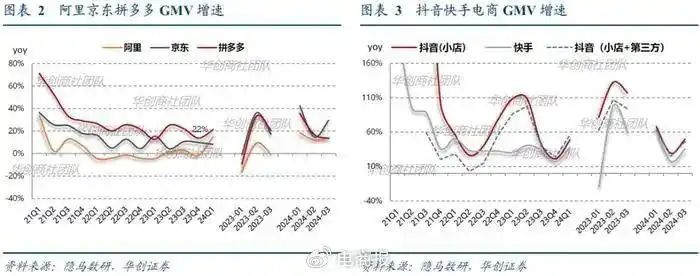
March platform gmv growth source: china securities research
This rate of growth is already rare in terms of the size of the podcat, which also points to the first positive results of the upgrading of its user experience。
But, as mayun said earlier in his internal letter, “reforms and innovations are painful because they cost, and innovations are made step by step and by themselves”. Even if the treasure hunters are determined to improve their user experience, it is bound to be a long process that cannot be done overnight。
On the other hand, it is also a challenge to safeguard the business will while enhancing the user experience。
For too long, a number of consumer-specified services launched by electric power platforms have often been accompanied by business grievances. For example, the controversial “refunds only” due to the wool party, as well as the more time-barred and better-quality “half-day delivery” of goods to the door, often entail additional costs for the business。
The question of how to strike a balance between consumers and merchants, so that consumers do not abuse their rights, and so that traders are willing to proactively improve the quality of their services is certainly an issue worth continuing to explore。
It's like the new experimental services like "no food packs" and "no drinking" that have just been introduced, all of which give businesses the right to choose. It is only when business sees that good services bring good business that perhaps in the future there will be more businesses joining in service upgrading to create better platform ecology for consumers。