
I. Real estate
Also known as “real property”, is the sum of the properties and properties, which generally take three forms of existence: simple land, simple buildings, land and “premises” in combination with buildings. “real estate” is generally defined as immovable property that combines land and buildings。
Property
All types of residential and non-residential housing that have been built and are functionally and economically useful, along with equipment, municipalities, utilities, premises, etc。
Iii. Real estate
A combination of economic activities, such as real estate development, construction, operation, management, maintenance, decoration and services, is the tertiary sector, which operates on land buildings. These include real estate development, real estate investment, real estate construction, brokering services, consultancy services, price assessment, real estate brokerage, property management, etc。
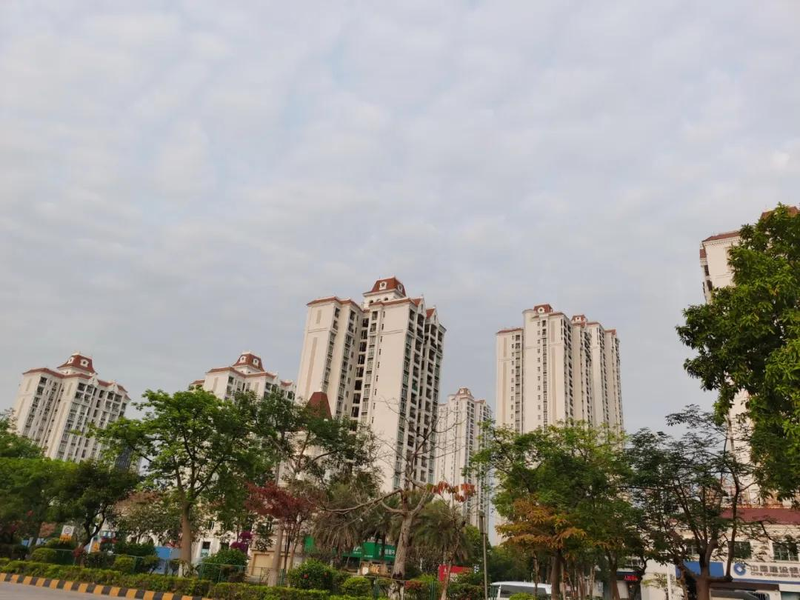
A small part of the river
Iv. Land-level development
The process from birth to maturity is a land-level development claim. Land-level development is carried out by enterprises commissioned by the government or by the government, with a view to providing integrated land acquisition, demolition, resettlement, compensation and clean-up of the urban state-owned land (magic land) and rural collective land (live land) within a given area, as well as the construction of appropriate municipal support facilities to bring the land in the area to “three squares” (water, electricity, roads and land level), “five squares” (water, electricity, roads, communications, gas, land levelling) or “seven squares” (water, drainage, electricity, communications, roads, gas, heating, heat, land levelling) and then the process of concession or transfer of ripe land。
V. Modalities for access to land tenure by developers
Level i market (state concessions): administrative transfers, contractual concessions, tendering, listing, public auctions
Secondary markets (transfer of enterprises): sale, gift, lease, inheritance, mortgage
Vi. Resources, murder, center, climb, feel
In general, the physical and sophisticated focus is on construction, while the gross and net focus is on concessions。
(i) place of birth: place of birth is the land on which the land office has not ceded, auctioned, allocated land use rights。
(ii) gross land: gross land is land in old urban areas that has not yet undergone the process of land development, such as demolition and resettlement compensation, and does not have basic construction conditions。
(iii) netting: netting means land where demolition has been completed, the ground has been levelled and there are no undemoved buildings, structures or other facilities。
In contrast to the gross land, it points to the existence of land on the ground for other installations, such as buildings, structures and other installations that need to be demolished. In material terms, net land refers to land that completes the infrastructure package and meets the conditions for starting work on the site; in tenure terms, net land refers to land that is not subject to any other right and that has unrestricted rights to possession, use, gain, disposal, etc。
(iv) clanding: clanding refers primarily to land that can be used directly for construction through expropriation, demolition and municipal infrastructure inputs。
(v) flying lands: also known as flowers, means land that is part or all of the land of others。
Vii. Land level
Land classification according to the value of the land and the degree of exuberance of the area. Standards vary from place to place, for example, beijing is divided into levels i, ii, iii and iv。
Eight, three and a half
It refers to water, electricity, roads and flat sites。
Nine, seven to one
It refers to water, electricity, roads, communications, gas, heat, drainage and ground leveling。
X. Commodity rooms, exports, interests, customs
Commodity housing: means housing that is developed and sold and rented by real estate development enterprises。
Outlet housing: is residential, commercial and other property that is sold both inside and outside the country。
Domestic sales: homes, businesses and other properties that are built only at the domestic level (excluding hong kong and australia)。
(c) current housing: refers to a commodity house in which the developer has issued a real estate licence. The usual meaning is a house that has been completed and can be occupied。
Xi. Real estate, endroom, tailroom
(b) portable housing: in the general sense, houses that are near or near completion. In general, the main structure is capped, under renovation and has not yet been completed, but the buildings in the subsector and the contours of the accompanying facilities are essentially visible。
(a) term housing: is the dwelling sold by the developer between the time the developer obtains the pre-sale certificate of the commodity house and the time of obtaining the real estate title certificate. The sale of “building flowers” in hong kong and australia is also a common marketing strategy。
Endrooms: also known as “cleaning houses”, are one of the vacant houses, usually after 90 per cent of the stock has been sold, the remaining scattered houses are usually not well oriented, lighted, located, etc., but cheap。
Twelve, one, two, three, four
There has been no clear definition of the concept of the first, second, third and fourth-line cities. In general, the first-line cities are the five special districts and six cities established by the state in 1992; the second-line cities are the provincial capitals, the municipalities directly under the state and the individual municipalities, such as qingdao, dalian, shenzhen, etc.; and the third-line cities are small, strategic cities and small cities with large economies, such as ningbo, wenzhou, and tojo。
For the real estate market, in addition to important indicators such as urban level and city size, there are aggregate indicators of GDP, per capita income and disposable income, industrial structure, population size, and product level. However, the average price of a commodity house is usually the most standard indicator. Thus, the first-line urban habits refer to beijing, shanghai, guangzhou, shenzhen; while tianjin, as an old-fashioned municipality, and some provincial capitals (e. G. Xi'an, chongqing) are subservient to the second-line cities because of the late start of real estate; some provincial-based cities are more dependent on the low level of real estate development than on the third-line cities (e. G. Hout and hot, silvergawa, qinghai, etc.) in the north-west; rather, open coastal cities like dalian, qingshima (the planned single-line city) have been at the forefront of the second-line cities and have even pursued the first-line cities; and cities such as hangzhou and nanjing in jiangzhou, which include jiang zhe developed region. Cities like wenzhou and ningbo, which are supposed to be three lines, are catching up, especially when prices are rising and faster than they are。
Housing, villas, apartments, hotel apartments
(c) housing: is a residential home. The usual meaning of residence is that of ordinary residence。
A villa: is a comfortable garden house built in a suburbs or landscape, generally with a yard, garage, garden, etc。
Apartments: one type of dwelling, usually built in large cities, in a rich section, mostly high-level, with high standards, with essentially the same interior support and residential accommodation, with better commercial and property services, is provided mainly to frequent mid-term and short-term rentals of foreign and medium-sized businesses and their families。
Hotel-type flats: those that provide “hotel-type services, apartment-type management” are highly market-oriented and have a combination of residential, hotel and club functions。
Xiv. Business instruments, students, instruments
Commercial buildings: are buildings that are both office- and residential。
Writing building: office building with unified property management。
Consolidation building: a building with accommodation, office and even a mall。
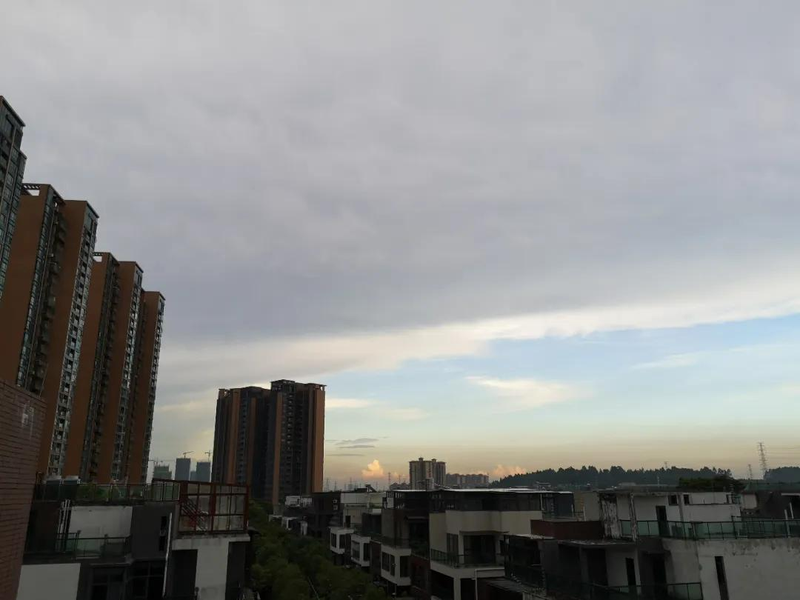
♪ some neighborhood with a sunset ♪
15 duplex house, garden house, row house, single villa
Double-pooled housing: there are two families per unit level and one double household。
Garden houses: also known as western ocean houses, small ocean houses, etc., are small courtyards with garden lawns and garages or three or four-storey buildings with low construction density, full internal functionality and dynamic, with more exit designs and outdoor stairs。
Houses of villas: townhouse, commonly referred to, is a joint house, which is closer to the city, has a beautiful environment, has an independent yard and parking space, mostly on the 3rd and 4th floors, including in the form of double and multiple rows。
Single villa: a single villa
Urban settlements, small settlements
Urban settlements: generally referred to as settlements, which are surrounded by major urban roads or natural boundaries and are equipped with a full range of public services capable of meeting the material and cultural needs of the inhabitants of the area, with a population of between 30,000 and 50,000。
(a) small settlements: these are smaller in size than the settlements, and are populated by the settlements ' roads or by natural dividing lines, with a population of between 7,000 and 15,000, with the necessary public facilities。
Sectors 17 and 3
“three zones”: the size and scope of the three main types of areas identified within the town area that are not allowed to be built (regional green areas), non-farm areas (town construction areas), and controlled development areas (development reserve areas)。
Eighteen, six lines
Red line: refers to the link around the coordinates of a piece of land, within which the plot is the area of land to which the right of use has been acquired and is generally marked by a red line. In practice, however, a “regression line” is generally used, i. E., a backwarding of a distance from the red line to the inside as a buffer zone, with specific numbers set for different locations, mainly for the purposes of subsequent urban development, and the part of the subordination not to be occupied, but also within the area of land use。
2. Construction red line: means the building control line, which is the limit of the base position of the building (outside wall, steps, etc.) and over which no building or building on the street may go。
3. Urban yellow line: a controlled area of urban infrastructure that has an impact on the overall development of the city, as defined in urban planning and that must be controlled line
4. The blue line for cities: refers to the territorial boundaries of protection and control of urban surface waters such as rivers, rivers, lakes, reservoirs, canals and wetlands as determined by urban planning。
5. Urban green line: this refers to the area of green land for urban planning, which can only be greened and cannot be converted to other uses。
6. City purple: refers to historical and cultural neighbourhoods within the historic and cultural city of the country and to the boundaries of protection of historical and cultural neighbourhoods declared by the people's governments of the provinces, autonomous regions and municipalities directly under the central government。
Building body coefficients
This means “the ratio of the outer surface area of the building to the volume to which it is surrounded in contact with the outdoor atmosphere”. See design standards for energy conservation in civil construction (jgj26-95). The northern area is generally less than 0. 35 (the outer area includes roof area)
Xx. Sunning standards
The minimum daylight time required to ensure adequate sunlight in living space to meet the health needs of the population. The code of planning and design for urban neighbourhoods stipulates that buildings are subject to a daily amount of sunlight to be obtained in the solar-looking rooms on the basis of the climatic conditions and sanitary requirements of the regions。
Winterday (about 22 december), sunday: 1 hour, measured: 9 - 15:00
Day of the great breath (around 20 january), sun-ray: 2 hours, measured: 8:00 - 16:00。
Xxi. Spacing of the sun
This refers to the ratio of the height of the building itself to the distance between the building in the north. The smaller the better。
Xii. Building spacing
Horizontal distance between the outer walls of the two buildings。
Tablet housing: should not be less than 6 m. The beijing region should not be less than 10 metres. The regulations vary from place to place。
High-level housing: should not be less than 13 metres. Line interference should be considered between various layers of dwellings with windows on their side, with an appropriate increase in space spacing。
23. Land area for construction, total building area, building base accumulation, area of use
Land area for construction: also known as total land area, refers to the horizontal projection of the area of land for construction as determined by the urban planning sector, excluding land for expropriation。
Total building size: also called open area, means the total surface area at all levels of the building。
The total building area of the subdistricts is the sum of the residential, public and personal basement areas of the subdistricts。
Building floor area: refers to the total size of the first floor of the building。
Use area: means the net area of the building directly used for production or subsistence, also referred to in the dwelling as “occupancy area”。
Structure size: refers to the total area of walls, columns, etc. In the floors of the building。
Auxiliary area: the total net area of each layer of production or subsistence activity, such as stairs, walkways, etc。
Xxiv. Total building area, construction density, planning pattern
The total building area of the subdistricts is the sum of the residential, public and personal basement areas of the subdistricts。
Building density is defined as the sum of the floor area of the building in relation to the area occupied (%) within a given range. This refers to the coverage of buildings, specifically the total base area of all buildings within the project area as compared to the area planned for construction (%), which can reflect the spatiality and construction intensity of a given area。
Planning pattern: refers to the specific construction composition of the project, including specific indicators such as number of buildings, nature of use, number of layers, etc。
Volume rate, floor price
The volume rate is the ratio of total land area to net land area for a small area. For developers, the rate determines the proportion of the cost of the land price in the housing stock, while for households the rate is directly related to the comfort of residence。
Land price on the floor: refers to the average cost of the land to be divided over the area of construction。
In general, land concessions are required by planning requirements such as capacity and building density, which also determine the value of land. The higher the volume and construction density, the more houses a developer can build on a piece of land, the lower the floor price, and theoretically, the higher the profits the developer develops on the plot. However, it may not be necessary because too high a volume rate and construction density and a reduced household comfort will affect the rental price of housing。
Xxvi. Greenland and greening rates
Green land area: refers to the area of land that can be used for greening, including public green land, green land by house, green land by road, etc., excluding roof greening, vertical greening and land less than 2 m2。
Greenland rate (commonly used indicator): refers to the proportion of area of greened land of all types within a given region to that area (excluding vertical greening). There is a general requirement for no less than 30 per cent of new districts and no less than 25 per cent of old districts。
Greening rate (generally greater than green land rate): greening coverage is the ratio of the total area projected at the total greening vegetation level within the area of construction to the area of construction。
Xxvii. Population density, per capita land area
Gross population density: number of people on land per hectare of settlements。
Net population density: population per hectare on residential land
Total land area per capita: refers to the area of land used in the construction red line as a proportion of the population。
Area of residential land per capita: refers to the area of residential land in small areas as compared to the population。
Garage
Is the space allocated for the parking of motor vehicles or non-motorized vehicles within the area of construction land。
There are no clear legal figures on the ratio of residential spaces, and only the needs of owners are met first. In general, the ratio of spaces in sub-areas is between 1:4 ~1:0. 8。
In the case of open parking for small cars, one parking space should occupy 25-30 flats。
In the case of indoor parking spaces for small vehicles, a parking space should occupy 30 to 35 flats。
In the case of a car park used for motorcycle parking, a parking space should occupy a flat range of 2. 7 to 3. 6。