Our celery cultivation, which began in handy, has been in existence for over 2000 years. At first, it was grown only as a ornamental plant, then for food, and it was continuously domesticated, resulting in the cultivation of a fine-spreaded celery, i. E. Celery in china. Here is a presentation on celery cultivation techniques。
I. Selection of celery varieties
The celery is divided into two types of celery (chinese varieties), which has a long leaf handle, which is thick and wide, and which divides white and cyanide species (opened glass). Smaller white leaves, light greens, yellow-coloured white leaves, smaller, emptied, fragrance of fibres, good quality, softening, short-lived, low single production. The cyanide leaves are larger, green, thick, large and strong, large and sweet, rich and rich in fibres, long-term fragrance, high single production, abundant production and poor soft quality。
Based on the biological characteristics of celery, the seeds have a 40-50-day hibernation period after harvest, so the seeds of the previous year are preferred for planting in the autumn。
Ii. Celery growing environment
The celery is colder, colder, semi-cooly, seeds begin to germinate at 4°c, germinate at 15-20°c above 25°c or below 15°c at lower or longer gestation times, but the seedlings are resistant to the low temperatures of 4-5°c and the low temperatures of 7-8°c, but the quality is reduced after freezing, and the celery grows at 20-22°c and 13-18°c at night. Temperature of 15-23°c is appropriate, and celery is normally kept above 5°c at night to ensure normal growth。
Celery is less demanding for sunlight and more obstinate, while short-day photos help improve quality, so it is better in autumn and winter than in summer celery。
The celery is of a straight root type, a shallow root vegetable, less absorbent, wet, dry, without sufficient moisture to prevent growth and affect quality. The celery principals are quickly able to form a large number of sides after they have been injured and are suitable for planting。
The lack of water and fertilizer during growth often results in the hollowing of leaves, and the lack of boron in celery leads to the cracking of leaves. Celery growth requires a full-scale fertilizer, with the whole growth dominated by nitrogen fertilizer。
Iii. Celery cultivation techniques
1. Cultivation: celery seeds are phytogenic fruits with oily glands and small, incompetent seedlings, which are generally transplanted. Spring broadcasts do not require cryogenic treatment, while fall seeding is subject to cryogenic treatment, before seeding is immersed 24 hours later with fresh water and then washed with clean water, covered with hand-stamps, covered with gauze, sprung in the freezer room of the refrigerator, or sprung 40 cm from the water surface. Attention is paid to the need to wash once a day, about seven days later, and to sow 50 per cent of the seeds when they are white. The hibernation can also be broken by 5 mg/kg acination。
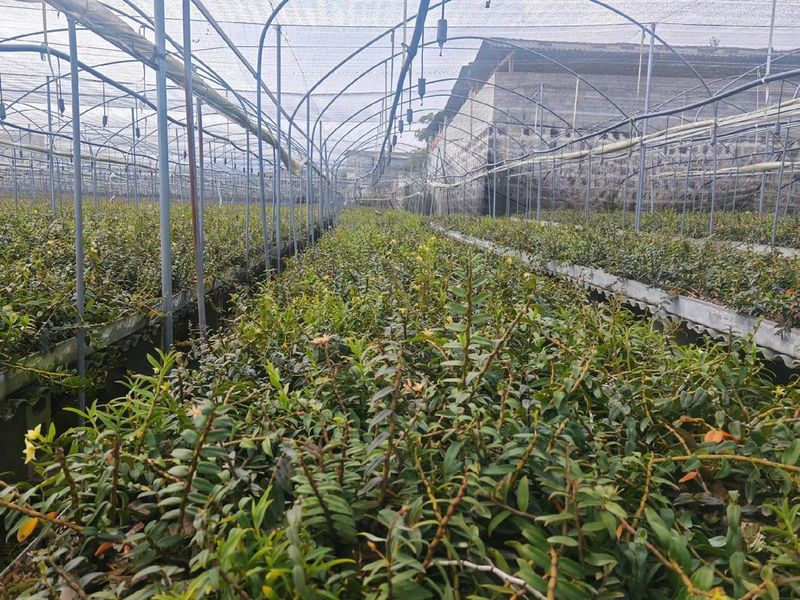
First, a nursery bed, deep tillage, base fattening, before seeding, the bed flattens the bed, then water the bottom water, soak it to the full water seep and sow it, with 100 to 150 grams of seed per 70m2 bed, with three to four millimeters (about a flat finger) of trophic soil due to the small size of the seed, and because of the low capacity of the top of the seed, the fact that the ground cannot be thick, and a layer of membrane must be managed. Plastic membranes will be used to prevent storm washes and heavy rainfall from entering seedbeds during periods of high temperatures, with timely coverage of the sunnet。
The celery, though well-developed, is relatively shallow and drought-resistant, and must be watered with little water and wet on its face. When one or two leafs of seedlings are taken, the water shall be watered with a fine layer of soil on its face, which will cover the roots of the surface, and the water shall be watered at noon at a low temperature (high-temperature season)。
70% of the 100 microbacterium venom spray is used to prevent sudden fallout. During the period, two to three fattenings were followed, mainly by urea seedlings, with two real leaves starting to grow once, with an average age of 50 to 60 days, with 5 to 6 real leaves to be planted at a height of more than 10 cm。
2. The seedlings are to be practiced six to seven days before planting and the sunnet is gradually removed. A manure is given once a week before the planting, 10 to 15 kilograms of ammonium sulphate or urea are administered, and water is poured on the day before the planting is scheduled, so that the seedlings can rise and the soil is moved. Because of the high regenerative capacity of celery roots, there is information that requires soil to be washed and replanted, general densities to plant two or three to four plants to achieve a certain density, scalding the seedlings, preferably after 4 p. M. In the middle of the day, except in the middle of the day. The depth of the plant shall be fixed in the absence of the roots and of the leaves of the heart, and it shall be planted, and water shall be poured into it, so that it may live。
3. Field management and management of fatty water: the slow-planting phase (10-15 days after planting) during which a small amount of water may be required, the timely pursuit of 20 kg of ammonium sulphate or urea in the case of acupuncture, the low amount of water in the case of acre, 20 days of acupuncture, favouring root ligation and cardiac fragmentation, the shift of the climate to cooling times after acupuncture, i. E. To keep the soil wet, followed by a second pursuit, 30 kg of acre sulphate in the case of acreage, and water with the application. Nitrogen is dominant throughout its growth, and nitrogen affects the quality of celery. The use of human urine to avoid the creation of rotting hearts and roots should be avoided, and wells should be poured down in a timely manner after high-temperature season。
Warming against the cold: the heat tolerance of the pelicans is less than that of the pelicans, which are frozen at below 0°c, usually warmed by a large sheet of film in mid-november, with attention given to ventilation during the day, which does not exceed 25°c during the day and not less than 5°c at night。
Hormones and microfertilizers: sprays with a concentration of 40 to 50 mg/kg in a cactin over 30 and 15 days, respectively, or with a large volume of 481, which increases the length of the leaf handles, with a long-term dose of 0. 3 to 0. 5 per cent of potassium phosphate, 2 to 3 times in the tubers, and other microfertilizers, such as boron fertilizer, and harvests, to improve yields and quality。
4. Prevention of diseases and pests: celery is mainly ailments and spots, with 1,000 times the use of 75% methyl tobuzin and 600 times the use of more than 70% more fungus, and can also be treated with 75% enzymes and 80% of desenzin; the main pests are aphids: 40% of fruit 1000 times or 0. 4% of americin. Use 15% of golden years or 48% of thorium and no highly toxic, highly residual pesticide。
These are described above in the context of celery-growing techniques, and it is sufficient for farmers to follow the methods of planting above. More knowledge about vegetable cultivation was welcome, and continued attention was being paid to farming gangs。