Black moor, a food of more nutritional value in people's lives, is a medium-temperature strain that can be cultivated in the spring, summer and autumn seasons. In most areas, two to three batches a year can be cultivated, with considerable benefits for local farmers. With improvements in technology, the supply of raw materials and the production of bacterium packs, etc., have been professionally managed, and growers have to acquire certain skills in order to achieve high yields。
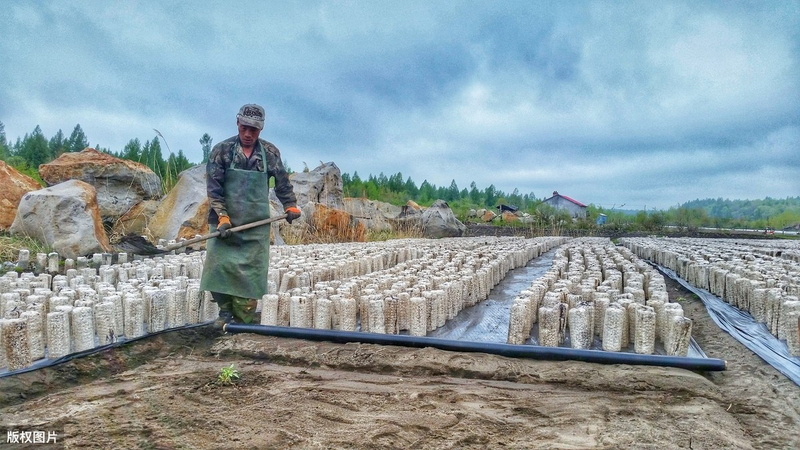
Prepare raw materials and supplements and prepare nutrients for the right formulation. Feeds
Raw materials: there are many natural resources in rural areas that can be used to plant black wood, especially if some wood crumbs are suitable for use as raw materials, as some growers choose hard wooded oaks, willows, euphemisms, etc., to demand that they do not change. In the course of its use, if the wood crumbs are too small, they used to have a few shreddings, such as straw, barley, etc., and the coarse fineness of the regulating material, the best proportion being 80 per cent of the granular form of wood crumbs, plus 20 per cent of the thinner amount. When farmers harvest crops, there will be a great deal of by-products left, as well as a good alternative to wood chips as raw materials. Following the harvest of maize, the remaining maize cores and soybean straws can also be used for the cultivation of black wood ears for the purpose of reuse of waste, with no more than 30 per cent of the nutrients to be used for the remainder of the year。
Auxiliary materials: black molluscs are grown, and nitrogen sources are required, so that wheat and rice can provide such nutrient supplements, preferably with large pieces of wheat and fresh rice. When buying rice beams, care must be taken of quality, some of which seep into rice shells with low purity, which results in a weak growth of mycelium, slow growth, failure to form sub-entanglements on time, and difficulty in growing up with ear buds. In the event of a lack of rice, it may also be replaced by soybean powder or soybeans, with an increase of 2% to 3%, and as small as possible, so as to facilitate planting by growers. Embedding black wood also provides calcium sources with lime, which regulates the acid content of the culture, and is added in a way that maintains use at 1% of the total culture。
Reference formula: 86. 5 per cent for hard wood crumbs, 10 per cent for falsium, 2 per cent for bean cake, 0. 5 per cent for lime and 1 per cent for plaster; 64 per cent for hard wood crumbs, 20 per cent for corn cores, 12 per cent for wheat, 2 per cent for bean bread, 1 per cent for plaster and 1 per cent for lime (whichever is 8-9 for ph); 48. 5 per cent for maize crumbs, 38 per cent for sawn crumbs, 10 per cent for wheat, 2 per cent for bean bread, 0. 5 per cent for lime and 1 per cent for plaster; 72 per cent for beans crum, 17 per cent for maize or sawnock, 10 per cent for wheat, 0. 5 per cent for lime and 0. 5 per cent for plaster. 51% sugar cane, 20% wood, 15% wheat, 3% soybean, 0. 5% plaster and 0. 5% lime。
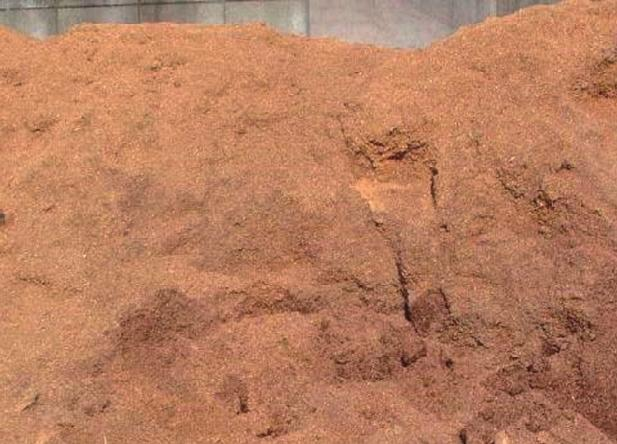
Make nutrients for mixing
In the northern part of the world, raw materials such as wood crumbs and wheat are frozen in such a way that the amount of water contained therein is too high to be stored in isolation for a period of time before the nutrients are prepared, until the ice is fully melted. The pre-positioned wood crumbs are screened and larger wood blocks are cleaned out to avoid subsequent bagging. Wheat and lime are called on the basis of a reasonable ratio weight, and they are evenly mixed together, then mixed with wood crumbs, then mixed with mixed water, so that the matter is evenly mixed, so that when mixed water is added, the water content is kept at 60-65 per cent, so that by hand the mix can be held in groups, the effect can be diffused, the water is too large, the fungus at the bottom of the bag is not easy to grow, and it can be black. An appropriate amount of lime is to be added to the blend to adjust the alkalinity to 6 ~ 7. 5。
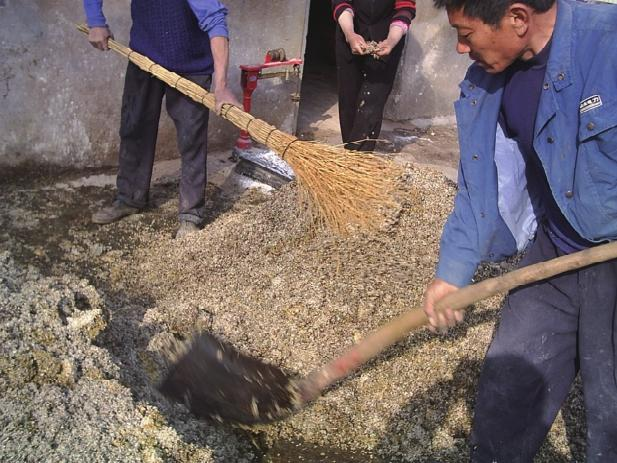
The mastery of baptism is the key to the growth of black wood
After the mixing of the nutrients is completed, the storage period cannot be too long to prevent bacteria from growing, the production of toxic substances hinders the growth of mybs, plastic bags used for nutrients, the choice of bags in the north is generally 18 cm x 34 - 38 cm, the south 25 cm x 50 cm, and before the bags are packed, see if there is a leak in the bag and if there is a breakout gas that cannot be used. Mystic growth rates are highly correlated with the tightness and quality of the bags, and it is preferable to choose non-constricted, non-modified polyethylene plastic bags。
Packs are divided into manual and mechanical operations, and are prepared for vaccinations such as sticks, shovels, wooden sticks and cotton-free lids, which can be placed directly in a basket of a fungicide pot. The bag room shall be kept at the right temperature, which is too low, and the bag is prone to leaking when it is frozen, which cannot be less than 16 degrees, and before the bag is packed, the bag may be preheated by an electronic lamp tube。
Manual bags: open the mouth of the plastic bag, expand the base of the bag, insert some culture into the bag with shovels, lift the bag when it is loaded in one third of the position, shake carefully, put the culture to the bottom, press the bottom of the bag, then load the material into two thirds, press it with your hands and keep it tight and loose. When the bag is filled, the nutrients in it are lax, the fungus cannot be deformed or wrinkled, and the culture must be tight on the bag wall and do not create gaps. Upon completion of the bag, a small hole is struck in the middle of the material with a wooden stick, which is approximately three-fifths long at the height of the culture material, maintaining the aerobicity of the culture material, so that the fungus will grow down along the cave, and helping to stabilize the culture material so that the movement does not affect the growth of the fungus, or by inserting an inoculation rod in the bag, which will be removed after the sterilization。
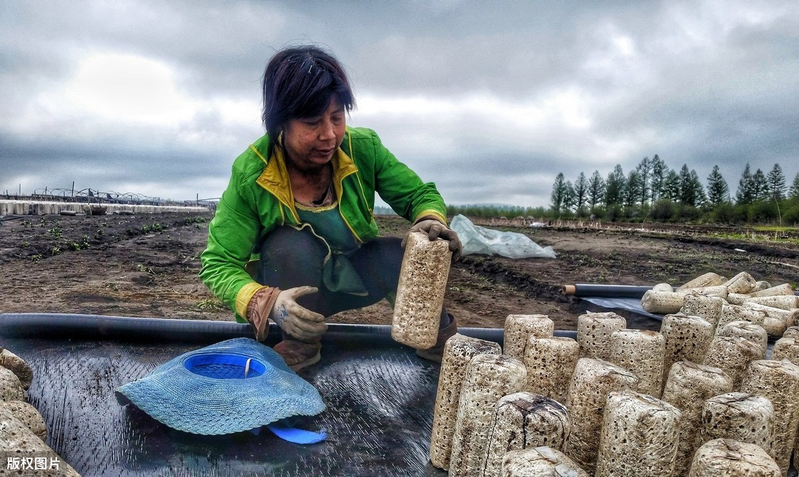
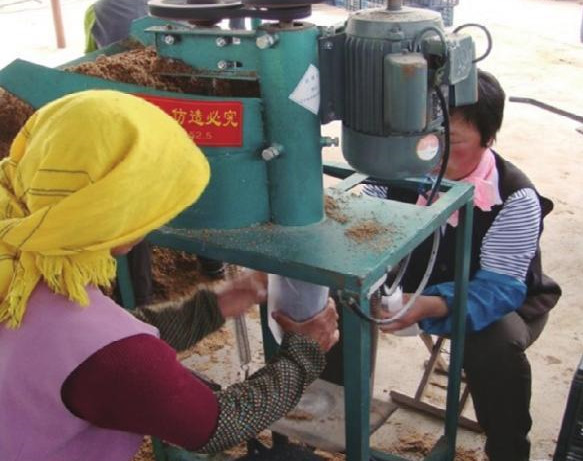
Mechanical bagging: at large-scale blackwood ear-planting sites, bagging machines and concierges are used to carry bags, which are not operated too quickly to ensure the quality of bags. A thiner bacterium bag can be fitted with a recoiled blast-proof bag machine, with the advantage that the material is tight and the bag will not break. When bagging, it is necessary to observe the laxity of the nutrients, which, if they are not filled, will be sealed too long and, after vaccination, the bacteria will not be exposed to the nutrients in the culture, resulting in the death of the strains who cannot absorb nutrients。
Note: the bags filled on the same day shall be sterilised in a timely manner, and the amount of bags shall be arranged according to the capacity of the equipment to be filled on the same day, followed by the sterilization work to avoid bacteria. If the bag is not sterile on that day, it should be placed in a cool ventilated area and not for too long. At present, the way the bag is sealed, the grower has identified a variety of methods, such as cotton stale, cotton lids, rods, collars, etc., most of which use rods and cotton stubs to facilitate subsequent inoculation, and the mycelium can be quickly planted。
How to judge the quality of the bacteria
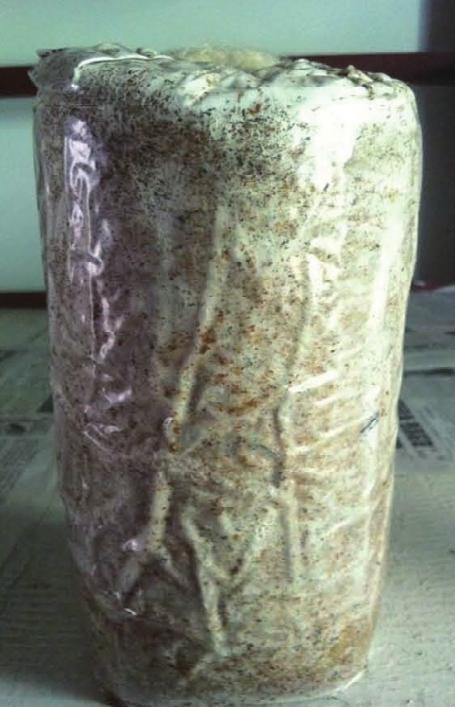
The bacterium that is growing should be white, free of impurities, with raw materials that are coarse, consistent up-to-down, appropriate strains of the fungus, which have grown unseparated from the sack wall and can be seen with small amounts of beads in a constant temperature environment, without generating water. Raw materials made of wood crumbs are not loose and present in bulk. Good fungus, with yellow, green, green, black, etc., the surface of the bag will have separate areas of different fungus, which should be phased out in a timely manner if acid stinks in the bag, indicating that the fungus are contaminated and uncultivable. Plastic bags for raw materials, each of which may not exceed 4 kg, may not be used in too thin a bag, so that materials such as wood crumbs or cotton seed shells are not filled in and are susceptible to deformation during sterilization operations. The fungus are kept closed or broken and there are no pollutants on the surface。
And finally, some of the concerns about preparing nutrients and making a fungus bag
In selecting wood crumbs as raw materials, fresh wood crumbs are not exhaustive, contamination is not easily detectable, and wood crumbs contain substances that affect the growth of mycelium silk, and before cooking nutrients, wood crumbs are placed in a ventilated environment for between one and two months. In blending, the use of lime is adjusted flexibly to different feedstocks, and if raw materials containing wood glucose slag or chinese slag are used, the use of lime is increased to keep the acidity of the culture at 7-8. During the bagging process, urea and polypsychia are not allowed to be used in the culture material, which, when added, affects the development of the fungus, is not conducive to the growth of the black wood ear, and does not meet the requirements of public hazard, nor is it possible to add white sugar, otherwise the fungus is susceptible to bacteria。