The planters plant black wood ears, pack nutrients in bags, and, after disinfection, produce a fungus bag to promote the growth of mycelium silk and to grow a child as soon as possible. In the case of culture, in a given environment, the grower usually plans a professional culture room, which, if investment costs are limited, can also be cultivated in the shed, but under one minimum condition that the environment meets the requirements for myctic growth. Before the bag is pulled into the culture room, clean, fumigated with sulfur for two days and disinfected with lime painted on the walls, the culture room is equipped with protection against light, which is too strong to stimulate the growth of mycelitis, which cannot be too high in humidity, otherwise it is easily contaminated。
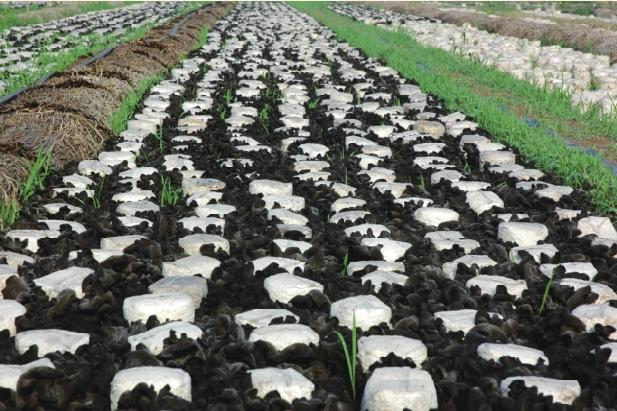
The black wood that grows on the bag
The way the bag was raised
1 indoor culture: using indoor culture, temperature and ventilation facilities are required to meet the requirements, with materials being used to make racks for the bags, which can be determined according to the height of the culture room, typically 3-4 floors, each 45-50 cm high. The windows of the culture room are covered with curtains, and the sterile bacterium bags are placed on the shelf, with a floor of 4-5 floors on each shelf, with a distance of 10 centimetres between the two rows, so as to ventilate, with an area of 60 squares and 4000-6,000 bags. The interior is kept in a dark environment, with a temperature and humidity measure attached to the shelf to monitor the temperature and humidity of the interior. When the fungus reaches one third, the ventilation facility that opens the culture room is separated by one centimetre from the previously tightly placed bag, with room temperature below 25 degrees. At this point, the fungus of the fungus is long-lived, with high concentrations of carbon dioxide in it and temperatures a few degrees higher than room temperature, with a clear feeling outside the hand-held bag. If the temperature in the bag exceeds 35 degrees, there may be a problem of “breeding”, as well as death and injury to mybs, and if there are no protons, the planter will have to take appropriate cooling measures。
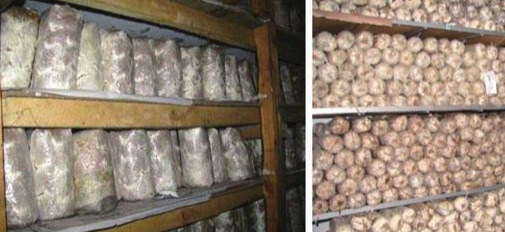
The fungus on the shelf of the culture room
2. Outdoor culture: outdoor culture is less costly and suitable for small-scale growers, but is vulnerable to external factors, not having a high volume of indoor growth and limited in time to achieve full-year cultivation. Outdoor culture begins with reference to the time of the ear, and is assessed in the light of the temperature at the time, usually before and after the avalanche and before the temperature rises. The timing is a key factor, and in some parts of the north-east, the summer season is the time when a bag of bacteria can be built out of the house, when the temperature required for an ear is determined, usually 40 to 50 days before the ear。
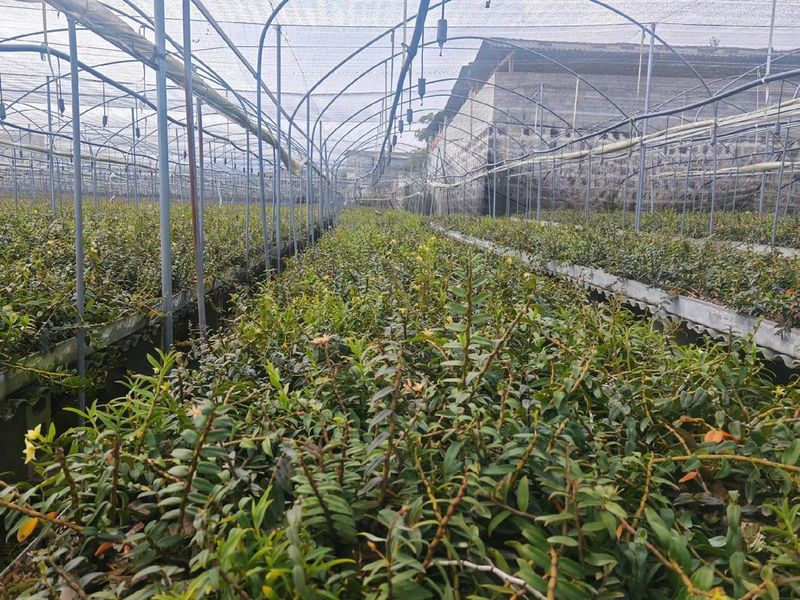
The choice to sell in the fall's ears allows for the cultivation of a fungus bag in the form of outdoor culture, but the temperature in the shed should be kept under control and not exceed 28 degrees, so that the temperature in the shed is not too high and the growth of the sub-entity is limited, affecting the quality of the black moot. In the spring season, outdoor culture is carried out, with a plastic sheet or fur coat outside the shed to raise the temperature in the shed and reduce the time taken to produce the bacteria。
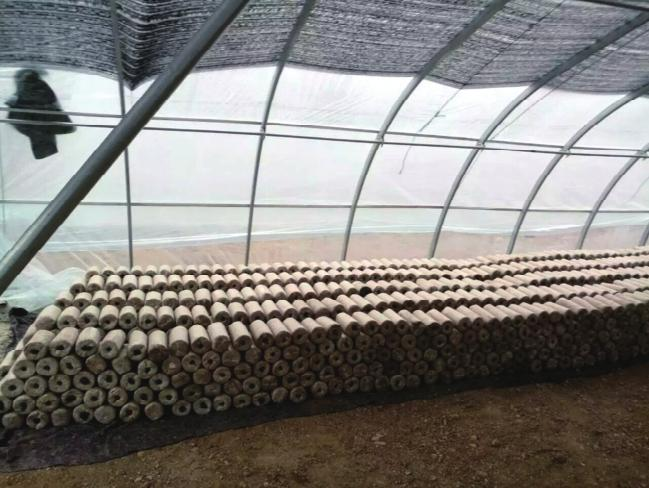
The bag was raised in the shed
Operational steps for outdoor culture kits: selection of areas with a higher surface size, no water accumulation on the ground, maintenance of ventilated and better-lighted conditions in order to contribute to warming in the sheds, and, in the summer of the summer, selection of shaded areas or artificial cavities to prevent high temperatures from adversely affecting the growth of the fungus. When the shed is planned, it will be possible to make beds, and the construction of bacterial beds in the direction of the north-south slope will facilitate drainage, depending on the size of the hut, which is 1 ~1. 2 metres wide, maintaining a channel of 55 ~ 60 centimetres between each of the breeding beds, 6 ~ 8 centimetres above the corridor to ensure a dry environment. In accordance with the width of the fungi bed, some straw curtains are made to cover the fungi bed so that the fungus can grow black wood as soon as possible。
Little trick: the bag is placed on the circulatory bed, the straw curtains are to be covered, both sides of the drapes are to be longer so that they reach the ground in order to contain the light, and when the temperature in the drapes is lower, a thin film is to be placed on the drapes, some stones are to be placed on them and the earth is to be pressed down. When the bag enters the culture shed, it is the early stage of its growth and is sensitive to the temperature, mainly by enhancing temperature management, with sufficient oxygen in the bag to allow for the growth of the fungus, a phase in which no major ventilation can be used。
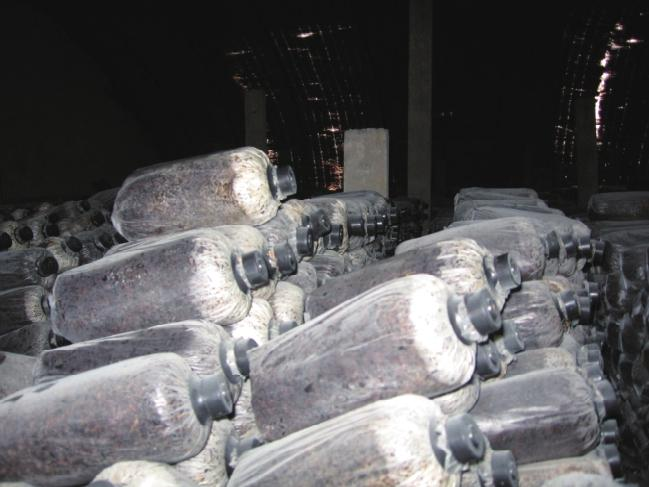
Bacillus bags during culture
A large-scale black-mule farm, with a larger number of fungus bags, demanding time and timeliness, requires standardized cultures
1 standardized culture room requirements: the construction of standardized culture rooms is costly to invest in, with temperature and ventilation control systems in the rooms. In order to trans-shipment or to check the growth of bacteria, plastic baskets of 40 cm long, 30 cm wide and 20 cm high can be purchased for placement in a fungus bag. When inoculated, they can be placed directly in a plastic basket and placed on a tablet, which can be transferred to the culture room by means of a forklift. In general, 8-10 floors of plastic baskets can be placed on a stack, with a fungus bag in the basket, which reduces the risk of infection and facilitates the growth of mybs. Standardized cultures have strict temperature requirements, higher pre-bacterial temperatures and then slowly lower, with the first week remaining at 24-26 degrees, the second and third weeks at 20-24 degrees and the fourth week at 16-20 degrees。
2. Requirements for bacterium bag culture: for 4-7 days, indoor temperatures are maintained at 24-26 degrees, with a humidity of 40-60 per cent, and when the bacterium is sprouted into the bacterium bag, the ventilation equipment is activated to promote the circulatory use of the bacterium, increase the rate of growth, improve the environment of the bacterium bag and avoid the creation of fungus. At the end of the mid-term, when the fungus has grown to one third of the bacterium bag, the temperature in the room does not exceed 26 degrees, at a minimum of 18 degrees, and the temperature monitored is based on the minimum or second layer of the bacterium bag. When the temperature difference between the upper and lower layers is greater, the temperature control system is activated and, in order to ensure that there is sufficient oxygen during the growth of the bacterium, it can be ventilated for about 15 minutes or so。
3 bacillus: after 30 to 40 days of standard culture rooms, when the fungus grow to 4/5 of the fungus bag, it is possible to move to the outdoor environment to prepare for related work. The outdoor temperature is more appropriate in the 14-20 degrees zone, and only in a low-temperature environment, the luminous irritation of the fungus can form ear cells. In the course of the culture, the bag cannot be taken, and the position of the collar closed is prone to deformation. The correct method is to hold the bag with both hands for transfer or inspection, and if the existing bag is contaminated, it should be isolated in a ventilated environment, treated for sterilization and, if the nutrients in the bag are already stinking, buried in depth to prevent bacterial cross-infection。
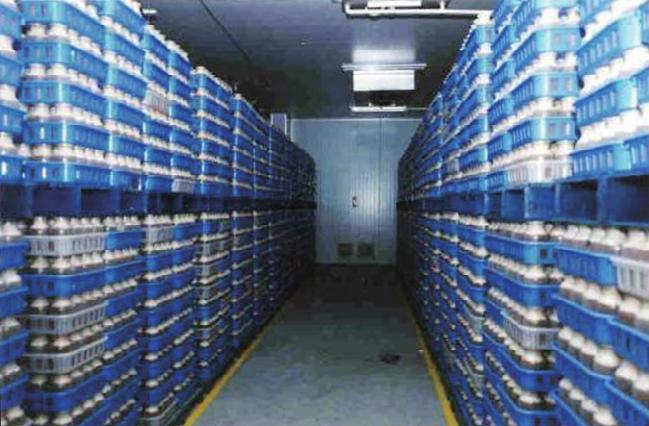
Standardized bag cultures
In the process of nurturing, the bag is prone to unusual problems that growers have to avoid causing losses
1. Cultivation of culture is incomplete: during the sterilization of the bag, the boiler does not have sufficient temperature or the time required for sterilization, and the pathogen microorganisms in the culture do not have total extinction. When bacteria enter into nutrients, they do not affect the filamental development of the fungi at first, and as time goes on, the organisms that have not been killed begin to reproduce, and the fungi in the fungus are affected by the fungus, when the fungus are opened and an acid stink can be smelled. In the pre-enactment of the bag, the operation is regulated according to the requirements of the equipment and the pathogen microorganisms in the nutrients are completely eliminated using the correct method of sterilization。
B. Over-temperature of mycology culture: during culture, the bacterium bag has high temperature requirements, whether indoor or outdoor, and if it is too high, it prevents the growth and development of the bacterium, and when some yellow marks appear in the bacterium bag, the bacterium bag is opened, the odour of the culture is normal and, if not alienated, it is not severe, the temperature is reduced, and after two to three days the bacterium is able to return to normal growth and seal it。
3 unventilated: the black wood ear is an aerobic fungus type, and if the fungus are not constricted in the culture environment and the fungus grow, the effect of ventilation is affected, and in an environment with insufficient oxygen, the fungus is prone to dampness, which increases the water content of the culture material, and the fungus tends to grow weaker or stop growing. Particularly in winter, when developing a fungus bag, such problems can occur, and while balancing temperature protection, care should be taken to develop environmental ventilation。
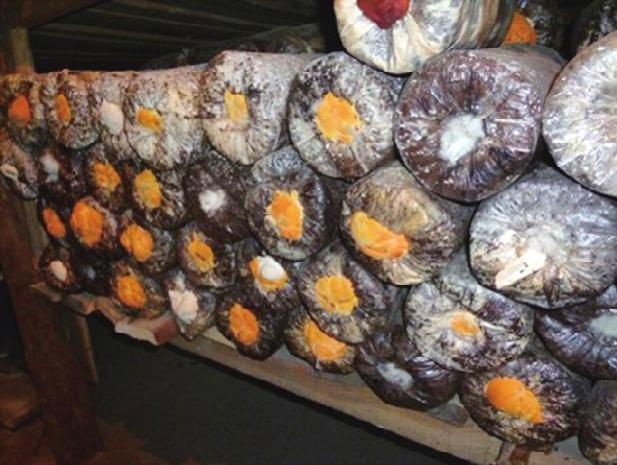
The bacterium bag was bred, and it grew
Some attention during baptism
It is not correct for some growers to regularly disinfect a bacterium bag during mycinosis, as long as it is regulated at the time of prior sterilization, the bacterium bag is not broken, contamination does not normally occur and the fungus does not grow, the repeated use of drugs for disinfection can harm the bacterium or fail to meet the requirements of public safety, and there is a cost to do so at no cost. During the summer, if a bacterium bag is found to be contaminated, as long as the nutrients do not stink, they are not discarded and can be re-inoculated after sterilization to reduce economic losses. In regulating temperature in the culture room, differences in temperature at different locations can be taken into account, with air-changing fans in place to keep the temperature in the room even, and with some cost savings。