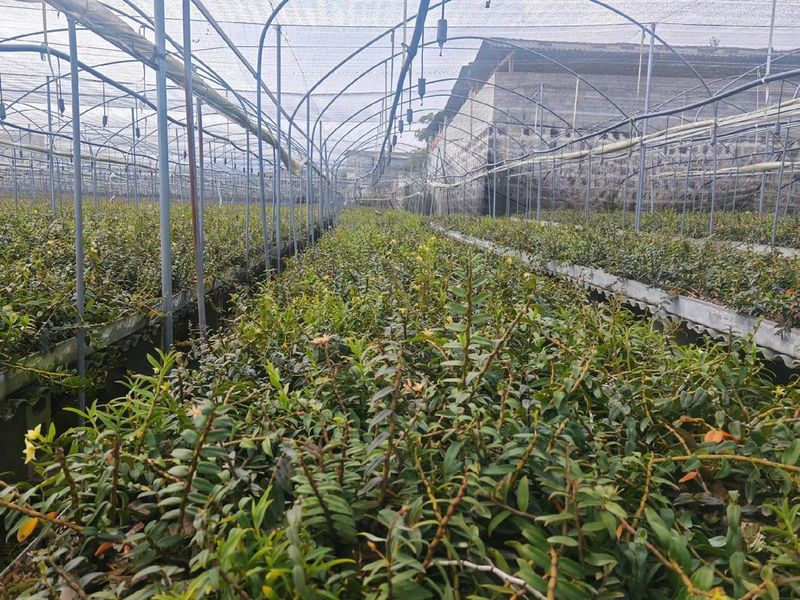
In recent years, following the expansion of the cultivation of the black moor, irregularities in its production and quality have affected its production and quality. During its appearance, the fungus has become susceptible to contamination by the fungus, leading to thinning of the ear, loss of the ear or rot in the ear, which has reduced the economic efficiency of the grower. How can we produce high-quality bacteria and grow thick black wood? Today, we will share some of the contents of the fungi production for the farmers。
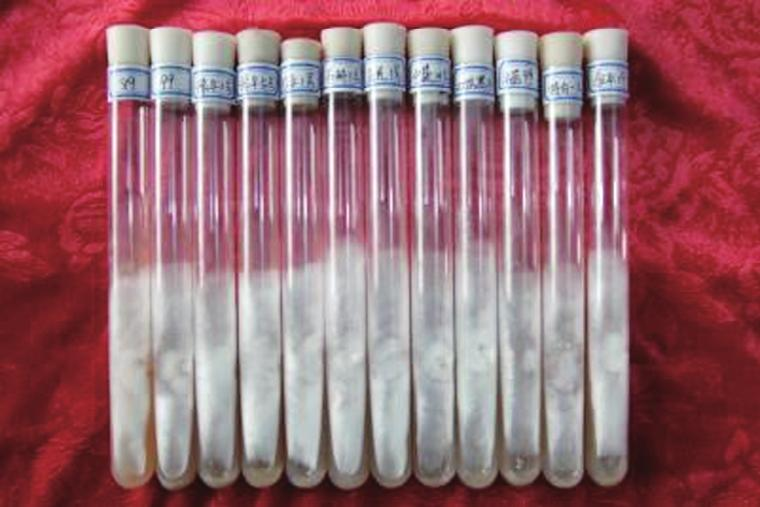
The bacteria that have been produced
Let's find out what equipment we need to make the black molybre
1. Culture rooms and incubators: in a scalded black-mujeres, culture rooms are built to cultivate bacteria, which can be determined by the size of the plant, typically in 30 to 50 square metres, with temperature and humidity control equipment in the interior, and roofs with powerless air exchange fans to ensure fresh air in the room. According to the size of the culture room, welding of several culture racks for the production of bacteria, with a width of 40 to 45 cm, with no special limit of length, maintains 4 to 6 floors, with a distance of about 50 cm per layer。
2. Sub-containers of culture: the sub-containers used for culture are cups, funnels, test tubes, etc., and the test tubes are most frequently used for culture in terms of the specifications of 18 mm x 180 mm, 20 mm x 200 mm. The cultured seed is stored in a glass bottle of 850 ml with a calibre of less than 4 cm, which can be stored in containers of the original species and replaced by high temperature plastic bags。
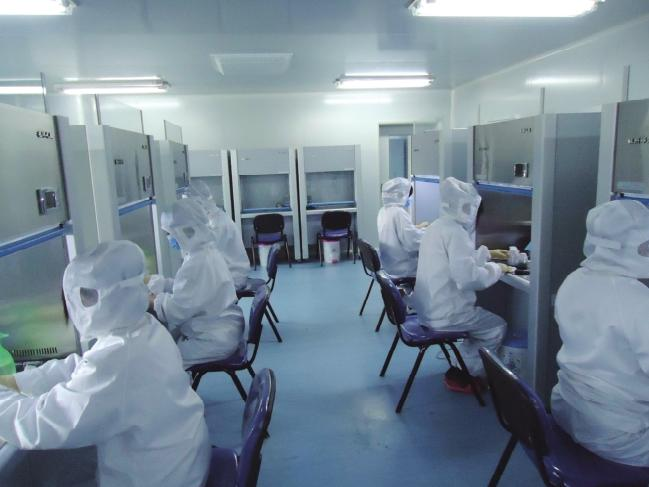
Bacteria cultures
3. Equipment to be used to produce a culture base: the equipment to be used to produce a culture base consists mainly of three components: tanks, filters, controllers, which are equipped with electric motors and ph-detection devices, vents with fillings and vents, where the culture base is placed. The tank contains a mixer, which is placed in a culturer and a culturer fluid, which is activated so that the mixer can work and be used to cultivate the bacteria. Oxygen required for culture enters from the pipe of the tank, producing water from the middle cooling water export, and the bottom of the tank is the vent。
4. Cradle: in some of the smaller blackwood ear-planting sites, there are no specialized bacterial culture equipment, nor can they be produced by shaking beds. Using biofermentation techniques, the fungal base is fermented in liquid form in the fermentation tanks and, after shaking the bed, the fungus is grown into seeds of black wood ear cultivation. The fermentation of liquid bacteria using the shake-bed is more advantageous than conventional in vitro, wood crumb, cotton shell bacteria, which is simple to operate and is not subject to professional equipment conditions。
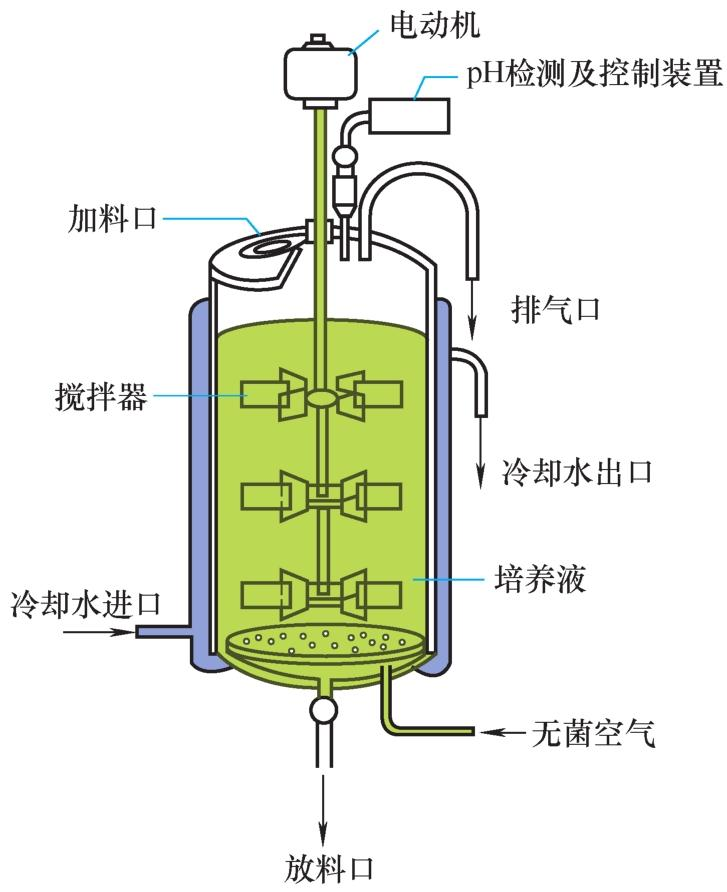
Production of floor plans for bacterial equipment
Operational steps to prepare a culture base
1. Preparation materials: select high-quality potatoes that have no hair bulge, have no colour change, wash them, peel them clean, call them 200 grams from the scales, cut them into small pieces about a centimetre, prepare yeast powder, melt them with some warm water for use. Scraped potatoes are placed in 1000 ml of fresh water, heated with a fiery fire in stainless steel pots, boiled for almost half an hour, filtered with four layers of more dense gauze to remove the residues from the water. When the powder is melted with hot water and poured into a filtered solution, it is fully dissolved by mixing and added to the materials prepared, then 100 ml of water is evenly mixed, so that the solution can be placed in the test tube, while maintaining 1/4-1/5 of the test tube。
Reference is made to the usual formulation: 200 grams of potatoes (defeating), 20 grams of glucose, 18-20 grams of glucose, 1,000 ml water; 200 grams of potatoes (defeating), 10 grams of protein, 20 grams of glucose, 20 grams of glucose, 20 grams of glucose, 1,000 ml of water; 3 grams of potatoes (defeating), 3 grams of potassium phosphate, 3 grams of vitamin b1-2-4 tablets, 20 grams of glucose, 1. 5 grams of sulfate, 20 grams of glucose, 1,000 ml water。
Tips: when partitioning a culturer, no liquid remains on the test tube in order to avoid contamination during the culture, and if a culturer is found on the wall of the test tube, then it will be wiped clean after cooling. When the partition is completed, the cotton slugs in the test tube are sealed, placed 1. 5 to 2 cm inside the tube, left around 1 cm outside, and cannot fall off with handheld cotton slugs. It is then tied to a bundle of seven test tubes, and the test tube is tightly wrapped with cow paper。
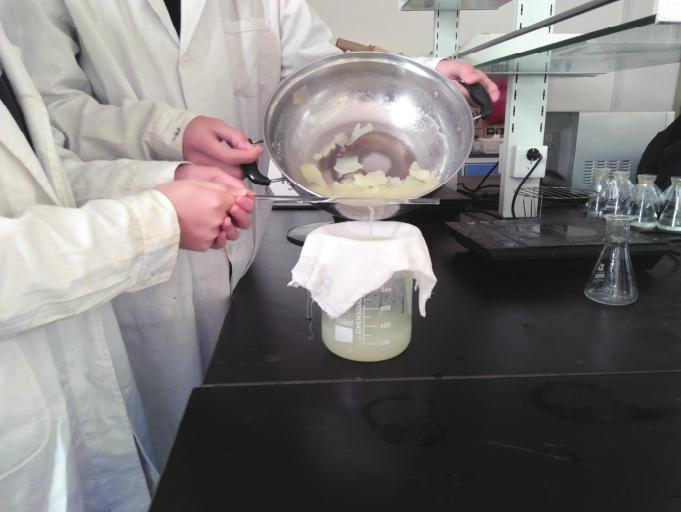
Formulating cultures
B. Sterilization: before the fungicide, the culture base must be watered in the steam pan, then the bundled test tubes should be placed in the pot, covered with a pan cover, and heating could begin when the vent is closed. The method of operation is to refer to the description of the fungicide pot, which is normally maintained by steam in the pot for 30 minutes at a pressure of 0. 15 mpa. When the time has come, the pressure in the pot is down to zero, so that the vent can be opened and the test tube can be removed later. When the test tube is removed, the temperature drops and the test tube is tilted to 30-40 mm higher than the base culture. If the temperature has not yet fallen, the temperature will vary within the test tube, resulting in water fog affecting the purity of the culturer. When the tilt is set, do not move the test tube again, and in order to prevent the culture base from being too fast to condensate, a layer of cotton can be kept warm on the test tube, especially in cold winters。
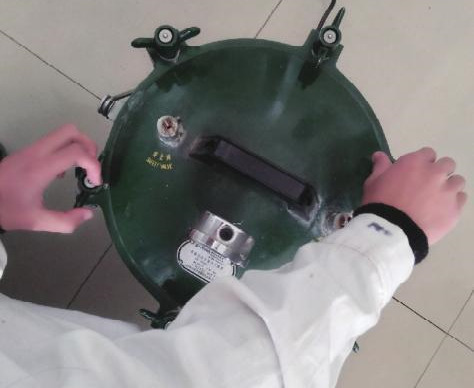
Use of fungicide pots for cultured fungi
Technical methods of mother-child vaccination
1. Preparation for vaccination: before vaccination, the inoculation room is to be cleaned up and drugged for fumigation to an sterile state, the vaccinators are to be replaced with professional work clothes and hats, the tools used are to disinfect and the hands are to be washed with 75 degrees of alcohol. The items to be used for vaccinations are placed on the table to check for any omissions, sprayed below the inoculation area with a cyrate solution, followed by uv lamps on the table for sterilisation。
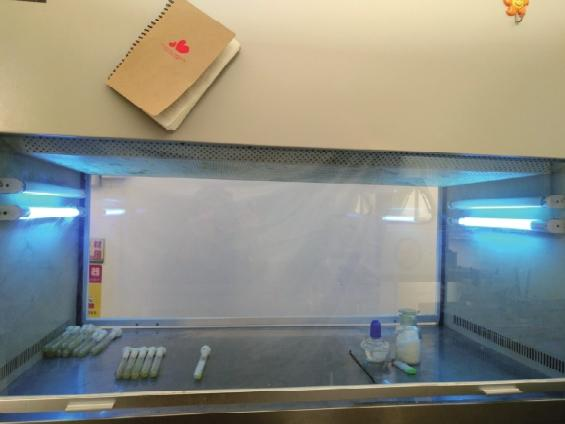
Vaccination on the working floor
2. Method of vaccination: when the uv lamp on the workstation is closed, 75 degrees of alcohol is used to sterilize the hands and test tubes of the mother, and then the alcohol light is lit. The 10 cm area around the flame is covered by the vaccination to avoid bacterial contamination. Holds two test tubes with a left hand in the middle of the two test tubes, keeping the tilt of the culturer at a level, and wrinkles the casket with the right hand to facilitate rapid extraction during vaccination. The right hand holds an inoculation hook and burns on an alcohol lamp, which must be done as long as it is a tool to be used for vaccination, and cannot be ignored. The test tube was then pulled out with its right hand and caught with its finger, with two test tubes in its left hand and disinfected with the burning of alcohol lamps. Then, by means of sterile inoculation hooks, it reaches the inside of the test tube, picks out the aging fungus on the culture matrix, and takes the appropriate amount of bacteria into the bottom of the test tube, without touching the tube wall。
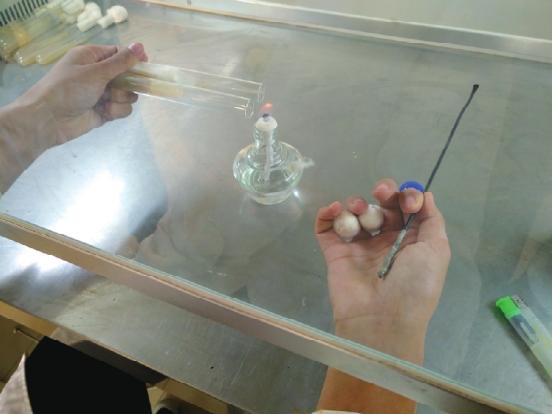
Burn the test tube
Little tips: when inoculations are carried out within the alcohol flames, the hooks cannot shake with their hands, they should be placed in the middle of the culturer, they should be light, the hooks should not be drawn to the culturer, and the strains should not be placed on the tube walls to avoid contamination. Inoculation hooks are also drawn from flame burning pipes and cotton plugs, covered in the flames, and each of the four to six test tubes is burned on the flames to prevent contamination of the culture。
3. Inoculation examinations: once the vaccinations have been completed, the in vitro is to be developed in a incubator of 20-24 degrees, the inoculations are to be examined in two days ' time, and an in vitro is to be produced to observe the oscillating cultures, and if yellow, green substances, neatly arranged spots or fungus are found, they are to be phased out in time. Bacillus that grow white and are not contaminated by fungi are placed in freezers of 2-4 degrees for preservation。
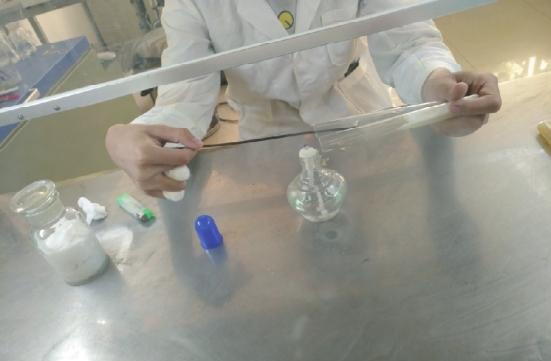
Inoculation of operators under way
And finally, about some of the vaccinations
The duration of the vaccinations is generally unlimited, but during the summer vaccinations, 98 per cent of the bacterial species are eligible for proper sterilization and operation, with higher summer temperatures, less heating in the culture room and more abundant raw materials, which can save some costs. High-voltage steam pots and common-pressure steam pans have different time periods for culture-based fungi and have to adjust time flexibly. During the inoculation process, the piping is carried out with a mild rotation, without force, which would cause test tube vibration and air to enter the test tube. In order to check the state of vaccination, test tubes are randomly extracted and placed in incubators, followed by the detection of bacterial infections。