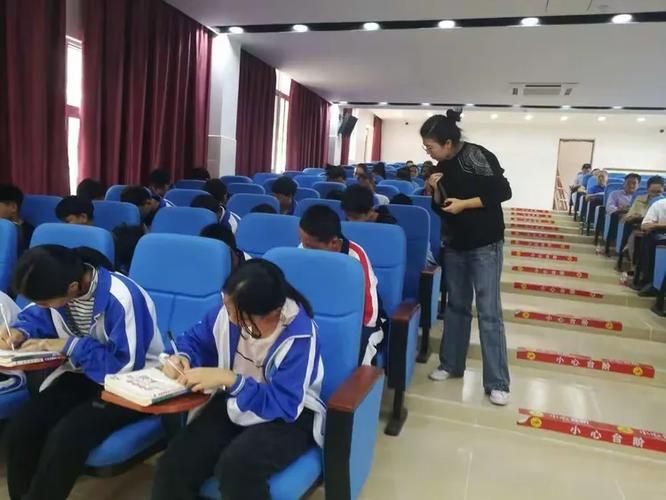
In the interactive classroom of the grand college of geo-education, teachers are communicating via video with students from far away。
You don't have to travel thousands of miles to the university to listen to and communicate with teachers through video? What was previously unimaginable has now become a reality。
When online education started in china in 1998, only 9,000 students were enrolled in the country. In just a few years, there has been a rapid growth in online education, with statistics indicating that 5 million students will be enrolled in national higher education networks this year。
In mid-october, at the fourth annual meeting of the national council for technical cooperation in higher education in han, online education became the focus of discussion, as its role was becoming increasingly critical。
A black horse in education
At the end of the twentieth century, with the spread of computers and the rise of networks, people were no longer satisfied with traditional content services (e. G. Http services, email services, fip file transmissions, etc.), and multimedia content gathering images, audio, video and shared data became hot spots for new applications. The widespread integration of the internet and education has given rise to an entirely new form of education and an educational concept - online education。

In september 1998, the ministry of education approved the university of tsinghua, the university of hunan, the university of zhejiang and the beijing post and telecommunications university as the first pilot institutions for modern distance education, with a total of 9,000 online students, marking the beginning of online education. The following year, the state council approved the action plan for education for the twenty-first century, which provides a macro-level plan for the development of online education. “one of the most important advantages of cyber-education in relation to traditional education is the fullest sharing of teaching resources.” teacher gao xiaohong, department of communication and media, university of east china, believes that online education brings together educational resources from a wide range of schools, research institutes, libraries and other institutions on internet platforms to provide a continuously updated resource base for learners。
With the advent of web-based education, the advantages of ease, simplicity and low-cost investment have gradually become apparent, with the number of online students increasing from year to year. Today, the ministry of education has approved 68 modern distance education pilot projects. There are five institutions in hubei, namely, the chinese university of science and technology, the chinese university of geology (wuhan), the wuhan university of technology, the chinese university of teacher training and wuhan university。
One of wuhan's companies now works in small weeks and is depressed about having only a post-secondary degree, and is constrained in terms of salary and promotion. A year ago, he applied for undergraduate studies at a local internet education institute. Today, he is used to studying at home every day after work. “it is difficult to take time from work to study systematically in higher education.” cho said that online education was an ideal platform for “working people” who needed to charge, learning and obtaining diplomas。
Cyber-education is becoming popular without time and space constraints. It is like a black horse, breaking the old pattern of traditional education。
Cracking in the middle
At the beginning of the e-education boom, pilot schools were generally on the path of scaling up, with a wide range of sites and learning centres, and the quality of education was not kept up in time. As a result, a number of problems are gradually being revealed in the development process。
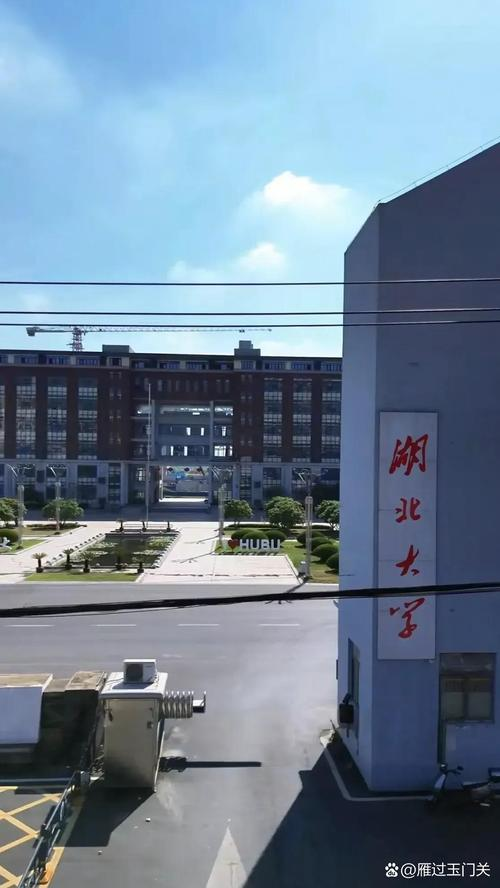
Since last year, there has been a significant decline in the number of online education enrolments. At that meeting, journalists learned that in the past year, many of the online educational institutes had enrolled less than one tenth, or even hundreds, of them. Colleges adapt their specializations to their own circumstances and reduce enrolment。
At the meeting, a number of experts suggested that “this contraction could be seen as a clean-up and a break”. Following a decline in enrolment, many web-based education colleges have begun to focus on platform and curriculum development, making the quality of teaching fundamental to the development of web-based education. “we have more than 22,000 students officially enrolled in our school. In fact, there are more than that number of students enrolled, but we have put in place effective controls to adapt the size of the enrolment to the conditions under which schools operate.” the director of the chinese university of geology (wuhan) network institute of education said that he was committed。
In his view, online education had just emerged without experience. Some schools are pursuing the pace and scale of development on a one-sided basis, focusing on recruitment, leading to web-based education of fish dragons. But shortcomings and shortcomings in new things are inevitable, and we should see their strengths and effects and encourage and nurture them。
In the poster on the walls of the compound, several prominent big words were written: “let the learners share the university”. For several years, cyber-education has broken down the walls of traditional universities in the past and directed educational resources to society as a whole, to everyone who wants to be educated. This positive impact cannot be ignored。
In fact, at the time of last year's “cool” admissions, my provincial college of higher education's internet education institutes were running short while taking advantage of traditional education. The colleges seek to put online education on track through the regulation and improvement of a range of subjects, such as enrolment management, teaching management, academic qualifications management, web-based technical support, online resource development, and appeals for graduation。
♪ in the walls ♪
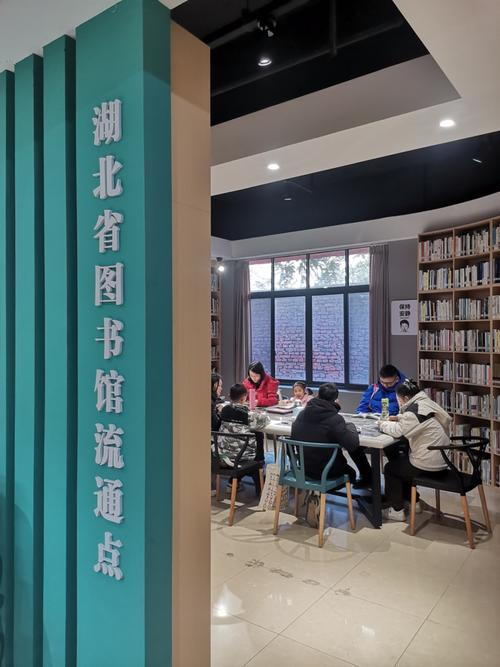
For four years, it has been approved as a pilot school for modern distance education, where web-based education takes place, relying heavily on such subjects as geological engineering, mineral resources, environmental science and geographic information. It has now established some 40 out-of-school learning centres, covering 15 provinces, and has developed a large pool of practical skills for social development and economic development。
In the face of the envy of one's peers, the heart is divided. He said that the school's online education was popular in the provinces, such as the existence of study centres in every municipality of zhejiang. In the province, i have set up eight teaching centres, representing one fifth of the total number of schools in the country, but almost 2,000, or less than 10 per cent, live in hubei. In the occidental region, where knowledge is most needed, it has not been possible to carry out web-based teaching under various conditions. The learning centres in the province are mostly located along the jianghan plains and some are no longer sustainable。
This embarrassment of “frozen fragrances within the walls” does not occur only in the size of the earth. The director of the institute of education of the wuhan polytechnic university network said: “the number of students from the coastal areas of guangdong and jiang zhe makes up two thirds of the total number of students at the college, while the number of students in hubei is less than one third.”
According to a rough estimate, we now have more than 100,000 students enrolled in online education in our province, mostly from outside the province, accounting for at least 80 per cent of the total。
He analysed the phenomenon as a result, on the one hand, of the faster economic development of the coastal areas and, on the other hand, of the relative delay in the development of the network infrastructure. In my province's large rural towns and villages, with the exception of some primary and secondary school teachers and staff of government agencies who are qualified to participate in the network, it is difficult for those employed to enjoy the easy educational resources provided by modern information technology, despite their desire to “charge”. "it may also have something to do with hubei students choosing space." it is stated that higher education is developing faster in our province and that, with the exception of traditional general higher education institutions, vocational education, independent colleges, adult education, etc. Have become a rich educational resource。
There is a perception among industry that employers in coastal areas generally accept a diploma in online education and encourage employees to pursue their studies in this way, which is still not well recognized by local enterprises. The recognition and role of web-based diplomas will have a direct impact on the development of online education。