Counselor to help
In the 1980s, after “strikes”, the authority of the public security organs was unprecedented, but abuse of power by the police continued to occur, and it was urgent to establish a sound internal oversight mechanism. In 1997, the regulations on the supervision of public security organs, which are based on the people's police act, were introduced and were amended in 2011 to establish the legal basis for a system of specialized internal oversight of public security organs. As an internal oversight body, the inspector of police is responsible for the overall supervision of police law enforcement and discipline, with a particular focus on on on-site law enforcement and control of violations. In the past, the head of the public security inspectorate and the inspector general was often accompanied by a person, and after the dual leadership of the inspector general, the disciplinary supervisory board was mostly assigned to the inspector general. The size and special nature of the public security organs and the fact that the police inspectors are the firewalls for ensuring the shining image of the people's police still do not meet expectations in practice。
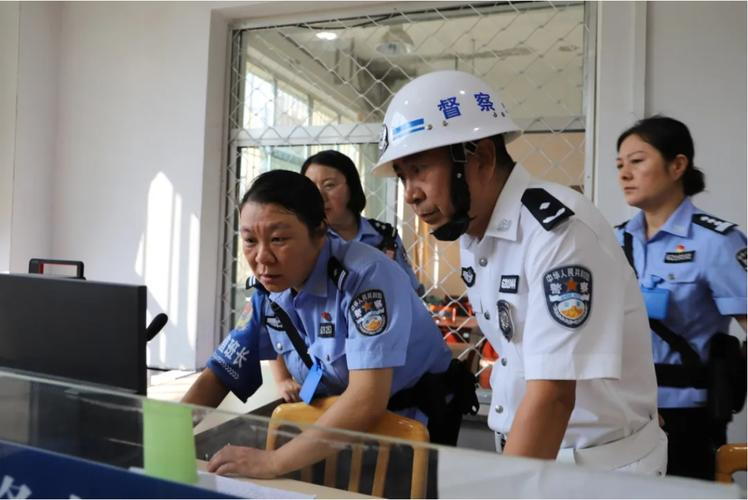
The public security organs at the provincial and municipal levels usually set up a compliance committee composed of the main units of the public security organs at their own level, which is responsible for coordinating the work of the police inspectors of the public security organs at their own and lower levels, with the chief executive as the inspector-general and the police inspectorate as the specific body. The inspectorates are organized in teams, the provincial public security offices have a general police inspectorate and the local municipal public security bureaux have police inspectorates. The directorate-general of the department is established at the level of a regular division, with each local and municipal unit at the level of a single department, and the few at the level of deputy or chief of the unit at the level of senior deputy, most of them at the level of a regular section. It is a dedicated inspectorate with functions broadly consistent with those of the provincial directorates, but its organizational framework is not identical, either with a large unit or section, or with a single office. The supervisory bodies of the public security organs at the district and district levels are often co-located with the departments of disciplinary inspection, auditing, correspondence, etc., which are referred to collectively as “supervisory rooms” and operate as “one set of horses, several brands”。
At present, the district and district inspectorates are faced with the challenge of being “unorganised and unstaffed” and lack the dedicated capacity of inspectors. The ombudsman's work covers the areas of public security law enforcement and civilian police discipline. The quality of personnel is demanding, and institutional independence and professionalization are prerequisites for effective functioning. The public security inspectorate ordinance, as amended in 2011, provides for a framework for the composition of the police inspectorate and for a basic model of unit formation at all levels of the public security organs, but does not specify the number of units organized by the inspectorate or the proportion of police officers. It is up to the public security organs of the same rank to decide on the structure of the police at all levels, although they are under the dual leadership of their superiors and their executive heads, but they are not well placed, are dependent on each other, have serious concerns about peer oversight and have little responsibility, thus limiting effective oversight by the supervisory bodies of the subordinate public security police, especially the “first hand”。
The question of how to better exercise the role of oversight is a long-standing issue for the various levels of compliance. In practice, the goal of “monitoring for development” is often difficult to achieve, owing to a departure in the focus of functions. The ordinance on the supervision of public security organs specifies that it covers all areas of policing, including the performance of duties by public security organs and civilian police at all levels. However, the partial leadership's use of inspectors as “gold oil” requires them to keep a close eye on the work of the centre and to arrange for their participation in other police inspections, which not only weakens the role and authority of the inspectors, but also puts them in the position of “doing everything but not doing well” and leaves their functions to the surface. The generalization of the function of the inspector is bound to weaken, the various levels of the inspectorate are overstretched to cope with the underlying problems of the management of the inspectorate and the administration of justice, and it is not easy for some municipalities and districts to carry out sub-level inspections, let alone autonomous and in-depth inspectors。
The internal management of the police inspectorate suffers from inefficiencies. Some of them are vaguely aware of their own supervisors, acting with little courage and fear. Due to lack of attention, the inspectorate has been placed in the category of “old, infirm and infirm,” and many of its staff do not possess the basic skills of inspectors in investigations, computer operations, etc., and professional qualifications need to be improved. The size of the public security forces, the limited space for promotion, the difficulty of effective incentives and sanctions mechanisms, coupled with a decrease in grey revenues from the party-restraint context, the phenomenon of “hiking” is prominent among the public security forces, and there are frequent cases of neglect and evasion of duty. In a situation of strong corruption and corruption, “public disorder” has been contained, but it has been abetted, with varying degrees of “silentness” among police officers at all levels of the inspectorate, some of whom have lost their sense of progress after promotion, work has been stifling, slackening and lack of commitment。
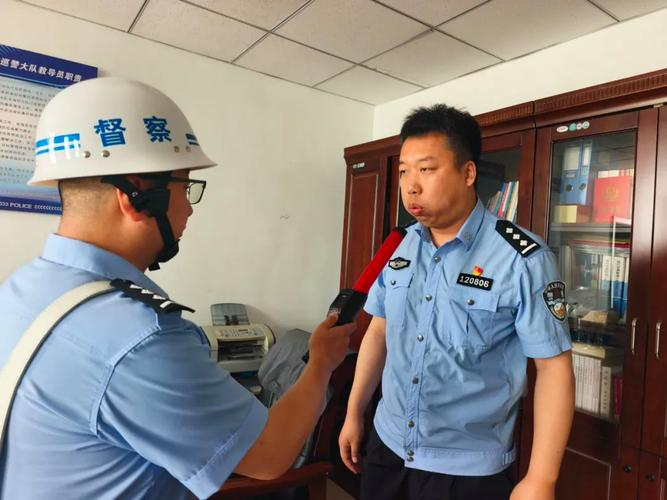
Within the public security organs, in addition to the inspectorates, audit, rule of law, personnel, correspondence, etc., also carry out oversight functions in accordance with police duties; external oversight includes legislative oversight, judicial oversight, disciplinary oversight, public opinion monitoring and integrity monitors. Owing to the lack of effective collaboration mechanisms, the monitoring force is often caught in a situation of “kowloon water” and fragmentation. While the inspector is legally competent to monitor all law enforcement actions of public security organs, there are many traditional areas in practice, mainly on-site inspections, lack of integration and lack of lead coordination mechanisms. There is an urgent need to clarify internally the division of responsibilities between inspectors, the rule of law, audits, letters and visits, personnel, and to establish good interaction with external oversight, and to develop operational mechanisms for information sharing, teamwork and dispute resolution in order to achieve an efficient division of labour and joint oversight. Otherwise, oversight would consume considerable resources in sectoral coordination and be caught in the quagmire of “improvement and coordination”。