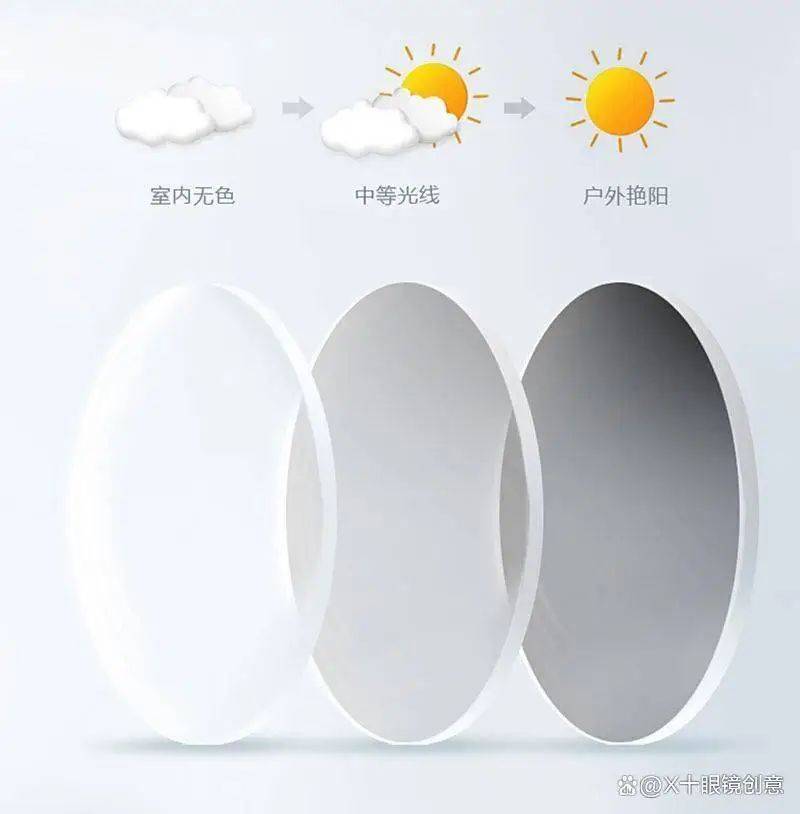
Remember the magic glasses that automatically darkened when you left the room and returned to the room
Today i'm going to give you a deep insight into the science and technology behind the colour-change lens -- not simple magic, but a fine photochemical reaction
It's called "the life before."
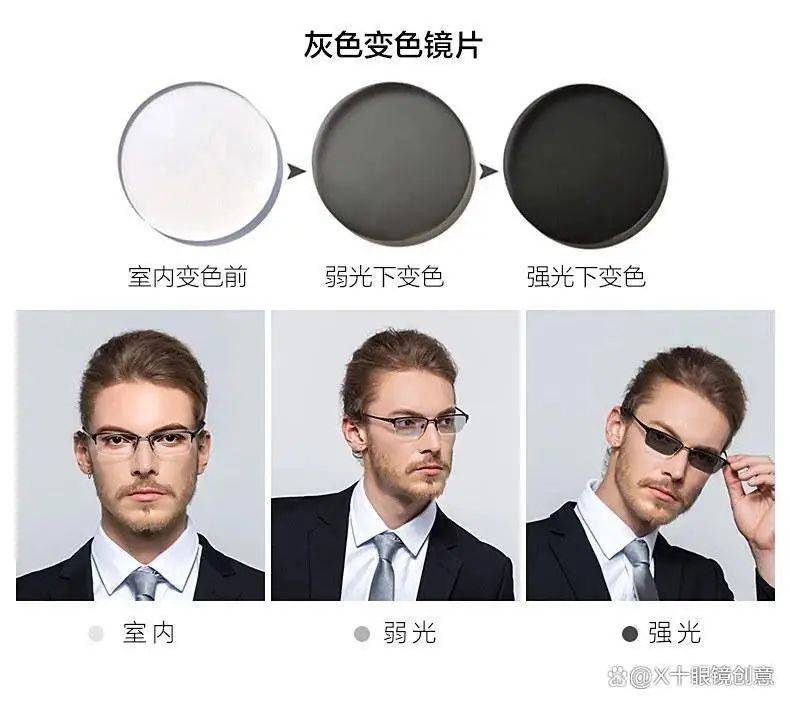
The story begins in 1964, when the united states invented light-to-colored glass, and the era of color-changed glasses began。
Who would have thought that this technology has been with us for nearly 60 years? In the end, the mystery of the colour mirror is that it contains silver halogenated crystals (including silver chloride, silver bromine)。
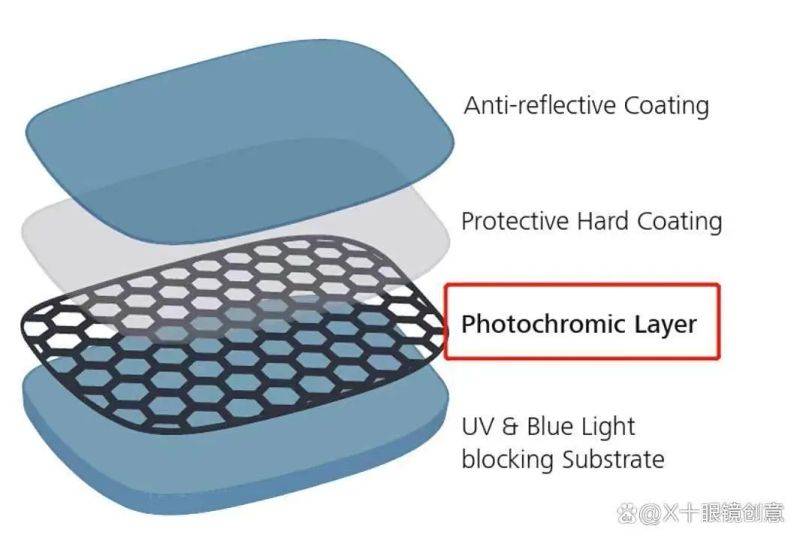
When these microcrystals are exposed to ultraviolet or short-wave visible light, a great chemical performance occurs:
The colourless silver halogenation is broken down into non-transparent silver atoms and transparent halogen atoms。
The silver atom absorbs light and reduces the lens's perforation, which is why your glasses darken in the sun。
And when we get back inside, when the activated light disappears, the silver and the halogen are reconnected, and the lenses become transparent。
The process is completely reversible and extremely resistant to fatigue — it is said that it will not fail after more than 300,000 bright and dark changes
Basic vs membrane: how
A lot of people ask me whether i should choose whether it's gay or membranes. I'm here to bullshit you。
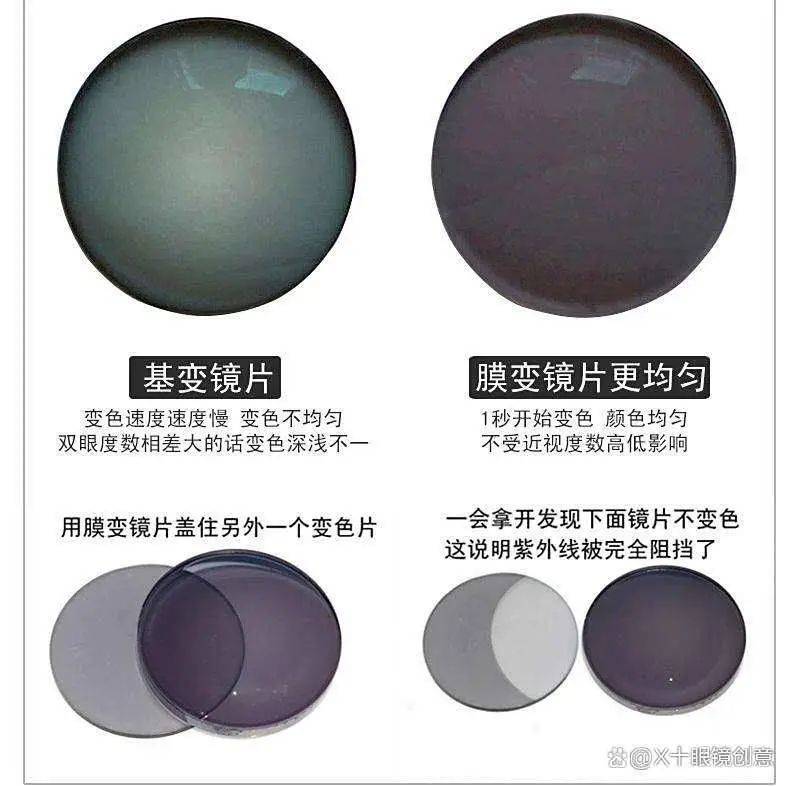
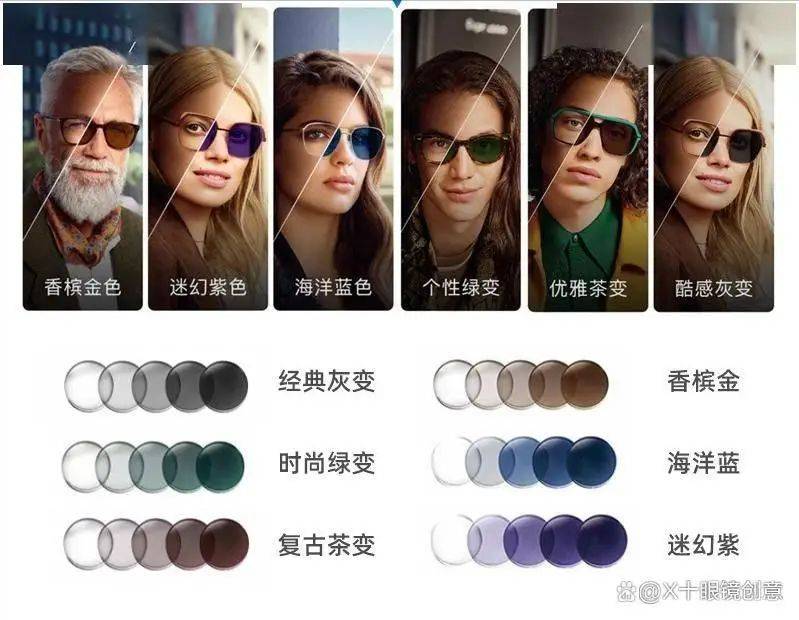
Gymmetric technology is the insertion of colour change factors in the lens raw materials. The advantage is that prices are relatively pro-people and colour choices are numerous. However, it has a small disadvantage — a slight and possibly uneven change in colour, especially in the middle and edge of the height lens。
The membrane conversion technique is specially treated in the lens plating process, using compounds for high-speed spin on the lens surface. Its advantages are that it is virtually non-bottom, that it is fast and stable, and that it is not affected by degrees. Of course, prices are higher than the base。
Five indicators for the evaluation of the colour lens
How do you judge the beauty of a colored mirror? I usually tell clients in five ways:
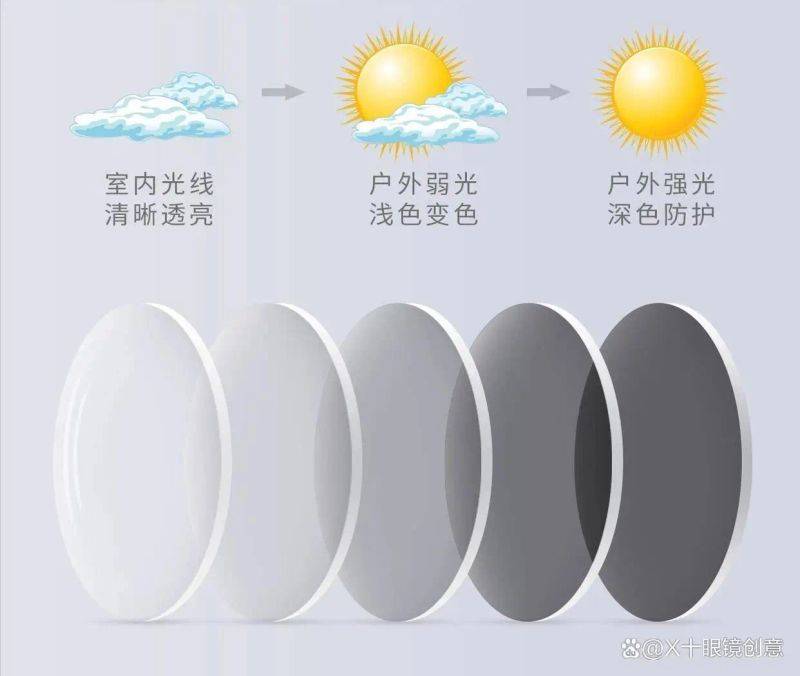
The first is the change speed: the time required for the lenses to move from the initial colourless transparency to the deepest color, of course, as quickly as possible
Secondly, the colour speed: the time required for the lenses from the deepest to the initial colourless transparency is also the faster
Three is the colored depth: the lens can reach the deepest color. In addition to being affected by materials and processes, it is also associated with ambient temperatures - - high summer temperatures, fast and light colours; low winter temperatures, slow colour changes but deep colours
Fourth is the initial perforation rate: the perforation rate before the colour of the finger lens, the higher the perforation rate, the higher the perforation rate, the better
Five is durability: a general high-quality colour change lens that maintains a good color change effect of two to three years。
Technological innovation and future trends
The eyeglass industry has been improving. Now, the coloured lens not only changes with light, but also integrates blue light protection。
Recently, there have been a number of new breakthroughs in the industry, such as the patenting of all-real optical applications for “a colour-modified photo-change lens and its preparation” to improve colour-changed lens evenness by improving the process。
And researchers are exploring ects, which are power-driven, faster and smartly controlled. Looks like future glasses will be smarter
How to choose a colourful lens for yourself
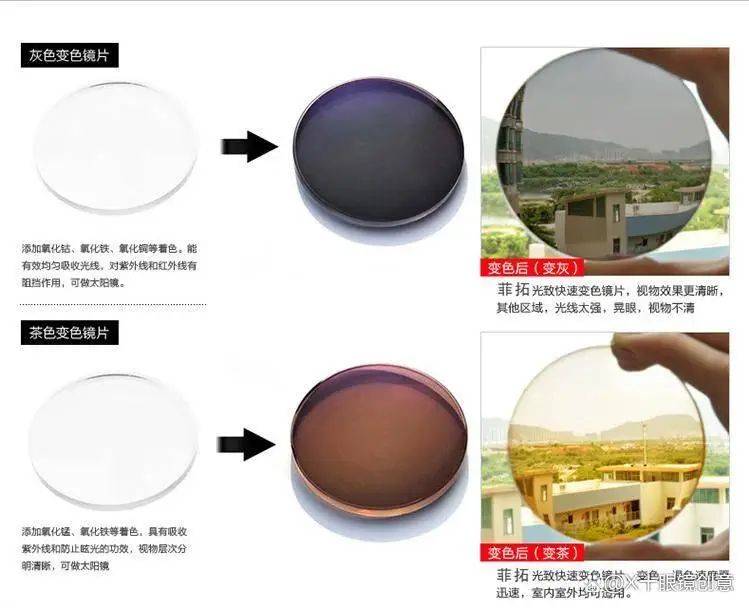
I suggest that the selection of a coloured lens take into account its daily use。
And if you're always changing inside and outside, the colored lens is definitely a lazy evaporation -- a pair of glasses can fix a lot of light environments。
High and low levels are also important considerations. A low number of lenses can be selected for a 1. 56 refraction rate, with a medium number taking into account 1. 61 and a high number recommending a reflection rate above 1. 67, which would make the lens lighter。
And don't forget to choose non-spherical lenses that can reduce the deformation of the edges and make the horizon clearer and more natural。