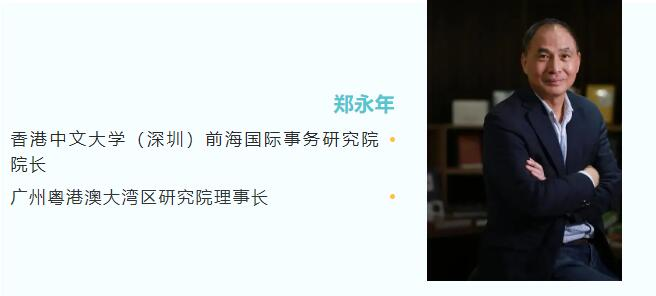
In the recent past, western media have smitten china, focusing on topics such as the chinese economy and the “one-way road”. The former director of the hai institute of international affairs of the chinese university of hong kong (shenzhen) and the director of the university of hong kong, hong kong, hong kong, and the governor of the university of the great lakes region of hong kong, zheng yongyan, received a special “wu’s watch” interview to discuss views on relevant issues。
W: is there a similar motive and logic behind the west's chorus on the road and the chinese economy
Zheng young-yin: the west's understanding of the “one way forward” initiative runs counter to our original intentions. The “one way forward” initiative aims at inclusive growth, but the west sees it as a geopolitical competition project, which is why the west simply imposes its geopolitical logic on china. In recent years, along with the escalation of competition between china and the united states, the united states has been leading the west world in stigmatizing and obstructing the “one side” initiative, as reflected in various so-called “political bloc” “new colonialism” “debt imperialism”。
At the same time, for many years the west has sung down the chinese economy. In the recent past, there has been a particularly loud look at the chinese economy, which involves issues such as the demographic dividend, the sustainability of the chinese model and geopolitical issues. In the view of even those who link the current state of china's economy to the future of the “one-way road”, the “one-way road” is difficult to follow, given the problems in china's internal economy。
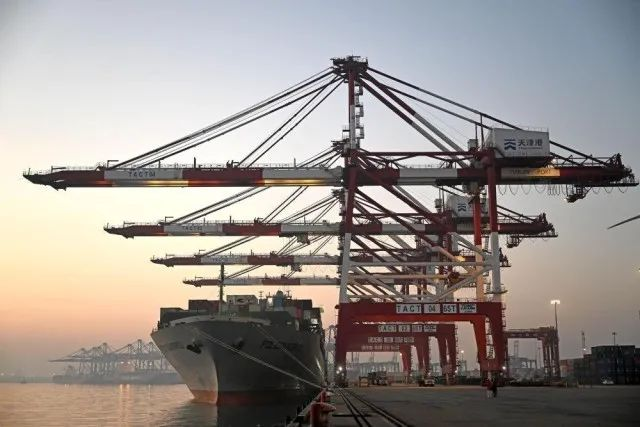
For decades since china’s reform and opening up, the west has never stopped singing the various arguments that have sunk china’s economy. It can be said that the chinese economy has emerged in the west in a variety of bad voices. While every wave of failure ends in bankruptcy, at every time, the authors find new evidence to convince themselves that the chinese economy is declining, or is bound to decline。
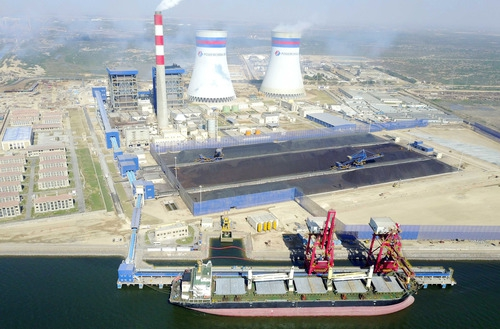
The inexhaustible rhetoric of “across the road” becomes even more problematic. In practical terms, and particularly in the area of infrastructure development, the “one way forward” has made the desired (and even over-expected) progress over the past decade, beginning to enter the harvest period. It is obvious that people are looking at projects such as the yawan high iron project in indonesia and the china-lao railway。
For the west, the externalization of internal problems has been a western logic. Over the years, united states politicians have turned to geopolitics instead of internal affairs. Endless geopolitical strife has been worsening the international economic environment and has had a negative impact on all economies. Thus, while western countries, such as the united states, have also launched many of their own versions of the “one way forward” to compete with china, few believe that western countries have the capacity to do so. Of course, for china, we should face up to it, and we welcome all initiatives that can promote socio-economic development。
Sister woo: what do you think is the reason for the ongoing international misunderstanding of the `one way forward'? How should we tell the story of the "along the way"
Zheng yongyan: on the face of it, the external environment leading to the construction of the zone has deteriorated, but in fact the zone is gaining momentum, while the west is responding passively。
The “one way” initiative was china's first major autonomous international project, and the building of a “one way” was a historic event in recent history. Now that the west is responding to china's actions, of course we have to have confidence in “the road ahead”. We sincerely hope that the west will implement the infrastructure-building programmes that it has committed to developing countries. Even if the purpose of the related commitments in the west is to compete, this does not mean that the space for cooperation between the west and the west disappears. The west has its advantages, and china has its own ones, two of which can go hand in hand in the socio-economic development of a “one-way street” nation。
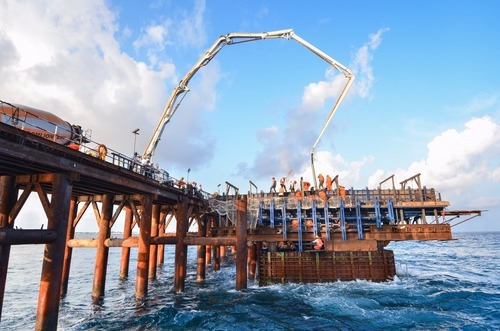
Public opinion was multifaceted and complex, and tangible results were the best response to murmurs and challenges. So, to do the "away" story, we have to tell the "away." i'd like to mention two ideas in particular。
First, the involvement of chinese and chinese national enterprises in the “one way forward” project should be increased. The active involvement of private firms can make the “one-way” more transparent and help to reduce external suspicion about the “one-way” geopolitical strategy, not only by further enhancing the recognition of the “one-way” as a common nation and the international community, but also by allowing people to grow up。
Second, the “across the road” in the new phase of rule-building could draw on some of hong kong's experience. Hong kong is a world leader in free trade ports, intellectual property protection, consumer protection, health care, education, social governance and its rules. The hong kong sar can be “additional” directly on the basis of hong kong's well-established and internationally accepted rules and regulations, which provide a comprehensive system of rules linking the nine cities of the region with hong kong/australian rules, such as in the areas of business, science, trade, tax, public services, etc., and in shenzhen, guangzhou, etc., which form the rules of harmonization and international integration in the region。
On the basis of the uniform rules, the hong kong sar could take the lead on the standard cptpp rules, further deepen reforms, expand openings, fully and systematically carry pressure tests to push the chinese rules to the world, advance the interface with the world rules, and lay a soft foundation for the chinese rules to “go out”. The harmonization of rules in the australasia region in port-au-prince is, in fact, china's pre-negotiation of international rules, which has important implications for china's further international harmonization and refinement of international rules in the “along the way”。