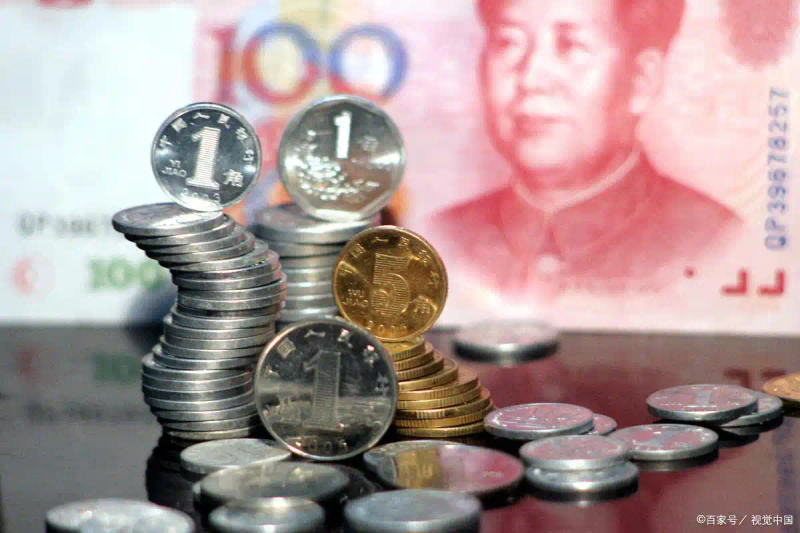
On 16 october, the asian-pacific time early drive reported the exchange rate of the chongryon to the united states dollar at 7. 177, with the lowest touch of 7. 125, which has been at a new low since 10 september. That same day, the median value of the renminbi against the united states dollar was reported as 7. 1191, which is also at a new low since 12 september。
What are the implications of the continued decline of the renminbi against the dollar
Impact on import and export trade:
- impact on exporting enterprises:
- short-term benefits: the devaluation of the renminbi will make chinese exports cheaper in the international market in united states dollars, thereby increasing the price competitiveness of products and facilitating the expansion of export firms'share of overseas markets and their export volumes. For example, when an original commodity was sold on the international market at $100 and the renminbi was converted to a renminbi of $700 at the rate of exchange with the united states dollar, the same $100 was converted to $720 when the exchange rate fell to 7. 2. Commodity prices were relatively attractive to foreign buyers, which could have prompted them to increase their purchases of chinese goods。
- medium- and long-term challenges: a continued decline in exchange rates could trigger trade friction. Some countries may consider that the price advantage of chinese goods is obtained through exchange rate manipulation, thereby imposing trade barriers or anti-dumping measures on chinese exports, which would have long-term adverse effects on china's export trade。
- impact on importing enterprises: importing firms need to exchange more renminbi for foreign goods and raw materials, which can lead to higher import costs and a reduction in their profit space. For example, imports worth $100,000 worth of raw materials cost 700,000 yuan when the exchange rate is 7; if the exchange rate falls to 7. 5, the cost rises to 750,000 yuan. For some enterprises that rely on imported raw materials, they may face production difficulties and may even be too costly to sustain normal production activities。
Impact on the domestic economy:
- impact on the implementation of monetary policy: in order to stabilize the rmb exchange rate, central banks may need to take a number of interventions, such as buying the rmb on the foreign exchange market and selling the united states dollar, which can deplete foreign exchange reserves. At the same time, the continued decline in exchange rates could lead to capital outflows, and, in order to maintain stability in domestic financial markets, central banks might adjust monetary policies, such as raising interest rates to attract a return to capital flows, but this could run counter to the domestic economy’s objective of steady growth。
- impact on economic growth expectations: a continued decline in exchange rates may raise market concerns about the domestic economy and reduce investor and consumer confidence, thereby affecting domestic investment and consumption. Investors may reduce their investment in domestic assets and consumers may delay some substantial consumption, which will have a chilling effect on the growth of the domestic economy。
3. Impact on financial markets:
- impact on the stock market: the continued decline in the exchange rate of the renminbi could lead to foreign capital outflows from the chinese stock market, as foreign capital would face exchange rate losses in converting the renminbi into the united states dollar, which could put pressure on the market's financial position and lead to a decline in the stock market. In addition, economic uncertainty arising from a falling exchange rate can affect the profitability of enterprises and, in turn, the performance of stock markets。
- impact on debt markets: falling exchange rates may lead to higher yields in domestic bond markets, as investors may demand higher returns to cover exchange rate risks. At the same time, foreign investment in domestic bonds is likely to decrease, with implications for demand and supply in bond markets。
4. Impact on personal life:
- higher costs of study and tourism: for individuals who have a need to study abroad and to travel, the decline of the renminbi against the united states dollar means that they need to pay more yuan to exchange dollars, thus increasing the cost of study and tourism. For example, the cost of a year of study in the united states would have been rmb 300,000, which may be needed to meet the same cost requirements after the exchange rate falls。
- changes in the return on investment in overseas assets: for individual investors holding overseas assets, the drop in the renminbi exchange rate increases the value of their assets when converted to the renminbi, but they may face exchange rate losses if the renminbi exchange rate rises in the future。