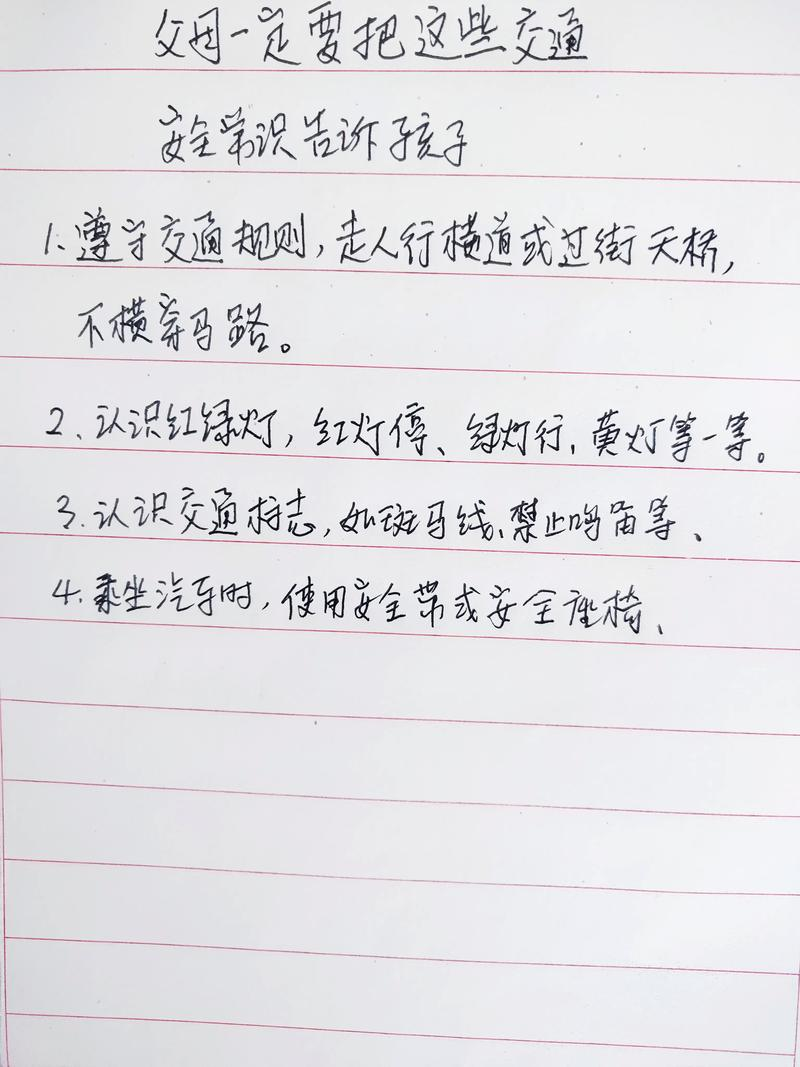
1. Safety of walking: pedestrians are required to walk on the sidewalks, with no one walking by the right side of the sidewalks; crossing the sidewalks by means of a valid communication number is subject to the requirements of the signal; crossing the sidewalks without traffic signals is subject to the requirements of the signal; passing through the sidewalks without traffic signals is subject to a right-hand look, no traffic is allowed to be pursued, no running, no traffic is allowed; if there is no pedestrian crossing, it is required to walk straight through the street bridge or tunnel, no one is permitted to walk through the street bridge or tunnel; no climbing through the roadside and the fences, barriers and barriers to separation, no picking, chasing, force stopping or throwing vehicles on the road。
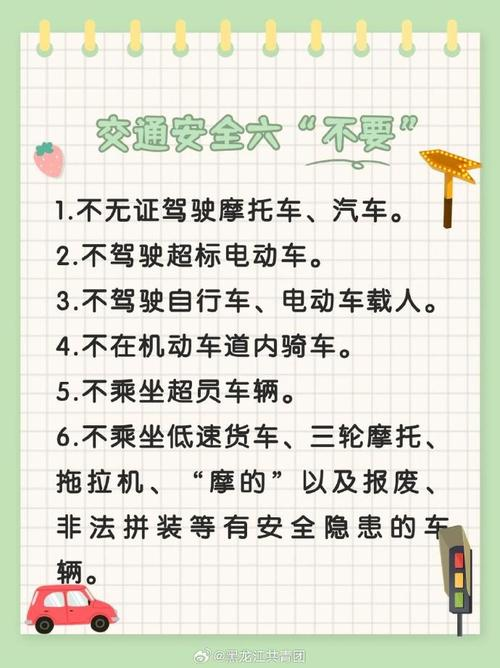
2. Safety on bicycles (electric vehicles, motorcycles): cannot ride electric cars, motorcycles on roads under the age of 16; does not cycling without an umbrella; does not ride without a hand; does not ride with a person; does not ride a “disease” car; does not ride fast; does not break the road with a motor vehicle; does not ride in parallel; does not ride in bad weather。
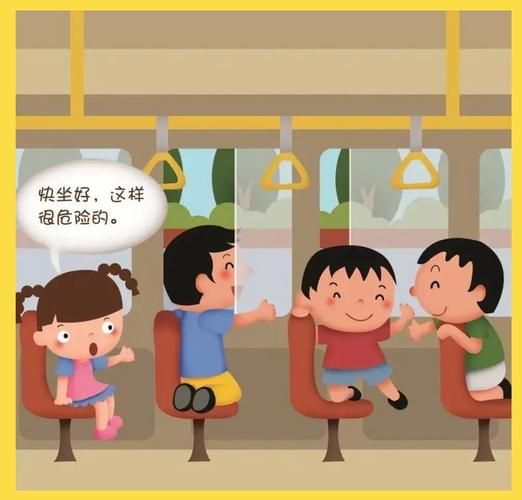
3. Safety of the vehicle: take the bus and get up and out of the car, hold the arm in the car, the head, hand and other parts of the body cannot reach out of the window, keep the side of the vehicle safe from theft, wear a seat belt in a high-speed vehicle and not overload the vehicle。
Driver's traffic safety
I. Correct control of speed
The right control of speed is a necessary condition for safe travel, and that is what is called “middle speed, security comity”. In general, many drivers, depending on the type and performance of the vehicle they drive, are able, through practice and testing, to find their favorite and most comfortable speed. If the speed of such movement is consistent with the relevant provisions of the traffic regulations and the traffic environment, it can be established as its own safe speed。
Of course, unlike cities and villages, mountains and plains control the speed correctly, attention must also be paid to the environment in which the following vehicles operate:
(1) close observation of traffic signs along the road and, in case of a sign at a limited speed, strict observance of the signs。
(2) flexible control and control of speed, depending on the condition of the road and the conditions of operation, should be fast and slow。
(3) drive on roads with crowded traffic, larger vehicles and natural speed of traffic, so that their speed follows the speed of traffic and does not rush。
(4) keep the economy as stable as possible, avoiding high-speed speeding and slow speed. Economic speed can be reasonably high when car loads are light and road conditions are good, while when car loads are large and road conditions are poor, economic speed must be lower。
(5) in transit, the speed corresponds to the distance between the moving vehicle. Under different weather, road and speed conditions, the distance is not the same as that of the former workshop, and the distance is moderate to ensure safety。
Ii. Reduction
When vehicles are travelling without a centre to separate fences, they should meet with each other in the forward, at an appropriate pace, and select a relatively broad and solid section of the road, which will pass by the right side of the road. In case of poor vision, lower speed and close light, even in the wider double lane, slow encounter)。
If there is an obstacle on the right side of the road ahead, depending on the distance, speed and state of the road from the barrier, the decision is to be made whether to accelerate or slow down after crossing the barrier or even to stop to allow the other party to move ahead, in order to stagger the time of crossing the barrier and to avoid meeting at the barrier: if there is no certainty as to the judgement of crossing the barrier, the speed of the vehicle should be lowered, slow down to the vicinity of the barrier, and not be too busy, so that the opposite car will continue to move through the barrier: if the two vehicles are expected to meet at the barrier, they should be actively slowing down, parking, repositioning their bodies or backing up the road and not blocking the road: in the event that the road is likely to be narrow or there are obstacles on both sides of the road, the pre-selected section of the road should be properly controlled to ensure that the car meets at the selected segment, depending on the speed of the other party's arrival and the road conditions。
When travelling, care must be taken to maintain sufficient security-side spacing and to “grace three” — slow, let-go, stop first, and never take the road to each other, thus creating a stalemate. In general, the following rules are followed: empty vehicles allow heavy vehicles, bicycles allow trailers, buses allow cars, coach cars allow other vehicles, ordinary vehicles allow special vehicles to operate, and downhill vehicles allow uphill vehicles (when the broken-down to midway and uphill is not yet up the slope, uphill vehicles should allow downhill)。
At night, when a car meets, the distance light is changed to a close light and the meeting is slowed to prevent collisions between pedestrians and cyclists on the right side。
Special attention should also be paid to pedestrians and non-motorized vehicles on the road, to seeing the expected movement of pedestrians at the location of the car, and to preventing the pedestrian from ignoring the vehicle when it is blocked, so that the signal is sounded. In any event, when there is a pedestrian car, all contingencies must be prevented and ready for parking。
Iii. Non-stopping of vehicles
Overriding is normal in car travel. However, overloading is also a more complex and dangerous operational process and must therefore be carried out under certain conditions. Based on the provisions of the traffic code and the experience gained in practice, the choice of the supercar is broad, with good vision, barrier-free on both sides of the road, no traffic within 150 metres of the supercar, and in the event of a break-off and in the circumstances permitted by the traffic code. In case of supercars, the left turn light must be turned, close to the left side of the forward vehicle, and the horn (no horn-blowing areas and change of distance light at night) must be used to notify the front vehicle, confirming that the safe and forward vehicle will pass, accelerating and maintaining a certain horizontal distance with the supercar to the left. After exceeding the front car, the right direction wheel cannot be rapidly rotated, and the speed of the excess should be maintained and the right light should be turned back in the same lane, 20 metres above the vehicle。
Overriding is not permitted at:
(1) upon a left-hand turn and turn around by means of an overcar。
(2) during the course of the overcar, there is a possibility of a meeting with the car opposite。
(3) when being overloaded。
(4) when the act crosses the road, crosses the road, over the water bridge, over the water。
(5) when passing through alleys, rail crossings, hard bends, narrow roads, narrow bridges, steep slopes。
(6) turn around, turn around。
(7) wind, rain, snow. Fog sky visibility within 30 meters。
(8) while travelling on snow, snow and mud。
(9) in the event of a failure of a horn or a shaving machine。
(10) when a motor vehicle is in trouble。
(11) in and out of non-motorized lanes。
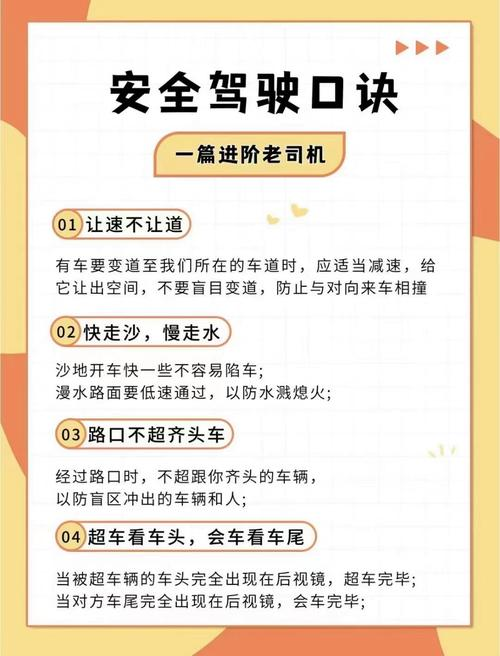
In the course of speeding, if the barrier on the left side of the road or the horizontal distance is too small to be squeezed, do not use emergency brakes, as far as possible, in order to prevent a side-sliding collision with the arches, stabilize the steering wheel, do not rotate around the right or the left, and in the shortest period of time, draw the distance properly and then wait for the machine to pass, and do not venture to force over the vehicle. When moving beyond a parked vehicle, bellows (in non-prohibited areas), be careful to observe, be vigilant and keep a large horizontal distance, be prepared for emergency brakes to prevent any sudden collisions between the vehicle and the driveway, or if the driver suddenly opens the door to get out of the car, especially when the bus is parked at the station, more attention should be paid to the sudden presence of pedestrians who cross the road in the parking lot。
Ten major behaviors affecting the safety of motor vehicles
One, in front of the car, hanged
Some car owners prefer to hang their favorite accessories in the car, but the beautiful ones that hang on the back and behind the wind screen prevent the owner from observing the road from the rear-view mirror, which naturally affects the safety of driving。
Recommendation: decoration is hanging, as little as possible
♪ two, one hair, one hair ♪
A hair that flies in a random fashion is very moving, but long hair can affect the concentration of the driver's efforts when driving, as well as the owner's ability to observe the movement of the car around the corner, and long hairs may also obscure the line of view when there is a sudden return to an emergency, creating security risks for a safe car。
Recommendation: driving time, long hair
Three, winter and summer
In winter, in summer, oxen mats, some drivers customarily put a cushion on the driver's seat, but the cushions of such activities cause the driver's body to be unstable and, in case of emergency brakes, the inertia of the body can easily slip from the cushions, with unimaginable consequences。
Recommendation: need to be advanced, fixed
Four, worry about cocoon, put your hands on it
In particular, female drivers often prefer to wear gloves in both morning and evening, so as to grind cocoons in order to prevent their hands from holding the steering wheel. In fact, gloves are easy to slip when turning, especially when there is a sharp turn。
Recommendation: no gloves, no car feeling
Five, east zhang zi, mindless
The fact that many people drive away at times does not preclude the fact that some people are naturally curious about the outside world, that they like to drive, that they prefer each other, and that they even look in the mirror and make up while driving。
Recommendation: focus on one purpose and focus on the other
Six, get in the car and wear high heels
Women can't wear high heels, they can look down on everything. It's beautiful, but driving in high heels can affect the movement of the clutch, the oil door pedal and the brake pedals, and whether it is an emergency brake or not, there will be a relative increase in the rate of slipping the pedals, with the possibility of spraining their ankles without accident。
Recommendation: drive for shoes, flat bottom best
It's a sunglasses
To act cool, regardless of whether it's dark or rain, many young people go out to wear sunglasses, but the dark color of the sunglasses delays the time when the eyes send visual signals to the brain, which in turn renders speed perceptive and leaves people vulnerable to miscalculation。
Recommendation: blinding eyes without sunglasses
8. Aromatics, no matter where
In order to preserve the aroma inside the car, perfume became an essential vehicle item for the owner. However, prolonged use of aromatics accelerates the ageing of plastics in cars and is detrimental to the health of the owner. Plus. The hot sun goes straight to the perfume bottle, which, together with its dark body, is particularly prone to heat and to heat explosions. Moreover, aromatics should not be placed on the dashboard where “airbag” or “srs” are located, which would otherwise affect the opening of the airbag。
Recommendation: we must move away from the instrument
Nine, driving, talking
On the road, it is often visible that some people sit in the cab and talk and dance. One hand with a mobile phone, one hand with a piped block and a steering wheel, was perhaps very distracted。
Recommendation: shut up and pull over
10, play and enjoy yourself
You must've seen the early rush when you were driving and eating breakfast. It is also dangerous for people to eat snacks while driving or to sing while driving。
Recommendation: shut up and drive. Watch your step。