The style style (de stijl, from dutch, meaning “style”) refers to a coalition of painters, architects and designers established in 1917. Dutch painter piet mondrian (1872-1944) was one of the founders of style and one of the most influential painters in the first half of the twentieth century. Mondrian's original is a “less or less” philosophy, and he wants his art to be simple, careful and pure。
According to the news, the exhibition “mondrian and dutch style” was recently held at the museum of the queen sofia national centre for the arts in madrid, spain, bringing together mondrian and other artists, including paintings, sculptures and documents, for the first time in spain since 1982。
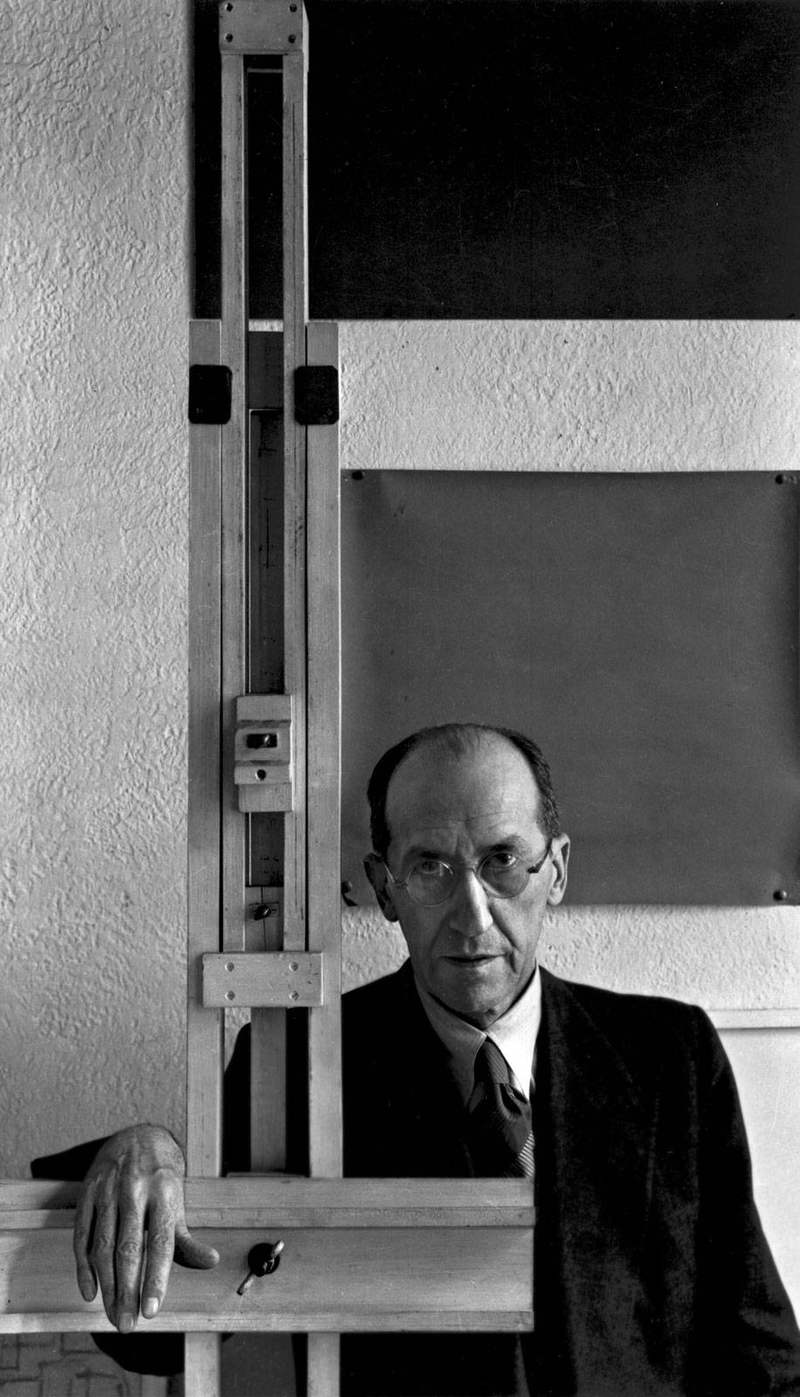
Piet mondrian (1872-1944)
In 1918, the founders of the style movement published their ambitious declaration in four languages: to create a world style, “to promote international unity in life, art and culture”. The mission of this alliance of artists is to create a new art style with a calm and harmonious spirit. They believe that condensing the elements of painting to form, colour and line can bring new life to society, and that when art is perfectly integrated with life, people no longer need it。
According to mondrian's description, style will capture “the pure creation of the human spirit ... It manifests itself in a purely aesthetic relations, in abstraction”
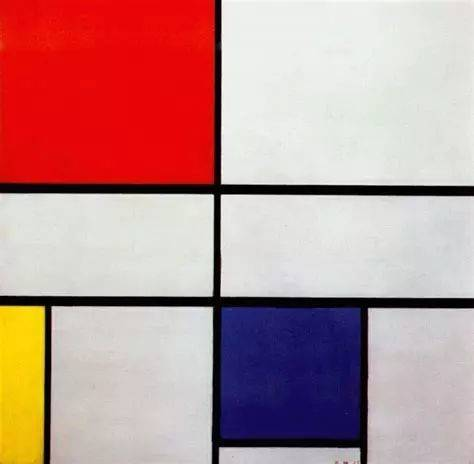
Composition c (no. 3), red and yellow blue
Composition c (no. 3), red and yellow blue is a classic mondrian. It has a pure white background. Mondrian believes that, as the basis for the construction of the work, it is general and pure. He then drew a thin grid of different fine black levels or vertical lines. That's an important detail. Mondrian wanted to convey the idea of the eternal movement of life in his work, which he believed could be achieved unwittingly by changing the width of the black line. He deduced that the more thin the line, the faster the eye “reads” its trajectory, and vice versa, the greater the width, so that he could apply it like a car pedal, which would contribute to the success of his ultimate goal: to give the painting a “dynamic balance”。
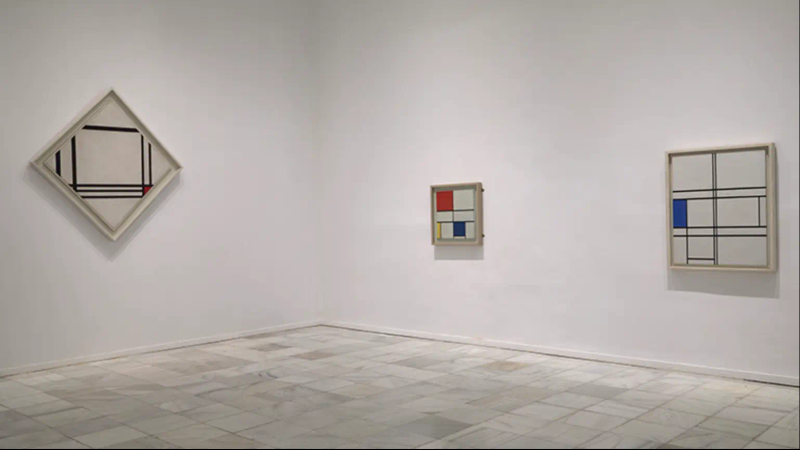
"mondrian and dutch-style" exhibition site
Balance, tension and equality are all mondrian's creations. He said: “the neo-modelism represents equality, for while there are differences between parts, it gives each of them the same value as the rest.” this is an instructive comment, which highlights the difference between mondrian's neo-modelism and the abstract art of kondinsky, malievich and tatlin. During mondrian's mature artistic career, individual elements were never mixed, and they were always self-sufficient. There is no overlapping plane or over-tone. This is because mondrian is concerned with the unity of the various elements of the relationship and has no time to take into account the romantic ideal of a traditional combination of love. He is defining a new social order。
In 1872, mondrian was born in amesford, in the central netherlands, with a father who was a puritan and head of a high-intensity primary school, where art and religion planted seeds at the beginning of his life. In 1911 he saw in paris the earlier works of the founders of stereoism, pablo picasso and george brac, who ignored the true depiction of natural objects and stressed that the physical composition of the picture was very appropriate to reveal the intrinsic nature of nature。
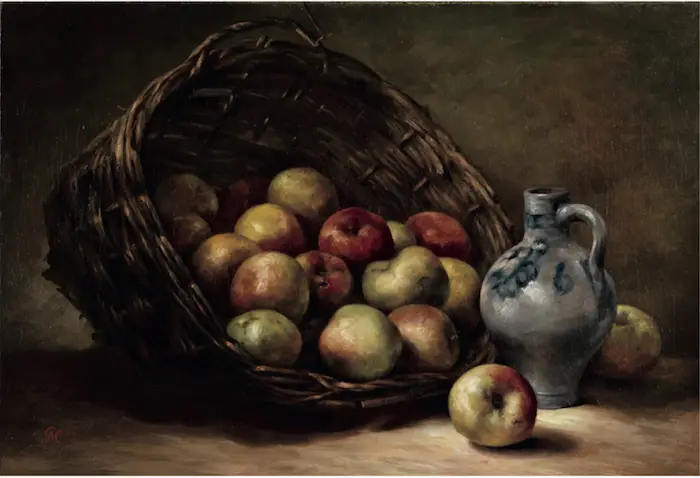
"ball and apple" 1891 kunstmuseum den haagNgterm loan of p. J. Van berg mondrian/holtzman, 2020
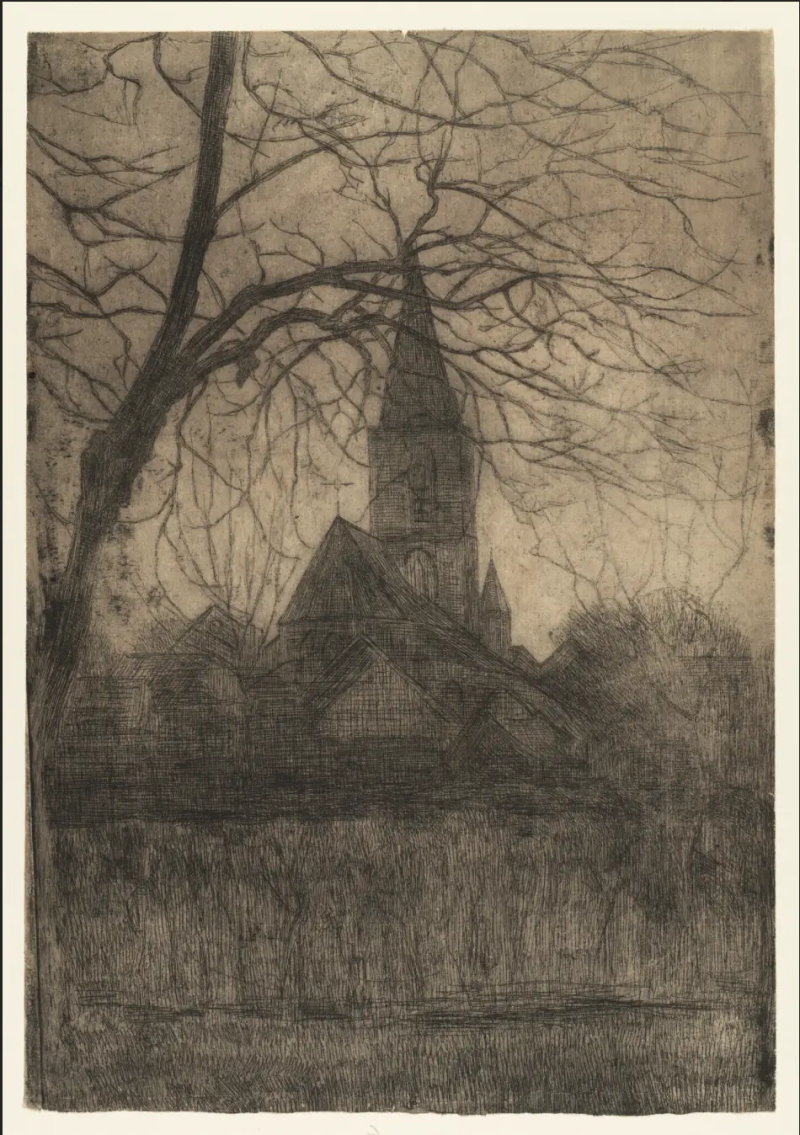
Reformed church at winterswijk 1898
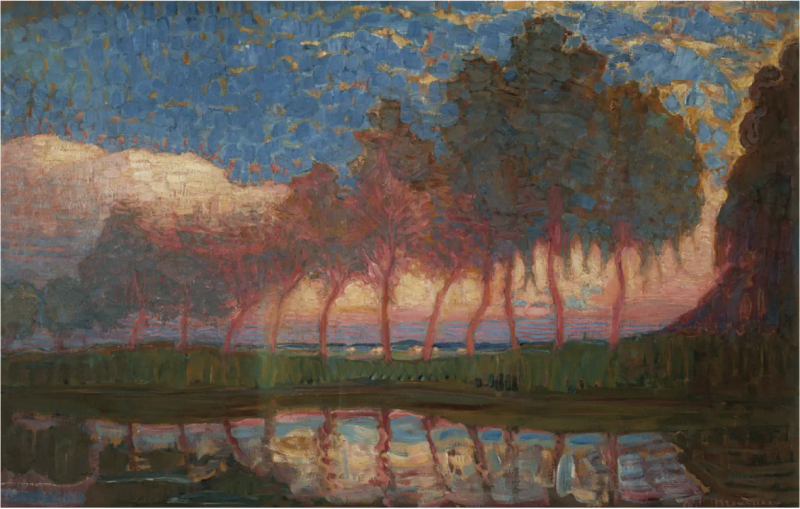
Summer day, 1908 collection musium de fundatie, zwolle and heino/wijhe, the netherlands © mondrian/holtzman, 2020
In 1913, mondrian realized that the expression “purely real” had not been fully realized. And the ultimate goal of art should be the reality of visualization and the restoration of the most fundamental structures: plane, colour, rhythm and rhythm. So he gave up stereoism。
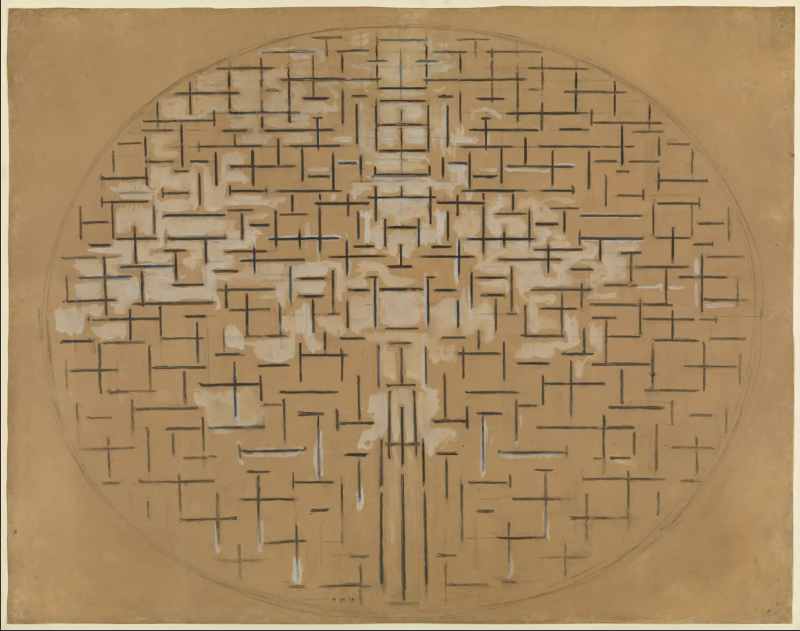
The sea and starry sky 1915/1914
A few years later, mondrian also launched a modern art movement, where neo-conformism was the most pure and abstract form of art at the time. Four paintings with the theme of a tree form an excellent series showing mondrian's path from an early master's followers to pioneering modernist artists。
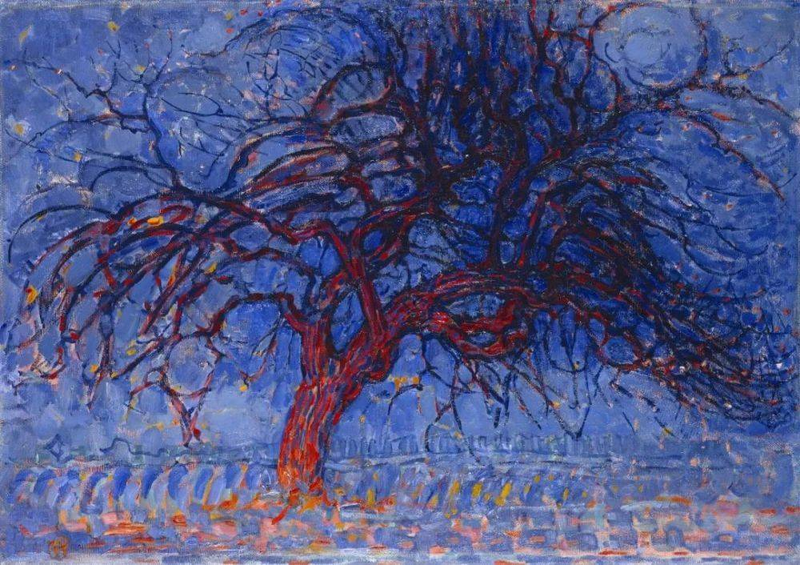
"night, red trees" (1908)
The first one is night, the red tree (1908), where the painter paints an old tree of the winter season. The painting confirmed the impact of the 17th century dutch romantic landscape artist on mondrian at that time. The performing color of the work — dark red, blue and black — shows that the artist also draws nutrients from van gogh。
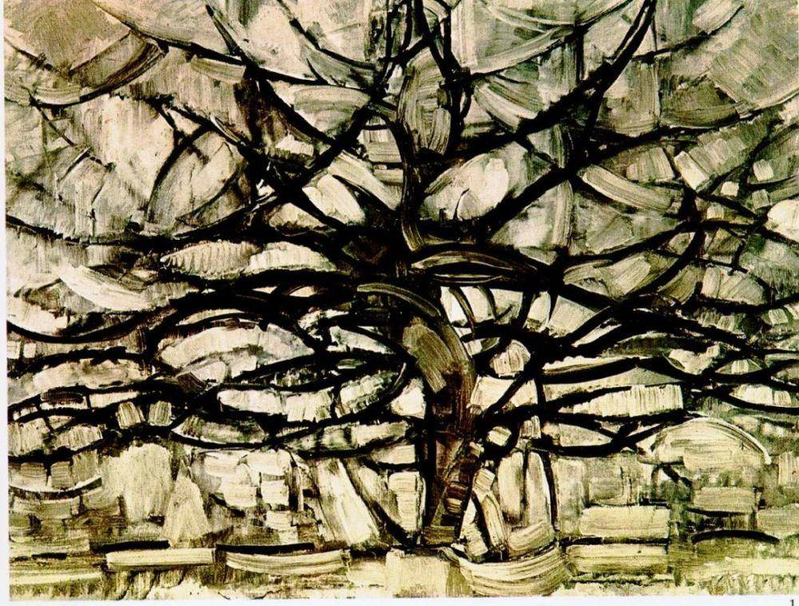
Grey tree (1912)
The grey tree (1912) is the second in this series. Mondrian's abstraction awakened and could see the effects of stereoism on him. The details of the tree have been simplified by mondrian's attempt to show a combination structure in a painting whose space depth was almost completely eliminated。
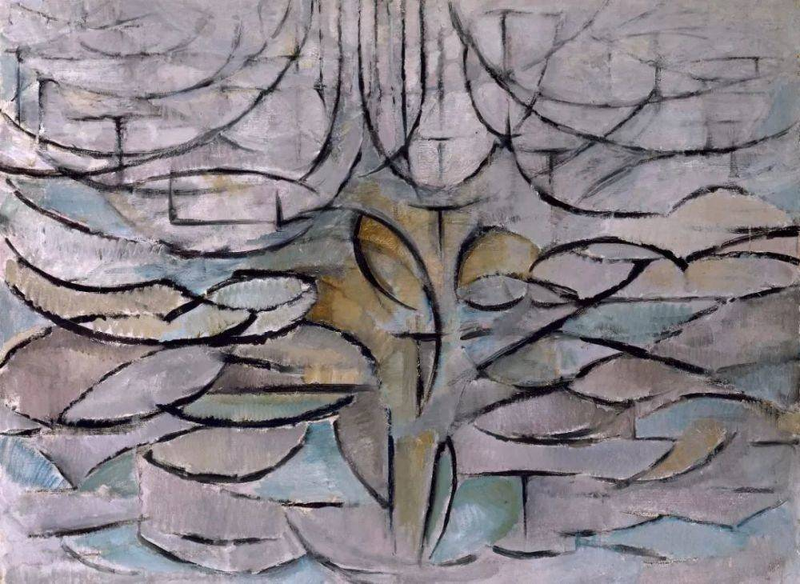
The apple tree of flowers (1912)
Next is the apple tree (1912), which shows the distance that mondrian is taking on the abstract road. Mondrian presented the branches as a series of short and thick black lines, bent with grace, some of them conflated into elliptical combinations, floating horizontally across the canvas. He added some black vertical lines, fixed the picture and gave it structure。
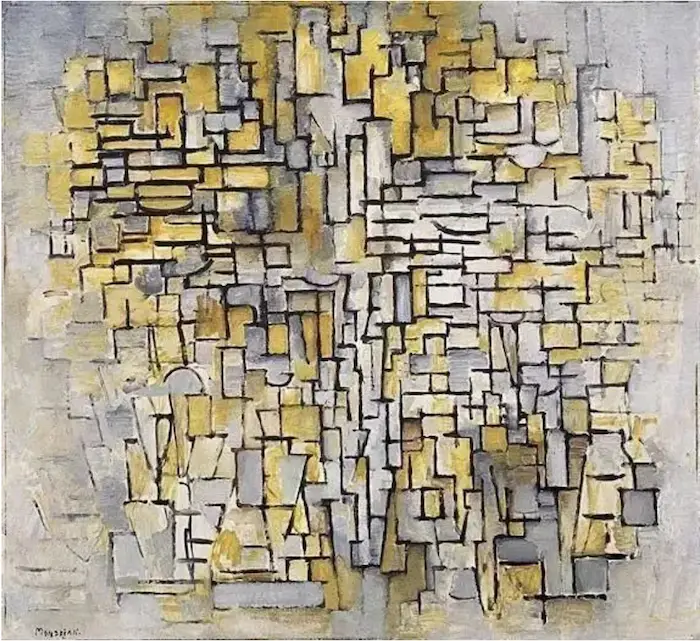
Image 2/ composition 7 (1913)
In 1913, image 2-construction 7 was born. The theme of the painting is still a tree, but it is much more abstract than any stereologist dealing with the same subject matter. Mondrian split his drawing object into a tiny, broken plane. Colours remain mild, except for the distinct yellow effort to break out of the whole pattern. This may suggest that he intended to paint the inner spirit of the painting。
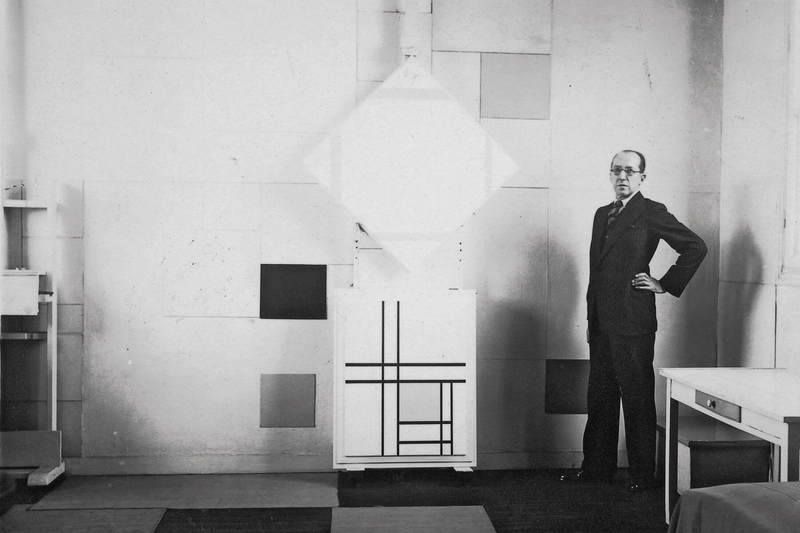
Mondrian
Mondrian's career continued, when he met the dutch artist, writer, designer and sponsor theo van dusberg (1883-1931), who co-founded a magazine in 1917, with van dusberg as editor-in-chief. They named the magazine "de stijl", meaning "style" (english sounds like "enrichment"。
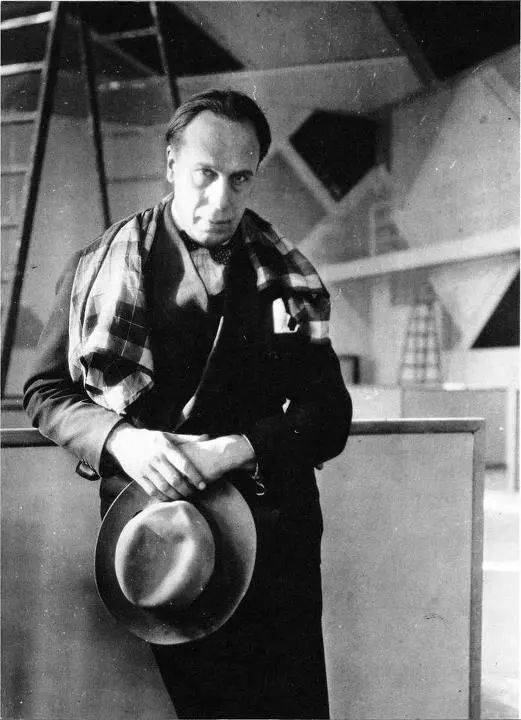
Theo van dusberg (1883-1931)
The stylers claim that natural forms will be “purely eradicated” because they are “impediments of pure artistic expression”. The only thing that really matters is to create something that can be found in the relationship between colour, space, line and form. They concluded that the concept applied to all forms of art, from architecture to product design。
This was confirmed by early participants of style, dutch furniture carpenter and architect heritte ritterfield (1888-1964). In 1923, the ritterfield, immersed in style-based aesthetics, used the original and black lines of mondrian neo-conception to make a "red blue chair" that looked like a three-dimensional mondrian painting. The backboards of the chairs were painted red and seats were charming deep blues. The yellow paint painted by the designer on the visible end of the chair makes the black wood frame more lively than ever before。
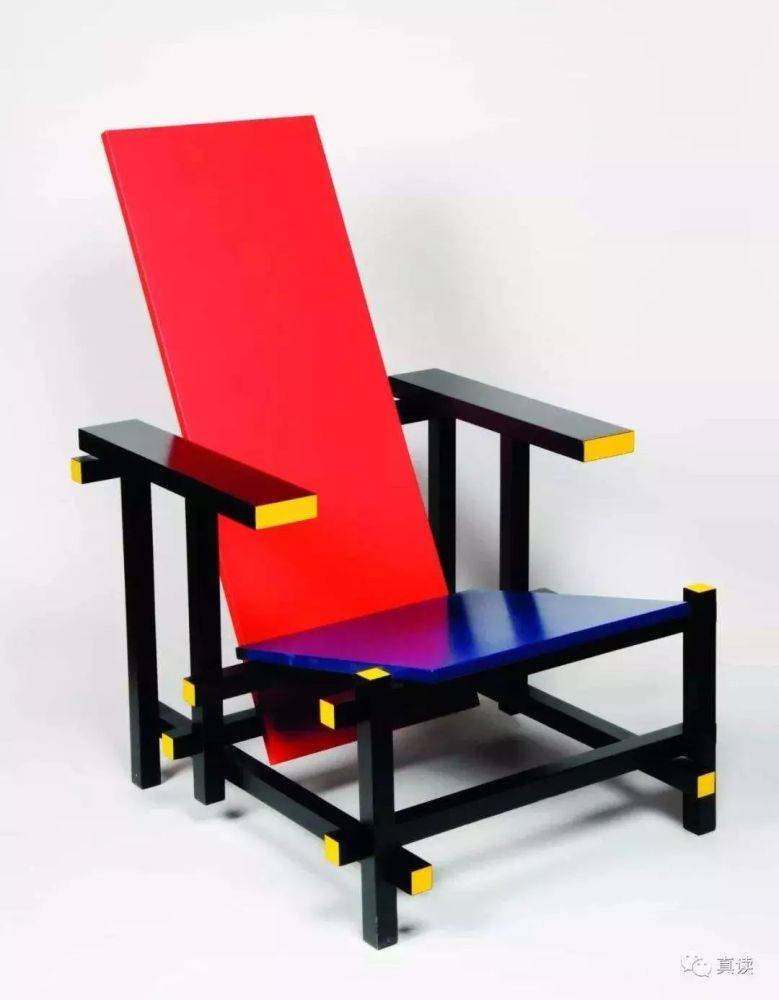
"red blue chair" by harriet ritterfield
In 1924, ritterfield designed a house based on style-style guidelines, the schroeder house in utrecht, which had been included in the unesco world heritage list. The “house of schroeder” is like a painting of a man-occupying mondrian, with a rectangular plane on its front, concrete walls painted white, and behind it floor and second floor windows, each with a coloured beam: a red and blue. Building interiors also perpetuate the features of neo-modelism or style。
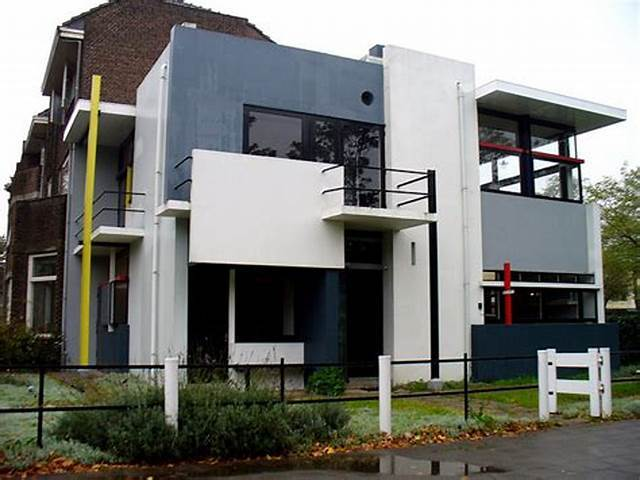
Schroeder's home view
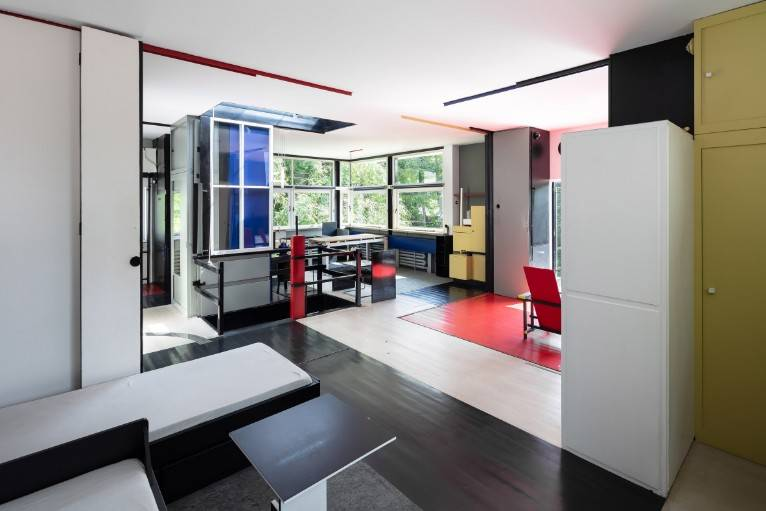
Inside schroeder's house
In the same year, under the influence of marjević's altruism and russian constitutiveism, dusberg proposed the introduction of a diagonal line in a series of “anti-constructive” drawings, which, in his view, was too rigid and monotonous, while the slopes were moving, giving life and movement to the picture. This is unacceptable to mondrian. After several arguments, the founder of the neo-modelism left the style in 1925. Perhaps the old idea of neo-stereotypeism has gone into the heart, and perhaps dusberg’s fundamentalistism was too short and too multiplicity, and in 1931, the style sent out after his death。
In 1940, mondrian moved to new york to join the american association of abstract artists, a continuation of his musical preferences for jazz, and logically became a popular theme created by mondrian during the same period, as shown by the disappearance of the black line in his image, leaving only red-blue-blue-colored and vertical lines interwoven. In 1943, the broadway jazz was an integral piece of mondrian, full of rhymes, a blurry interface, a proliferation movement of the four sides as if it were a perfect chapter from the environmental score。
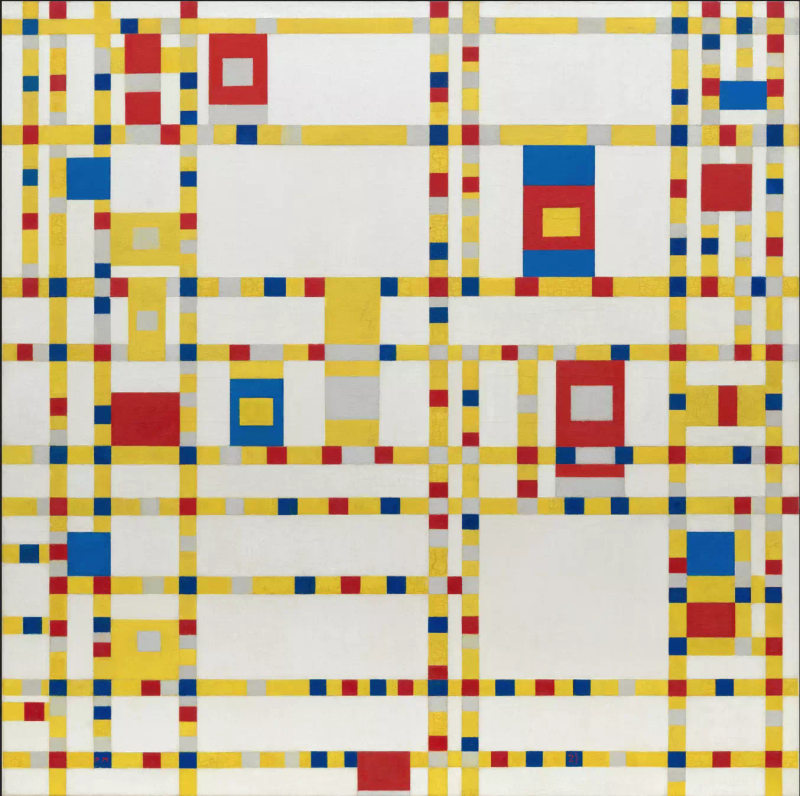
The broadway jazz
Mondrian's aesthetics extend from architecture to the design community. The french fashion designer, yves st. Roland, owned four mondrian works that he used to hang in his luxury apartment in paris. In 1965, yves st. Roland produced a cuffless wool dress decorated by the original colored and black line in mondrian's red yellow blue composition (1930). It was placed on the cover of the french magazine fashion in the autumn of 1965, which triggered a wave of mondrian decorative elements, continuing to this day with a high prevalence, as evidenced by the success of the dutch art code。
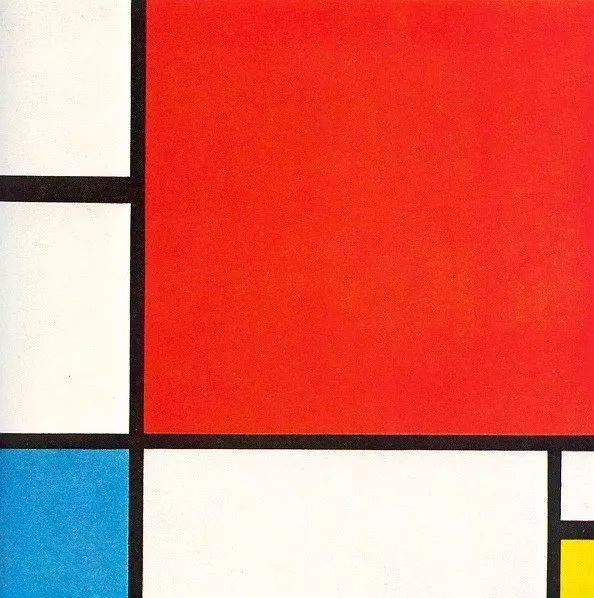
Red and yellow blue composition (1930)
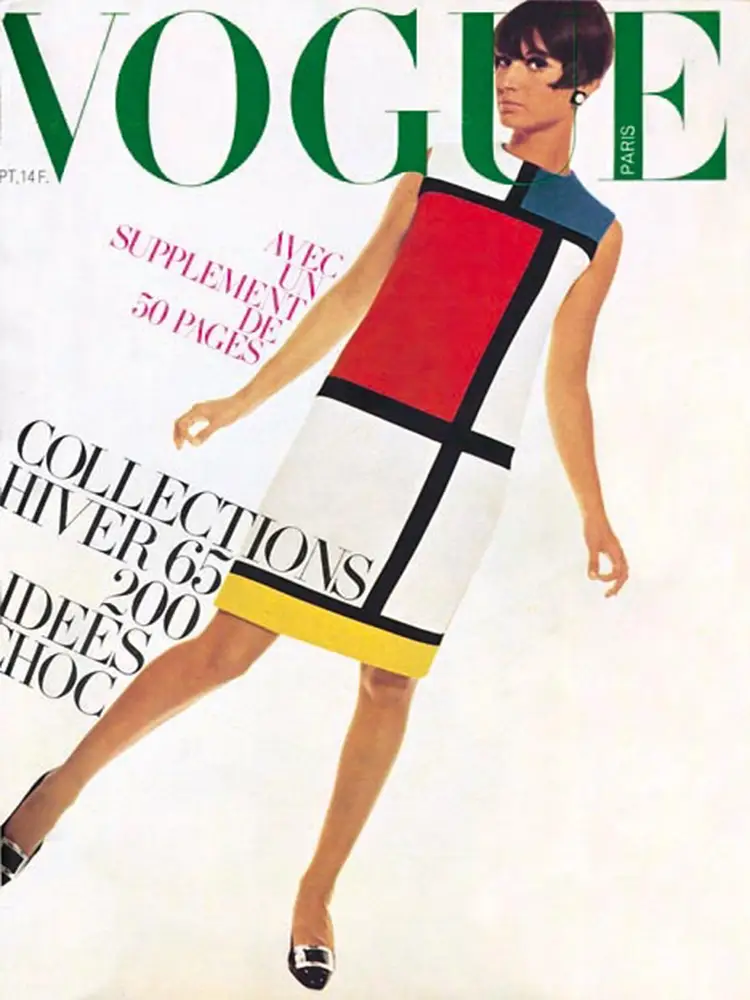
Yves st. Lorraine produced a cuffless wool dress with the original colored and black line in mondrian's red yellow blue composition on the cover of the french fashion magazine autumn 1965。
Mondrian's original philosophies are “minority is more”, and he wants his art to be indestructible, simple to extreme, careful, pure and of high moral character. He wanted to overcome “the supremacy of the individual” with a sense of harmony and unity that everyone could understand。
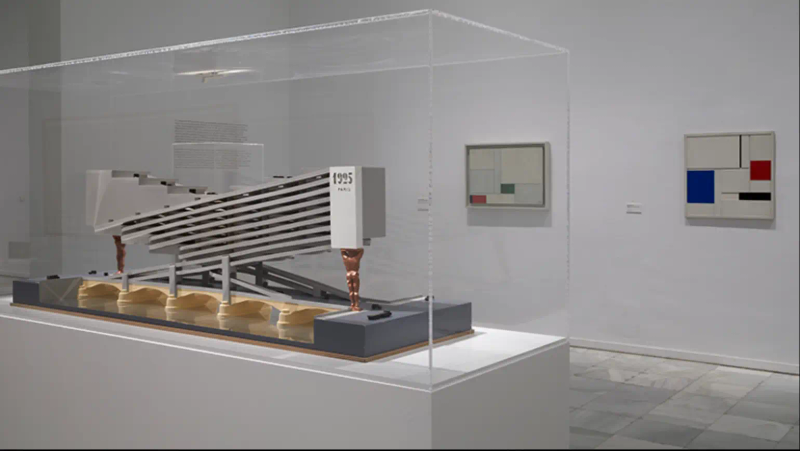
"mondrian and dutch-style" exhibition site
The exhibit will continue until 1 march 2021。
(ref. Will gombez, 150 years of modern art, amy dempsey, in art, etc.)