High-molecular materials such as plastics, rubber and synthetic fibres are widely used as modern industries develop. However, the vast majority of these organic high molecular compounds are flammable and can produce large amounts of lethal toxic gases when burned. The most effective way to address this challenge and increase the fire resistance of synthetic materials is through the inclusion of flame retardants. In response, flame retardant research and material flame retardation technologies for flame retardants have developed considerably in recent years and have become one of the major components of the world's industrial system today. This paper will describe current status applications and trends in flame retardants。
I. General development of flame retardants
As early as the nineteenth century, many flame retardants had been developed. With the expansion of the synthetic industry and the refinement of fire-retarding regulations, flame-retardants have undergone a dynamic phase of development since the 1960s. In the united states, for example, its consumption of flame retardants has increased by about 30 times since the 1960s. Japan's flame retardant industry started late, but developed faster, with consumption of flame retardants reaching 60,000 and 73,000 tons in 1980 and 1982, reaching 154,000 tons in 1996, more than tripled in 15 years. In western europe, where lack of legislation limited the development of flame-retarding technologies, the pre-1988 flame-retardant market remained stagnant. There is currently legislation in the united kingdom and germany, and consumption of flame retardants has increased rapidly in western european countries. In contrast, our flame retardants were developed relatively late, starting in the 1950s and largely stagnant in the 1960s and 1970s, with only a small number of products such as tetrabromoethane triphosphate. Only in the 1980s did it begin to develop at a rapid pace, with 85 years of production of 5kt, and now total production of flame retardants is around 100,000 tons. To date, more than 50 units and 120 varieties of flame retardants have been developed in the country. However, further improvements in the development of new products and the fact that flame retardant products have not yet formed a competitive commercial market have to some extent constrained the development of flame retardants. However, the situation is improving, and not only the ministry of public security, but also various institutions of higher education and research have devoted considerable effort to the development of flame retardants in recent years. Four main types of flame retardants, inorganic, phosphorous, bromine and chlorine are currently available。
Ii. Status study of flame retardants
A halogen flame retardant。
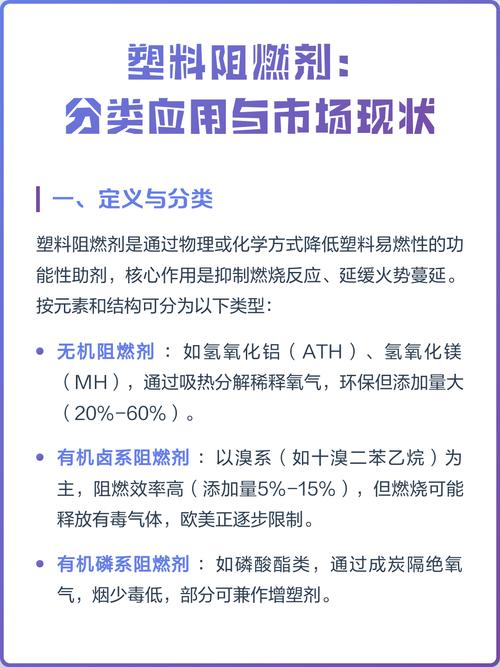
Halogen flame retardants decompose in heat to produce hydrogen halogenated hx, which acts as a flame retardant through two mechanisms, i. E. A free-base mechanism: a free-based ho that consumes the degradation of high molecules and reduces its concentration, thereby delaying or disrupting the chain reaction to combustion; a surface cover mechanism: hydrogen halogenation is an inflammable gas of greater density than air and can form a barrier on the surface of high molecular material, reducing the concentration of flammable gases, thus slowing down the rate of combustion and even extinguishing the flames. Halogen flame retardants are typically the two main categories of bromine and chlorine. Bromine flame retardants are one of the world's largest currently produced flame retardants because of their low use, good heat stability and high flame retardation efficiency, while chlorine is the same halogenated as bromine, but less efficient than bromine. Chlorine flame retardants have been replaced by bromine flame retardants over the last 20 years. Although halogen flame retardants remain one of the most important products, research on the products is still ongoing, as they release toxic smoke during combustion, causing secondary hazards, leading to research on new flame retardants - non-halogen-free flame retardants。
Two inorganic flame retardants。
Inorganic flame retardants are mainly hydrates of hydroxides and oxides of metals that are absorbed by thermal decomposition to a large amount of heat, which reduces the surface temperature of polymers, while the decomposition produces water vapours that accumulate heat and release high molecular surface gas concentrations. Inorganic flame retardants are an important component of non-halogen flame retardants, which account for a large share of the market for flame retardants, and japan's market demand in 1998 was 74,850 tons, or 43 per cent of the total demand for flame retardants. At present, the development and application of inorganic flame retardants in the country is extensive and has been developed in approximately 19 varieties, including aluminium hydrate, boron, molybdenum, inorganic phosphorus and zinc, magnesium and transitional metal oxides, the bax1091fm series developed by alcan chemical corporation of the united states and zinc super fine borate hcmThe etandz series improves the processing and mechanical performance of products while improving flame retardation and smoke abatement. It is worth mentioning that our country has a wealth of resources and scientific research, which offers great prospects for the development of our antimony flame retardants。
Triphosphorus is a flame retardant。
Phosphorus-containing compounds have many oxidizing states, and their thermal dehydration products have a strong dehydration effect, which has the effect of carbonizing the surface of the covered polymer, forming carbon membranes and acting as flame retardants. The phosphorus flame retardants also have plasticization functions, which make flame retardants non-halogenated. General phosphorous systems include inorganic phosphorous and organophosphorus systems. Inorganic phosphorous flame retardants include red phosphorus, ammonium phosphate and ammonium polyphosphate; organophosphate flame retardants include series of phosphate, phosphate, thyl phosphate and thorium salts。
Four-bulb-type ifr。
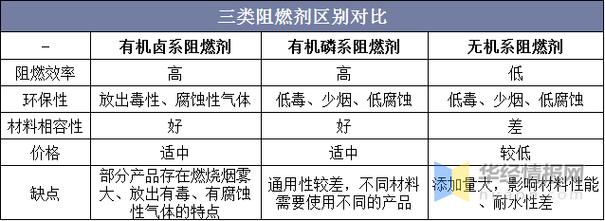
Ifr is a new flame-retarding system with phosphorus and nitrogen as effective flame retardants without halogens and without the use of antimony oxide as an accelerant. When high-polymers containing such flame retardants are heated, the surface produces a flat layer of carbon-based foam that is insulated, oxygen-insulated, smoke-free, etc. And that prevents melting droplets and thus has good flame resistance. Ifr systems typically consist of acid, carbon and gas sources. There are usually mixed and monomer sources co-located within a single molecule. In general, the ifr system is still in the development stage, and the existing ifr system generally suffers from significant additions and severe wetting, which need to be further refined. A great deal of work has been done to effectively compensate for the decline in the performance of ifr in the use of high-molecular materials, and there are great prospects for development。
Iii. Development applications for new flame retardants
Study of an alloy flame retardant. A so-called alloy flame retardant is a micro-capacitation product based on red phosphorous combined with a variety of modified aids and materials, molecular chains and interfaces, which are integrated into a molecular group and packaged with a surfactant uni-molecular layer. Alloy-type flame retardants are mainly based on the idea of metallurgy alloy treatment, are technically processed and introduced into polar cells, further dispersing loose molecular keys, which combine less powerful raw materials, so that compounds are interwoven, integrated and entangled into one group molecule. Then further shredding to the required particle size, and finally wrapping the surfactant onto the group particle surface micro-capacitation to increase compatibility with plastics, the alloy-type flame retardants initially being applied to recover flame retardants such as polyethylene, polypropylene and double polypropylene belts。
Study of flame retardants for the second paper. Most of the paper in general is flammable, and in real life a considerable number of fires are caused by paper and packaging materials. In order to eliminate the fire hazard, many countries have various fire safety regulations in place, with increasing demand for paper and paper flame retardation. There are generally two types of flame retardants: paper produced primarily as asbestos, ore cotton, fibreglass, etc., and paper products with flame retardants or impregnated coated into flame retardant products in pulp, which are now developing more rapidly. The main substances used for paper flame retardants are phosphorus flame retardants, halogen-based flame retardants, aluminum hydrate flame retardants and boron sand retardants. The phosphorus flame retardants are used in a relatively large variety of paper flame retardants, the earliest phosphorus flame retardants in the paper industry being ammonium phosphate, and currently commonly used as an important efficient flame retardant ammonium polyphosphate app developed over the years. In many phosphorous flame retardants, nitrogen-containing compounds can release nitrogen, nitrogen dioxide, ammonia, etc. From thermal insulation of the oxygen, for the purpose of flame retardation efficiency and synergy。
Iv. Trends in new flame retardants
Development of efficient flame retardants. The search for efficient flame retardants systems is a long-term goal of the population, given the existing conventional flame retardants, which are inefficient and high-volume retardants, which exacerbate the desired superior properties of the high-polymers base, increase the volume of smoke and toxic gases generated during high-polymer combustion or pyrolysis, increase the price of materials and create difficulties in the processing and recovery of flame retardants. Experts predict that a flame-retarding system with one of the following characteristics has the potential to become a promising future efficient flame-retardant: an oxidizing reaction that inhibits condensation; a catalytic flame retardation; an efficient gas-retardant function; and a protective layer capable of generating effective carbon layers or other flame retardants. The four types of systems are briefly described below. The first category consists of catalytic flame-retarding systems: primarily, compounds that dehydrate under certain conditions to produce strong acids, which promote high-polypolymer carbonation, thereby reducing the burning heat of the substance, and significantly improving the flame-retarding of the material, which is a non-toxic water vapour. The second category of aromatic sulfate, which is extremely effective for polycarbonate pc and has very little use. In the third group of condensers, free-based inhibitors are added, and surface oxidation in condensation is important for high temperature degradation of polymers. However, most antioxidants and free-base cleaners are not very effective for flame retardation at high polyoxidation fission temperature and must be designed to resist high temperature. The fourth category is efficient gas phase retardants. It was suggested that some hcl and hbr flame retardant systems released in the gas phase may be essentially physical, but there must be more effective combustion inhibitors for reaction combustion, such as radon, tetraethyl aluminum, chromium dichlorodioxin, etc., with flame retardation efficiency at least one order of magnitude higher than currently used in sbcl3. Experiments have shown that gas phase-retardants that are 1 or 2 percentage points more efficient than existing flame-retarding systems can be found。
Second, the development of the trend of non-halogenation. Halogen flame retardants have developed into the dominant product of the flame retardant market because of their low-use, fire-retarding efficiency and high adaptability, but their smoke volume and the high corrosive and often secondary hazards of hx gas released can lead to the corrosion of circuit system switches and other metal objects that simply cannot be caused by fire, as well as the hazards to human respiratory and other organs. In recent years, the united states, the united kingdom, norway, australia and others have enacted or enacted decrees to conduct incendiary toxicity experiments or restrict the use of certain products, to regulate the release of acid gases and to replace halogen flame retardants. The development of non-halogenated flame retardants has become a worldwide trend in the area of flame retardation, with new varieties such as zerogen, halfree, hydrass, magnifin, etc. Being introduced by alcoa, alcan chemical, lonza and salenr in the united states, and researched and developed by the national shandong aluminium factory, jiangsu sea research institute, dalian polytechnic university, among others, which have developed non-organic flame retardants that have a good flame retardation function, small grains, and are highly effective. Red phosphorous has grown rapidly in the trend towards non-halogenation due to superior performance and no secondary hazards, and the microcapsulation of red phosphorus developed in the united kingdom and japan has been commercialized, mainly through the amgard pc, amgard crp series of albright & wilson, united kingdom, and the rinra series in japan. For inflatable flame retardants, developed countries such as the united states and italy have commodified but not domestically, and their development products are mainly at the development stage。
Three trends in fumigation and non-toxic gasification. Smoke is an essential feature of the combustion of polymers, and 80 per cent of the deaths in fires are reported to have been caused by the asphyxiation of smoke and toxic gases from the pyrolysis and burning of substances such as building components, decorative materials, etc. To that end, strict regulatory restrictions on the volume of smoke and the concentration of toxic gases in plastic combustion have been established in all countries of the world, and fumigation and non-toxication have been identified as one of the priority studies for flame retardation technologies. Two approaches are currently used: the use of polymers with their own relatively small amounts of smoke, and the addition of anti-smoking agents, which reduce the volume of materials. The latter is simple and economical for the former. The smoke retardants currently used are mainly metal oxides and transmetal oxides. The main products are the firebracke zinc zinc bate series, the xp series, and the moly fr molyte series of climax. This has also been studied by a number of national research institutes and the development of the fzy series of composite flame retardants has been listed. However, there are many unresolved issues in current research on anti-smoking agents, and there is a lack of effective and practical anti-smoking agents for some polymer materials. In conclusion, the developed countries, such as the united states and japan, are experiencing rapid industrial development and new flame retardants are emerging. In my country, flame retardants are a nascent industry and there is a gap compared to developed countries. On the one hand, there is a lack of awareness and regulations on flame retardation and, on the other hand, our limited investment in fire protection, especially in flame retardation, which has to some extent constrained the development of flame retardation technologies。
This situation is currently improving, with a certain amount of research and results being made available not only by the fire service, but also by universities and research institutes. With the development of the national economy and the establishment and soundness of flame-retarding regulations, our market for flame retardants will be very broad。