Introduction
In the digital transformation of enterprises, the satisfaction of their employees with their well-being and the efficiency of their office at the tool level have become matters of concern to enterprises. The question of how enterprises can improve their job efficiency and staff experience through technological means has become an important issue. This paper will explore in depth, through a specific business case, the technology options for the interface between the pan-oa system and the platform of carriers, how it can be addressed through an integrated platform and how it can be used and analysed in practice。
Text
In the digital transformation process, enterprises often face problems with inter-system data isolation. The company has several branches throughout the country, with more than 1,000 employees. Staff travel approval processes were cumbersome and data were delayed to synchronize prior to the interface between the oa system and the traveler platform, resulting in inefficiencies。
1. Paths to technology realization
In order to address the above issues, the company used single-point log-in technology for the pan-oa and the traveler brigades. Through the integrated platform integrated management of all single-point log-in links within the firm, staff not only have access to both systems using a single identification document, but also help it departments to operate through integrated platforms when using single-point log-in in other systems. This improvement has streamlined user operations, enhanced system security, facilitated staff and reduced work interruptions due to forgotten passwords。
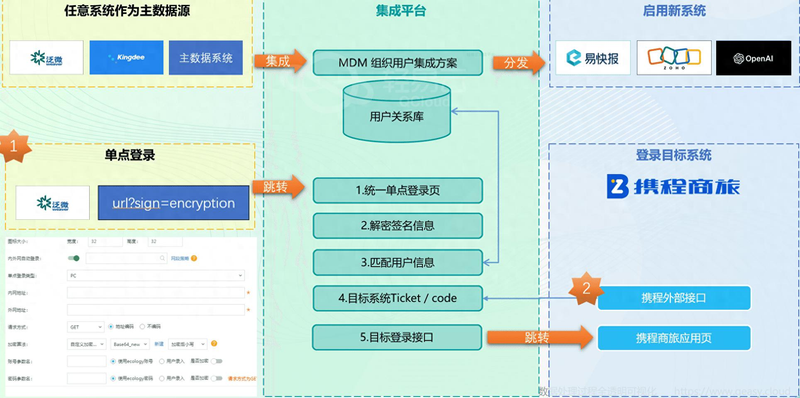
2. Panorama oa and details of the integration of the caravan
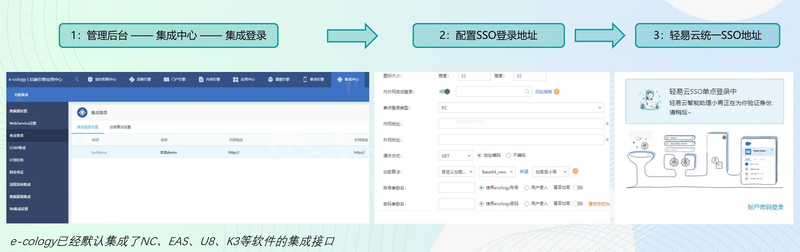
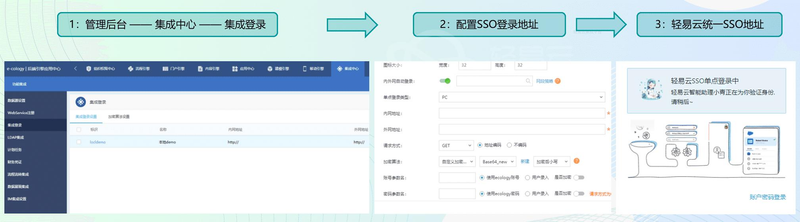
In practice, the it department of the company has configured the management backstage of the pan-oa, including the integrated login set-up of the integrated centres, the configuration of the sso log-in address, and the easy cloud integration of the sso address. This process involved close cooperation with the platform of couriers, ensuring compatibility of interfaces and data accuracy。
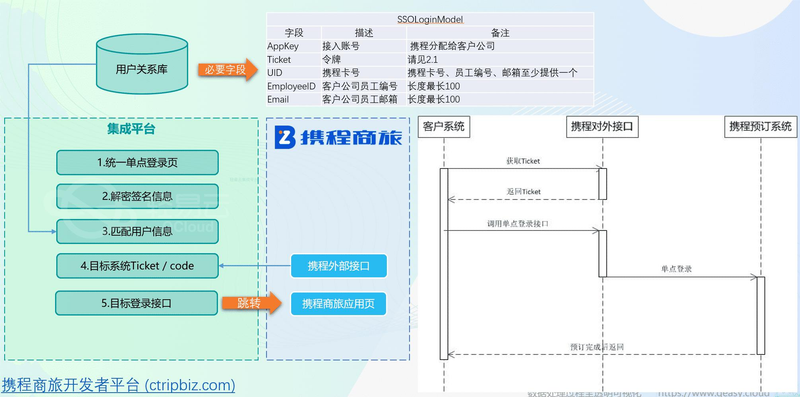
3. Analysis of the necessary fields for single point login by a traveller
The necessary fields, such as appkey, ticket, uid, employeeid and email, are key to achieving user authentication and data synchronisation during the single point log-in process. For example, when a staff member is required to travel, the system automatically matches the staff member's uid and employeeid to ensure that the traveller platform accurately identifies the staff and provides the corresponding services。
4. Closed-ring management practices for synchronized approval processes
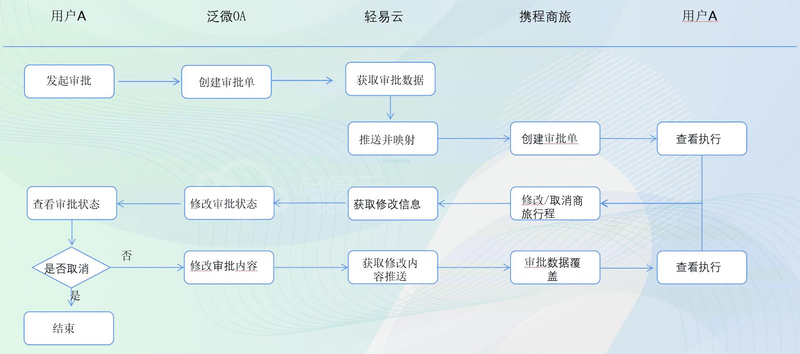
The company managed the process closed loop from the approval launch to the end of the process, through a cross-oa interface with the traveller brigade. In one specific case, staff a initiated mission approvals at the pan-oa, easily accessed approval data on cloud platforms, created approvals for travellers, staff a viewed implementation, easily sent and map changes/cancellations in business travel, and finally modified the approval status to achieve closure of the process。
5. Optimization and practice of data flow processes
It optimizes the flow of data, such as process signature opinions, synchronization of staff information, access to process observations, and approval for single creation, through the use of the portable interface and the pan-oa interface. For example, during an emergency mission, employee b was required to book air tickets and hotels immediately. Through the optimization of the data flow process, staff member b's travel requests were approved in a matter of minutes, and air travel and hotel reservation information were synchronized in real time to the traveler platform, greatly increasing the speed of emergency response。
Conclusions
The trans-oa and bridging technology programme provides an example of a digital transformation for enterprises. A seamless inter-system interface through technical means would enable enterprises not only to improve efficiency but also to ensure consistency and security of data and provide a solid foundation for future business development. This transformation involves not only integration at the technical level, but also a number of aspects, including process optimization and user experience enhancement, and is an important component of the digital transformation of enterprises. Through the above-mentioned case of multinational enterprises, we can see that, through a cross-oa interface with a traveler's tour, enterprises can achieve more efficient and secure travel approval processes, enhance staff satisfaction and speed up business decisions。