


Focus. Start with the photo
Usually, when we want to see things from a distance, whether in the back of a conference room with a ppt or in the luminous flowers on a branch, the first move is often to open a mobile phone camera hand-in-hand, to drag or click on the focal multiplier on the screen, to shoot。

Do you understand
There are two very different focal logics behind this fluid movement:
Optical focal (focal mode of mobile phones / camera)
Principle: change the focal length by physical movement of the inner lens group, thereby changing the refraction path of the light and increasing or decreasing the image of the object on the sensor。
Characteristics: images are clearly undetailed and lost, but mechanical movements slow down (hundreds of milliseconds to several seconds) to quickly capture dynamic targets。
Digital focus (default mode for normal mobile phones)
Rationale: it's actually a "crop-up" image, without really adjusting the light focus to capture images of the sensor's central area through software algorithms and force them to scale up the entire picture。
Characteristics: no mechanical movement, no delay in operation; the more the painting is damaged, the more the detail is lost, the more the magnification is multiplied, the more the painting is reduced, the more it is barely visible。
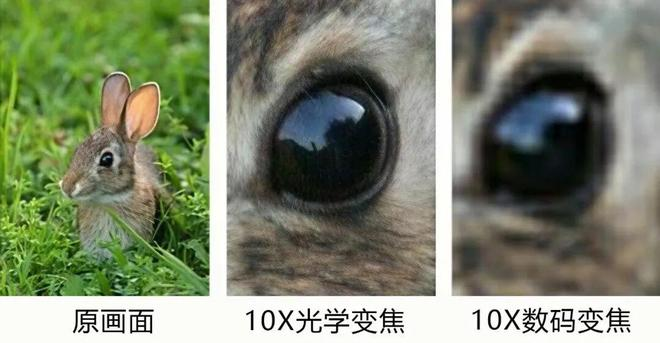
A comparison of optical and digital focals, from: web
Strictly speaking, digital focal is a kind of “false focal” — it does not change the light path, it is just tailoring and magnifying the image。
The real focus is at the core of the optic system itself. So, what's the focus
What's the focus
To understand zoom, we must seize its soul — the focal length. In the optical definition, focus length refers to the distance between the “optic centre” of the lens and the “light convergence to a clear focus”。
That sounds like a professional concept, actually learned in middle school physics. Remember the classic experiment of lens imaging in middle school physics
Taking a contour lens to the sun, moving the contour lens creates the brightest and smallest light spot on paper, which is the focus; the distance from the contorted lens's "light heart" to that focus is focal length (f)。
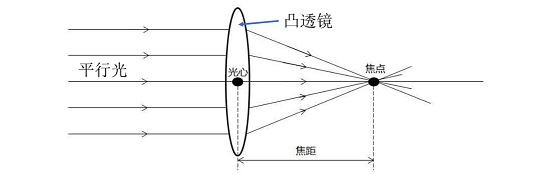
Vibration lens focus light principle, photo source: network
For an optical system with only one lens, its focal length (i. E., the ability to aggregate light) is highly correlated with the curvature of the lens。
Vibration lens focal length and curvature (heavy), video source: fine physics channel
In short, curvature refers to the degree of convulsion of the lens: the greater the curvature of a convulsor (the more the surface bends), the greater the convergence of the light, the shorter the focal length; the smaller the curvature (the more flat the surface), the smaller the convergence of the light, the longer the focal length. The curvature is zero, which means that the lens is a plane, at which point the plane lens has no ability to congregate against the light, and the light will go straight through the lens without any deviation。
The lenses of mobile phones, cameras, microscopes are complex optical systems that are combined with many lenses, a complex set of lenses that can be extrapolated by physical formulas, and ultimately equivalent to a cone lens, which can calculate the focal length of the equivalent lenses。
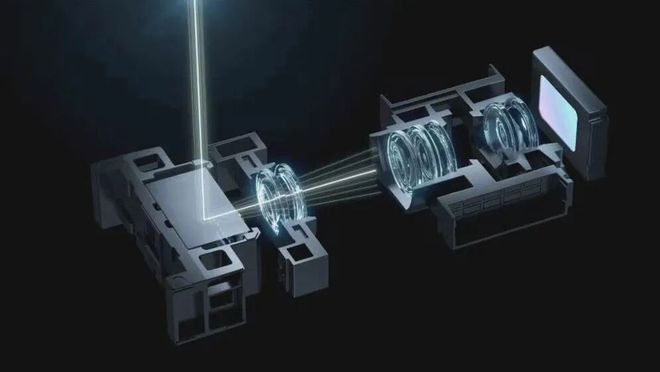
Optical focal camera structure inside the cell phone, photo source: web
Back to focus: the real focus is changing the focus。
By clarifying the concept of focal length, the definition of focal change is well understood: the essence of the focus is to dynamically change this equivalent "focal length" within the lens by adjusting the physical structure of the optical system (e. G. Mirror position, mirror curvature). When the camera multiplies from one to ten, the internal lens moves precisely, altering the light convergence of the entire lens, thereby magnifying the landscape from afar。
Focusing, exploring the challenges of the microworld
Optimal imaging can be achieved by keeping the object close to the focus — either by not changing the focal length, by approaching it or by moving away from it; or by changing the focal length by moving lenses from optical to optical focus。
In daily photographs, it gets a little more charred, perhaps unharmed and acceptable. But when we turn our eyes to the scientific microscopes, which are extremely demanding for precision and speed, these minor shortcomings become a big problem。
The focus of life addresses the problem of “distant proximity”, while at the heart of the microscope is the ability to “micro-magnify and clearly distinguish” — for example, cell structures, chip circuits — these goals are at micro- and even smaller scales。
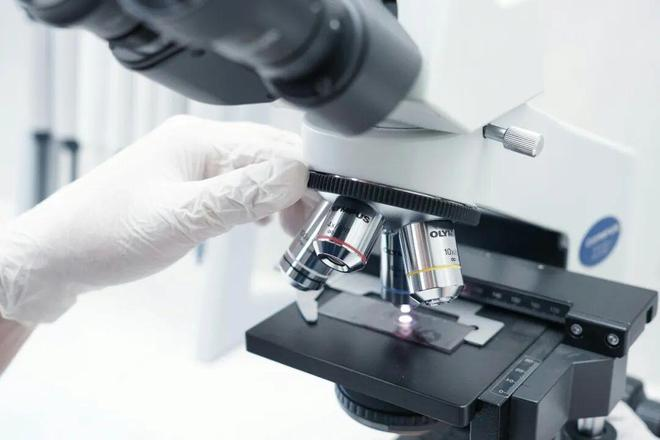
Operators switch mirrors for optical microscopes. Image source: network
The conventional optical microscopes usually achieve increased focus (e. G., four, 10, 40, 100 times) by switching lenses with different focal lengths, which is the equivalent of changing focal lenses with different focal lengths。
However, this zooming process is not as complete as a phone photo. The operator must refocus each time he or she changes the mirror, taking seconds or even ten seconds to complete, not only slow, but also vulnerable to loss of target by shaking。
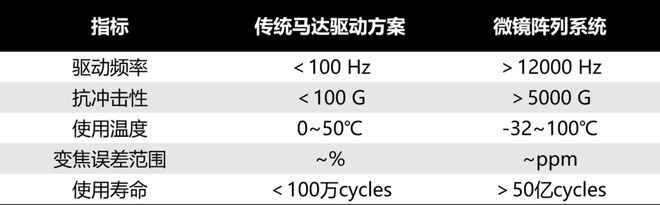
Faced with these shortcomings, scientists continue to optimise microscopes, such as auto-focusing the delivery platform with an electric drive or developing continuous multiplication microscopes that can be converted seamlessly through slide lens groups. These improvements do increase efficiency, but the core principle remains physical movement based on electric motor-driven macro-components, which have not been able to escape their original limitations and have a modulation frequency of less than 100 hz (100 in one second)。
What other way to get more focused than mechanical structures? The answer lies in the previous conclusion: focal length is also associated with lens curvature, which can be rapidly focused by changing it directly。
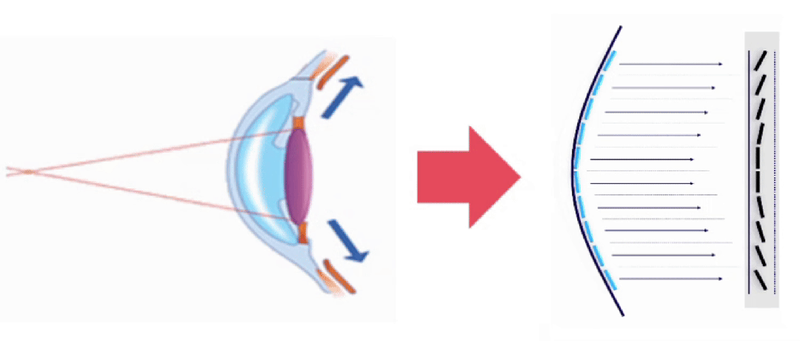
A map of the thickness of the human eye crystallines and the calculus of microscope arrays
Our eyes, they're an optical system that can quickly change the curve. Have you noticed that we don't seem to have any problems in our daily lives? If you don't have a near-sighted look, when you move your sight from a distant sky to a nearby cell phone, the crystals in your eyes change the thickness in milliseconds, achieve a seamless and precise re-focus, so that we can see clearly and almost not notice the delay in the focus。
Microscope array technology, which transposes this logic to the microscope system, achieves a faster curvature change than human eyes, with a maximum focal frequency of 12,000 hz。
Momentum focus — microscope array system
Before talking about microscope arrays, we need to add a core imaging knowledge: we've been going around mirror reflections, which are characterized by dim mirror reflections。
The diaphragm mirrors and cam lenses have the same degree of light convergence, and the core difference between the two lies in the imaging position: the cam lenses are located on both sides of the lens, while the dim mirrors are on the same side, which allows microscope arrays to be more flexiblely embedded in microscopy circuits, without disrupting the original observation structure。
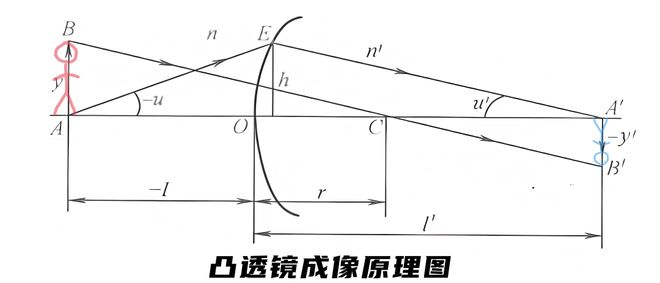
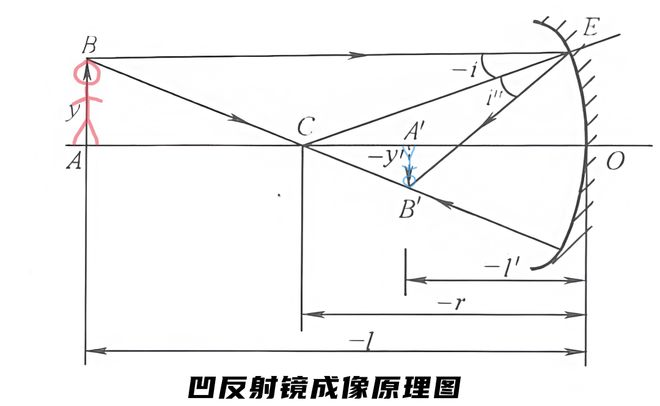
In both maps, ab is the object and a'b' is the corresponding imaging. Visible diaphragm mirrors and convection lenses allow for convergence of light, but the imaging space is distributed differently。
This is precisely the revolutionary aspect of the microscope array system, which no longer relies on the movement of mechanical components but embeds a microscope array driven by mems technology (micro-electro-mechanical system, micro-electro)。
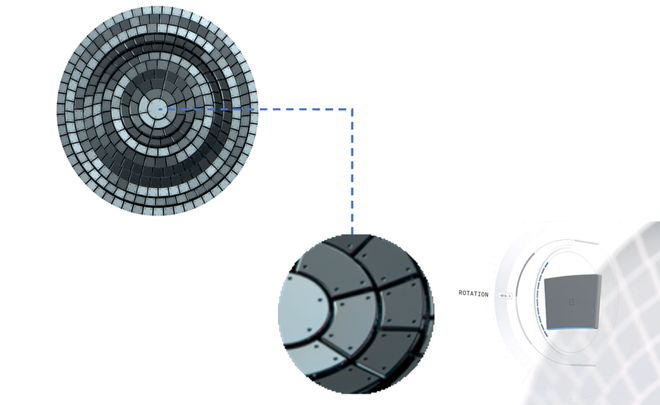
Microscope presentation of intent (face-to-face), photo source: qinhua laboratory
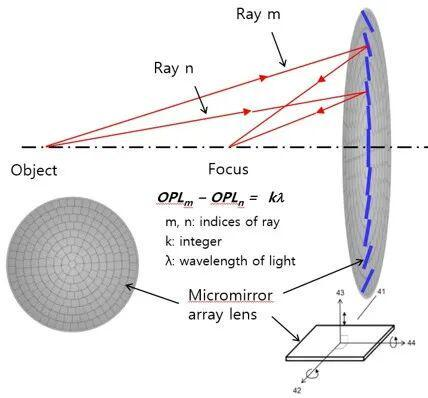
Microscope display of intent (sideview), photo source: qinhua laboratory
The core of the system is a round microscope array of about 10 mm in diameter, consisting of thousands of micro-reflectors of only 0. 1 mm x 0. 1 mm in size, each with an independent microcontroller on its back to receive a digital signal to change the rotation angle of each microscope。
The core principle for microscope arrays to achieve increased focus is to change the overall curvature of the array by co-rotation of microscopes, with the equivalent of a dent mirror at different focal lengths:

Currently, there are two types of mature products based on microscope array focals: one group of products is the superspectrum digital microsystem, which can be used independently, and another group of “superspectal bathymetric smog groups” integrated in automated equipment, which can be used to show the detection of products such as panels, crystal circles, glass panels, and pcb plates。
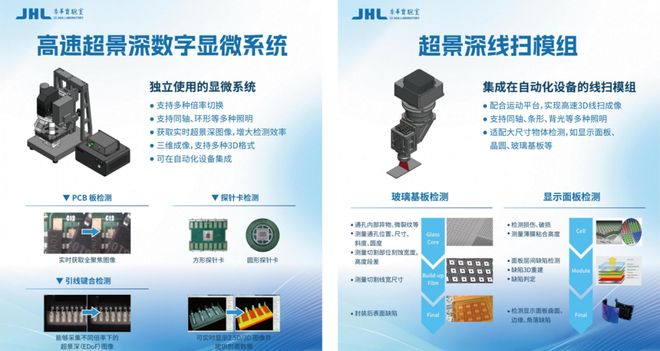
In the field of industrial detection, the screening and measurement of defects in products such as chip circuits, precision parts, etc., has always been demanding in terms of the clarity of the imaging and the speed at which it becomes focused - • the need to achieve precision observations of the micro-scale not only by focusing on the target areas, but also to ensure that the range of clear imaging meets the detection needs. In traditional tests, when we need to magnify the product to detect micro-metre-scale defects, there is always a problem: the landscape is too shallow。
The emergence of microscope arrays is just how it breaks down the pain of the industry: it provides a viable solution to the deep-seated dilemma at the technical level by allowing for a high-focal frequency, rapid completion factor switching, quick access to clear images at different levels, and a clear global image of three-dimensional objects。



