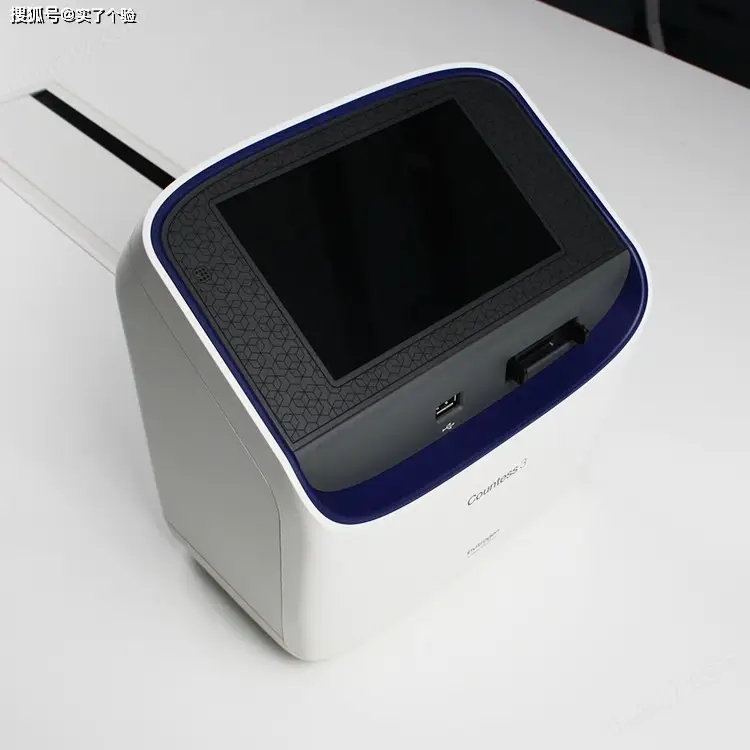
The cell meter is a laboratory device used to determine precisely the number of cells in liquid samples. It is widely applied in the fields of biology, medicine, pharmaceuticals, cell culture and clinical diagnosis. Cellmeters are automated or semi-automated to capture the number of cells in the sample and generally provide the health of the cell (e. G. Cell activity) and other parameters. Its main function is to help researchers to perform cell count tasks quickly and accurately, save time and reduce errors in manual operations。
The basic principles of a cell meter
Cell metering uses a variety of technical principles to detect and measure cells
Microscopy imaging: many of the cytometers use microscopy imaging principles to capture cell images through imaging systems (usually digital cameras or ccds), using image analysis techniques to identify and count cells. Common equipment, such as the samer fly the counts series, uses automated microscopy imaging techniques. Resistance method: this method is based on the principle of cell current detection. Cells are directed through the electrical resistance zone between batteries and are detected and counted when cells pass. This technique is usually used in simpler cell count devices, such as blood cell meters. Fluent cytology: fluent cytology is a more sophisticated technique, commonly used for high-speed counting and analysis of large numbers of cells. Through laser beams, the equipment analyses the dispersive and fluorescent signals of each cell, resulting in cell size and other characteristics (e. G. Cell size, morphology, surface markers, etc.). This approach is widely applied in the fields of immunology and cancer research. Photoscatter method: this method uses cells to measure the dispersion of light through beams. Cell size and internal structure influence the dispersion of the light, and the cell meter calculates the number and characteristics of the cell by measuring the dispersion light. Fluorescent tagging: use dyes to mark living and dead cells and use the strength and colour differences of the fluorescent signals to distinguish the type and number of cells. Many cytometers are compatible with fluorescent dyes and provide cell survival and cell state analysis。
Type of cell meter
Manual cell meter: this equipment usually requires a user to manually enter a sample, carry a film or array, and the device carries a cell count using microscopy imaging or resistance principles. The advantages are relative to the economy, but the operation is cumbersome and vulnerable to human error. Automatic cell metering: the automated cell meter allows the cell sample to be inserted directly into the instrument, which is used to perform cell count by automatically identifying and analysing cell images or resistance signals. These equipment typically handle more complex samples and provide more accurate and reliable data. Common are the summer coutes series, the bio-rad automatic cell meter, etc. Flow-cell meter: flow-cell meter is a device designed for high-speed analysis and counting. In addition to counting, it analyses other characteristics of cells, such as cell surface antigens, inner matter, etc. Multiparametric analysis applicable to a large number of cells is widely used in cytological immunology studies。
Application of cell meter
Cell biology research: cell count is a common tool in the field of cell biology to measure cell multiplication, death and division processes. Cell count is one of the basic experiments in studies such as cell culture, cell toxicity testing, drug screening, etc. Medicine and clinical: in clinical laboratories, cytometers are widely used for blood tests, such as red cells, white cells, slab counts, etc. It is also used in areas such as cancer diagnosis, immunization examinations. Drug development and screening: in the course of drug development, cytometers are used to assess the effects of drugs on cell toxicity, activity and cell proliferation. In drug-screening experiments, researchers need to assess rapidly and accurately large numbers of cell changes. Cell therapy: for stem cell therapy, gene therapy, etc., cytometers can be used to assess the survival and quantity of pre- and post-treatment cells to ensure the safety and effectiveness of the treatment process。
The strength of the cell meter
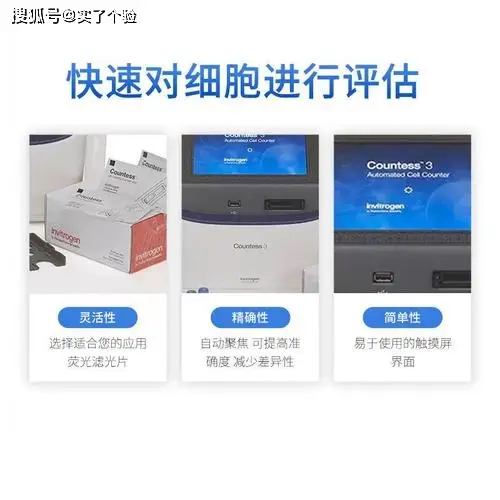
Quick and efficient: cytometers have been able to complete cell count in a short period of time, significantly increasing experimental efficiency, especially in high flux experiments. High accuracy and reliability: through automated or accurate imaging techniques, the cell meter is capable of providing accurate data on the number of cells and their state of health and reducing human error. Simplified operation: modern cytometers are equipped with user-friendly interfaces, many of which can be done through touch screens or computer software, simplifying the processes of the experimenter. Multifunctionality: many cytometers are capable not only of counting cell numbers but also of analysing other characteristics of cells, such as survival, size, morphology, etc., and providing additional experimental data. Reduction of labour intensity: automation of the cytometer can reduce the labour intensity of the experiment personnel, reduce fatigue in long-term manual counting and increase the efficiency of laboratory work。


Summary
Cell metering is an indispensable equipment in modern laboratories that provides accurate cell count and analytical results and is widely used in a variety of fields, including cell biology, clinical diagnosis and drug screening. The application of cytometers, whether in basic scientific research, clinical experiments or drug development, has greatly improved experimental efficiency and reliability of data