Everything is easy. People are great. According to public data, at the end of may 2019 there were 170,000 old and old sub-districts with a construction area of 4 billion square metres, involving hundreds of millions of people. Streeters, yarders, housekeepers, old facilities and poor living conditions are a common concern of the inhabitants of many old and old neighbourhoods and a major difficulty in urban governance. In recent years, various departments in various regions have made progress in the rehabilitation of old and old neighbourhoods, with positive results。
The retrofitting of old and old neighbourhoods is not “a hammer trade”, but rather a complex and systematic project that requires improvements in long-term governance mechanisms. In recent days, journalists of the daily rule of law have focused attention on public maintenance and maintenance of facilities, parking difficulties, installation of elevators, property and security, conducting field interviews in various old and old neighbourhoods, and launching a series of reports on the rule of law at the latitudes from today。
Lack of clarity in property relations, lack of ownership rights, unclear definition of property management and community ownership, unclear ownership of property management and municipal professional business units, resulting in unclear responsibility, authority and interest in the management and maintenance of the community, and lack of knowledge, clarity or reluctance on the part of the parties concerned to assume responsibility for the maintenance of facilities in the district
For the time being, there is a preliminary division of responsibility for the maintenance and management of facilities such as public pipelines in old and old districts, and what is needed now is a clear definition of tenure, distinguishing between the exclusive and shared parts of owners in the sub-districts, as well as between property management services in the sub-districts and the municipal professional branches, and then the respective maintenance and maintenance responsibilities in accordance with the relevant laws and regulations
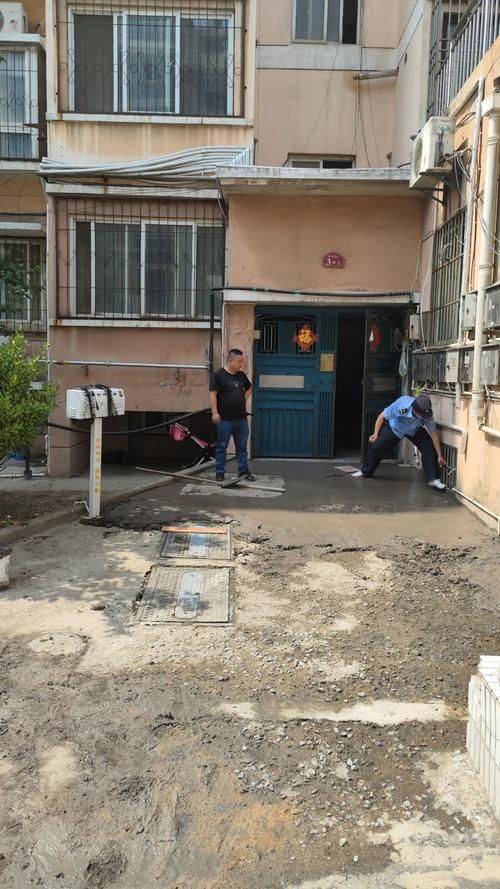
As soon as he entered the room, he stepped into the pool, which was about 10 centimetres deep, and he infiltrated the house downstairs. This is a recent disquiet about song xuan, a resident of a small district in beijing。
What bothers her even more is the leaking of the valves in front of the surface of the pipe at home, which is “closed” because of the ageing of the equipment. However, the question of who is responsible for the repair and replacement and who is responsible for the costs is a question — water claims that it is the property company, while water claims that it is the water company。
Recent interviews by journalists of the daily rule of law newspaper have found that this phenomenon is widespread. In recent years, as a large number of residential districts, including those with commercial residences, have had more years of service than the unit of construction, the public pipelines, facilities and equipment in the sub-districts have deteriorated over a long period of time, but the ownership of these pipes, facilities and equipment is not clearly linked to the responsibilities of the management subjects, resulting in different perceptions of maintenance and maintenance responsibilities among owners, property companies and water and electricity operators。
A number of experts interviewed by journalists suggested that the responsibility and cost of maintaining public lines, facilities and equipment should be determined only if the basis of ownership and the nature of the service was clearly established. The responsibility for maintaining them should be divided between the exclusive and shared parts of owners in the sub-districts, the responsibility for the management of the property in the sub-districts and the responsibility for the professional management of the municipalities, and the responsibility for maintaining and repairing them should be divided in accordance with the relevant laws and regulations, so as to address the concerns of the inhabitants of the old sub-districts。
Public facilities tend to age
Subject of maintenance liability is in doubt
On 27 december 2021, when song was at work, he received a telephone call from a small property company, who said, “your house is leaking, and the leak is particularly severe, so come quickly.”
When she returned, it became clear that, although the property had been drained, the house was still full of water and had infiltrated the house of the neighbours downstairs。
Song xin, together with the property staff, conducted a search and finally discovered the cause of the leak: a valve that had been in use for almost 20 years, was seriously ageing and was not properly closed before the water table of the pipe entering the household。
Finding the reasons does not mean that the problem is solved. Who is responsible for the maintenance, replacement and cost of the valve? According to property personnel, this is the responsibility of the water company, which is responsible only for the maintenance of facilities in the public areas of the sub-region under the property service contract。
Song xin called the water company in front of the property workers. The operator stated that, following the entry of the pipe, the company was only responsible for the maintenance and replacement of the surface and that the water pipes and the ancillary facilities were under the management of the company。
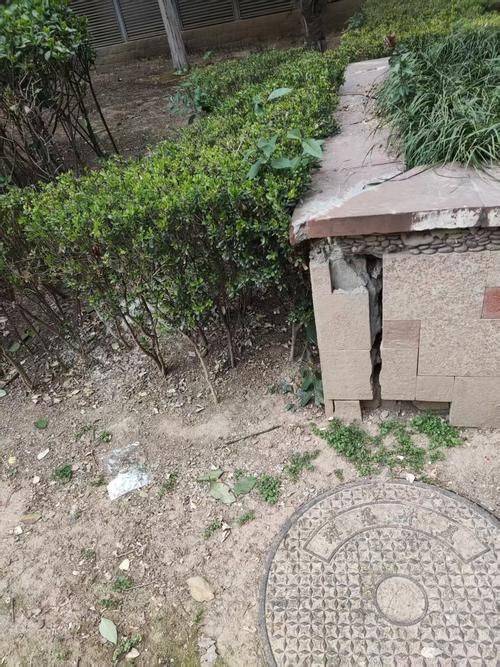
Song was curious: when he was living in his house, the pipes for water, heating, sewage, electricity, etc. In his room had been prepared in advance, and the valves were neither installed nor disposed of for repair alone. Even if he needed maintenance, the main valves of the entire building would need to be closed with the cooperation of the property company。
Who's gonna fix this valve? No answer。
During the following two weeks, song xuan and property corporation discussed several occasions about the financial losses caused by leaks in front of the valves, but there was no agreement, as liability for negligence could not be judged without establishing liability for maintenance and replacement of the valves。
Owing to the distance between the home and the unit, song xiaoping rented a house in the family home of the western sanctuary school in beijing. She observed that the district's public pipeline was more aging, but that, unlike her family's district, it had been included in the integrated rehabilitation project for the old district of beijing。
Song xin saw that, in the published retrofit project profile, the kitchen was retrofitted from the outside pipe to the surface, including entering the household pipe valve. The response of the residents of the sub-districts to the question of whether the circuit lines taken within the walls of their homes were part of the renovation was “not belonging”。
Chen zhen, associate professor at the institute of public policy of the people's university of china, believes that the electrical pipes within the walls of the residents ' homes belong to the exclusive part of the building, owned by the owner and not to the public pipeline。
In beijing, ms. Li, a resident of the northern district of the hyangyang district, was troubled by the ageing of the electrical pipeline, which made the microwave ovens and ovens she had purchased unusable。
Ms. Lee's neighborhood was developed in the late 1990s. A short while ago, ms. Lee purchased large power appliances such as microwave ovens and ovens for food heating purposes. However, as soon as the microwave is activated, the electricity will be out of the house, the meter will be opened with the key and the switch will be found。
She called the property industry, which said that it was possible that the switch capacity was too small or that the household wire was overloaded, which made it impossible to carry electricity. The property personnel also told her that the interior wire was under the responsibility of the owner. However, the electrical cables in the building are also ageing and are difficult to build. It is not a matter for the property to decide if it is to be transformed, and it requires the joint consent of the owners of the subdistricts。
Ms. Lee had no choice but to put the microwave oven and the oven in the attic。
Unknown ownership of facilities and equipment
Frequent maintenance fee disputes
There are also a number of small district owners who have been prosecuted for the public pipeline。
Zhang fong is the owner of a small district in tunzhou, beijing. She recalls that several years ago, a leak occurred in the corner of the bedroom wall on the south-east side of her house, resulting in water flooding on the interior floor and the wall. The inspection by the property company resulted from a serious leak in the main line of the building's water supply。
Zhang fong sued the property company. The court found that the property company was partially liable for the delay in dealing with leaks, which caused further damage to the owner。
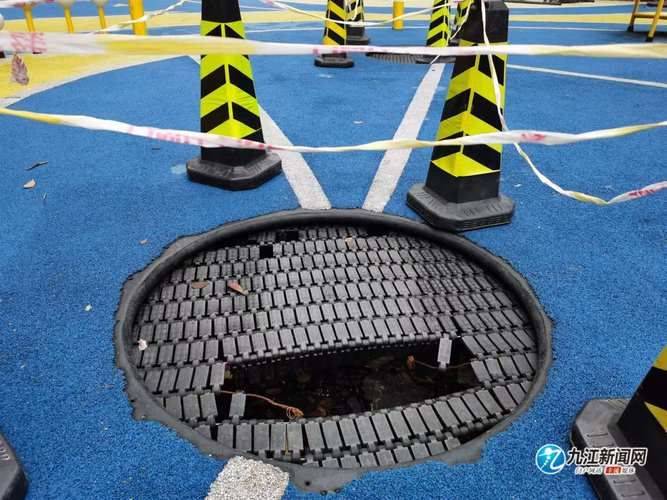
Li guang au, director of the technological group for family life, which focuses on the rehabilitation of old and old neighbourhoods, explained that under the property regulations, responsibility for maintaining the line is vested in municipal exclusive companies. The ownership of utilities covers both the exclusive utility units and the owners, generally differentiated by a meter, and the remote utility units, after-table and near-end owners。
In may 2011, the court stated in a judicial proposal addressed to the beijing municipal housing commission: “improve the law by establishing minimum obligations for property management units, clarifying their responsibilities for the maintenance of public facilities and establishing appropriate periodic maintenance inspection mechanisms. In the case of hidden works such as ground-laying pipes, consider whether special provisions are to be made and whether the lead line requires mandatory replacement at the expiry date.”
The beijing city housing commission replied that property service enterprises provided services on the basis of property service contracts. In response to the issue of the maintenance of the landfill line, since it is a hidden project, it is not realistic to require the property service enterprise to conduct regular excavation inspections and maintenance. In such cases, liability depends on whether the property service enterprise, upon receipt of a report, arrives at the site in a timely manner and is dealt with effectively, as agreed in the property service contract。
According to chen, in a small sector of construction, there is an urgent need to improve the corresponding special legal provisions, depending on the relationship between the owner-owned and the owner-owned facilities, as well as the facilities owned by professional operators and the municipal public facilities。
For example, under the property regulations, water, electricity, gas, heating, communications, cable television, etc. Should be legally responsible for the maintenance, maintenance and maintenance of related pipelines and facilities in the property management area。
According to chen, at the national level, the age of construction of residential areas, the nature of tenure, the construction technology, the legal provisions on water and electrical heating differ from those of the property regulations, and the situation is more complex when it comes to distinguishing the liability relationship between owners, property service enterprises and municipal exclusive units。
In interviews with journalists, it was noted that in recent years there have been many disputes over the failure to maintain public pipelines and facilities in the districts in a timely manner. For example, in an old district built in 1995 in the western part of beijing city, frequent flooding, severe ageing of electricity lines and frequent water spills have led to repeated complaints by residents。
“old and old” neighbourhoods generally refer to old residential buildings and ancillary facilities, including, inter alia, publicly owned and unsold housing units under the national housing reform policy, but some of the early commercial zones were also included in the “old and old areas” because of poor maintenance。
According to chen, the general situation in the old sub-districts is that of poor construction standards, poor facilities, inadequate functionality and, in particular, poor maintenance. To date, old neighbourhoods have generally exceeded the warranty period for construction units, and public pipes, facilities and equipment in the districts have deteriorated over time, leading to maintenance disputes。
“on the face of it, this is due to the absence of a specialized property management model in the sub-districts; but at the deep end, it is due to the lack of clarity of property relations, the absence of owners' rights, the lack of a definition of the exclusive and communal parts of property management, the unclear relationship between property management and municipal professional business units, which leads to a lack of responsibility, authority or interest in the maintenance of the sub-districts, and to a lack of knowledge, clarity or reluctance on the part of the parties concerned to assume responsibility for the maintenance of the sub-district's facilities.” chen zhiqiang explained。
There is an urgent need to clarify ownership rights
Financial systems to be improved
Behind the controversy over the responsibility for the maintenance of public facilities in old and old neighbourhoods is the difficult journey towards socialization and specialization of the country's housing maintenance and institutional reform of management services。
In july 1994, the state council decision on the further reform of the urban housing system was published, proposing the transformation of the institution of unit construction, allocation, maintenance and management of housing into a social, professional system. Accordingly, in the socialized market for the maintenance and management of houses, the cost of all the repairs to the houses purchased by the employees is borne by the purchasers. Upon sale, a maintenance fund should be established to maintain shared space and shared facilities。
In july 1998, the state council circular on the further deepening of the reform of the urban housing system and the acceleration of housing construction was issued, calling for the establishment of specialized maintenance funds for housing co-location, equipment and public facilities in sub-districts, based on the accelerated reform of the housing maintenance and management system, as well as for the improvement of the system of supervision of owners over the management and use of special maintenance funds。
In december 2007, the former ministry of construction and the ministry of finance jointly issued the regulation on the management of funds for specially used residential repairs and repairs, which was used to finance the maintenance of residential areas, maintenance and upgrading of common facility equipment upon expiry。
However, during a study conducted in beijing, chen zheng found that the current situation in which these policies are being implemented is that most public housing is sold in the form of a long-term welfare administration, with the responsibility for the maintenance and maintenance of houses, equipment, and housing units or the original property units. The lack of resources and lack of accountability for the maintenance and maintenance of public facilities, as a result of the lack of substantial property management in most of beijing's old and old districts, insufficient investment in maintenance and maintenance funds and difficulties in professional and social management。
In november 2014, the administration of state organs, among others, issued a joint opinion on the reform of property management and heating of residential areas for workers in the central and state institutions of the country, in which it was requested that the responsibility for the management of property maintenance in residential areas should be clarified: the owner should assume responsibility for the home's own parts and the equipment for its own facilities; the owner should share the residential area and the equipment for the common facility (including the houses used for the shared facilities) should be jointly owned by the owner or the owner concerned。
According to chen, this document is being implemented in order to make the unit responsible for the maintenance of the contractual relationship between the housing services of the former employees of the central state organs, to change the individual responsibility of the owner to the “who owns the house, who pays the fee mechanism”, to bring the right to housing into line with the “accountability” of consumption, responsibility, and to achieve the socialization and marketization principles of the management of the residential areas。
Private wang, a member of the legal policy working committee of the chinese property administration association, explained that, in the light of the relevant laws and regulations, there was a preliminary division of responsibility for the maintenance and management of facilities such as public pipelines in old and old districts, but that what needed to be done was to clarify tenure issues。
“in respect of the exclusive parts of the owner's property, such as the hidden pipes installed during the interior fit-out, maintenance and repair are the responsibility of the owner, unless expressly agreed between the owner and the property company. In the case of a public pipeline, the responsibility for its maintenance and repair rests with the relevant operational unit. According to the property regulations, water, electricity, gas, heating, communications, cable television, etc. Are legally responsible for the maintenance and maintenance of the relevant pipelines and facilities in the property management area.” private wang said。
At the same time, the act on the management of funds for the specialized maintenance of housing stipulates that maintenance and maintenance of piped and facility equipment such as water, electricity, gas, heating, communications, cable television, etc., which are legally to be borne by the relevant units, shall not be financed from funds for the specialized maintenance of housing。
Private wang cautioned that there is no clear legal provision for damage to decorations caused by the maintenance of public pipelines, which needs to be dealt with on the ground, such as liability for fault, etc., or by mutual agreement。
According to ma yunpeng, an engineer at the beijing skystar industries company, the beijing exclusive water and electrical heating unit is currently implementing comparative regulations and is taking the initiative to conduct inspections and major maintenance of the relevant pipes and facilities in small residential areas, especially heating units, which are more dangerous in the event of accidents due to the stress and temperature nature of the facility. However, when it comes to specific situations, disputes may arise, and the responsible parties may be “playing football”, where there is an impasse between owners, property companies and municipal monopolies, which is ultimately coordinated by the government。
According to chen, based on the principle of taking into account costs and responsibilities from a social perspective, the dispute over liability for the maintenance and maintenance of public facilities in old and old neighbourhoods can be resolved at two levels:
(a) distinguishing the ownership of public facilities in the sub-districts from municipal public goods and services, such as water and drainage, electricity, gas, heating, communications, cable television, etc., to professional operators, who shall receive them as soon as construction is completed, or at the stage required by the state policy, and shall assume responsibility for the maintenance and maintenance of the related lines and facilities within the residential area
Others, which are shared by the owners of the sub-districts, are shared by the owners themselves or the owners concerned, and the owners or owners decide, in accordance with the corresponding procedure, whether or not to initiate the application for special public maintenance funds, with a distinction between maintenance and maintenance, and the maintenance of day-to-day maintenance is contracted by the property enterprises, while maintenance in general and medium-sized is covered by special maintenance funds。
“the problem is that the funds for specialized maintenance were created in the early stages of the housing system reform and that for more than a decade there have been shortcomings, such as the fact that the funds for specialized maintenance have largely failed to be managed by the owner's conference itself, the system for the use of specialized maintenance funds is too costly, the transparency of the owners is inadequate, and the lack of an operational funding system. In the absence of a large number of owners and the delayed transfer of administrative authorities, it is generally difficult to achieve the desired goal of medium- and large-scale maintenance, except in a few cities such as shanghai。
Chen zheng suggested that special maintenance funds should be transferred from “political” to “civil” institutional approaches and mechanisms as soon as possible, that practical mechanisms should be established and accelerated to improve the system of special home maintenance funds in old and old neighbourhoods, and that all owners should be helped to manage themselves in accordance with the appropriate procedures, and that access to special public maintenance funds should be facilitated。
Reporter chen li