I've been driving for 20 years. That confidence could cost you tens of thousands. In the face of the technological revolution, there is no seniority, only knowledge。
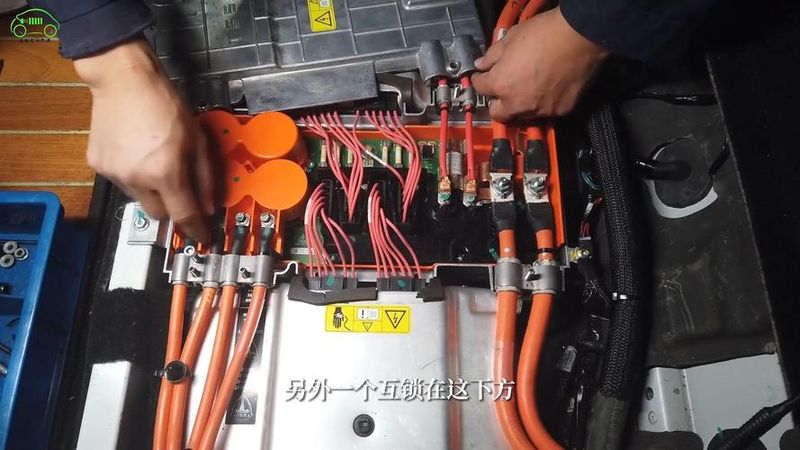
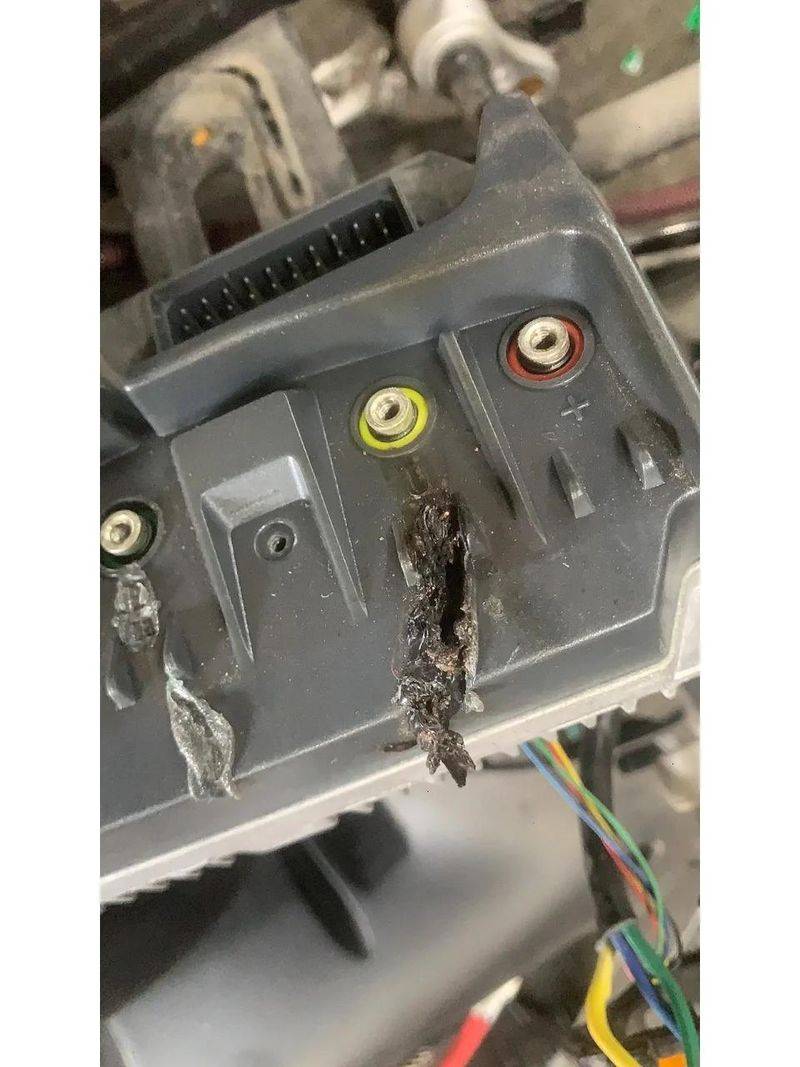
Just last month, an old driver over 20 years of age found himself in a freeway service area suddenly unable to start his own pure tram. He looked around without a trailer and was in a hurry to drive, thinking what was going on — when he used to drive a fuel truck, he could get to the repair plant with a rope. So we got a passing car to help us, and we tied it up. About 78 kilometres were towed to the point of repair for a test that went straight to the eye: the electric controller was completely burned and the repair price was nearly $40,000. The manufacturer's technicians specifically informed him that this was an artificial damage caused by a typical “misconductive” action, and that the condition of the vehicle as a whole had lapsed。
This is by no means a case. As early as 2022, when the new energy vehicle had left a few dozen kilometres behind, the owner had to drag his friends to the charging station with a rope, which had resulted in the power engine being destroyed and maintenance costs of approximately $20,000, which had likewise been denied. Why does a simple tow rope become a “damn vehicle” in the new energy age? The answer is not the operation itself, but the complete subversion at the bottom of the technology。
In the new energy world, a vast area has become a dangerous off-limit。
A failed “map of experience” — an outdated car perception
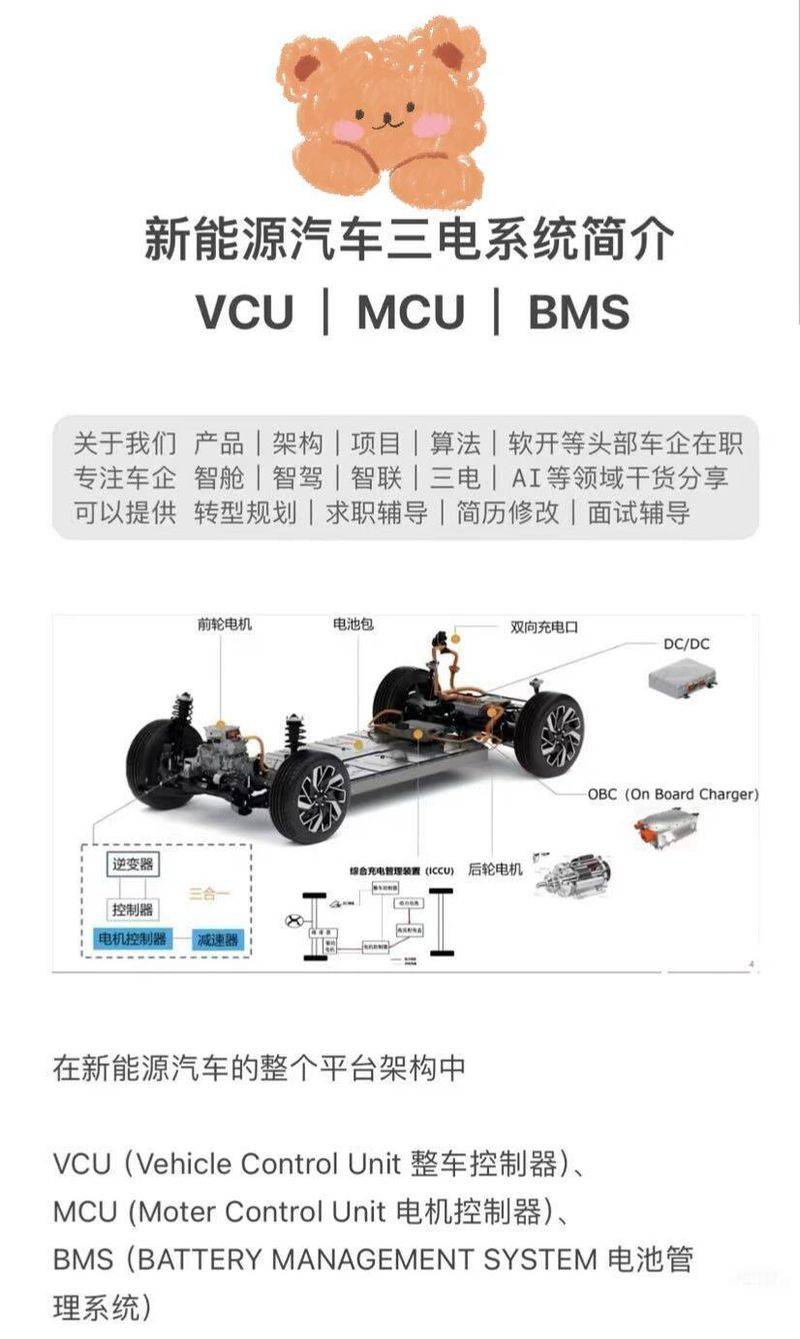
The maintenance logic of the conventional fuel trucks is centred on “serving engines” — regularly replacing oil, filtering, spark plugs, cleaning gas-saving doors and oil-jet mouths, which are natural like people need to eat and drink water on time. But the bottom structure of the new energy car has changed completely. It does not have engines in the traditional sense, and these maintenance items naturally do not exist. The core of maintenance shifted to the “triple power system” — batteries, electric appliances and electrical control units。
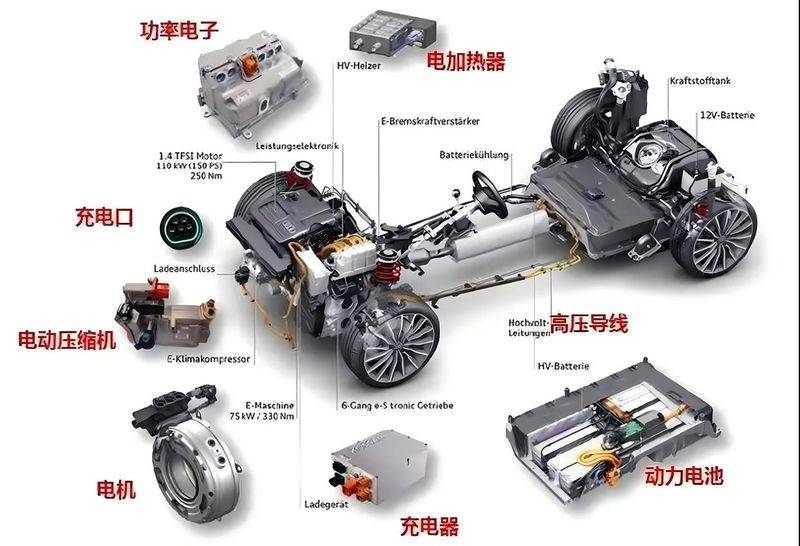
A pure electric vehicle, such as bmx3, can be maintained for a period of up to 10,000 km or 12 months with initial coverage, followed by basic maintenance every 20,000 km or 24 months. The maintenance project also changed from “replacement to primary” to “detection to primary”. Three-power system detection is the main focus: checking for battery soc health (generally 80 per cent or more), leakage of drum packs; whether the electrical power functions with a noise, whether the circuit is loose; whether the electrical control system has a malfunction code; and whether the heat dispersion is normal。
Many do not know that new energy vehicle electric-driven bridges require specialized insulation, low-conductor gear oil, which is replaced every 40,000 to 60 000 km, and must never be replaced by ordinary gear tank oil, which could trigger short circuits or even system paralysis. Similarly, while new energy vehicles have been able to significantly reduce brake wear and tear as a result of kinetic energy recovery technologies, brake fluids have to be replaced on a mandatory basis every two years or 40,000 kilometres — because of their high water intake, with more than 3 per cent of the water content significantly reducing boiling points and causing brakes to become soft or even to fail。
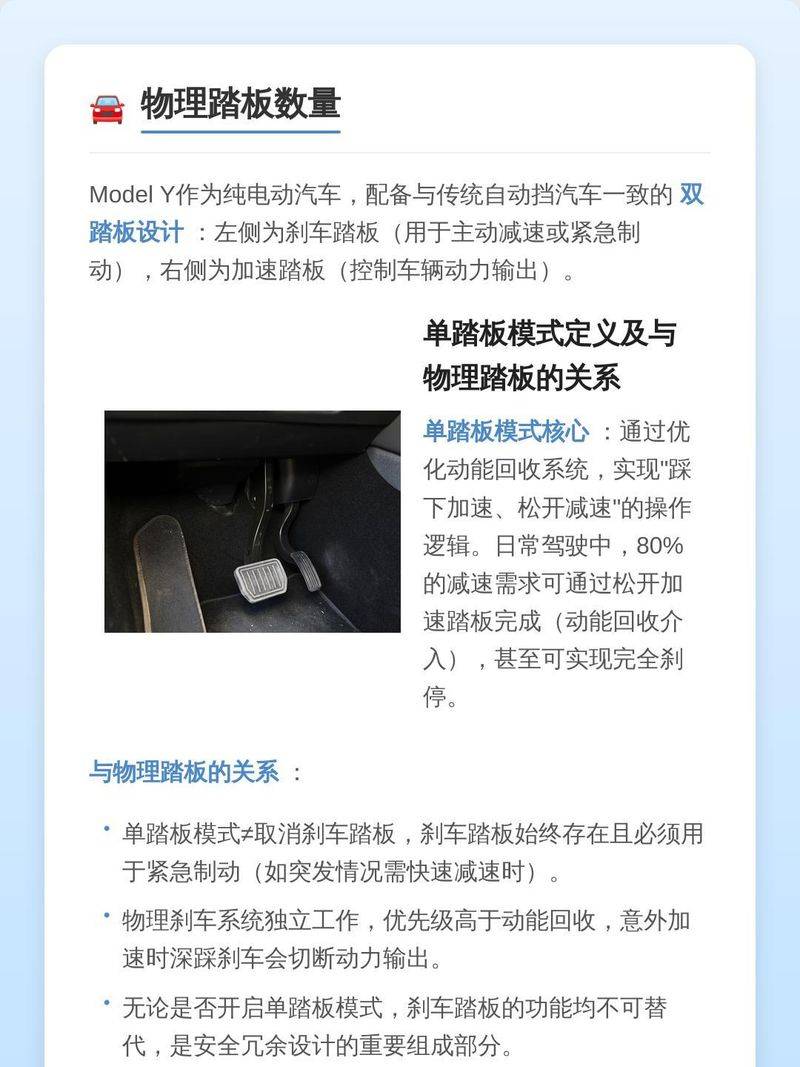
Customary conflicts in driving operations are more evident. The single pedal model is confusing many old drivers. In the conventional fuel truck, you need to switch doors and brakes more frequently, and when you release the doors, the vehicles will be used to skimming. But the single-pedal model of the new energy vehicle, which uses the energy-recycling system to achieve a pine-gate slowdown -- i don't know. When you release the accelerator pedals, the motor switch from the drive mode to the generator mode, and the power is stored in the battery using wheel rotation, a process that creates electromagnetic resistance to slow down the vehicle。
Tesla's single pedal model allows vehicles to continue in urban conditions for about 12 per cent longer, but also alters the basic driving logic. In an emergency, the old driver may instinctively untying the door and not stepping on the brakes, but the energy recovery power of the single pedal model is much smaller than that of the physical brakes, which rely entirely on the physical brake system, which has a brake distance of 35. 7 metres at 100 km/h-0. On the surface of the wet snow and snow slide, it is even recommended that the single pedal model be closed and that priority be given to the use of physical brakes in order to avoid too much energy recovery to kill the wheel。
The cognitive deviation of special scenarios is equally dangerous. In water, the traditional experience is that “just as long as there is no fire out”, but new energy vehicles, although commonly designed as an ip67 or higher-level waterproof design (capable of immersing in water for 30 minutes at a depth of 1 metre), face completely different risk logic. In accordance with the national standard, the security requirements for electric vehicles (gb 18384-2020), all listed new energy vehicles must undergo rigorous water-related tests: at least 500 metres at 20 km/h in a 100 mm deep pool. However, real heavy rains and high-speed driving can generate shock pressures equivalent to 3 metres deep。
More critically, the high-voltage systems of new energy vehicles, including electric generators, electrical control units, etc., are equipped with insulation protections, but water insulation can still destroy insulation protection in vulnerable areas such as beam interfaces, high-pressure connectors, and trigger short circuits and even high-voltage electrical accidents. In long-term use, the battery bag may have structural damage or seal ageing due to bumps in the road, minor collisions or vibrations, leading to reduced waterproofness. When vehicles are involved in water, it is possible not only to cause direct damage to the electrical core, but also to bury heat out of control and fire。
Trailer rescue is the most costly cognitive gap. There is a “buffer block” set of gear transformers and clutches between the conventional fuel engine and the wheel, which can cut the power transmission when the trailer is left blank. However, new energy vehicles, especially pure electric vehicles, motors and wheels are hard-connected through speed-retarders without a clutch to disconnect power. When the ropes are towed, the wheeling force the reverse wheel, generating “anti-electric dynamics”。
The vehicle is in a state of power outage, battery management system is not working, the passive generation of electricity is nowhere to go, and the voltage surges. The first was the igbt power module in the electric controller, which had limited resistance and which could easily be burned by a sudden high voltage surge. In serious cases, volatile currents may also reverse the flow back to the battery pack, trigger overloading, short circuits and even heat out of control to set fire. That's why a tow truck rope can take out tens of thousands of dollars of electric controllers。
Energy supplementation habits also need to be overhauled. The idea of “already charge”, “exhaust and refill” fuel vehicle age could be fatal to new energy vehicle batteries. Research by the energy research institute of the university of tsinghua has confirmed that lithium batteries are the most vulnerable to two extremes: long-term 100 per cent full power and deep discharge (less than 20 per cent). Test data from the centre for the study of battery at shanghai university of transport show that lithium batteries can be recycled within 10 to 90 per cent of the electricity, reaching about 2,000 complete cycles, while in 0 to 100 per cent, the number of cycles will be reduced to about 500 to 700, with a reduced lifetime of about 65 per cent。
The guide to the use of electric car battery, published by the china battery industry association, states that lead-acid batteries will have a useful life of about 40 per cent less than being charged within 40-80 per cent of the capacity. In laboratory tests, lithium batteries were used from 100% to 0% recharge, 50 cycles were followed by a 25% reduction in capacity; they were kept in between 20% and 80% and 300 were followed by a reduction of less than 15%。
The vacuum of responsibility — who will bear the cost of learning new knowledge
The pace of technology diffusion has gone far beyond the pace of building user education systems. Current users ' access to the knowledge of new energy vehicles is largely based on self-learning or reputational dissemination by car owners, which is seriously lacking in systems and authority. The cost of learning is to a large extent borne by the users themselves, which should be a shared responsibility。
There are clear limits to the responsibility of the car companies. Often, the education of the marketing chain is not sufficiently deep, and many salesmen themselves are half-aware about technical details. The use of hundreds of pages of sophisticated and specialized terminology, although detailed, discourages ordinary cars. Post-sales training focuses more on the professional upgrading of maintenance technicians than on general-purpose science education. While some brands have started to provide digital car owners ' guides or regular knowledge delivery, coverage and systems still need to be improved。
The lag in driving education is systemic. The current driver training programme, which is still based on fuel vehicles, does not involve the specific knowledge of new energy vehicles — high-voltage system security, special driving patterns, correct charging habits, new emergency response protocols — which are almost zero in driving licence examinations. As a result, a large number of new and old drivers, with their fuel car age “driving licences”, are driving new energy vehicles with completely different structures and are unaware of the risks hidden therein。
The role of government and industry also needs to be repositioned. Will the pace of updating regulatory standards keep pace with technological developments? Rescue operating protocols, instructions on the use of public charging facilities and standards for user safety education content need to be promoted jointly by regulators and industry associations. The mandatory national standard, the electric automobile safety requirements (gb 18384-2020), while setting out safety performance requirements for vehicles, still lacks adequate regulation of soft content such as user education, operating regulations, etc。
Society as a whole has developed a strange cognitive fault: vehicle technology has evolved to the new energy age, but user knowledge systems, the content of driving education, standards of rescue services and even insurance rules have remained in the fuel car age. The immediate consequence of this fault is that old drivers, with their proven experience in the past, are paying the price of real money and silver in the face of today's new technologies。
Reconstructing knowledge systems — compulsory course for new energy vehicle owners
Proactive updating of the knowledge base is key to responding to technological change. The owners of the new era need to establish a completely new knowledge framework, rather than simply migrating fuel vehicle experience. This requires the construction of four core knowledge modules:
First, the “triple power” foundational awareness must be established. You need to understand the type of battery, recharge properties, life-impact factors - lithium batteries are afraid of heat, overloading and long-term full-charge storage; the mechanics of the power plant differ from the driving mode; and the central role of the electrical control system in the whole vehicle. This is no longer “driver needs to know”, but “driver has to know”, because the triple power system is the “heart” of the new energy truck。
Secondly, the safety and efficiency of charging are essential everyday skills. Management of safety codes for installation of domestic charge stakes, differences in usage processes for public quick and slow charge, charge status identification methods, charging strategy planning for long journeys. Learn to use charging stakes properly, not just as simple as plugs - know that fast but hurt batteries can be filled as slow; know that the optimal charge range for batteries is 20-80 per cent, not always full; and know the precautions for charging in different temperature environments。
Third, smart functionality and data privacy management have become new topics. Understanding the limits of the capabilities of aas - the limits of acc self-adaptation cruises, aeb automatic emergency brakes, etc. - and the circumstances under which they may fail, rather than be blindly dependent. At the same time, attention is being paid to data collection and privacy protection in connection with the vehicle network function, learning to manage the settings in the system and to determine how their data are collected, stored and used。
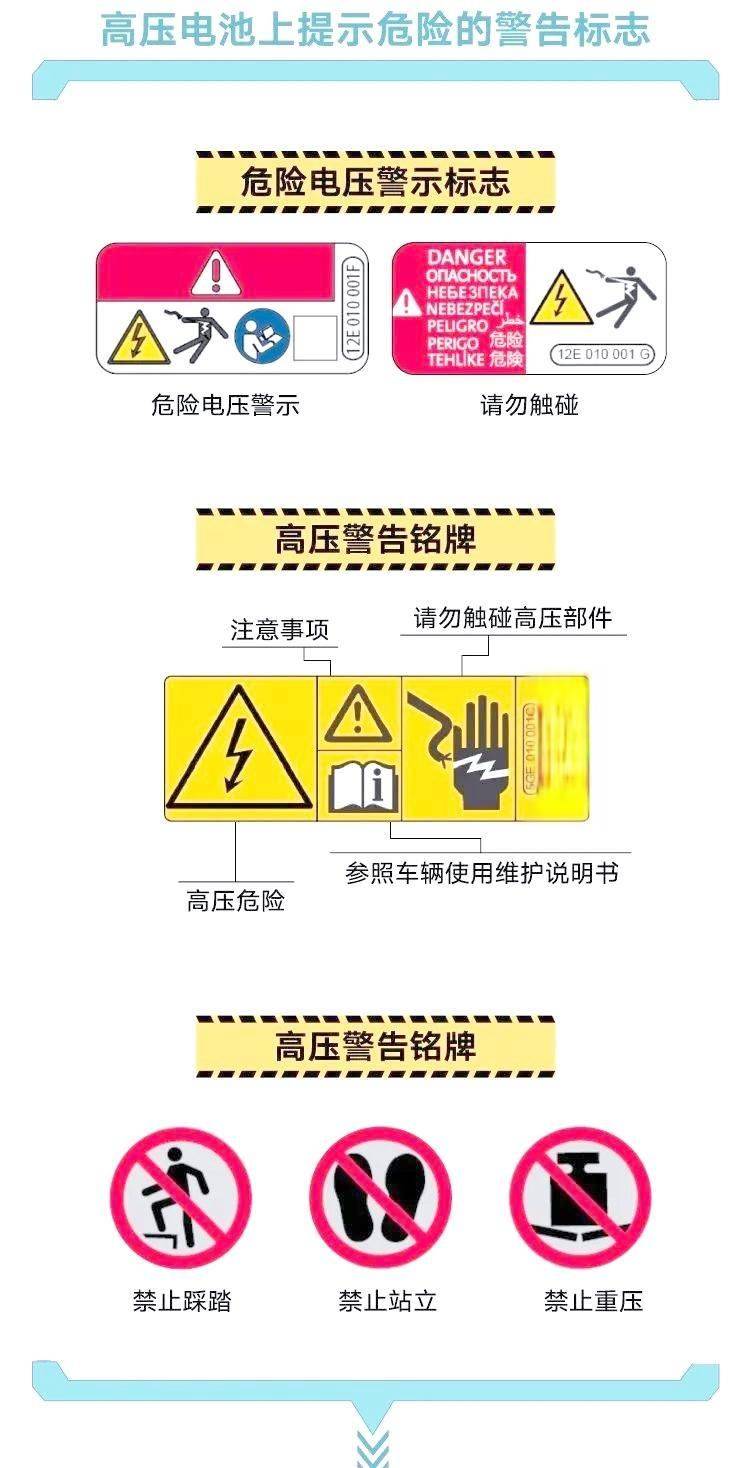
Fourthly, emergency response requires learning from entirely new principles. Identification of accident warning signs for high-pressure systems, understanding of primary emergency response care in the event of an accident - how to secure power outages, how to determine whether there is a risk of high-pressure leakage, and how to properly seek help. The rescue requirements that are unique to new energy vehicles: the wheel must be removed from the ground, with no tractor mode or non-use, just like a flat-bed trailer. All forms of ground-to-ground tugs are prohibited because of the serious damage to central power differentials or to front- and back-to-back electric appliances caused by the difference in rotation speed and unequal stress。
Knowledge acquisition requires a multi-dimensional network of channels. Official channels include app, official web technology files, and regularly distributed electronic guides; professional channels cover vertical media, technical analysis by scientific institutions; community channels, such as genuine carowner communities, experience-sharing provided by clubs; and practical channels, such as personal mapping of vehicle functions and participation in off-line training activities organized by brands. The different channels confirm and complement each other in order to develop a complete and reliable knowledge system。
From drivers to travel managers
In the face of the technological revolution, the glory of past experience is likely to become today's cognitive shackles. The old driver, who had driven hundreds of thousands of kilometres without accidents, could have lost tens of thousands of dollars because of a tow rope; the old technician, who was familiar with all engine failure, might have been overwhelmed by the pressure system。
In the new energy age, driving is no longer just an operational skill, but an integrated capability that requires continuous learning to manage complex systems. You need to manage not only the vehicle itself, but also the energy supply network, the data security system, the intelligent function boundaries. You're responsible not only for mechanical operations, but also for high voltage electrical security, battery health, privacy protection。
This requires that society as a whole work together to bridge the cognitive divide. Motor companies should provide more systematic user education, schools need to update the content of training courses, regulators need to promote improved standards, and media and science institutions should strengthen knowledge dissemination. But the most important thing is to upgrade each car owner's own perception — to realize that “i can drive” is not the same as “i know this car”, to recognize that technological overlap means that knowledge also needs it。
Embracing change and updating knowledge is responsible both for the protection of their property and for the safety of others. The lessons from the tens of thousands of dollars in maintenance costs tell us that, in the new energy age, the most dangerous is not the technology itself, but the old map that guides the new world。
Are you the owner of the new energy car? What's the biggest "cognitive pit" you've stepped on since the oil truck went to the tram