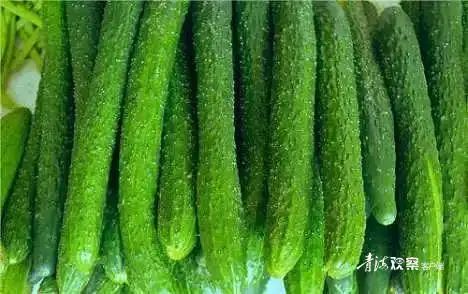
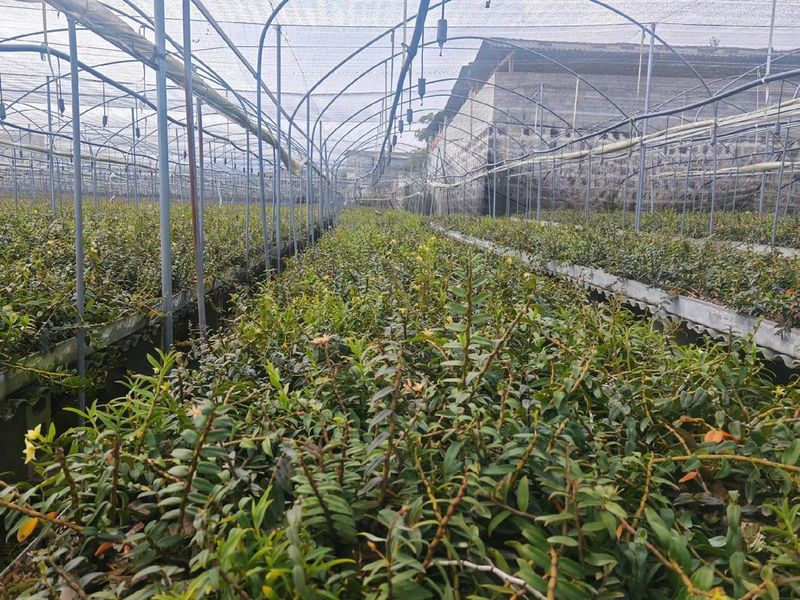
The production of cucumbers in winter hothouses can lead to non-seasonal cultivation, staggered cucumber planting seasons and supplying winter and spring markets, with the desired economic benefits for growers. Cucumbers grow in winter in greenhouses. Life spans a period of low temperatures and poor light in a year. Thus, sound management and scientific planting techniques have become key to high-yield quality. Let's find out how the cucumber is grown and managed

Autumn cucumber cultivation methods
I. Choosing good castes
Depending on the long-term climatic characteristics of the autumn cucumbers, varieties that are resistant to heat, flood, disease, high-yielding and strong-growing, such as jin-yo 1, and white cucumber, should be chosen. Local varieties suitable for autumn cultivation can also be selected。
Ii. To sow in due course and grow seedlings
It is possible to grow in a live manner and to grow. In general, according to the cucumber cultivation season in the region, seedlings are given in due course, with the first immersion of seedlings, i. E., 10-20 minutes of immersion with warm water at about 55°c, which is then reduced to 28°c ~ 30°c – 5-6 hours of immersion, at 28°c, which is normally available for 15 hours。
Shrimp period
Live broadcasts can be broadcast on-demand, with repenetrated membranes followed by perforation of approximately 50 x 27 to 40 cm, with 2 to 3 seeds per lavender, with 1 to 2 cm thickness and permeable water. The temperature control of the seed season must be secured. The cucumber fertility period requires a certain difference in temperature between day and night. Temperatures of 25°c ~ 30°c during the day and 13°c ~ 18°c during the night contribute to the suppression of the growing stock and the prevention of the falling fruit. The usual cucumber planting period was in mid-july and late august, so that after the flowering period in mid-august, the temperature differentials between day and night increased, contributing to the growth and high productivity of the cucumber。
Iii. Autumn cucumbers
A choice should be made to grow in sandy soil, which is fertile, fertile, water-protected and easily drained. Due to their shallow roots, weak absorptive capacity, rapid production and high results, the field is established to apply sufficient base fat。
The soil should normally be moderately ploughed in a timely manner after the harvest of the front crop, and the soil must be luminous, based on decomposed pigring fattening, with 2500 to 3,000 kg of acre. It is grown as a well-drained, small, high, 7 to 10 metres long, 1. 3 to 1. 4 metres long, 70 to 75 centimetres wide, 10 to 12 centimetres tall, 60 to 65 centimetres wide, and double-line cultivation. If the diaphragm is covered, disease prevention and flood control are better。
Iv. Field management
In accordance with the characteristics of the cucumber's different reproductive periods, various measures of fertilization, water irrigation and chinese farming should be adopted in a timely manner to regulate the promotion and control of a balanced development of nutritional production and reproductive growth, with a view to long-term growth in order to achieve high yields。
1. Fertilizer management and chinese farming:
In the early stages of seeding and transplantation, emphasis is placed on water management to ensure seeding or survival. The time frame, the time frame, the time frame, the time frame, the time frame, the time frame, the time frame, the time frame, the time frame, the time frame, the time frame, the time frame, the time frame, the time frame, the time frame, the time frame, the time frame, the time frame, the time frame, the time frame, the time frame, the time frame, the time frame, the time frame, the time frame, the time frame, the time frame, the time frame, the time frame, the time frame, the time frame, the time frame, the time frame, the time frame, the time frame, the time frame, the time frame, the time frame, the time frame, the time frame, the time frame, the time frame, and the time frame, the time frame, the time frame, the time frame, the time frame, the time frame, the time frame, and the time frame, and the time frame, the time frame, the time frame, and the time frame, the time frame, and the time frame, the time frame, the time frame, the time frame, the time frame, the time frame, the time frame, the time for discrepancies should be detected in a timely manner to ensure full seedling. After seeding, 15-20 kg of nitrogen fertilizer per acre
In the case of chicken seasons and flowering results, 20 to 25 kg of phosphate per acre are re-applied, noting that one harvest should be followed up with the application of 0. 1 to 0. 2% potassium phosphate or compound fertilizers. In addition to fertilization, care must be taken to increase water consumption. Before and after the harvest of the root melons, water should be controlled, combined with grass-cutting and shallow farming, with attention to drainage and flood prevention. Water is usually poured every three to four days into the guacamole period, which reduces the number of times。
2. A set, a set of chickens and a whole branch:
The frame is carried out after the start of the chicken-smuggling, with a frame of bamboo poles or branches of more than two metres in length and a timely binding of the chicken. The whole branch is covered with the main chicken, which has one or two beads, and is designed to take care of the old and yellow leaves。
3. Pest control:
Implement a “preventive, integrated” approach, using a combination of agricultural, physical, chemical and ecological control to address the root causes of disease and pests and prevent their spread。
The diseases that afflict the autumn cucumbers include, inter alia, frost, disease, bacterial horny diseases, etc., which are prevented by spraying three times every 7 to 10 days, using broad spectrum microbicides when the disease is prone to occurrence. In the event of an illness, three to four consecutive treatments can be used, using agents such as dupont, 58 per cent methadone. The pests are mainly aphids, red spiders, parrots, etc., which can be combated by 10 per cent aphids, 40 per cent poisons, etc. Cucumbers may not be sprayed with any pesticide。
4. Timing:
The first batch of guacamole was picked early, enabling the plant to enter the reproductive boom. When reproductive growth takes place, fertilizers should be picked as far as possible, generally at the length and within the large limits specific to the species, so that they can be of both quality and yield, and marketed at a good price. The cucumbers grow slowly when the local early frost approaches and should be harvested one to two days later than the reproductive boom。