The news on the internet about the apple tree has attracted a lot of attention: the discovery of apple trees in an orchard in a certain part of the country during the winter is quite different from the conventional perception of apple trees falling in the autumn and winter. What are the little secrets behind this phenomenon? Actually, there's more to the apple tree than that, so let's pick it up today。
It's not a good thing you don't lose your leaves in the winter
You think the apple tree does not fall the leaves in winter is a resilient expression of life? Wrong! There are many dangers hidden behind this. Climate change is undoubtedly an important cause, with global warming, extreme winter temperatures in some parts of the world, and apple trees slowing into hibernation in warm environments, with relentless delays in the fall of leaves. Moreover, if winter temperatures are low enough, apple trees are like “spares” and cannot even receive signals of falling leaves. Moreover, the health and physical characteristics of trees are highly relevant. Growing young seedlings or overfertilized apple trees continue to grow with sufficient nutrients, and leaves do not want to leave in winter. A number of potential pests may also hinder the physiological activity of apple trees and prevent natural fallow behaviour. Of course, man-made factors are also influential, with excessive fertilization and watering, which drive trees to grow, affect hibernation cycles and disrupt normal physiology cycles through inappropriate cutting。
It is worth noting that the undefeated leaves during the winter become breeding hotbeds for bacteria and pests, which undoubtedly increases the risk of diseases and pests in apple trees. Does it not affect the quality of flowers in the coming years? Of course! Even more crucial is the disruption of the natural physiological rhythm of apple trees, which may have a negative impact on the growth and flowering of spring. What about the farmers? Sound management of water fertilizers is an important measure to push apple trees into hibernation, with appropriate reductions in irrigation and fertilization, coupled with timely trimping, and can effectively help restore the trees to their natural physiological state. In the case of dead and undefeated leaves, the farmers may consider physical means of removal to mitigate the risk of disease and pests。
To sum up, apple trees don't fall in winter as simple as we can see. There are many problems behind them
The difference between the north and the south is far greater than you can imagine
Hey, you know, the difference between the apple trees in the north and the south is far greater than expected. The first thing to do is the impact of climate. In most parts of the north, cold winters are suitable for the growth of cold-resistant apple tree varieties, such as red fooss and golden handsomes, which are thick, sugary and tasted thin. In the south, the climate is warm and humid and suitable for the growth of some of the more tender varieties, such as pre-maturized varieties, where the sugar is high but the taste is soft. This climate difference allows the apple trees in the north and south to make a significant difference in their appearance and taste. Isn't it interesting to think that there's a big difference between the sweet apples in the north and the sweet fruits in the south
More interestingly, both north and south planting techniques have also developed their own features in submersion. In the north, apple farmers tend to focus more on enhancing the resistance of trees to cold, adopting special agricultural techniques, such as covering warm materials and increasing snow cover time in the soil to protect root systems. In the south, advances in agricultural science and technology have enabled farmers to better cope with the challenges of wet heat, such as the introduction of drip irrigation systems to ensure the normal growth of apple trees during the hot season. Thus, not only are the species of apples different from those of the north and the south, but planting habits also characterize each other, further reinforcing the differences between the two. And the growth cycle of apples is a big issue in the north and south. Owing to climatic effects, apples from the north usually mature in the autumn, full of fruit and colour. In the southern region, however, because of seasonal variations, apple trees can often be picked multiple times, showing different growth patterns, and can even be updated in spring and summer. This unique growth cycle allows people to taste apples with distinct tastes. How many farmers are there in this
So these differences in apple trees in the north and south are worth studying
So much for the red fuji apple
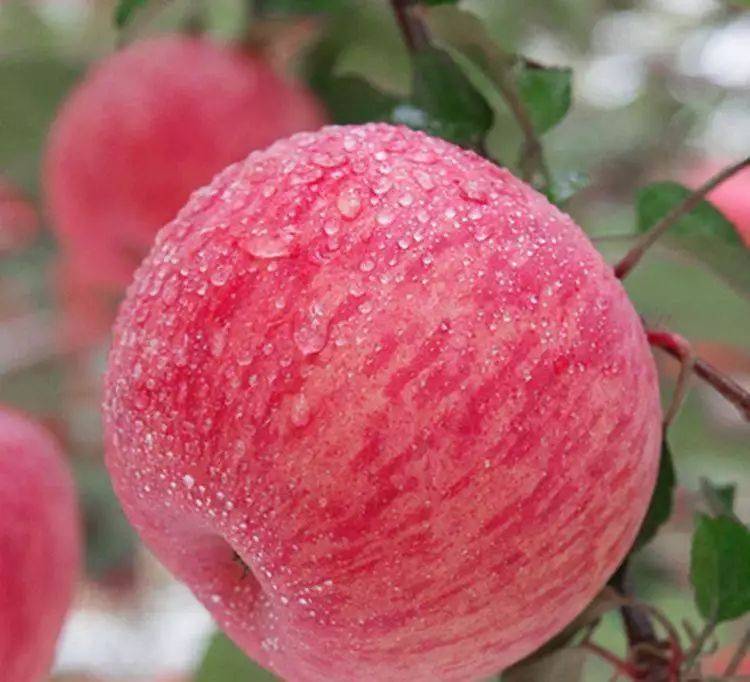
We're all familiar with the red fuji apple, but do you know how much it's grown? In the case of apple tree cultivation, the red rich apple planting site is selected for sandy soil, which is high in size and has a better aerobic soil. In late october or so, red rich dug a ditch, 80 cm deep and 100 cm wide, and the dug ditch could freeze some of the winter pests. After the spring soil has been unfrozen and before the trees have sprung, a layer of straw and straw is laid under the ditch, with a proper amount of organic fertilizer to produce the soil. The selection of well-developed, robust and high-quality trees, proper cutting of the trees prior to planting, water bathing to supplement the moisture and increasing the rate of tree activity. The roots of the seedlings are stretched during planting and light seedlings are in close contact with the soil during planting. The growth of the root system is facilitated by the planting of the red rich, which is generally kept at a distance of 3 m x 4 m and is watered in a timely manner. Moreover, red-fish apples should not be planted in heavy orchards, which not only create nutritional imbalances in the soil, but also create concentrations of harmful pathogens, which are extremely detrimental to the growth of trees. It is also important not to plant in the vicinity of industrial contaminated areas, waste water gas and garbage dumps to prevent contamination of fruit trees。
Again, manure management, the best time in mid-september for the application of base fertilizers to the red fossies apple tree, is generally applied in a ditch. A ditch is dug around the soil where trees are projected outside the canopy, with 50 cm deep and wide. In order to facilitate soil fertilization, the excavated topsoil and the ground floor are stacked on both sides, with some of the glycerine scattered under the bottom of the ditch and others spread evenly over the beams on both sides of the pit. You see, there's a lot of steps and things in there, but if we don't do it, it might affect the production and quality of apples
Anyway, the details of the red fuji apples are all key factors in apples' well-being

New suit network
These little-known secrets that lie in the apple tree, ranging from the phenomenon of unlearning leaves in winter, to the differences between the apple trees in the north and the south, to the development of the red-favorite apples, each deserves our insight. These secrets relate not only to the growth and development of the apple tree itself, but also to the harvest of the fruit farmers. I hope you'll see apple trees later and remember these interesting secrets。