Traditional agricultural production patterns also suffer from waste of resources, environmental pollution and pesticide residues, which are detrimental to sustainable agricultural development and ecological environmental protection. Thus, in the management of apple cultivation, greater attention is paid to the application of planting techniques, addressing problems in the management of past cultivation and producing high-quality apples。
1 optimizing green apple cultivation management techniques to achieve high yield of apples
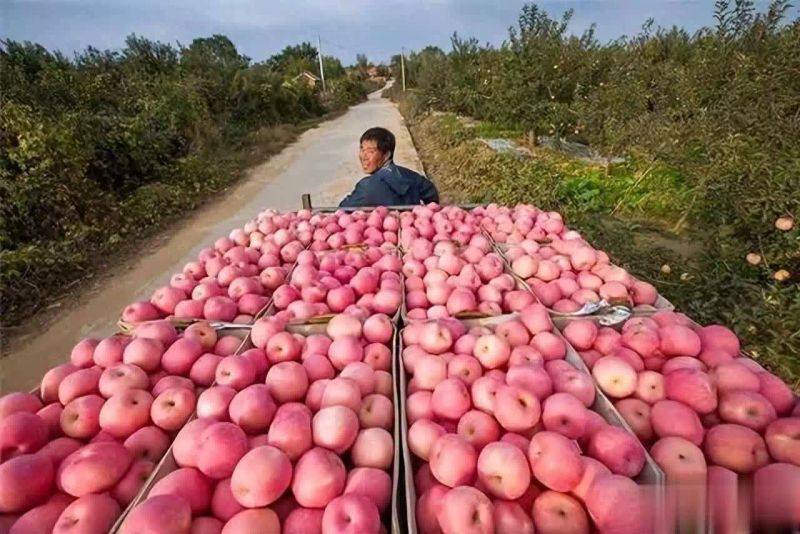
Strengthening the application of green apple cultivation management techniques to achieve a high yield of apples (figure 1) is important for the sustainable development of the apple industry. Consumer demand for healthy food is increasing, and green, environmentally sound agricultural production patterns are gradually becoming a necessary trend for future agricultural production。

Gold platform -- great wall gold industry -- trade fair, operator 217
Figure 1 high yield of apples
The improvement of apple production and quality can be ensured by strengthening the application of technical measures. Optimized management techniques can ensure better growth and development of apple trees, for example, through sound tree-shaped management, soil nutrient management and effective integrated pest and disease control measures, which can effectively improve the quality of apples in individual production and fruit and better meet market demand for high-quality apples。
The implementation of management techniques for green apple cultivation has increased the focus on water conservation, while reducing the use of chemical substances and protecting soil and water resources effectively; and reducing the potential adverse ecological effects of apple production. The sustainable development of agricultural production can be achieved through the rational use of organic fertilizers and the adoption of biological and physical measures such as pest control and control。
As consumer awareness of health and green agricultural products increases, green products produced through green cultivation technologies are more readily marketable and in demand, and can significantly improve market competitiveness and yield higher planting benefits for growers。
2 elements of specific measures
2. 1 plumber planting
The planting of apple trees is a key component of apple cultivation management techniques. Doing so could contribute positively to high and stable production at a later stage。
First, care is taken to select the appropriate species. Different varieties have different adaptations to climatic conditions such as light, temperature and humidity. In selecting varieties, apple varieties suitable for the region should also be selected, taking fully into account local geographical and climatic conditions. Apples are an important crop type in the pyramid region of shandong, and in selecting trees, care needs to be taken to select apple trees suitable for growth in the area and to ensure their adaptability. At the same time, some varieties have high resistance and survival rates and are more likely to take root and live during the migration process. Therefore, when selecting varieties, the characteristics and market adaptability of the varieties should be fully taken into account, and a higher quality apple variety should be selected。
Second, prior to planting, areas for transplantation should also be scientifically selected, such as soil nutrient testing for transplanted areas, in order to create good conditions for healthy later growth of the trees. The production of green apples is more demanding for the soil, with the preferred soil of laxity, fertility and good drainage. The most appropriate soil ph value is 6. 0 ~ 7. 5, preferably border or sandy soil. There should also be adequate sunlight and appropriate temperatures in the plantations and not too easily sloped. It is also ensured that clean water sources are available in its vicinity to facilitate irrigation. Land is thus selected for management and irrigation in a flat and well-drained manner。
Selecting the right timing for planting apple trees is important for healthy growth in the later stages. The option is usually to move in the autumn or early spring. Prior to planting, the tree canals can be reasonably dug to allow new roots to grow smoothly, taking into account the age of the apple tree and the roots and crown size. Before planting, every effort should be made to ensure the integrity of the roots of apple trees and to avoid damage. The root system, which can be covered with wet soil or sacks, can reduce water evaporation. It is not appropriate to tan it. When planted, the roots of the apple tree are protected as much as possible to avoid fracture. After planting, the soil is filled in in a timely manner, with light pressure to ensure that the roots are in close contact with the soil. This is followed by timely watering, soil moistification and the promotion of new roots. For a period of time after planting, appropriate humidity is to be maintained to avoid insufficient moisture or water suffocation of the root system。
In planting, plant density is controlled (figure 2) and space is fully utilized for optimal growth. As a rule, range selection requires a combination of planting varieties, soil conditions, climatic conditions and management methods. If trees are too small, problems such as canopy, poor ventilation and high levels of disease and infestation can occur at a later stage, while excessive distances can lead to increased waste and management costs of land resources. Therefore, when planting apple trees, all factors are taken into account and the right range is selected. In addition, different species of apple trees have different growth habits and canopy patterns, and in determining planting density, account is taken of the characteristics of the species to avoid poor ventilation and pest transmission due to dense canopy. Plantation density should also take into account the fertility of the soil and the availability of water resources. Overdensity and increased demand for soil nutrients and moisture can easily lead to soil infertileness and water deficiency. Therefore, planting density should also be properly controlled in conjunction with soil fertility and water resources。
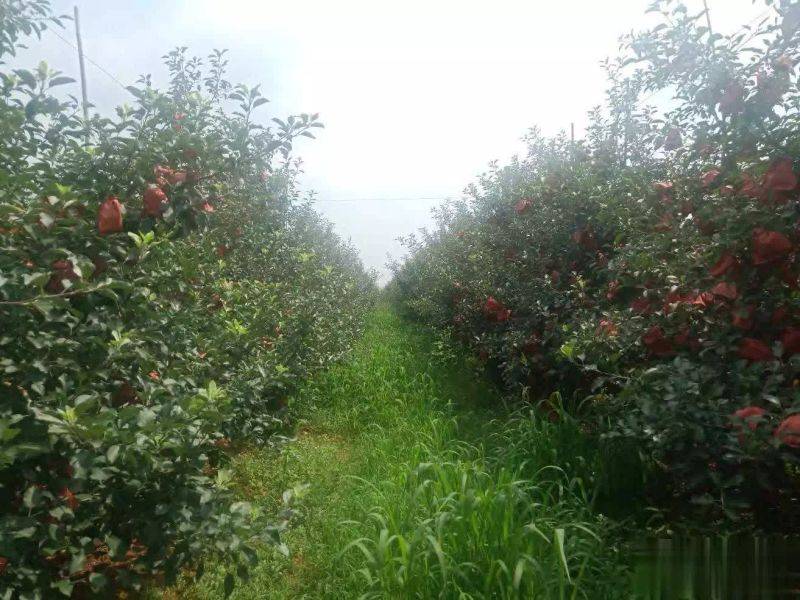
Figure 2
2. 2 fertilizing irrigation
Fertilizing apple trees is important for promoting high productivity. At the same time, green apple cultivation, with greater attention to the use of organic fertilizers as alternatives to fertilizers and the promotion of high yield of fruit trees, is an environmentally sound and sustainable method of fertilization. For example, in the application of fertilizers, greater attention is given to the selection and application of organic fertilizers, which, by replacing fertilizers with organic fertilizers, such as decomposed organic composting, animal excreta, can contribute to better growth of fruit trees, organic fertilizers can improve soil structure, increase soil organic content, favour the growth and reproduction of soil microorganisms, increase soil fertility and water protection capacity, and provide a better taste of the fruits obtained later. Biofertilizers, such as biobacterial fertilizers and bioenzymes, which are rich in microorganisms and enzymes, can contribute to the activities of microorganisms in the soil, increase the effectiveness of nutrients, improve soil ecosystems and increase the resilience of fruit trees. Green fertilizers can also be used to harness the advantage of the ability to stabilize nitrogen in the atmosphere, improve soil structure, increase soil fertility and promote fruit tree growth. The return of green fertilizers to soil as organic matter after long periods of life is a green, sustainable way of fertilization. In addition, the growth of fruit trees requires the involvement of a variety of trace elements, and green fertilisation techniques should include micronutrient supplements. The demand for multiple trace elements, such as zinc, copper and boron, for fruit tree growth can be met by applying trace element fertilizers or using trace elements in organic fertilizers。
In addition to scientific choice of fertilizers, fertilization and timing can be reasonably determined during fertilization, taking into account the needs of fruit trees and soil fertility. It is generally recommended that fertilizers be phased in several times to avoid one-time over-fertilization, leading to soil fertility imbalances and environmental pollution。
The green fertilization technology emphasizes integrated management of water fertilizers, i. E., rational management of irrigation water and frequency of irrigation at the same time as fertilization, ensuring that fertilizers are fully dissolved and evenly distributed, increasing fertilizer utilization and reducing nutrient loss. There is a high demand for moisture at all stages of apple tree growth, and testing should be further strengthened to improve water and fertilizer efficiency. The soil moisture status can be monitored and assessed prior to the implementation of integrated water fertilization techniques. The timely availability of moisture content and distribution in the soil, including through soil moisture sensors, provides a scientific basis for fertilization in irrigation. At a later stage, precision irrigation techniques, such as drip irrigation, microspray irrigation, etc., are being actively used to accurately control the volume and frequency of irrigation, depending on the quantity of water required for the growth of fruit trees and soil moisture, avoiding water waste and soil moisture. Fertilizers have also been mixed with irrigation water, allowing for full mixing of fertilizers with water and increasing fertilizer utilization。
2. 3 integrative shearing
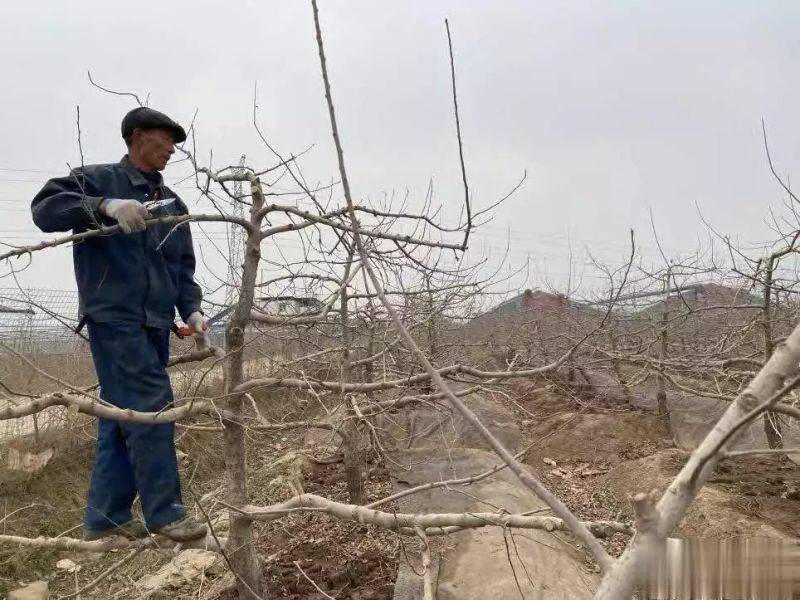
Prototyping of fruit trees (see figure 3) can help to promote high yield while reducing the probability of pests and pests occurring and thus achieving high-quality green fruit. The apple tree can be regularly inspected to remove dead, pests and vulnerable branches in order to reduce the growth and spread of pests and diseases. The maintenance of good canopy is key to preventing the occurrence of pests and pests, so that plastic trimmings are carried out with care to keep the canopy of the canopy as smooth as possible to each part of the canopy. Integrative trimmings are designed to promote the growth of the branches of the outcome, maintaining the direction and spatial position of the branches of the result, which contributes to increasing production and improving the quality of the fruit. Attention also needs to be paid to the rational choice of the timing of the prosthesis, which takes place before winter hiatus or spring apple trees bloom, thus facilitating the recovery of apple trees and the healing of wounds. The trimped worm branch, the dead branch, should be brought together and processed from the field。

New suit network
Figure 3. Apple tree oscillation
2. 4 pest control measures
In the area of pest and disease prevention and control, the application of green prevention and control technologies should be strengthened to replace chemical substances and promote healthy growth of fruit trees. For example, biocontrol techniques can be applied to introduce natural enemies of pests, control their reproduction and spread and reduce the pest base. Plant extracts and microbiological agents can be used to replace chemical substances for pest control. For example, the production of pesticides using plant extracts such as pepperoni, or the prevention of pathogen microorganisms using microbiological agents such as muscular bacteria, dead grasscrawl sprouts, can achieve the desired preventive effects. Insect trappers can be lured to pests by setting up in the field, by means of physical control。
Growers can create a good orchard environment and reduce the probability of pests and diseases occurring through sound plant management measures, such as sound planting, rotation and timely removal of pests and diseases。
Early warning systems for pest monitoring and surveillance could also be established in parks to keep abreast of trends in the occurrence and spread of pests and pests and to ensure timely response to them. At the same time, different green technologies have been integrated and a combination of pest and disease prevention and control measures has been applied to improve control effectiveness。
Conclusion
In conclusion, the green apple farming technology is the basis for high productivity and is an important measure to improve apple quality and promote sustainable agricultural development. The large number of growers should now focus on the application of measures to improve the quality of apple production, achieve a high level of production and achieve higher economic benefits for the large number of growers。