


Children and adolescents are vulnerable to the outside environment and are among the most vulnerable. The 2022 report on the work of the government states that services such as mental health should be completed. At the recently concluded two national conferences, the issue of adolescent mental health was also a high-frequency word for advice on behalf of the commissioners. How is mental health education for adolescents available in primary and secondary schools? How should the mental health education system for adolescents be structured? Experts, principals and psychologists are invited to discuss these issues。
Attention: mental health of children and adolescents
Adolescent mental health issues are frequent and increasingly receiving attention from society. The 14th five-year plan for national economic and social development and the 2035 vision programme of the people's republic of china, adopted by the national people's congress in march 2021, clearly set out “strengthening mental health education and services for children”, which is the theoretical policy basis for the development of mental health education in our schools in the new era。
The new era has given new meaning and meaning to mental health education in schools, and it has been necessary to develop a chinese perspective on mental health education as a basis for actively building a modern and successful school mental health education system。
Mental health education should be tailored to student development needs
Health is the eternal subject of humanity. In the constitution of the world health organization, which entered into force on 7 april 1948, the preamble states that “health is not only the elimination of disease or infirmity, but the complete state of physical, mental and social health”. Indeed, good health improves the quality of life, develops psychological potential, enhances the motivation for learning and development, and adapts to family and social life. To that end, the secretary-general of xi has clearly stated that “the concept of health-first education” is the cornerstone of the philosophy that governs mental health education in schools。
At present, adolescents ' desire for happiness and concern for mental health are on the rise, and there is a growing awareness that mental health is a necessary requirement for comprehensive human development and the basis for a happy, happy and dignified life for humanity. The main subject of mental health is the human person, and the effectiveness of mental health education can be maximized only if people are actively involved. Mental health education in schools in the new age must therefore be adapted to the mental health development needs of students. The full and free development of the human person can be achieved only if students are truly realistic and take full account of their real needs and physical and mental development, following mental health and educational patterns。
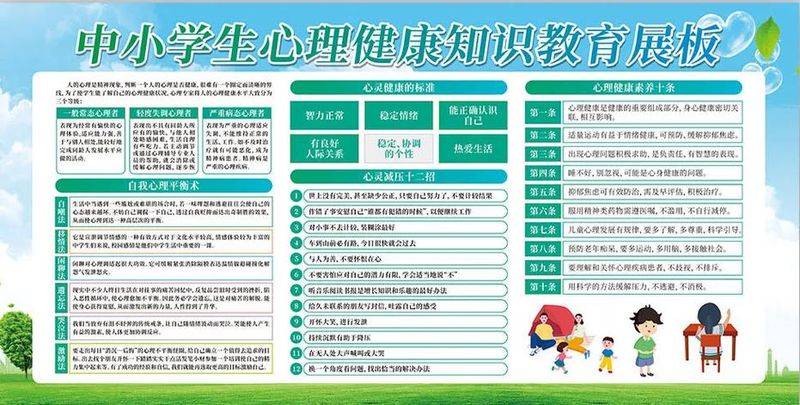
The fundamental goal of strengthening mental health education in schools is to promote the mental health and comprehensive development of the personality of students, which is a prerequisite for the development of creative and innovative capacities, while integrating innovative talent development and mental health education to shape a new generation of mental health and innovation is the primary task and challenge for educators. At present, mental health education in our schools is in its infancy and has become structurally loose and intensive, from sectoral independence to multi-sectoral interaction, and conceptually moving from a single education to a pluralistic service, a gradual process that combines vertical and horizontal development。
Integrating mental health education into the school education service system medium
In recent years, mental health education for primary and secondary students has been actively explored in many places. At the national level, however, the overall level of mental health education is at an early stage and regional development is uneven. Full mobilization of all sectors of the school and the development of a comprehensive, multi-channel, well-defined and coordinated system of mental health education services are objective requirements for further strengthening mental health education for primary and secondary school students。
Institution-building. It can be divided into fundamental systems, basic systems and specific systems. The basic system, which is the educational policy of the party and the state, includes as its fundamental task the triads, the improvement of the psychological qualities of students and the promotion of comprehensive development; the basic system refers to the relevant mental health education policies, documents and regulations issued by the state and the government, which can also be called the regulatory system; and the psychological support management system, the system of psychological crisis prevention and intervention, the system of training and supervision of psychological counselling teams, etc。
Institution-building. Under the leadership of the headmaster, schools should be built around student management cadres and full-time mental health education teachers, consisting of counsellors, classroom directors and part-time mental health education teachers, with the participation of all teaching staff, and educational practice mechanisms involving all members of the teaching staff, as well as party cadres, schoolteachers, part-time mental health education teachers, responsible at a hierarchical level and coordinated by each department. Particular emphasis is placed on mental health education or the construction of psychological counselling centres。
Teachers. In primary and secondary schools, a full-time mental health education teacher workforce, with a percentage of teachers and students, will be transformed from a part-time teacher to a full-time teacher-led, part-time teacher-led model, with mental health education teachers requiring professional training of no less than 40 hours per year and the gradual development of a certified induction system. At the same time, the terms of reference of full-time teachers are defined, their work processes are regulated, their staffing and development are integrated, and pre-service, entry and post-service training are integrated。
Curriculum system. Its purpose is to implement the fundamental tasks of the lythians and the basic requirements of the whole process of procreation, with the task of standardizing and standardizing the content of the curriculum. Among them, the regulation of the use of teaching materials plays an irreplaceable role in the effective development of curricula; content, as a micro-level of curriculum development, is essential to reversing duplication, mismatches and disconnections. In particular, the quality of mental health education in the new era will be improved by integrating mental health curricula with other relevant disciplines, creatively offering comprehensive courses, integration courses, etc。
Quality mental health education services are provided in a comprehensive, multi-track approach
The effective promotion of mental health education practices in schools must be based on practical approaches such as individual counselling, group counselling, crisis intervention and medical collaboration, so that the work can be truly translated into reality, pain and pain。
Individual consultations include outpatient consultations, web counselling, telephone counselling, etc. Establishing a good counselling relationship with students seeking help in the counselling room requires that counsellors have good personal qualities, special conversational skills and counselling skills, which are the basis for visitors to actively change the situation and realize their potential。
Group psychological counselling provides a good atmosphere of trust, warmth and support for group members, allowing them to look at others, build positive self-identification and develop a sense of self-effectiveness, as well as being a social support force for others, so that the use of this technology in schools can yield a multiplier of educational results。
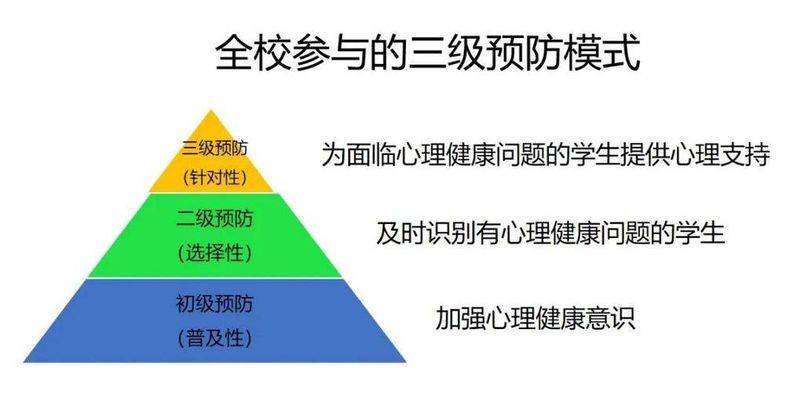
In addition, the establishment of a “school-led, sectoral and community-based” crisis intervention mechanism and a three-tiered prevention mechanism are particularly important, aiming at early detection, diagnosis and treatment. The establishment of a vertical crisis-resilient mechanism to ensure timely response, support and assistance in the first instance is a guarantee of effective response in the aftermath of a crisis. Particular attention should be paid to extreme incidents such as suicide and self-harm among students。
It is also necessary to strengthen cooperation between schools and hospitals in the establishment of mechanisms for cooperation in psychological or psychiatric departments of general hospitals, psychiatric hospitals and school crisis intervention, for the establishment of referral mechanisms for psychological crisis, through medical integration and coordination, and for the timely referral of students suspected of having serious mental or psychiatric problems to specialized institutions for diagnosis and treatment, from schools ' mental health institutions to specialized mental health institutions。
Building a community-based association and integration mechanism
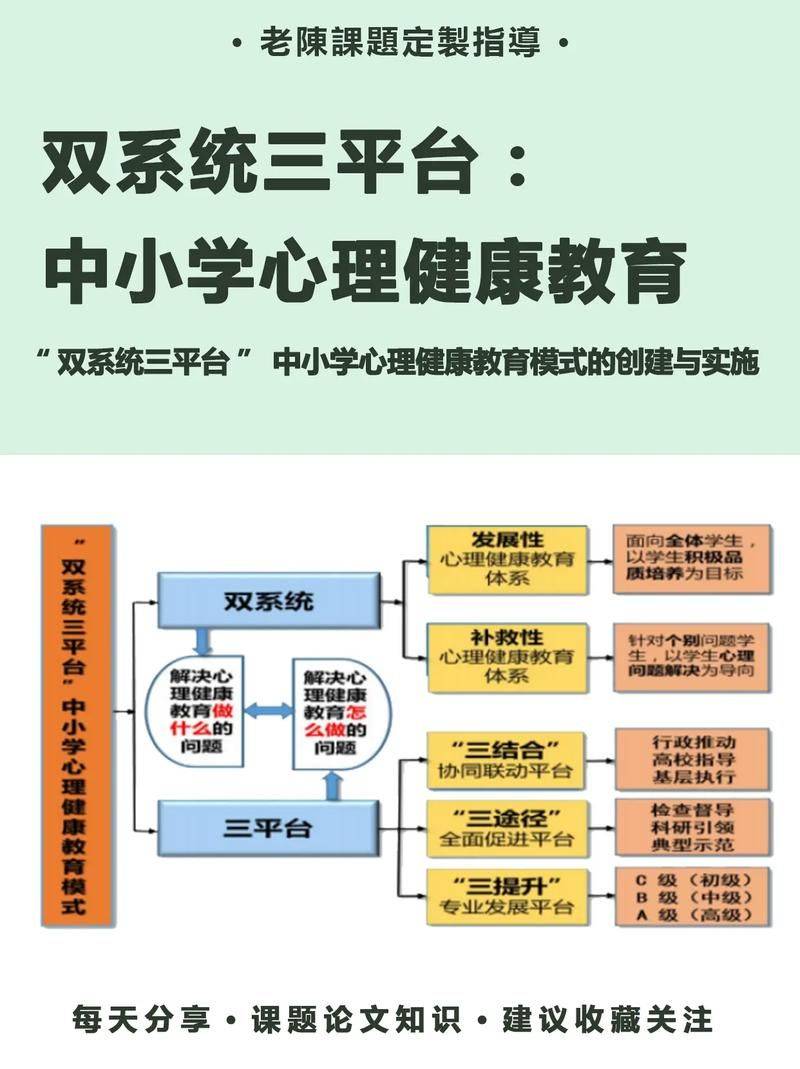
Strengthening mental health education for adolescents also requires the establishment of synergy mechanisms in schools, families and societies that focus on the ecological environment in which students learn and develop。
School eco-classes should include specialized mental health education programmes and penetration in other disciplines. The former are courses that combine knowledge transfer, psychological activity experience and behavioural training. The latter refers to the need for dedicated teachers in different disciplines to develop a strong awareness of mental health education, to incorporate elements of mental health education adapted to the characteristics of different disciplines, and to focus on their role as a model for their personality and their role as a teacher and to enhance the ecological effectiveness of classroom teaching。
Schools can promote and disseminate information about mental health and mental illness through electronic screens, radio and television, school networks, and school magazines. (c) create a positive, healthy and elegant school environment through school activities, building school culture and raising awareness of mutual care and support among students through peer support, psychological dramas, etc。
In coordination with home-based schools, families must, on the one hand, actively cooperate with and support school education and care for the healthy development of their children, and, on the other hand, schools must move ahead and provide voluntary guidance to families with poor growth conditions or students with mental behaviour problems。
Schools should also strengthen contacts and cooperation with government agencies, health institutions, social groups, public cultural institutions and neighbourhood communities, organize recreational and recreational activities and outreach activities on mental health and well-being for students, broaden the scope, path and methods of mental health education, promote the extension of school education to social education, and “primary education” in schools complements the strengths of social “classrooms” and integrates them effectively and works together。
(author: ryu guo liang, chief specialist, interdisciplinary cross platform for mental health education, china people's university)



