In 2007, the supreme law launched a pilot reform of the “third instance” of intellectual property proceedings in civil, criminal and administrative proceedings, with a view to harmonizing the standards of adjudication and improving the efficiency of trials. Seven years later, how did this pilot work
On 28 december 2014, the shanghai intellectual property court was inaugurated. Previously, the courts on intellectual property rights had been established in beijing and guangzhou. This reform of the judiciary introduced the “second instance” of civil and administrative cases relating to intellectual property。
In this news, the president of the intellectual property court of yiu city, zhejiang province, jin liqing, was pleased. “in fact, our court is like a ‘small intellectual property court’, which began in 2007。
In 2007, the supreme law initiated the “third instance” reform of intellectual property law in civil, criminal and administrative litigation cases, the first of which was the yiu city court. Since then, seven years of testing, the ulu courts have not only addressed the issue of harmonization of adjudicative scales, but have also been able to innovate and construct uniform, comprehensive and rigid mechanisms for judicial protection of intellectual property rights。
Today, the yiu courts are at the forefront of the country's pilot courts in terms of the number of intellectual property cases, the building of judicial institutions and institution-building, and have been established by supreme law as the model court for intellectual property trials in china。
The zhejiang provincial high court has extended its experience through a pilot inspection of the yiu court, and now has two courts, hangzhou, ningbo, wenzhou, taizhou and kimhua, which have implemented the intellectual property “third instance”。
Addressing the issue of harmonization of adjudication scales
“`the key to the three trials together' is to address the problem of inconsistent standards of adjudication.” only zhejiang, a full-time member of the supreme court of zhejiang province and president of the chamber of intellectual property, informed the journalist of the association for democracy and the rule of law。
Civil, criminal and administrative proceedings relating to intellectual property are heard in the courts of china under the existing judicial mechanisms. This makes it possible for judges of different levels and divisions to have different perspectives and may result in different decisions. There have been cases in which a criminal conviction constitutes an offence when a civil offence has not been committed。
In the largest market for small commodities in the world, there are a large number of intellectual property disputes each year, both in number and type. When the supreme law of 2007 referred to yiu as the first “third instance” pilot court, it was also the only pilot court in zhejiang province。
Three years later, when the state council approved the city of yiu as a pilot area for comprehensive international trade reform, the judicial protection of intellectual property rights became more prominent, and the pilot of the court of yiu was successfully accepted by the high court of zhejiang province, whose unified, comprehensive and well-structured judicial protection of intellectual property rights was recognized by supreme law。
The united states special 301 report 2008 states: “in industry, it is believed that yiu is strengthening law enforcement ... It is easier to file a criminal report on intellectual property in yiu”
Such an assessment was not easy, following a report published by the united states trade representative's office that included yiu on the “blacklist” of countries and territories that did not provide adequate and effective protection of intellectual property rights。
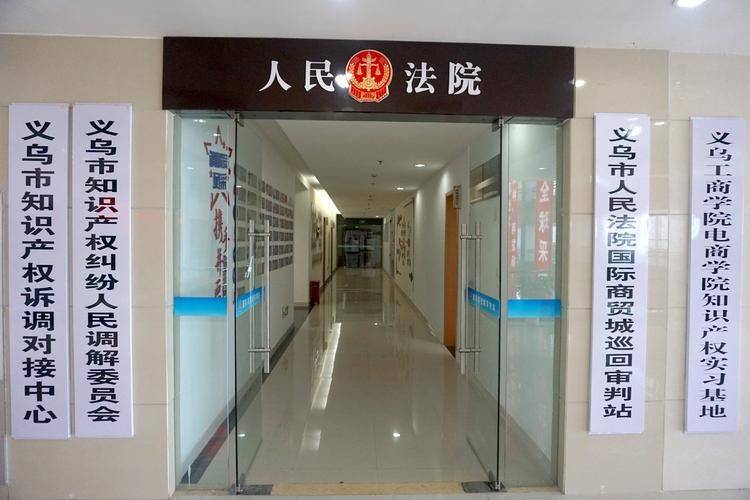
Zhougen only considered that this was closely linked to the “three trials in one” pilot. The statistics of the iu court indicate that the “triple trials” pilot significantly improved the quality and efficiency of trials. During the pilot period, all cases were completed within the statutory limits, the average duration of criminal cases was only 12 days, civil cases were approximately 90 days, and only 2 of 189 appeals were remanded and revised。
“the first and last sentence”
The intellectual property division of the tribunal has now increased from six to seven. The court of intellectual property was re-established by the original chamber of the people's republic of china and part of the court's staff was drawn from the chamber of criminal justice and the administrative chamber。
All civil, administrative and criminal cases relating to intellectual property are heard in the intellectual property court, except for the single case before the court. The president of the operational court is directly responsible for the issuance of all judgements. As a result, both the trial and the operational chambers are unified。
An important indicator of the success of the “triple trials” pilot is the effectiveness of the procedural interface in cross-cutting cases and the harmonization of criteria for adjudication。
Such cross-cutting cases refer to both civil and administrative or criminal cases arising from alleged intellectual property violations. The principle of the iu court is “penalty of the ancients”。
This is contrary to the usual “first-to-last” principle. “if it is difficult to establish a civil tort, then it is more difficult to establish a criminal offence; in turn, problems arise if a criminal tort is found to constitute a crime, but not a civil tort.” this, he said, is our experience in practice and is related to the nature of private intellectual property rights, with greater emphasis on civil remedies。
Many cross-cutting cases considered under this principle have had better legal and social effects. Despite the fact that six years have passed, bo-hang's case against him is still fresh in his memory, and he describes it as “a bit of a shock”。
In 2007, he designed and produced a toy known as "rich to grind" and registered copyright. Soon after his product came into existence, he discovered that someone in iu international trade city sold fake toys. He reported that the yiu city cultural department had seized and seized part of the violation。
Subsequently, the impersonators should be prosecuted before the court and compensation should be sought. If he thinks he has a basis for the investigation of the cultural sector, he will win. However, the court dismissed his complaint on the grounds that it was not sufficiently substantiated. Due to the roughness of the administration of justice in the cultural sector, the relevant evidence was not locked, and it was not established that the defendant had sold toys for abuse。
Bo-hang was angry and took the cultural sector to court. The department of culture re-takes evidence and provides it to chao-hung. On that basis, bo-hang again prosecuted the violator and finally won the case, during which he applied to the court to dismiss the administrative proceedings against the cultural sector。
According to the judge in charge of the civil and administrative cases in bo-hang, all cases were completed by the chamber of intellectual property rights, and civil and administrative cases were effectively linked and the scale of adjudication was harmonized。
He was surprised that he had completed all the proceedings in one court, that it was convenient, and that one of them was the same judge, who was familiar with the case and had saved him all the time。
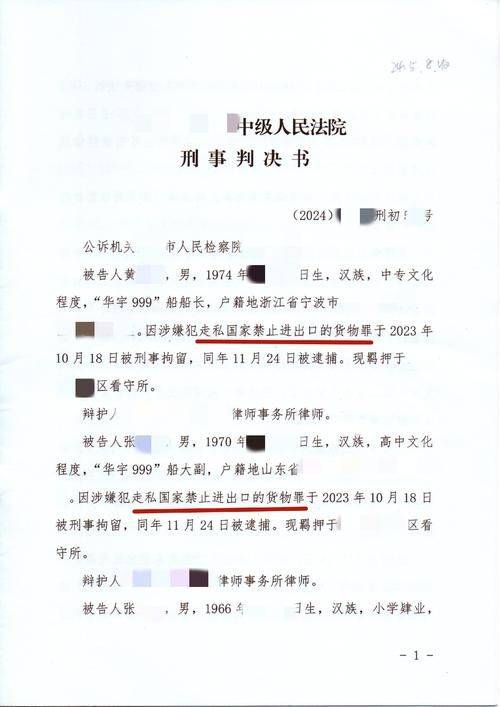
The president of intellectual property has always controlled the process of cross-cutting cases. “when a case is prosecuted, we will follow the case closely, and we will ask the prosecution or the relevant administrative department on our own initiative。
Comprehensive justice protection mechanisms
The supreme law has always been concerned with the yiu pilot and, in response to the high number of cases of patent disputes in the country, in 2009 it was the first in the country to delegate to the yiu city court the case of patent disputes that were originally handled by the intermediate court in the form of new practical and visual design。
The patent disputes accounted for 30 per cent of the cases of intellectual property before the yiu city court, as well as disputes over trademark rights and personal and property rights。
From january 2008 to december 2014, the city court of yiu heard 3519 civil intellectual property cases, 280 criminal cases and 10 administrative cases. The number of criminal and administrative cases is among the highest in the country. The advantages of “triple trials” are clear。
In particular, nine sets of 18 cross-cutting cases that have been completed have been standardized and applied in conjunction with criminal or administrative penalties and civil reparations in cases where violations have been found, thus increasing the response to violations。
“in particular, in the case of cross-penal justice, the `third instance' is significantly more efficient than in the past.” he said that, as active civil compensation can be considered as a criminal sentence, the perpetrators tend to be proactive。
Even in purely civil cases, the rate of withdrawal of complaints through mediation is very high, rising annually to 91. 7 per cent in 2013. Social conflicts were effectively resolved and legal and social effects were harmonized。
Ordinary procedures apply in intellectual property cases. In april 2013, under the authority of the high court of zhejiang province, the court of yiu applied summary procedures for the sole trial of judges in cases where the subject matter of the trademark and copyright proceedings was less than $200,000 and the basic facts were clear. This has further enhanced the efficiency of trials。
The “tribunal one” also brought an “excess effect” to the italian courts beyond the design of the system. In an administrative case in which the business sector was the defendant, the court found that the plaintiff had unsuccessfully sued the infringer in a civil suit, on the basis of an inspection certificate issued by the business sector, because the business sector had no fixed evidence. Accordingly, in 2012 the court issued a judicial recommendation to the business sector to regulate the conduct of witnesses and improve the enforcement files. The chamber of commerce and industry of the city of yiu has issued a special change of opinion. Since then, the business sector has not become a defendant。
Similarly, this situation occurs in customs. Customs requires the destruction of the infraction material three months after the administrative penalty has been in effect, and it is only when the tortort is brought before the court that the tort was discovered that the tort material was missing and evidence was missing. Through the high court of zhejiang province, the yiu court issued a judicial recommendation to hangzhou customs for the preservation of physical samples or photographs of violations, which fills a gap in evidence in the customs system throughout the province。
“in the case of intellectual property rights, which is not an administrative finding of a violation, the court finds a violation, as in the case of the right to establish a trademark, that the judicial determination is final, requiring a combination of factors, such as substantive and procedural findings.”。
Every month, the u. S. Court informs the u. S. Intellectual property steering group of decisions concerning infringement of the intellectual property rights of market operators, which is sent to the relevant authorities and to the u. U. S. Group for appropriate penalties. Operators in the town of yiu are subject to deductions under the contract and, if the deduction is completed or a court decision constitutes an offence, the leased shop is to be recovered。
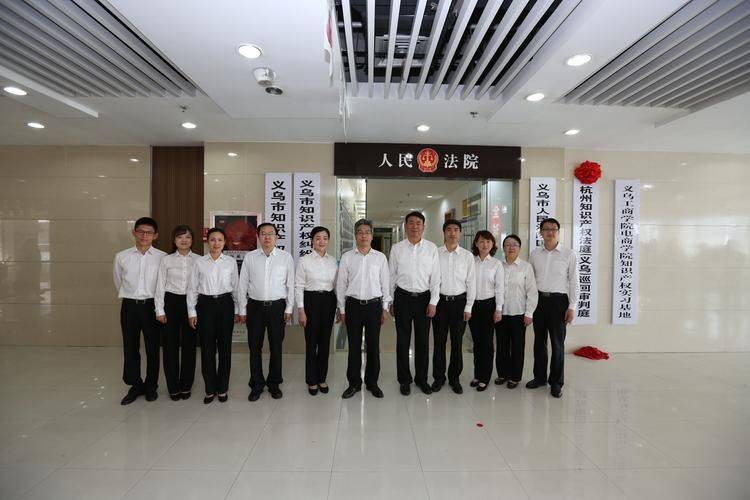
The court will also conduct a situational analysis of suitable, high-profile cases, time periods involved, regions, etc., and inform the leadership group on intellectual property of the city of yiu on a monthly basis to alert the operators。
With regard to the legal aspects of the new types of intellectual property violations that arise, the u. S. Courts explore and consult through a joint meeting mechanism of the relevant municipal authorities in order to measure the implementation of the law, thus creating a unified, comprehensive and rigid mechanism for the judicial protection of intellectual property。
Pilot "slate"
In august 2010, the yiu pilot was accepted by the high court of zhejiang province and considered successful. Since then, the zhejiang provincial court has promoted “three trials in one court” in five family homes and eight basic courts. In april 2011, the yeu court was identified by supreme law as one of five model courts for intellectual property trials in china。
The “third instance” pilot has now been implemented in several provinces and municipalities of the country, and by the end of 2012 it had been implemented in five high courts, 59 intermediate courts and 69 grass-roots courts。
In his view, the “triple trials” pattern has significantly increased the level of specialized intellectual property cases. “to contribute to the improvement of the quality of the trials as a whole, as well as to the development of research, training and, consequently, the professional trial of judges.”
But the “short-span” of specialized intellectual property trials in the courts has also been highlighted. The intellectual property division of the italian court of justice was seized 20 times more in 2014 than in 2008, but only one more person. Although all five judges and two clerks now hold master's degrees in law or law, five have travelled to the united states and belgium to train in intellectual property and wto knowledge. However, as a result of the frequent changes in personnel, it has been a pain in the way that the only “remaining” person in seven years has to be trained as a professional judge。
“a judge who also lacks experience in criminal and administrative trials has different burdens of proof, standards of proof, etc., due to the different purposes of the civil, administrative and criminal proceedings before which they are tried, difficulties in changing the mindset of a judge's trial from a different perspective, and the tendency of a judge to take greater account of the private nature of intellectual property rights as a result of the trial experience, which tends to affect the quality of the trial from a civil perspective.”。
In order to address this problem, all intellectual property cases before the iu courts are now attended by people's assessors, who are mid-level cadres from the business, scientific, cultural and other executive branches, in order to remedy the lack of professionalism of judges. In 2014, the court's intellectual property division handled 266 cases per person, which is higher than the average for the entire court。
Yang yancheng, deputy researcher at the intellectual property centre of the chinese academy of social sciences, stated that the special nature of intellectual property cases determined their specificity in terms of leadership, jurisdiction, case management, selection of judges, etc. In connection with the above, it was difficult for ordinary courts to effectively take into account the above-mentioned special requirements of the intellectual property tribunal, which determined that the current reforms would make it difficult to fundamentally resolve the difficulties facing intellectual property trials。
At present, neither the zhejiang provincial court nor the supreme law tribunal has “third instance” and “the whole line remains open. As in the case of training of judges, training of intellectual property judges in criminal matters is not included, while training in intellectual property is limited to the civil, administrative and criminal sectors, leading to knowledge `simplistics'。
As for the reform of the supreme law, which established the intellectual property court in the north, above and beyond, zhougen considered that this was in line with the aim of the “third instance” in terms of improving the efficiency of trials and harmonizing standards of adjudication。
At present, the “three trials together” pilot is still controversial in the high court of zhejiang province and in the supreme law, especially in regions with fewer cross-cutting cases. “the attitude of the supreme court is to move forward with caution.” zhejiang indicated that the zhejiang pilot had been very effective, that it had improved the utilization of judicial resources and harmonized standards for the adjudication of criminal cases, particularly in the case of the intermediate court of intellectual property。