Intellectual property protection needs to accelerate standardization
The implementation of intellectual property protection is a systemic exercise in which standards provide demand-side safeguards for the conditions and methods of intellectual property protection. As a system of public rights recognized by the state, standards are used to enforce the protection of intellectual property rights, which will strongly underpin the protection of science, technology and innovation activities and outcomes, essentially as a form of protection of intellectual private rights by public rights and, more importantly, of the system of actions to protect intellectual property rights at the national level。
According to the author, the protection of intellectual property rights in our country needs to be accelerated and standardized。
The relevance of standards to intellectual property
As a rule, intellectual property rights and standards are independent of each other, there is no necessary link between the two; however, with innovation in science and technology, increased global competition, improved and developed national governance systems, intellectual property rights and standardization move from separation to integration to maximize value。

First, standards and intellectual property rights are closely linked to sti。
The intellectual property system is a foundation system for the protection of science, technology and innovation. It is a monopoly or monopoly granted to the applicant by the competent national authority for the creation of the invention for a specified period of time, upon application by the applicant to the competent national authority in accordance with the legal procedure and subject to a review。
Standards are scientific, but the most essential characteristic is public goods. Standardization needs to be based on sti outcomes, which are standardized through analysis, comparison, selection, application and marketing. Thus, standards are not only normative requirements for the provision of products, methods, technologies, safety etc., but are agreed upon in full consultation with stakeholders, such as users, producers, governments, scientific institutions, etc。
Moreover, the scientific nature of standards is reflected not only in their science-based nature, but also in their underpinnings for sti work and the application of sti outcomes. For example, in the 1980s, while planning to develop laser launcher technology, germany developed a standardization plan, and laser launcher products were standardized and disseminated after production, resulting in market recognition in the shortest time and speed possible. Currently, the share of german laser products in the international market is more than 60 per cent。
Second, the relevance of standards to intellectual property rights would contribute to maximizing the value of science and technology。
Standards and intellectual property rights, which are distinct from public and private rights, are independent of each other. However, if the results of access to intellectual property protection are translated into standards in standard-setting, or if the standard content includes science and technology or methods or products that are protected by intellectual property, it would be tantamount to the application of private rights outcomes through public ownership, which would accelerate the diffusion of this private rights technology and maximize its value。

The main form in which standards are associated with intellectual property rights is “the standardization of patents”. Patent standardization refers to the conversion of patented technologies into technical standards or the inclusion of patented technology components in technical standards in standard-setting activities, making the standards a vehicle for the promotion of patented technologies. Generally, the combination of standards and patents is a one-way and irreversible process, unless the standard is repealed or the patentee waives the right to intellectual property protection。
It is now common practice internationally to encourage standards to adopt innovative technologies or methods or products that are protected by intellectual property rights, but to recommend that intellectual property owners waive their rights or license free of charge。
Thirdly, the main forms of relevance of standards to intellectual property rights。
In the integration and linkage of patents and standards, the incorporation of standard patents is referred to as “standard necessary patents” and falls within the scope of patent standardization, i. E. Patent inclusion through standard-setting activities. Standard necessary patents have both technical and legal normative attributes, the most important feature of which is that they must be valid patents and cannot be replaced by other technologies. In terms of type, the standard necessary patent can be either an invention patent or a practical new type of design and appearance. In the case of invention patents, both methods and products can be included in the criteria。
It is noteworthy that, against the background of increasing global technological and market competition, standards with a “patent trap” have become the main type of patent standardization. Such standards are also often used as tools and tools for creating technical barriers to trade in some countries or regions。
Layout of standardization strategies under intellectual property protection
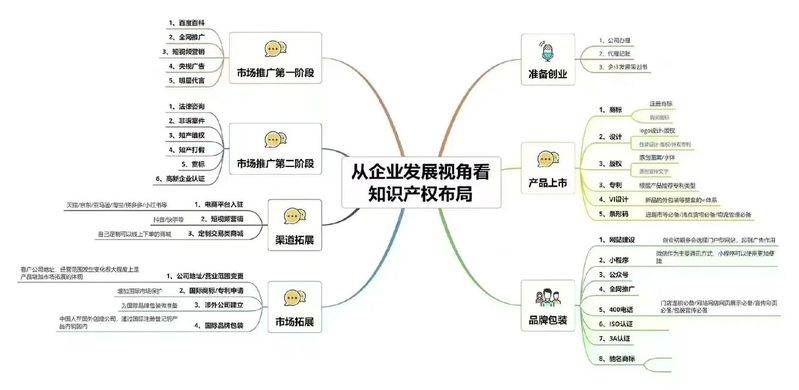
Standards are an important tool for intellectual property protection, and there is a need for a standard strategic layout of intellectual property rights, not only to protect the country's innovation dynamism but also to bring it into line with international practice. A standard strategy to accelerate intellectual property protection is urgent。
First, standards are used to implement top-level design objectives for national intellectual property work. Intellectual property protection aims to stimulate innovation, services and promote quality development. The study of international rules and policies relating to intellectual property and the development of standards for intellectual property protection in line with the national development needs of our country's strong intellectual property strategy can be both fully implemented in national development strategies and combined with the specific practical aspects of intellectual property protection for individuals and institutions, ensuring that public interests and stimulating innovation are combined。
Secondly, the rule of law protection of intellectual property rights is implemented through standards. On 1 january 2021, the civil code entered into force, covering aspects of intellectual property rights such as patent law, trademark law, copyright law and scientific and technological progress law. The development of relevant standards, such as guidelines, norms and guidelines on best practices in intellectual property rights, not only raises awareness of intellectual property practice, but also regulates everyday conduct and activities related to intellectual property and promotes the harmonization of standards of administrative enforcement and adjudication of intellectual property rights。
Third, the full chain of protection of intellectual property rights should be strengthened through the establishment of standard systems. Intellectual property protection is a systematic project that covers the entire chain of creation, application, protection, regulation, services, etc. The standard system of intellectual property protection can be established through the development of standards that are appropriate to all aspects of intellectual property protection. For example, at the creation stage of intellectual property rights, a series of standards could be developed, such as a guide to best practice in intellectual property creation activities, classification criteria, a guide to the regulation of the allocation of interests, and at the application stage of intellectual property rights, a series of standards could be developed, such as a guide to best practice for the conversion of intellectual property rights and a guide to practice on intellectual property sharing. The orderly flow and efficient allocation of innovation elements can be facilitated through the development of standards。
(the original title, “strategic layout of accelerated standardization with emphasis on intellectual property protection”, published in the chinese academy of sciences journal, 2021, vol. 36, no. 6, by wei feng, zhang hongsong, chen sheng, tang yae, sun yu qi, has been deleted)