Technical details of treapers
Location and location
It is suitable to grow in a slow slope or gavage of half-mud, and such soils are organic and well drained. The best option is loose land, sandy soil or sandy soil, especially uncultivated wasteland. Soil ph values should be maintained between 5 and 6, avoiding the choice of clay or lowlands, while avoiding heavy planting. In addition, shelters, caves, basements, etc. Can be used for the cultivation of tianima。
Reproduction methods
Anemic reproduction includes sexual non-sexual reproduction and sexual reproduction, i. E. Tubing and seed reproduction. It is important to note that seeds can only be grown using two generations of seeds and that more than three generations of seeds are not suitable for use。
In the case of tubing, sterinization is usually done in winter or spring. A higher rate and a faster rate of growth of sterilism is found in winter, usually in november. And spring planting took place in march-april. Before planting, we need to have a bacterial bed ready. The tree species required for the growth of the honey circulus include shellfish species such as bars, platinum, embroidery and chestnuts, which are good for broad leaves with thick bark, thick wood and strong corruption resistance. Cultivation methods for bacterial beds can be divided into wood and bacterial culture and sawdust culture。
Through the above detailed description of the technical elements of cultivation, you are confident that you will be better equipped with the method of planting tungsten and that you will be able to lay the groundwork for the cultivation of high-quality sis。
(3) cultivation of transvestites: similar to the above method, the main difference is the use of nectar species for culture. In artificial bacterial bed cultivation, the slashing of the bacterium stock between the two branches of wood and at both ends of the wood is required, and ensuring that at least one is close to the mouth. Cultivation can be carried out at any time from november to april of the following year, by artificially controlled temperature control, using robust white and rice-melting as planting。
(2) seed reproduction
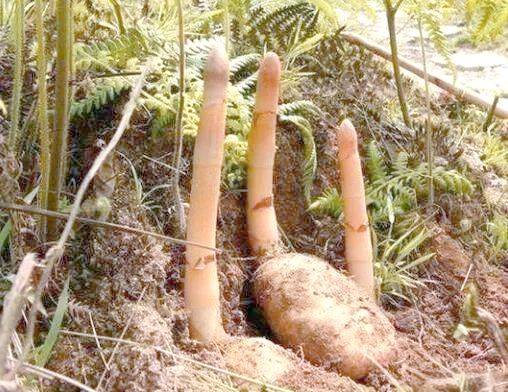
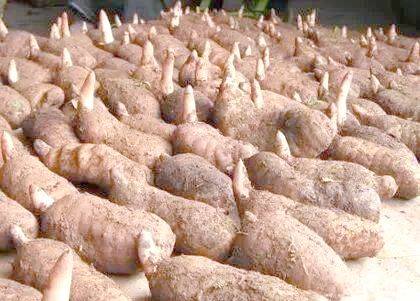
The seed of cynics weighing more than 100 grams is selected for breeding in indoors, sheds or greenhouses where conditions for early spring warming are available. A wooden box, a cardboard box, a basket of bamboo or a tarable ground, with sand piled for seeding. Each 100 square centimetre is sowed, i. E., the range is maintained at a distance of 10 centimetres, with the tip of the tooth pointed up and buried deep at 5 centimetres. At lower temperatures in early spring, care should be taken to increase temperature and to keep the temperature between 20 and 25°c. During the spiking, sunlight is avoided and artificially pollinated when flowers bloom. It is recommended that pollination be done in the form of alienation, different species, such as red poles and green poles. The best timing for pollination takes place at around 10 a. M. In the middle of the sun, when there are small flowers on the edge of the cap. After pollination, a plastic bag is used to cover the fruit and when a small amount of seed is scattered in the next fruit, it is collected from the bottom up. Because of the short life span of the seed, the fruit harvested should be sowed immediately。
Before seeding, we need to remove the bacteria from the bed, remove the soil from the lower bacteria, and spread the moist leaves on the lower bacteria, with a slight flattening. The seed is then mixed with the bacterium and attention is paid to the fact that the bacterium (leaf bacteria) needs to be torn into small fragments in order to sow the seed. The seed-bearing bacteria are spread over the leaves and covered with thin, wet leaves. A second layer of seed is then sowed, covering 3 cm thick soil, and a layer of wet leaves. It was then put into the tectonic bacteria and eventually covered 10-15 cm of soil. For example, there are between 8 and 10 hyenas per cellar, each containing about 30,000 seeds. If properly managed, some of the arrows, whites, gills and large quantities of rice could be harvested in the fall of the following year, all of which could be planted as tubers. In addition, seed breeding may be carried out in a manner that does not pre-plant a bacterial bed, i. E., in the form of both bacterium and seeding, with attention to the use of honey circulus as a bacterial seed for bacterium breeding, and in the case of sexual seeding。
Field management
When planted, humans and animals need careful care to avoid stepping. Before winter, the soil should be thickened and the leaves covered to prevent freezing. During the high-temperature season from june to august, shade-covering facilities or high-screw crops were needed to cover the sun. Before the onset of the rainy season, drains will need to be cleared and the water accumulated will be removed in a timely manner in order to prevent the decay of the stem. The spring and fall festivals should be given appropriate sunlight to maintain the appropriate temperature。
Disease control
I'm sick
There are two causes of the disease: the fungus attack on the root of the sky; and the excessive production of long-term rain that causes the root of the disease. For fungus infestation, fresh wood should be chosen to breed the fungus and to maintain the appropriate culture time, while suitable breeding soil should be selected and filled to reduce the occurrence of fungus. In the case of scavenging roots caused by excessive production of long-duration rainfall, it is necessary to select high-lying, water-free, soil-deficit and air-absorbed areas for planting sterilisation and to strengthen the management of cellars to maintain a stable internal moisture level in order to inhibit the growth of fungi。
Zenium
Chrysotile is also a pest that may have been encountered during the fertilization process. Its response includes measures such as manual capture, lighting booby traps and drug control. Before or in the early stages of an infestation, appropriate agents may be selected for spray control to mitigate the effects of the infestation on the avalanche。
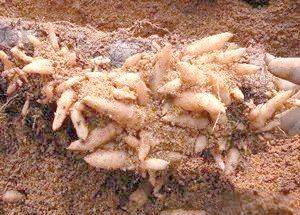
The larvae bites the tremors or chews the roots of the cannabis, leading to the emergence of broken truncheons and empty roots. They also break into the bacteria over the winter and further destroy the bacteria. Copper-green gold turtles represent such pests, with a generation of larvae rising in winter. Beginning in april, the winter larvae will be fertilized, and in may-june, the larvae will appear in may-august, with light. The month of july-september was a boom for larvae, while october was winterized in three-year-old larvae。
In the case of such pests, we can take a variety of measures to combat them. First, black lights can be used to trap insects. Second, larvae can be hunted for during planting and harvesting. In addition, 90 per cent of trichlorfon is 1,000 times or 75 per cent of thiophos-methyl emulsure 700 times may be used for irrigation or booby traps。
In addition, vermin is a common pest in the fertilization process. They are clustered on the piston tubers and on the bacteria, resulting in the stagnating growth of the pistons and their thinning. The pattern of vermin occurrence is related to the host plant, so care is taken to avoid plants with vermin when selecting bacteria. In terms of prevention, it is possible to kill during the harvest and to burn seriously hazardous bacteria。