The sprout, a new vegetable developed in recent years, uses seeds, roots, branches, etc. Of crops as a breeding material to grow seedlings, buds, buds, buds, plums or seedlings for food under conditions of weakness, temperature, quality, nutritional enrichment, non-polluting and health hazards. The short cycle of sprout production and its high productivity can result in four to eight times the yield of seeds, with significant economic benefits and very broad development prospects。
Type of sprouts。
1 seed (spectage) sprouts: a seed or sprouts of growth directly grown using nutrients stored in the seed. In addition to the usual soybeans, green beans, black beans and muscular sprouts, seeds from crops such as peas, carrots, scabs and gravy can be grown for raw materials such as mascara seedlings, seedlings, sprouts and radish sprouts。
• 2 sprouts: utensils of two or more years of brocade, flesh and the nutrients stored in the roots, roots or branches of meat are produced to feed the sprouts, buds, sprouts or sprouts. Such as sprouts, platinum (sprouts or sprouts) that are bred from cucumbers, chrysanthemums that are bred from chrysanthemums in dark, warm conditions, chrysanthemums, chrysanthemums, chrysanthemums, chrysanthemums, chrysanthemums, chrysanthemums, etc。
2. Plantation facilities. A variety of sprouts grow at a temperature of 20-25°c (18-23°c for peas) and when the external temperature is above 18-20°c, they can be cultivated in the open, provided that appropriate shades and water sprays are kept wet. During the winter and evening, energy-saving solar greenhouses, arch sheds and houses can be used for planting, and plant equipment is available。
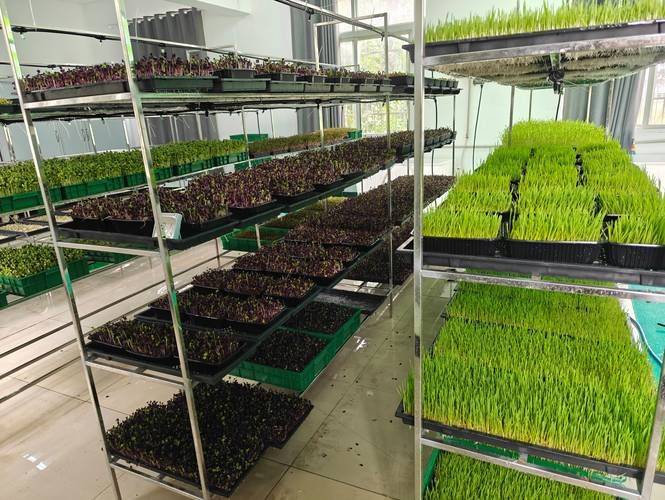
(b) 1st stage: when multi-layer stereoculture, a shelf of 3 to 5 floors, with a distance of 30 to 40 cm each, depending on the length of the nursery bed, may be used. For operational purposes, the height of the frame does not normally exceed 1. 5 cm。
2 packagings and substrates: plantation packagings are generally selected for plastic seedlings with specifications of 60 cm long, 25 cm wide and about 5 cm high. They can also use plastic baskets with small net holes, fruit plates, etc. The basis is white paper (or old newspapers), white cotton cloth, river sand, pearl rock, etc。
3 water-jet facilities: in order to ensure the need for moisture in the growth of seedlings, the matrix must be moist, so the spray needs to be enhanced, and a large area of plant-planting water-jet facilities should be available in smaller areas with sprayers and canteens。
3. Plantation techniques. At present, the bulk of the production is mainly pea sprouts, followed by carrots, fragrances, raspberry sprouts, etc., with roughly the same planting points。
The main cultivation techniques are:
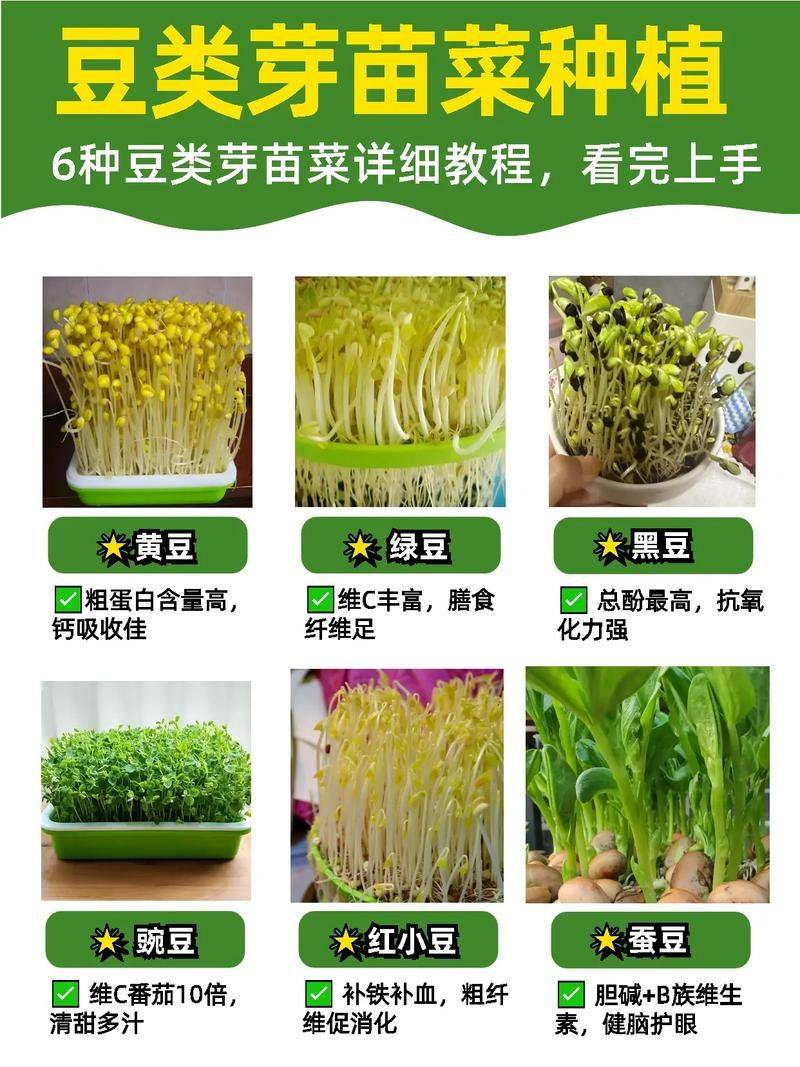
1 strictly selected species: new seeds with a growth rate of more than 95 per cent for sprouts, high purity and purity and full seed grains should be selected. In particular, sorbent seeds are highly vulnerable to gerbilization in high-temperature conditions, and more attention is paid to the selection of new seeds (with pre-summer wings). They grow sprouts with this seed, and they grow fast. Large, low fibres, good quality and high production。
2 leached seed seed: 2-3 times water from 20-30°c and then impregnated with 2-3 times the size of the seed. The winter is longer and the summer is shorter, ordinary peas are impregnated for 18 to 24 hours, fragrances for 12 to 20 hours, wheat for 24 to 36 hours and radish for 6 to 8 hours. When impregnation takes place, seed is placed in a flat packaging, wet towels, peas are placed at 18-23°c, radish and barley are placed at 23-26°c, and fragrance is sprung at 20-23°c. The seed can be sowed at 2-3 cm length。
Seeding: cleaning of seeding discs, underlaying of l-2 layers of white paper (or old newspapers) so that the paper is drained. The seed sprouts are spread evenly over the wet matrix, with the typical 60x25x5cm seed being 350-400 g of peas, 150-170 g of radon, 80-100 g of radish and 30-50 g of fragrance. After seeding, the seedlings are stacked together and covered with black plastic sheeting; the peas can be mounted and lighted up at 18-23 °c, barley, carrots at 20-25 °c, vanilla at 20-23 °c, and sprouts 2-3 cm high after 2 days。
Sapling management:
Lights: radish and radish require greater light, seedlings require medium light and peas are more adaptable. The light is not too strong during the growth of the seedlings, otherwise it affects the quality; the light is too weak to make the seed thin, leading to fall and decay。
Water: because the sprout itself is juicy, it is necessary to refill it regularly and spray it 2-3 times a day, at a level that does not have large drops of water from the inner base. The weather is hot, dry and sprayed more often, and less so on rainy days or when the temperature is low. Ventilation: a combination of temperature and humidity is required daily, with proper ventilation。
4. Harvest. The sprouts, which are made of young leaves, are softly organized, have high water content and are sold in a whole body. The collection criteria are as follows:
1 pea sprouts, sprouts light green, 10-12 cm high, top blades spread, soft unfibrosis。
The two seeds are fragrance, the bud is green, 8-12 cm high, the leaves are spread unlearned, and the scent is rich。
3 wheat sprouts, green sapling leaves, red lower axles, 12-15 cm tall and fattening leaves。
Four radish sprouts, green sprouts, 8-12 centimetres high, and fattening leaves。