Introduction to multi-dimensional sensors:
In some locations, there is a need to measure only one or more of the six force and force rectangular weights that are not fully measured, so there are two, three, four, and five-dimensional multi-dimensional sensors, each of which may have multiple combinations. A multi-dimensional sensor, in contrast to a single-axis sensor, has to deal with inter-dimensional (axis) disturbance questions caused by layout processing and process error, information marking questions and decomposition algorithms and circuits in vector calculations, in addition to dryness and consistency questions that are sensitive to measured weights. The product cage covers a full range of multi-dimensional sensors of two to six dimensions, ranging from hundreds of grams to dozens of tons, and acquires multiple zhuanli techniques in elastic layouts and vector decomposition circuits. Multi-dimensional sensors are widely used in robotic finger, hand claw research; robotic surgery research; finger-force research; dental research; force reaction; brake testing; precision assembly and cutting; rehabilitation research; plastic surgery research; product testing; tactile response; and indicative resource web practice. Industrial cages cover robotics, car production, automated live water line assembly, biomechanicals, aerospace and light-swipe industries. Multi-dimensional sensors - layout species
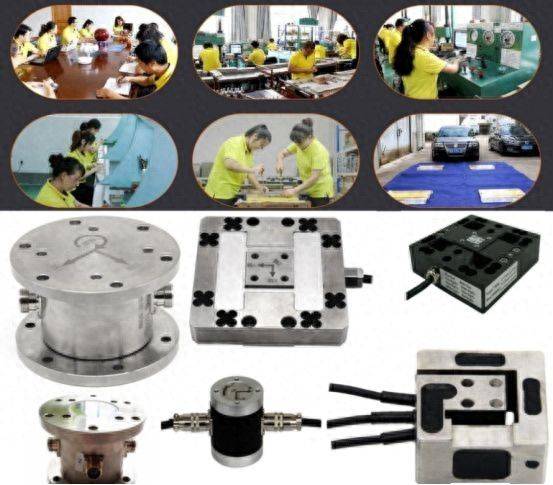
Three-dimensional sensors are capable of simultaneously testing three forces in a three-dimensional space (fx, fy, fz) through which the system is capable of testing and mastering not only the grip of robotic claws, but also the weight of the captured object and whether there is a slide, vibration, etc. During the capture manipulation process. The 3d finger sensors are both side-to-side and top-to-top, and the side-to-side 3d finger sensors are commonly used for robots with two fingers, and the top 3d finger sensors are commonly used for robots with multi-finger hands. The six-dimensional sensor is an intellectual robotic stress sensor capable of simultaneously testing the best possible message of a three-dimensional space (the cartesian coordinate system), i. E., three power weights and three power rectangles. The product is widely used in precision assembly, automatic grinding, surface tracking, hand-to-hand adjustment, zero-power teaching, and in aviation, space and machine processing, automobiles, etc. Sensor elastics accept a zhuanli layout, with a high vibrancy, rigidity, small dimensional coupling and machine overloading. Summarizing the decomposition of the bridge street lights as six points of three-dimensional space can be used simply for power control. Accepts standardized serial and simultaneous input output. The product can consist of a two-tier computer system with a master computer, as well as a link to the terminal to form a self-contained test assembly。
Multi-dimensional sensors
The sensor is referred to as the heart of the electromechanical countermeasurer, and its apparatus is very much determined to the degree of electromechanical measure and stability. In planning electrons, questions are often raised about how to select sensors. The heavy sensor is in reality a assembly that transforms a quality light into a measurable output of an electric light. The use of sensors should first take into account the reality of the work of the sensor, which is critical to the selection of the sensor, which is relevant to its normal operation, its safety and operational life, and even the reliability and safety of the entire counter. The effect of the situation on sensors is as follows:
1: high temperature conditions cause problems with the sensor in terms of coatings, welding, elastic internal stress, etc. For sensors working in high temperature conditions, high temperature-resisting sensors are often accepted; in addition, it is important to be equipped with heat insulation, water cooling or air cooling。
2: dust, damp, short circuit effects on sensors. In this case, very closed sensors should be selected. Different sensors have different methods of sealing and there are very wide differences in their closedness. The most visible seals are filled or coated with seals; rubber cushion machines are tightly sealed; welded (arc, plasma beams) and vacuum-filled nitrogen seals. From the results of the sealing, welding is sealed and filled with covered seals of a different amount. For sensors working indoor clean, dry-dry-out, adhesively sealed sensors may be selected, while for a small number of sensors working in wet, high dusty conditions, a membrane thermal seal or a membrane welding seal and a vacuum-filled sensor should be selected。
3: in the case of higher erosion, e. G. Wetting, acidity causing elasticity damage to sensors or short circuits, surfaces should be selected for spray or stainless steel masks that are effective and closed。
4: effects of electromagnetic fields on sensor output of chaos lamps. In this case, the shielding of sensors should be rigorously checked for good electromagnetic resistance。
5: flammable and explosive not only cause complete impairment of sensors but also pose a very significant threat to other equipment and physical safety. Thus, sensors working in flammable, explosive conditions impose higher requirements for blast protection: in case of flammable or explosive, it is important to select blast-proof sensors whose sealed masks take into account not only their containment, but also blast-resistant strength, as well as the water, tide, blast-proof nature of the cable coming out。
General characteristics of multi-dimensional sensors:
The world of japan is a world of penetrating technology, intelligent power, intelligent unmanned cars, automated unmanned factories, intelligent robots, intelligent highways and so on. Automation and intellectualization of everything is based on the development of sensor technology。
However, a very large number of people are inquisitive about sensors, and it is very strange how objects (equipment, machinery) verify outside changes and respond as naively as humans to outside changes. Five officials (eyes, ears, noses, tongues, skins) can sense outside information (visual, hearing, smell, taste, touch) and transmit it to the brain, which transfers the light numbers to the body。
If it is a lifeless object, it can be understood by using a variety of sensors as a human fives, and computers as the human brain, and the executing agency is a human body that achieves the same objective as a human being. So the sensor can also be called the "electron five." only with the characteristics of familiarity and inquisitiveness are we able to exercise the sensor better。
The sensor changes the amount of information (physical, chemical, biomass, etc.) from various non-power amounts to the amount of electricity according to specific rules, and the description of this variation in the input-output relationship discloses the normal characteristics of the sensor. Mainly divided into static and motion properties。
Static properties of sensors:
When input amount (x) is static (constant) or changes a slow light, the static properties of the sensor are discussed and the input output relationship is called static properties。
Linearity
Is the extent to which the actual relationship curve between the sensor output and the input amount deviates from the proposed line. A multi-dimensional sensor is defined as a very large margin between the contour curve and the proposed straight line within the full range。
Visibility
The vibrancy of the sensor is the ratio of the increased output Δy to the input Δx in its steady state, commonly expressed as mv/v。
Accuracy is defined as the degree of superiority outlined in terms of precision and accuracy, the introduction of the concept of strength and accuracy in the use of engineering, the expression a, the accuracy of the sensor, and the grade of the industrial instrument in our country, which is divided into 0. 1. 02, 0. 5, 1. 0, 1. 5, 2. 5, 5. 0 and seven grades。
Test and resolution
The resolution is a very small measure of which the sensor can feel a very small change in the measured air, and a very small measure of which the value is derived from a change in the indication value, which should be separated from the dynamic factor (viometric factor - the ratio of output to input). On the surface, the sensor's resolution is endless, except that we can actually see the limits of changes in the space in later reading or sampling equipment。
Delay
The delayed properties indicate the degree of inconsistency between the test system's positive (increased input volume) and reverse (reduced input volume) journeys (round load) by entering an output characterization curve. And that is to say, for input of the same size, the test system tends to correspond to the output of two different sizes in the bottom, in the back。
Repeatability
Repeatability refers to the degree of inconsistency of each measurement by the sensor during the verification of a uniform physical volume, also known as stability, and the common repeated continuous measurement uniform input is worth a very random error. Repetitive ruggedness is associated with a very large number of random ingredients and is similar to the causes of delay, which can be measured by empirical techniques。
Stability
Stability means the ability of the sensor to maintain performance parameters over a longer period of time, also known as permanent question stability, which can be expressed by comparing error and error。
Floating
The drift of the sensor means that, under external disturbance, the output produces an unneeded change unrelated to the input amount. The drift consists of zero-point drift and live drift. Zero-point drift or lively drift can be divided into time drift and temperature drift. Time drift is defined as the slow change of point, point or vibrancy at any given time. Temperature drifts to zero points or lively drifts caused by changes in temperature in the environment。
Motion properties of sensors:
When you enter a characteristic that changes over time, it indicates the corresponding properties of the sensor to the amount of input that changes over time. A function of measured time, or a function of frequency. Feature: the sensor's input output tracks the changes in the input at any time, and it has no time lag for any frequency input。