Hospital air purification is the cornerstone for preventing hospital infections, ensuring the safety of patients and patients, and improving the quality of care. The hospital air cleaning management code (ws/t 368-2012), promulgated in 2012, as the country's first industry standard for hospital air purification, has been a key guide for regulating air purification in health institutions for over a decade. However, with the rapid development of medical technology, the emergence of new pathogens such as the covid-19 outbreak, and the rapid evolution of air purification technologies, it has become difficult for the old version of standards to fully adapt to the demands of the new era of perception and control。
In 2025, the national board of health and health issued a new version of the standards for the management of hospital air cleaning (ws/t368-2025), which is not only a simple update of technical parameters, but also a rethinking of ideas and systems. The new edition fully incorporates evidence-based medical evidence and practical experience from both domestic and international sources in recent years, emphasizing the precision, thoroughness, diversity and humanization of air purification. This paper will provide an in-depth analysis of the significant changes to the new version of the standards and their far-reaching implications, and will focus on the key role that plasma air disinfectors can play in the new technological landscape。
Ws/t368-2025
Compared to the 2012 edition, the new version of the standards has achieved significant breakthroughs in terms of framework, technical and managerial dimensions, mainly in the following areas:
In order to build integrated operations and strategic partnerships, the science and technology forum focused on the theme of "intelligence for the future", focusing on new patterns in deep exchanges and creating new perspectives for intellectual science and technology。
1. Ideas upgrading: from “purification” to “management”, emphasis on overall quality control
The difference between the word “norms” in the old version of the standard name and the new version of “management standards” is far-reaching. It represents a shift in focus from simple equipment operations and methodological applications to a complete management system that encompasses risk assessment, strategy selection, impact monitoring, maintenance management and continuous improvement. The new standards require hospitals to establish responsibility for air purification management, develop and implement standard operating procedures (sop) and conduct regular supervisory inspections to upgrade air purification from the logistical level to the strategic level of prevention and control of infection in hospitals。
2. Classification precision: refinement of spatial hierarchy and implementation of dynamic risk management
The new version of the standards enriches and details the classification of risks across hospital departments and functional areas. It is no longer limited to the traditional categories of surgery, wards, etc., but may be further distinguished:
High-risk areas: e. G. Organ transplant surgery, negative pressure isolation wards (for aerosol-borne diseases such as tuberculosis, measles, covid-19)。
High-risk areas: standard operating theatres, ict, neonatal wards, maternity wards, burn wards。
Central risk areas: e. G. General wards, treatment rooms, endoscopy rooms。
Low-risk areas: e. G. Administrative office areas, corridors, pharmacies。
Differentiated air purification requirements (including air exchange, air cleanliness level, disinfection device configuration, etc.) have been introduced for different risk classes, achieving optimal allocation of resources and precision control of infections。
3. Scientificization of parameters: updating and refining key performance indicators
Based on a wealth of research and practice, the new version of the standards makes more scientific adjustments to key parameters. For example:
(b) the number of air exchanges: there may be a higher frequency requirement for some high-risk areas to ensure rapid dilution and removal of pollutants。
Level of cleanliness: a closer interface with international standards to identify the levels of air cleanliness in operating rooms for different types of operation。
Disinfective effects evaluation: not only is attention paid to the extinction of natural bacteria, but it reinforces the efficiency requirements of standard experimental bacteria (e. G., white fungus, yellow fungus, viral cactus, etc.) and the evaluation system is more rigorous。
4. Monitoring real-time: promoting dynamic and intelligent monitoring
Air monitoring under the old version was mostly static and intermittent (e. G., tablet deposition). The new version encourages and promotes the use of real-time online monitoring systems for continuous monitoring of airborne particulate matter (pm2. 5, pm10), humidity, carbon dioxide concentrations and selected pathogens. This dynamic data can provide immediate data support for hospital early warning of infections and ventilation system regulation, moving from “ex post facto” to “pre-warning, control”。
Ii. Far-reaching implications: construction of “air defence lines” controlled by the new age hospital
The publication and implementation of ws/t368-2025 is a landmark for our public health and hospital management。
Improved overall effectiveness of prevention of infection in hospitals
Through the precise management of the classification, hospitals can devote the best resources to the most critical areas, significantly reducing the incidence of infections in hospitals such as surgical tract infections and respiratory-related pneumonia, directly ensuring patient safety and improving medical outcomes。
2. Increased emergency response to new outbreaks of respiratory infections
The covid-19 outbreak revealed the existence of short sheets in medical institutions in response to aerosol-borne infections. The strengthening of negative pressure isolation, efficient ventilation and high-level air disinfection in the new version of the standards will significantly enhance the ability of hospitals to “peace union” so that they can rapidly construct solid air-transmission barriers in the face of similar public health events in the future。
3. Promoting the upgrading of the medical equipment industry and technological innovation
The standard lead will generate significant market demand for high-performance, intelligent air purification equipment. This will provide incentives for domestic producers to increase their r&d inputs, break technological bottlenecks, promote integrated innovation in plasma, light catalyzing, intelligence transfer, etc., and promote upgrading across industries。
4. Promote the construction of green hospitals to achieve energy conservation and reduction
The diversified technical route allows hospitals to choose the most suitable option according to their own circumstances. Many new technologies, such as plasma, have characteristics such as low energy consumption and human coexistence. Real-time monitoring systems can also avoid the energy consumption associated with traditional ultraviolet or chemical disinfection, achieve needs-based clean-up and conform to the concept of green, sustainable modern hospital construction。
5. Improving the occupational environment of medical personnel and patient access
The spread of the “human coexistence” model means that clinical activities can be carried out on an ongoing basis, avoiding both the occupational risk of chemical disinfectant residuals or uv leaks and the inconvenience of interruptions due to disinfection, as well as increasing work efficiency and medical comfort。
Technological strength: the role and role of plasma air disinfectors under the new standards
In the diversified technology landscape constructed by the new version of the standards, plasma air disinfection technology, due to its unique technical advantages, is expected to be upgraded from an “optional” to a “mainstream programme” and to play a central role in the following scenarios:
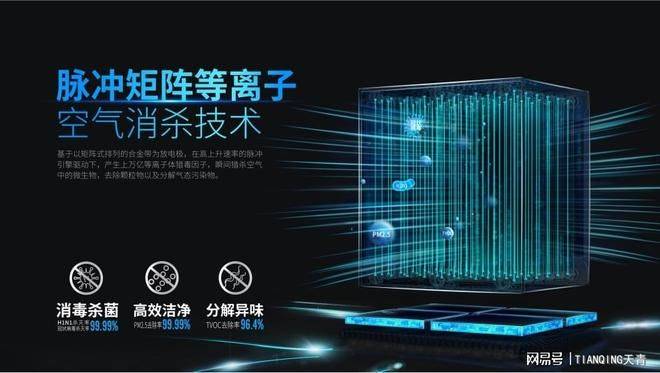
(i) technical rationale and strengths: core claims for new standards
Plasma air disinfectors produce large quantities of high-activity substances (hydroxy-free radicals) by applying high-voltage electric fields. These active ingredients can rapidly destroy the protein structure and nucleic acid of microorganisms (bacteria, viruses, fungi) and achieve efficient extinction. Its advantages fit perfectly with the requirements of the new standards:
1. High-efficiency broad spectrum: good extinction effects for a wide range of pathogens, meeting the requirement for the elimination of standard experimental bacteria。
Human coexistence: work can be sustained in a human environment to achieve “dynamic disinfection” and to address once and for all the pains that traditional ultraviolet or chemical fumigation must clear the field, greatly increasing the timeliness and ease of disinfection。
3. Continuous purification: not only can it kill micro-organisms, but it can also effectively degrade volatile organic matter (vocs) in air, alien molecules (e. G. Formaldehyde, ammonia) and improve overall air quality。
4. Low safety: no harmful by-products are produced during work and energy consumption is usually much lower than the sustained high power of large ventilation systems。
(ii) key application scenarios
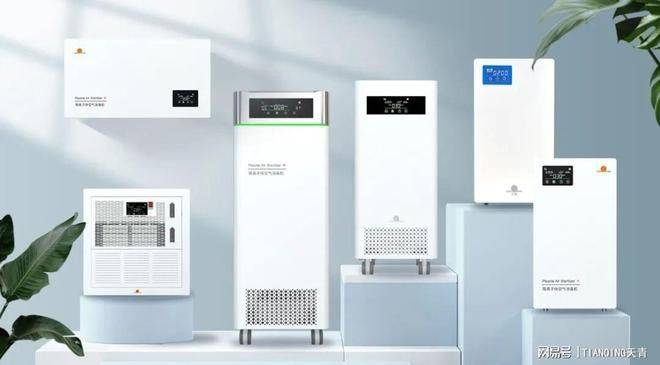
1 outpatient, emergency and waiting areas: high mobility, complex diseases, high risk areas for cross-infection. Plasma equipment may be embedded in air-conditioning tanks or continue to operate as a vertical/capture cycle wind unit, effectively reducing the load of pathogens in the environment without compromising normal order。
2. General wards and icu: 24 hours of uninterrupted sterilization, especially for persons with severe immunopathy and reduction of the risk of infection such as respiratory pneumonia。
3 paediatrics, neonatals: environmental safety requirements are extremely high and plasma technology offers ideal options with no radiation and no residual properties。
4 endoscopy centres, dialysis centres: continuous air purification in operational gaps and processes to reduce the risk of infection。
Auxiliary reinforcement of the negative pressure isolation wards: prior to ventilation, the air is pretreated using plasma modules, which can kill pathogens in a safer manner, protect the outdoor environment and medical personnel。
Challenges and prospects
Despite the wide range of prospects, the challenge remains for plasma technology to become a real force:
Standardized impact evaluation: industry needs to establish more uniform and rigorous testing standards to ensure that the decontamination of different brands and models is real, reliable and comparable。
Ozone control: it is important to ensure that the ozone concentration generated by equipment is well below the national safety limit (0. 1 mg/m3), which is the safety threshold。
Long-term reliability: need to demonstrate performance stability and durability of core components under long-term continuous operation。
Intelligent integration: the future plasma disinfector should have seamless access to the hospital building's self-control (bas) or infection monitoring system, and automatically regulate the intensity of work based on real-time air quality data, making it an indispensable “neurological endpoint” for smart hospitals。
Summary
The promulgation of a new version of the standards for the management of hospital air cleaning (ws/t368-2025) is an important step towards modernization and precision in the area of infection control in our hospitals. It is no longer merely an operational manual, but also a programmatic document leading the development of the industry, with its emphasis on management thinking, risk ranking and technological diversity, which will profoundly reshape the “airview” of chinese hospitals。
In this transformation, plasma air disinfection technology has ushered in a golden period of development, thanks to its salient features of efficiency, safety and human coexistence. It is no longer a complementary tool, but a key technical vehicle for building air safety lines at the new age hospital and for achieving the vision of “disinfective continuous, sensory seamless connection”. As standard landings and technologies continue to mature, plasma air disinfectors are bound to play an increasingly important and central role in safeguarding the patient's breathing health and improving the quality of medical care。