An effective reduction of watermelon-coast-quino-coated-blue cultivation technology
The salt city of jiangsu province, located along the eastern coast of the country, has continued to grow in recent years with the rapid development of efficient facilities agriculture. Owing to the high salinity of the soil in the area and the monoculture of cultivation, there are more obstacles associated with it, with an increase in the incidence of endemic diseases such as watermelon atrophy. Quinoa is of extremely high nutritional value, known as “nutrient gold” as “super grain” and “the king of vegetarians”, and has characteristics such as drought, cold, infertile and saline resistant to extreme weather and soil conditions. As a result, after many years of experimentation, the author has explored the cultivation model of a large watercracker — quinoa — which is used three times a year, which can effectively reduce the barrier to watermelon connection and increase the efficiency of the use of the plastic shed and reduce the cost of production; 3,800 kg per 667 m2 smelt, 200 kg per quinoa, 3,500 kg per slurry, 13,300 yuan per 667 m 2 product, at a cost of 3,552 yuan, with a net income of more than 9,748 yuan, with significant economic benefits. The model has been extended to 33. 3 hm 2 (500 acres)。
1 varieties selection
The watermelon chooses pre-maturity, anti-deceased and complex varieties, such as early childhood 8424 and somong 5 (chosen by the institute of agricultural sciences of the jiangsu xue region). Quinoa has chosen salt-resistant and flood-resistant varieties such as quinoa 1 and quinoa 1 (chosen by the xinyang agricultural pilot station of the academy of agricultural sciences of jiangsu province). The recommended type of glycerine is sweet (chosen by the vegetable institute of agricultural sciences, jiangsu province)。
2. Spectrum arrangements
The watermelon seeded around 10 february, using cave-breeding, planted in mid-march and collected from late may to early june. Quinoa planted seedlings in early june, moved in early july and harvested in late september. The ball was bred in early september, planted in mid-october and collected from late december to early january。
3 elements of watermelon cultivation techniques
3. 1 fertilizers were applied throughout the field during the first half of march to clear the excavated residues and weeds and to plough the dredge soil, applying commercial organic fertilisers of 300 kg, 42% potassium sulfate compound (n-p-k for 12-11-18) 20 kg as base fertilizers per 667 m 2. First, 1/2 base fats are rolled into the soil, then the remaining 1/2 base fats are put under the plant line and covered by 1 layer of black and white two-coloured membrane, flatting, 80 cm small and 1. 5 m large。
3. 2 cultivation of seedlings by cave seedlings around 10 february. After planting, seedlings are covered with seed with a seedling base, with full moisture, with 1 layer of membrane on the nursery, with a small arch with a height of 0. 4 m and a width of 0. 8 m, and, finally, with a large arch on the small arch。
3. 3 cultivation of watermelon seedlings at 60-80 cm range and 130-150 cm line distance per membrane, 400-500 per 667 m 2 plant, and timely water distribution for seedlings。
3. 4 in the field management system, the whole branch is carried out in the form of reptile cultivation, with the planting of the plant entering the cranium, with the pre-cooked watermelon species generally taking the whole chicken branch, and the mid- and late-literate watermelon species generally taking the full three; the female, who chooses the second female of the main chicken and the side of the chicken for artificially assisted pollination, with one to two melons each. The watermelon stretches up to 20 kg of ammonium nitrate per 667 m 2 water. Numeric fertilization 2 follow-up with water soluble fertilizer (n-p-k 18-24-19) 20 kg and potassium sulphate 20 kg per 667 m 2. Watermelons grow at temperatures of 25-28°c in the daytime, 12-15°c in the night, and are kept at about 75% humidity, with timely ventilation and heat spread. Pest control is based on a combination of prevention, agricultural control and chemical control, and attention is paid to the control of pests and pests such as pollinosis, smoke lice and mackerel, with special attention to the control of aphids, with 2. 5% brocythylene cream 3,000 times liquid spray, which is sprayed every 5-7d days. The harvest continued from late may to early june, when the harvest was completed and the shed cleared in time. Before planting wheat, three-dollar compound fertilizer (n-p-k 15-15, same) per 667 m 2 was applied to 40 kg, with deep-tilled soil。
4 technical highlights of quinoa cultivation
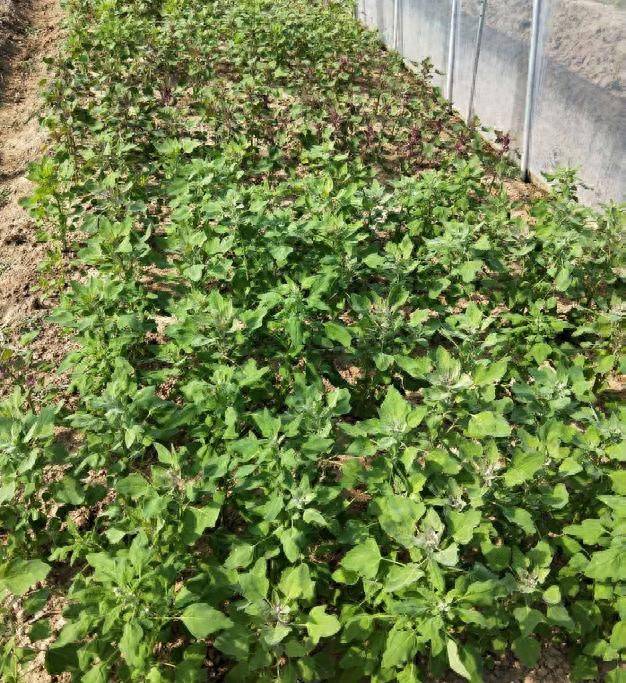
4. 1 quinoa is sowed around 8 june, with dentomatic base seedlings in the greenhouses, with 2 grains per den, timely watering after sowing and covering 1 layer of thin membrane humidity, with sun-covered nets at high temperatures。
4. 2 the planting of quinoa seedlings at 30 cm range and 50 cm range in the first half of july, which are built into the sheds and are produced in a timely manner, after a long period of time, by the zhejiang kopo biotechnologies ltd. (the main components of which include decomposition acids, trace elemental beryllium and zinc, etc.), in search of fattening and strengthening field management。
4. 3 field management when the seedlings are 10 to 15 cm high, they grow and fatten. A total of usd 3 per 667 m2 of composite fertilizer 46-49 kg is applied, as measured by moderately fertile plots. After planting, 15-20 d (days) fertilize on the basis of the condition of the child, which is not appropriate for urea application, 11-14 kg per 667 m 2. It is possible to plough urea into the field, then water it and then weed it. When quinoa is 100 to 170 cm taller, nutrition and reproduction are growing stronger, requiring adequate water fattening, if well-intentioned and strong, and if young children are weak, they need to fatten. The principle of early and early re-traumatization can be applied in combination with a one-time urea application of 10-15 kg of urea per 667 m 2 cropping or twice. In general, the first fat chase should account for more than 60 per cent of the total fat chase, and a blistering seedling that has been injected with pregnant saps can wait until the flower starts. The temperature in the shed remained at 15 to 35 °c during quinoa growth, and the humidity was around 50 % while keeping ventilation. For every 667 m 2 seeding, 3% octhion granular agent 5 kg for underground pest tigers and 1,500 times liquid spray for gold turtles and moths。
4. 4 in mid-september, harvests were performed when quinoa plants were dying, leaves were yellowened and seeds were fully mature. After harvest, sheds are cleared and fertilized in a timely manner at a rate of 35 kg of composite fertilizers of three cents per 667 m 2 to be planted with ball-laying kale。
5 elements of glycerine cultivation technology
5. 1 cultivation of seedlings in early september with the use of cave seedlings. Seeds are tanned 6-8 h (hours) and then ploughed using 50% of the seed mass 0. 5% of the polygreasable powder. Each 667 m2 seeded 1 grain per den at 25-30 g, watered and covered with 1 layer of thin membrane, watered in a timely manner when it came out, and ventilation at high temperatures。
5. 2 in the middle of october, a long, strong ball of glycerine seedlings with 45 cm range and 45 cm range were selected. For each 667 m2, 6,000 to 7,000 plants are established, 7 d (days) of suitable seedlings are established, water is poured into the plant, and collage kale is used to improve field management as it enters its rapid growth phase。
5. 3 field management and pest and pest control the principle of field management of fatty water is pre-control, i. E. Control of glucose nutrient growth before the lotus term, which is dominated by controlled water croakling; after the lotus term, following a long-term combination of water can be used to fertilise the shield (a combination of amino acid and various trace elements such as nitrogen, phosphorus and potassium, organic content of 30% and total nutrient content of 45%) 1-2 times. Temperatures are kept at around 20°c during kale growth, around 12°c at night, about 50% humidity, and stay ventilated. The main diseases are black scabs, root scabs, black scabs, and so on. The combination of agricultural and physical prevention approaches, such as the use of chasm traps, is used for prevention. The frequency, concentration and safety interval of use of various pesticides are strictly controlled, as far as possible different types of agents are selected for rotation, and the use of chemical agents is strictly prohibited after the harvest period。
5. 4 in late december through the following year, in the first half of january, kale ball sizes and tightness reach 80%, and when harvests are complete, the sheds are cleared and the watermelons are grown。