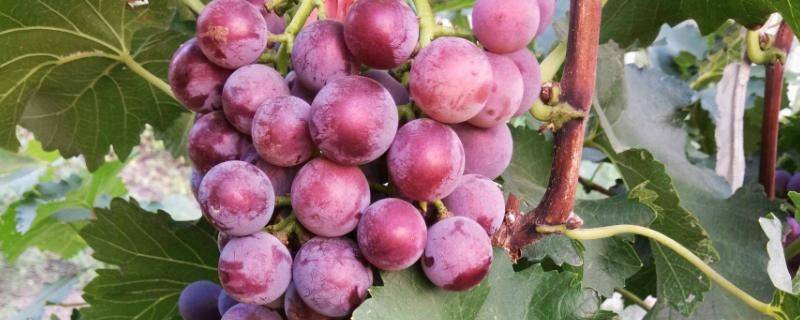
1. Selection of parks: land for planting is selected as an area with easy drainage, high terrain, ventilation, soil fertility and organic abundance. Selection of seedlings: high-resilient, virus-free quality varieties are selected for cultivation. 3. Plantation of fruit seedlings: the appropriate planting time is february-march, with a distance of 1. 8 metres and a distance of 2. 5 metres. 4. Scraping and trimping: in the spring, seedlings need to be replaced with double sprouts and small sprouts, and partial grafting is required in winter。
I. Methodology and technology of transfer of ground greenhouse
1. Selection of parks
Land is selected for cultivation in relatively good ecological and isolated conditions, with easy drainage and relatively high topography, while it is required to be ventilated to the sun, fertile soil and organically rich, usually with gravel and sandy soils with a ph value of 6. 5-7。
2. Selection of seedlings
High-quality, highly resistant, virus-free grape varieties are selected for cultivation based on an understanding of local climatic conditions。
3. Plantation of seedlings
The planting time is generally appropriate for february-march of each year, with a distance of 1. 8 metres and a distance of 2. 5 metres and acreage of 148。
Four, sprouts cut
(1) the spring seeding of the plant shall be followed by the timely elimination of the twin sprouts and their retention. The plant must be pre-planted in a timely manner (two to three times) and removed from the floor so that more nutrients can be transported to the flowerer section, while some of the bouquets can be properly removed from the last quarter-1/5 days prior to the flowering, so that the nutrients can be concentrated in the provision of fruit grains。
(2) adoption of mid-long cuttings in winter, with 10-15 new floors per square metre in this case, new steps need to be staggered to ensure that each result can grow 15-25 leafs and that the acre production can generally be contained within 2,500 kg, so that they can achieve a close, well-integrated and mature effect, thus increasing the smell of berries and their colour。
(3) in pursuit of high yields, some growers refrain from gravitating and slitting in the summer, resulting in a fragmented supply of nutrients and mixed sizes of fruit grains. Or, when the crop is cut in winter, it cuts and leaves more chickens, making the result quickly move up, leading to a thick ear on the top of the shelf, at which point the ear is overloaded, the nutritional distribution is uneven or unbalanced and it is difficult to produce quality fruit. Thus, in order to improve the light conditions on the shelf, reduce the incidence of disease, promote lumbering and femininity, with leaves to be trimmed after grape harvests, and remove excessive, strong branches on the top of the shelf, as well as weak and misplaced branches on the lower shelf, in order to reduce nutrient consumption and to nurture a robust outcome. In addition to this, air moisture under the shelf can be reduced to prevent disease。
5. Strengthening water fertilization management
(1) the requirements for fertilizers are more stringent in the case of raisins, which typically absorb 1. 5 kg of pure nitrogen, 1 kg of phosphorus fertilizer and 1. 5 kg of potassium fertilizer per 100 kg of berries. During the growth of berries, sufficient moisture is required to increase the grain and increase production. It should be noted, however, that berries are not overfilled after they reach chromosomal maturity, in order to prevent the sugar of the grains, increased acidity, poor colour and, in serious cases, even fissures, which can lead to asymptomosis and late decomposition, which can have a serious impact on the colour, scent and taste of the porcelain grapes, leading to a decline in the quality of the berries. Reasonable water should therefore be poured, in particular 15-20 days before harvesting。
(2) the application of nitrogen fertilizer should be controlled during the planting period and the application of phosphorus potassium fertilizer should be increased in order to prevent the growth of venomous strains, which can lead to leaf depression, poor ventilation and insufficient light, preventing the normal growth and maturity of berries. Moreover, excessive use of nitrogen fertilizer can lead to precipice, thinning of the skin and poor resistance to various strains. This can be done by spraying 800 times the potassium phosphate solution on the coloured leaves of berries and once more in half a month to improve the quality of berries。
(3) when leaves fall in the autumn, the acres are exposed to decomposition of 2,000 - 3,000 kg of organic fat and 2% of phosphorus fat. Temperature at this time is relatively high, contributing to organic fertilization and the absorption of nutrients by root systems。
6. Combating pests and diseases
(1) before the spring plant sprouts, five waves of thiomers of thiomers were sprayed to combat pollinosis and fur disease. A week later, 200 times the equivalent of bordeaux was sprayed to combat black pox. Starting in early june, 50 per cent (600-800 times the liquid) of debacterium was sprayed every 10-15 days, 3-4 successive times and 400 times the aluminum ethyl phosphorus to combat froste。
(2) insects such as tea, green leaves, which can normally be treated with 40% ointment, 1000-1500 times more. Grape-to-wing moths can inject 50 per cent of the diarrhea into the cavity, then seal the worm hole with clay。
(3) it needs to be noted that in order to avoid the effects of pesticide residues on the marketing of grapes, spraying must be stopped about half a month before harvesting。
7. Harvesting fruit
(1) large-peak grapes are produced for approximately 130-150 days in the long term and require effective warming of 3,000-3200°c during their growth. In places such as anhui, pompous grapes are usually fertilized in early april, flowering in mid-may and ripening in mid-july and late-july. Starting in late july, berries become purple, containing more than 15 per cent sugar and 0. 6-0. 8 per cent acid, and can be picked up when the scent is more fragrance. Picking in the first half of july in order to pre-market was inappropriate, as sugar and aromatic substances in berries were low at this time。
(2) the timing of extraction is generally appropriate in the morning or afternoon following dry dew, which is not suitable for harvesting in the dark or fog. Grape moisture and field heat should be minimized, while light cutting should be used to prevent the break-up of the pellets or the removal of pollen。
Ii. How long till the grapes grow
As a general rule, the raisins can begin harvesting in the second year of cultivation, although the timing of harvests is dependent on the actual situation, given the different climatic conditions and individual planting methods。
Large-peak grapes are fruits at the end of the summer and early autumn, and grapes in the natural world vary in maturity due to the area and variety they are grown, usually divided into three varieties: pre-, mid- and late- and late-to-be. In the southern part of the country, the maturity of the giant grapes is generally in june-july, while in relatively high altitudes, such as xinjiang, the maturity of the giant grapes is generally in august-september, with roughly the maturity of the great grapes being in july-october, and most of the grapes in other seasons being grown in large huts。