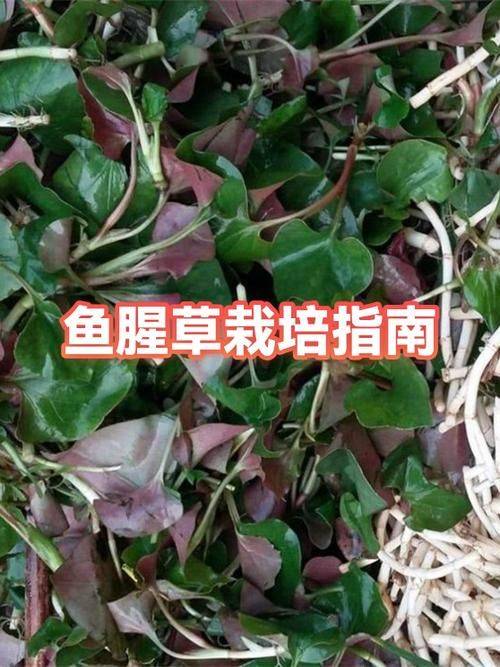
Fish weed is a high-quality, high-yield cultivation technique. In recent years, some farming households in rural areas have been growing artificially and with high economic benefits. Each acre can produce l000 l500 kg of fertilized root, at an average price of $3. 00/kg in the field, with an income of $3,000 - $4,500. High-quality and high-yielding farming techniques for fish grass are described as follows: first, large-scale cultivation of fish weed takes a certain number of plants, which are grown from wild fish weed. Before planting, wild fish weeds should be split and plugged in order to increase the number of saps. The production of separate plants is carried out in march-april of each year, after which wild fish grass is sown in a timely manner into sandy land or directly into the shed. In the spring or summer, the planting of the branches can be carried out, with the immediate removal of the fish herbs and the planting of them into the sandy earthbeds and their transplantation into the sheds after the rooting of the rods. It usually lasts for two months, after which it selects white, coarse roots to form a small section, requiring two argon buds on each branch of the tube, which are then planted into the nursery. In the event of drought, water should be poured in time to ensure that the bed is humid; in the event of rain, the field must be removed from water accumulation, otherwise the roots of the plant are susceptible to decay as a result of prolonged water accumulation. Land selection and cropping of fish grass are suitable for areas about 800 metres above sea level, requiring more flat areas to be cultivated and sufficient clean water to facilitate drainage and cultivation. The selection of areas for cultivation should be followed by the early removal of miscellaneous items from the site, accompanied by fertilization and tillage. Science-based production practices have shown that the use of boxing for planting not only increases the thickness of the earth and facilitates field management, but also improves the yield and quality of fish grasses, which is more advantageous than traditional flatland cultivation. It should be adapted to local conditions, with low-lying areas made of sun and highlands made of flat. 4. A strong, disease-free tubing shall be chosen for the planting of fish weeds, which shall grow by about 5 centimetres before planting, and shall be dug up in accordance with planting arrangements. 5. Water management should be based on deep tilling, mainly by consumable farmers, potassium nitrogen phosphorus complex and pie fat, to ensure that the fertilizer is fully mixed with soil. In recent years, some farmers have developed a new planting technique because of the low application of fertilizers, which can lead to whitening of fish and weed colours, reduced hair, and reduced sales value: digging a ditch of about 0. 5 metres long, then putting it in straw and carefully laying it, and spreading fertilizer such as phosphorus fertilizer, grass ash on the straw, and then filling the soil. The whole field is treated in this way, and then the fish and herbs are planted. In order to meet the nutrient demand for fish and grass, fattening should be pursued several times before the seedlings survive until the seals are closed, but it is enough to use chemical fertilizers and appropriate quantities of human urine. Once the fish grass enters its normal lifetime, one diluted human and animal dung is pursued, and one more time after 30 days. Because fish grasses require a large amount of fertilizers, water is also required for their growth in a timely manner for the purpose of fertilization, but the amount of water is sufficient to keep the soil wet and water is not available in the field. Vi. There is a low probability that pests will occur against fish herbs and that chemical agents will generally not be used to combat pests, but are prone to leukemia during their growth. In addition to the timely application of fertilizers and the strengthening of field management for the prevention of albinism, other crops will be adapted to improve the soil environment and reduce bacterial sources after two years of continuous fish and grass cultivation. Yeah