In mid-winter season, the taro of the town of fugen in yunnan province continues to be exploited. In the village of binno, a town of 2,100 metres above sea level, 200 acres of white taro were fruitfully harvested. The average acre production of 2180 kg was measured in the field, resulting in a new record production of white taro at high altitudes。
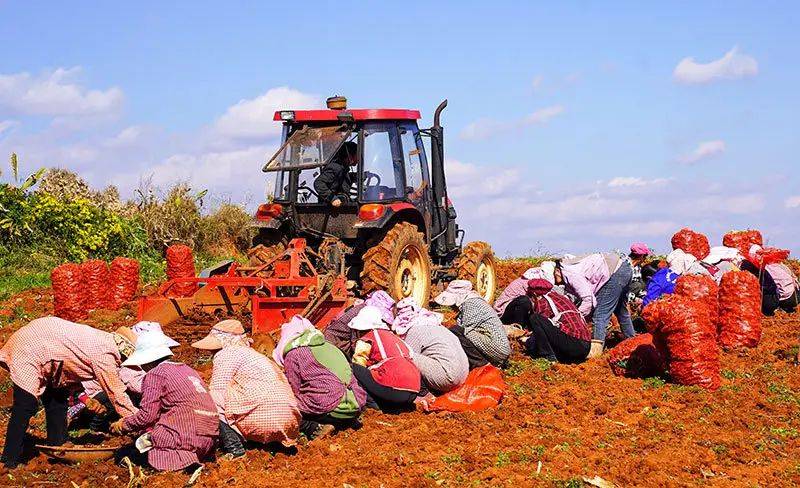
The workers sorted the tart。
The tiller slowly passed, and a full of white tart rolled out of the mud. The agricultural technicians then demarcated the production areas and the workers carried out orderly follow-up work such as mud removal, sorting and bagging. Scientificly measured, the production of new white tara varieties is higher on average. The results show an average of 2,180 kg of this white taro. “behind this production is the result of our success in overcoming key technical difficulties such as ferocious and white tara rotations in high altitudes, and two-year crop-free farming.” dong gon, director of the fugen taro institute of agricultural sciences, yunnan province, spoke at the scene。
The white taro tradition is known to be suitable for cultivation at altitudes ranging from 600 to 1,500 metres. An area of 2100 metres above sea level has been considered a “no-god zone” for white taro cultivation. To address this challenge, the joint scientific research institute of the rich source county has been successful in promoting high-quality disease-resistant and highly adaptable varieties, on the one hand, and the continuous innovation of planting techniques, on the other hand, to achieve systemic breakthroughs from the selection of varieties to the cultivation model, on the other hand, and to promote the “household” of white taro in the high-altitude mountains, on the other。
Looking at production better than expected, the farmer yao yao is happy to say, “i planted more than 200 acres of white taro this year, using the varieties and techniques recommended by the institute. This year the price of white taro is about 20% higher than the price of flower taro, making more than 3,000 more per acre.” at present, the purchase price of the local white taro is about $8 per kilogram, about $2 more than that of the flower taro, which significantly boosts farmers ' motivation to grow。
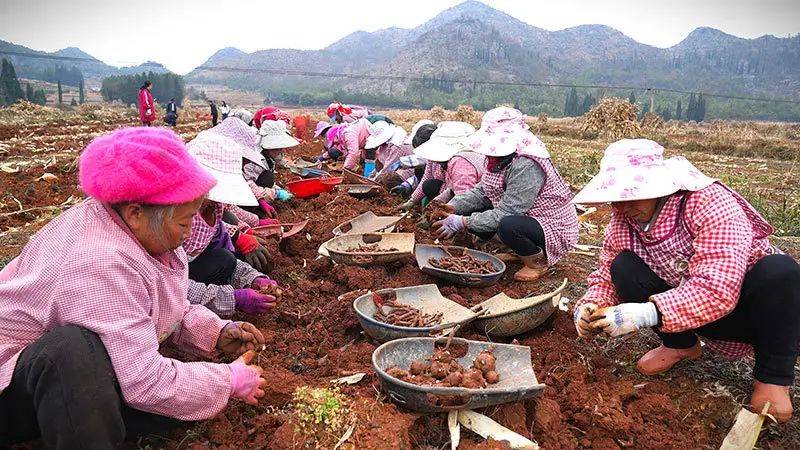
The workers sorted the tart。
As the country's largest taro-growing district, in 2025 the area of taro-growing in the rich resource district was 120,000 acres, of which it expanded to 40,000 acres, or nearly one third of the total area. The strong production of white taro at high altitudes has further increased the size of the industry, boosted the efficiency of niche agriculture and created a solid industrial base for rural revitalization. (panda, mahjong, wu jinkun, handsome dan man/chart)