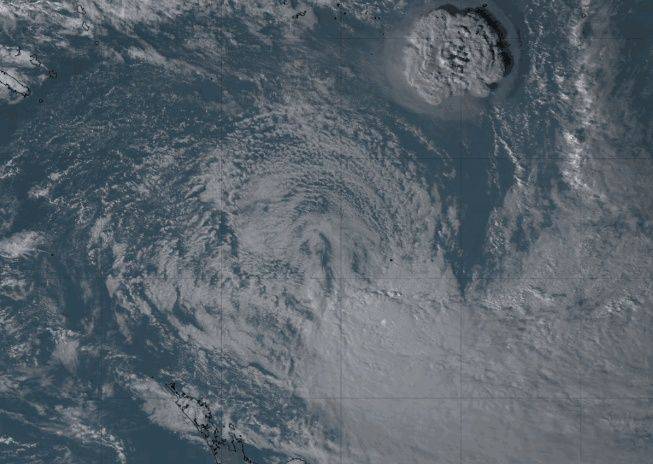
At about 12. 10 p. M. Beijing time, on 15 january, there was a violent eruption of a plini-type volcano near the island of hong ahaapai, south pacific island, where a large amount of gas was caught in smoke forming a large mushroom cloud, penetrating the troposphere between the troughs, undermining the momentum of the tropical cyclone cody, which operates here. According to estimates from the web site ofweathermodels, the blasting altitude is at least 25 km. Meteorological satellites captured the eruption, and even on the global cloud map, it became evident. After the most intense eruptions, the ash clouds of the volcano did not follow the western wind belt of the troposphere from west to east, but instead went the other way, heading west towards australia. This suggests that ash has entered the stratosphere。
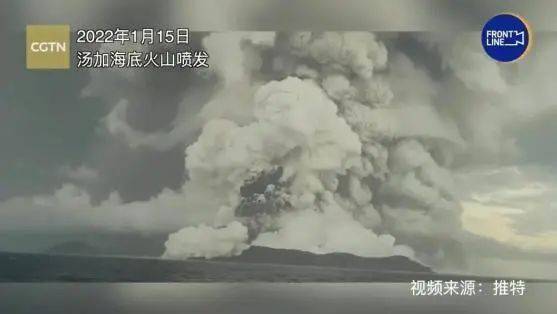
It is understandable that undersea volcanoes have erupted with large amounts of hot magma and ash, and that ash and rubble have been sprayed out of the sea surface. Why does the hot magma continue to run out of the sea? Didn't you say the fire would be extinguished
In fact, the volcanic fires are not easily extinguished by water。
The pacific ring of fire, also known as the pacific rim volcanic earthquake zone, is an area with a high frequency of earthquakes and volcanic eruptions around the pacific ocean, approximately 40,000 kilometres long and hoof-shaped. Ninety per cent of global earthquakes, 81 per cent of major earthquakes and 75 per cent of volcanic eruptions occur around the pacific ring of fire。
According to scientists such as zhang jinchang, qianqiang, yang xiaodong and zhou zhiyu of the south china sea marine institute of the chinese academy of sciences, the tonga volcano is located at the south-west end of the pacific ring of fire. The complex geological structure of the zone and the frequency of volcanic and seismic disasters are due to active plate movements. But also on the ring of fire around the pacific ocean, why is the hawaiian volcano calm and mild, while the tongan volcano is burning
Zhang jinchang explained that this was because the two volcanoes belonged to different types of submarine volcanoes. Undersea volcanoes can be broadly divided into three types of oceanic ridges, trenches and basins。
Volcanoes of oceanic ridges form part of mid-ocean ridges, which are the boundaries of the expansion of oceanic plates and where marine crust rises. This type of volcano flows along the mid-ocean ridge, forming a long mountain range。
Trench volcanoes are formed in trenches, the boundary where the plates converge and where the marine crust subsides. This type of volcano is distributed along the trenches, showing arcs of volcanic islands, such as the kalakato volcano in indonesia。
Volcanoes of the ocean basin, which are internal to the oceanic plate, are areas where magma erupts in mantle hotspots. They include, inter alia, seafloor volcanic chains, flattop seamounts, ocean floor plateaus, such as the qunaloa volcano in hawaii, united states. “the hawaiian volcano and the tongan volcano are active volcanoes that erupt from time to time, but of different types. Hawaii is an ocean basin volcano and tonga is a trench volcano. Because of different geological causes, hawaii's volcanic dynamics are weak and its material energy is relatively small, so it's mild.” zhang jinchang says。
Seafloor volcanic eruptions, when occurring at shallower seawater and lower water pressure, often ejected water from vapour and lava, with severe explosions. But if the water is too deep, we can't see very significant changes above the surface。
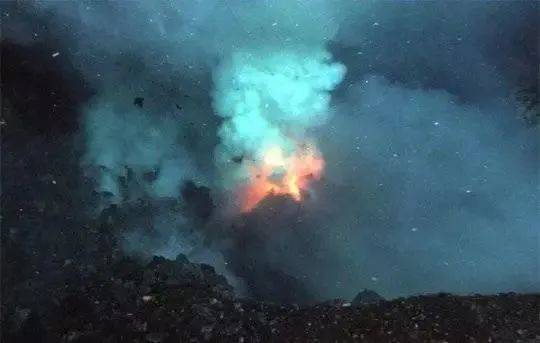
First of all, what we need to understand is that the fires emanating from submarine volcanoes are not open fires on land. The fire that we see in the daytime is an expression of the intense oxidation between the incendiary substance and the air, and the volcanic eruption is a high-temperature fluid, that is, magma。
Large amounts of magma are stored below the earth's crust because of high temperature and high pressure, which is the cause of the volcano when the plate moves frequently and when there are gaps in the surface。
We all know that the principle of water fire-fighting is to reduce temperature while separating combustion from air, but magma eruptions are caused by high pressure and do not require air per se. Therefore, the sea water can only cool it and cannot be extinguished。
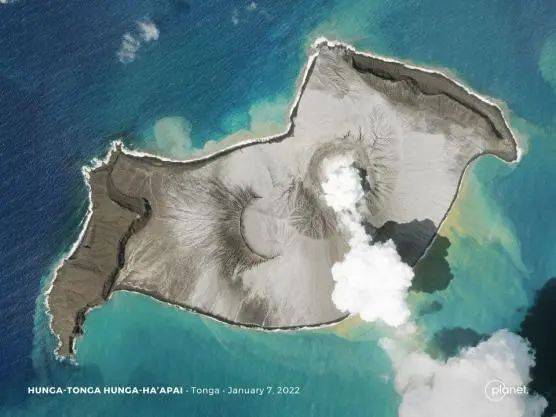
Undersea volcanic eruptions will undoubtedly have a significant impact on the environment of the hydrosphere, biosphere and atmosphere. The doba volcano on sumatra island, indonesia, was reported to have caused extensive damage to vegetation during the last eruption, when sulphides were combined with water molecules in the air, resulting in acid rain. High-temperature, toxic ash has landed extensively in surrounding areas, causing massive human and animal casualties。
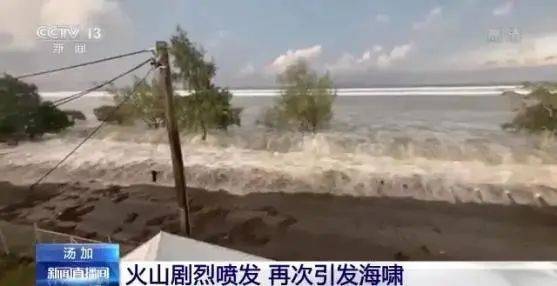
In addition, ash enters and stays in the stratosphere in the atmosphere, and the material in ash reflects sunlight, leading to a decrease in sunlight entering the surface and causing large-scale cooling. At the same time, volcanic particles fall into the vast ocean, providing fertilizers for marine algae, contributing to the growth of algae, increasing their absorption of co2 as a greenhouse gas and cooling the earth。
This tongan volcanic eruption, although also strong, is not sufficient to transport huge amounts of volcanic ash that affect the global climate into the stratosphere; the location of the eruption is in the southern hemisphere, with relatively small impacts on the northern hemisphere. As a result, the impact of the current eruption of the tonga volcano on the global climate, particularly on the northern hemisphere, should be weaker than that of the pinatubo volcano and less than that of the tambola volcano, which is unlikely to have a “summer-free year”。
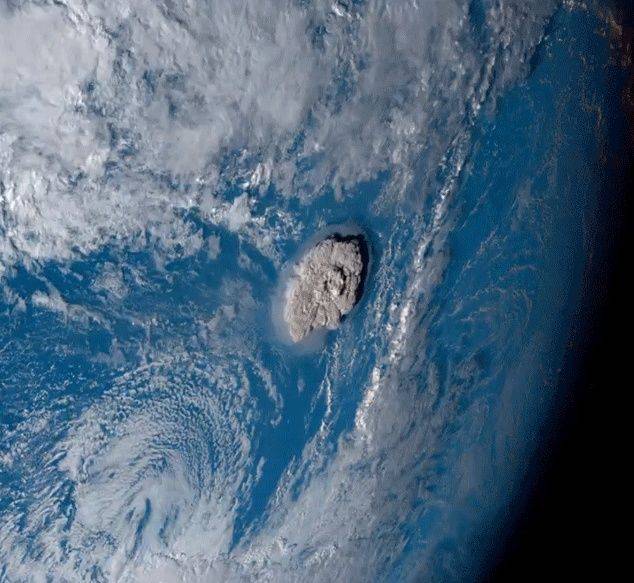
At present, the eruption of the “flammating” tonga volcano indicates that the crater has abated and that the eruption may last for weeks or even years, and it is not clear whether it peaks or when it will be quiet. If re-emergence occurs, tonga is at risk of being hit by the destructive effects of “disaster chains” such as tsunamis, heavy rains, floods and strong winds. The expert called on the international community to enhance its assistance to the affected people of tonga, while enhancing monitoring and preparing for more “disaster chains”。