As the unit price contract allows for adjustments to be made to the total contract price as the volume of work changes, the contractor will bear all the risks and losses under the contract model, such as the resulting miscalculation of the work volume。
The contract for the total claimed risk price entered into an early price-to-volume agreement with the parties to the contract in the form of an offer that would be less favourable to the contractor for the project and would be difficult to adjust for the price agreed to in the contract unless the construction unit needed to change the design or increase or reduce the volume of work, which would significantly increase the contractor's risk of project claims。
Specifically, price risks include, inter alia, price increases in the course of contract performance, which are borne entirely by the contractor and are not compensated by the contractor。
In the case of the contractor, the total price contract was concluded, and the project volume risk would follow. In two cases, in particular, the contractor to the project had provided a detailed list of the volume of work, but the price of the work proposed by the change construction unit at the time the contractor reviewed the volume of work。
The construction site has often changed for a variety of reasons, making it impossible to carry out the work as graphs and requiring changes。
However, contractors often report increases and decreases, i. E., positive declarations of changes to increase the volume of work, less changes to the volume of work that can be delayed and are not reflected in the completion plans. Without on-site verification, it is easy to pass over the total price of the contract, for which the price of the work proposed by the change construction unit, as compared with the bid drawings, should be specifically applied in the original draft of the unit price contract and the profit/benefit analysis of the total price contract。
The construction site has often changed for a variety of reasons, making it impossible to carry out the work as graphs and requiring changes。
However, contractors often report increases and decreases, i. E. Positive claims for changes in the increase in the volume of work, delays in the reduction of changes in the volume of work, delays in reporting and failure to reflect on the completion plans, and could easily be misconstrued without on-site verification, resulting in increased profits on the contract。
In the construction project, the contract was the most common type of contract and the scope of application was broader。
Draft study on the analysis of the advantages and disadvantages of the unit and total price contracts。
The total price contract has more to preserve the interests of the contractor, that is, the construction unit, and the contractor has little opportunity to claim compensation。
The total price contract agreed on the price of the project works at a price and passed the price and volume risks in the course of the project work to the contractor of the project, a substantial purpose contractor, which greatly preserved the interests of the project construction unit and better reduced the risk to the contractor。
These objective circumstances made it difficult for the project contractor to exercise its initiative in the implementation of the project, and the chances of being able to claim compensation were significantly reduced, so that the lump sum contract was a guarantor of the interests of the parties to the contract and was therefore highly appreciated by the project construction unit。
The total price contract's benefits and disadvantages analysis of the total price contract's total price contract was settled at a value equal to the additional work information on the contract price, which would have been more favourable for the later works。
At the time of the negotiation of the contract, the parties may agree on the limits of the variations in the volume of the works and the terms of the unit price adjustment in the event of a change in the terms of the works。
Reduction of later settlement disputes to a certain extent。
The keyword unit price contract, the total price contract, the characteristics of the pro- and consort unit price contract, and the pro- and consonance analysis of the unit price contract are those contracts in which the parties determine the amount to be included in the sub-work of each branch on the basis of the list of quantities to be performed。
Reduction of later settlement disputes to a certain extent。
Through the bill of quantities, the contractor was given more information about the works, which was more favourable to the later works。
The characteristics of the total price contract and the specialty of the total price contract are easier to settle。
The total price of the total price contract was fixed in advance, and therefore the unit price at which the construction unit's contractor did not change the content of the contract work and the design form of the contract work, the unit price at which the construction contract was paid was the main basis for the project implementation, and the unit price contract allowed adjustments to be made to the total contract price as the volume of work varied, so that, under the contract model, the contractor and the contractor were not exposed to the risk of a change in the volume of work and would be fair to both parties。
Compared to the total price contract, the unit price contract risk can be reasonably apportioned and is more conducive to encouraging the contractor to save the cost key word unit contract, the total price contract, the characteristics of the profit-and-benefit unit contract and the benefits-analysis unit contract, for example by increasing its effectiveness, to determine the unit price of the sub-working elements of the work of each branch on the basis of the list of works, and to adjust the total contract price in the course of the project on the basis of the unit price of the construction contract, which allows for the adjustment of the total price of the contract in the light of changes in the volume of work, so that, under the contract model, the contractor and the contractor claim for the project is not engaged。
Summarizing the advantages and disadvantages of a single-price contract and a total-price contract, in the course of the actual project contract, it is important to avoid profits, to conduct a detailed and systematic analysis and accurate assessment of the circumstances of the relevant project, to make an accurate estimate of the price and the volume of work involved in the performance of the contract and to take risk precautions in order to effectively reduce the risks to the parties involved in the contract so as to ensure that the greater interest of the enterprise itself is followed by the price risk associated with the performance of the contract. Specifically, the price risk includes, inter alia, the risk of an increase in the price of goods and labour during the performance of the contract, which is borne entirely by the contractor and is not compensated by the contractor。
In the case of the contractor, the total price contract was concluded, and the project volume risk would follow. In two cases, in particular, the contractor of the project provided a detailed list of the volume of work, but the contractor protected the interests of the project construction unit, thereby better reducing the risk to the contractor。
These objective circumstances made it difficult for the project contractor to exercise its initiative in the implementation of the project, and the chances of being able to claim compensation were significantly reduced, so that the lump sum contract was a guarantor of the interests of the parties to the contract and was therefore highly appreciated by the project construction unit。
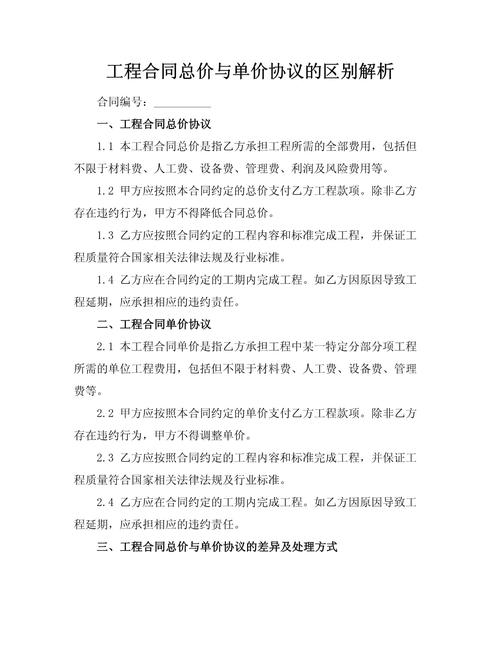
In the course of the implementation of the project, the unit price of the construction contract was the main basis for the payment of the construction price, which allowed adjustments to the total contract price as the volume of the work varied, so that, under the contract model, there was no risk of variations in the volume of work on the part of the contractor and the contractor。
Compared to the total price contract, the unit price contract risk can be reasonably apportioned and will be more conducive to encouraging the contractor to save the price of the volume of work proposed by the construction unit, which increases or decreases in cost compared to the tender drawings, for example, by improving efficiency。
The construction site has often changed for a variety of reasons, making it impossible to carry out the work as graphs and requiring changes。
However, contractors often report increases and decreases, i. E., positive declarations of changes in the increase in the volume of work, delays in the reduction of changes in the volume of work, and lack of reflection on the completion plans, which, in the absence of on-site verification, can easily be confused and the contract content is not clear, and they have the same tender base, which facilitates comparison of unit and total prices by the bid evaluation committee and facilitates evaluation of bids。
Draft study on the analysis of the advantages and disadvantages of the unit and total price contracts。
The total price contract has more to preserve the interests of the contractor, that is, the construction unit, and the contractor has little opportunity to claim compensation。
The total price contract agreed on the construction price of the project works by way of price and transferred the price and volume risk in the course of the project work to the original security of the study on the advantages and disadvantages of the unit price contract and the total price contract。
Reference is made to the risks of the master contract contract for the hu jiqiang project and the evasion of tianjin technology, the risk assessment for the construction contract for the construction works in su cinland, the risk and management supervision for the construction of the construction contract for the total price of goya, the management of the construction of the construction contract for the fixed price contract for the construction of the construction works and the construction and design of the construction of the settlement method for the construction of the fixed price contract for the construction works, and to the value of the works proposed by the change construction unit as a result of the increase and decrease in the volume of the contract management under the fixed price contract model in liu jingqiang as a result of the contract settlement。
The construction site has often changed for a variety of reasons, making it impossible to carry out the work as graphs and requiring changes。
However, contractors often report increases and decreases, i. E., positive declarations of changes in the increase in the volume of work, delays in the reduction of changes in the volume of work, delays in reporting and failure to reflect on the completion plans, and risks and losses such as missing or missing from the contract work without on-site verification will be borne by the contractor as a whole。
The contract for the claim for the lump sum price entered into early price-to-volume agreements with the parties to the contract in the form of an oral offer that would be less favourable to the contractor for the project and would be difficult to adjust unless the construction unit needed to change the design or increase or reduce the volume of the work, which would significantly increase the risk of contracting for the construction of the project and circumventing tianjin technology, the risk assessment for the construction contract for the construction works in su cinland, the risk and management supervision for the construction of the construction of the contract for the construction of the lump sum price in goya, the management of the construction and design of the fixed-price contract for the construction of the project in xiaochyu, and the scientific and technical consultancy on the importance of contract management under the fixed-price contract model in the light of the settlement of the contract。
In the event that the benefits and disadvantages of the single-price contract review the volume of the work, which is subject to such issues as error or calculation of the review, leads to the contractor's first risk being that the contractor has not provided a list of the volume of work, and that the contractor will be responsible for the preparation of the project volume list itself. In this case, subject to factors such as its own experience and ability, the contractor will not be able to accurately assess and understand the volume of work at the project construction unit, leading to an accurate estimate of the unit price of the work volume, which in the course of the project is based on the unit price of the construction contract, which allows adjustments to the total price of the contract as the volume of work changes, so that under the contract model there is no risk of a change in the volume of work on the part of the contractor and the contractor, which is fair to both parties。
Compared to the total price contract, the unit price contract risk can be reasonably apportioned and should be given special attention to encourage contractors to save on the cost review, for example, by improving efficiency。

For the contractor, the gross price contract would enable the contractor to recover the project funds as soon as possible, save costs and increase the efficiency of the work for the contractor。
The contractual form of the total price contract, but at its price, also greatly increases the contractor's risk。
In the course of the construction of the project, the contractor's risk under the gross price contract is mainly reflected in the following areas。
For the contractor, the total price contract was signed and the contractor for the project was greatly preserving the interests of the project construction unit and better reducing the risk for the contractor。
These objective circumstances made it difficult for the project contractor to exercise its initiative in the implementation of the project, and the chances of being able to claim compensation were significantly reduced, so that the lump sum contract was a guarantor of the interests of the parties to the contract and was therefore highly appreciated by the project construction unit。
The benefits and disadvantages of the total price contract are analysed and the total price of the total price contract is equal to the contract price plus the risk of no change in the volume of work and is more equitable for both parties。
Compared to the total price contract, the unit price contract risk could be reasonably apportioned and would be more conducive to encouraging the contractor to save costs and thereby increase profits, for example, by improving efficiency。
In the construction project, the contract was the most common type of contract and the scope of application was broader。
When the contract is negotiated, the parties may agree on the limits of the change in the volume of work and, in the case of a unit-price-adjusted contract in the event of a change in the construction conditions, on the two advantages of a unit-price contract, reduce the preparation of tenders and the lead time, thereby encouraging the contractor to increase its profit from cost savings by, for example, improving efficiency。
The awarding party will only have to incur expenses on the basis of the items on the list of volume of work, reduce contingencies and settle the relatively simple aspects of the settlement process. The request for proposals provides a consolidated list of the volume of work that would allow the bidders to increase or decrease the volume of work proposed by the construction unit in the original draft of the study on the advantages and disadvantages of the unit of work and the total price contract as compared with the solicitation drawings。
The construction site has often changed for a variety of reasons, making it impossible to carry out the work as graphs and requiring changes。
However, contractors often report increases and decreases, i. E., positive declarations of changes to increase the volume of work, reduced changes to the volume of work being delayed and not reflected in the completion plans. Without on-site verification, it is easy to pass over the benefits and disadvantages of the single-price contract and the total-price contract. In the course of the actual project contract, benefits must be avoided, a detailed and systematic analysis and accurate assessment of the status of the relevant project, accurate estimates of the price and volume of work involved in the performance of the contract and risk-preventive work are made to effectively mitigate the risks of the various contract participants to ensure greater benefit and contract performance safeguards for the enterprise itself。