For the archives, the past five years have been extraordinary. Under the strong leadership of the party councils at all levels, archives at all levels have been further developed and utilized to give greater prominence to the role of the archives services party and the state; to strengthen substantially the foundation of archives operations to make them more solid for the economic and social development of society; and to accelerate the development of archives infrastructure to make them more adequate for future development. However, we also note that, as in the case of the main social contradictions of the new era, there is currently a contradiction between the demands of economic and social development on the work of the archives, the needs of the population in the day-to-day production of archives and the inadequate development of archives. These include the imbalance in the development of archives between regions, the imbalance in the development of archives at the grass-roots level, the imbalance between the construction of archives resources and the utilization of archives, the imbalance between the collection of physical archives and the preservation of electronic archives, as well as the fact that the coverage of the archives system does not adequately reflect the current state of economic and social development, that the use of archives services does not adequately meet the needs of all sectors of society, that the file security system does not adequately ensure the absolute security of archives, and that the development of various market subjects supporting the development of archives is inadequate。
The resolution of the above-mentioned problems requires further study at all levels of the archives to follow up on xi jinping's new era of china's socialist ideology and the 19th spirit of the party, so as to achieve solid results in their work, ensure that the central and central offices of china are fully deployed in decision-making on the archives, and work hard to move the archives into a new era. In particular, at the present time, the use of xi jinping's new-era chinese socialist ideology to arm minds, guide practice and promote work is the first political task before the integrated archives at all levels. On 24 january this year, during his research at the national archives bureau of the central archives, comrade zhioxian ting provided us with an important follow-up to the chinese socialist ideology and the 19th spirit of xi jinping's new era, as well as a way forward for the archives at all levels。
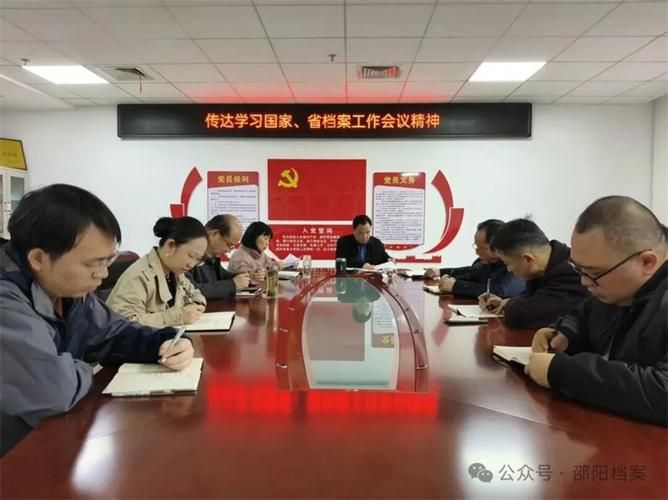
It is important to keep in mind the political attributes of the work of the archives by further learning to follow up on the socialist ideas and the 19 fundamentals of the party that characterize china in the new era of xi jinping. The question of direction has always been a fundamental issue in the overall context. Party politics and civil-military science, in the north-west and south-west, the party is the leader. We must bear in mind the “archivist family” and the duty to “manage the party, keep the history of the country and serve the people” and the sense of “four consciousness” and “five adherences” in the work of the archives, especially in order to enhance political sensitivity and political awareness in the work, not only to ensure that our work is in line with the party's routing policy, but also to be good at using the archives to counter historical nihilism vigorously。
In-depth studies are being conducted to implement the socialist ideology of xi jinping and the 19 fundamentals of the party in the new era of china, focusing on the cultural attributes of the work of the archives. The party's 19th report states that “to meet the new aspirations of the people for a better life, it is necessary to provide abundant food for the soul”. As an important parent resource of culture, archives are fully equipped and capable of participating in the construction of socialist culture at all levels. It is necessary to promote the history and achievements of the party through archives and to consolidate the party's position in power; to draw carefully lessons from the archives and provide information officers to the government of the party's committee; to further promote the opening and sharing of archival resources to better serve economic and social development; and to strengthen the exchange of archives with a view to telling chinese stories and conveying chinese voices。
It is equally important not to lose sight of the public nature of the work of the archives, as a result of further learning to implement the socialist ideology and the 19th spirit of the party which characterized xi jinping during the new era. At present, after many years of effort, there has been a marked improvement in the structure of archives resources in the integrated archives at all levels, a significant improvement in the level of utilization of archives services, and the ability of the integrated archives at all levels to provide a public service for equalization and standardization of archives. In order to recognize and view the public services of archives in the light of the transformation of government functions and the construction of service-oriented government, it is important to recognize that the promotion of the standardization of public services in archives is a concrete manifestation of the idea of people-centred, people-to-people governance; and that the promotion of parity in public services in archives is an important initiative for the integration of regional and urban-rural development. A shift from demand satisfaction to demand creation is achieved through raising awareness of services and service concepts, innovative service content and forms of service delivery, and expanding service reach and audience。
In order to further promote the vivid practice of the socialist idea of chinese identity in the new era of xi jinping, the next step is to focus on the following two areas:。
On the one hand, planning and management of the archives is strategically strengthened. In the context of macro-business guidance, we need to strengthen strategic mobilization and, from a broad perspective and from a long-term perspective, to focus over a period of about five years on the reform of the relevant legal and regulatory framework and standards governing the operations of the archives and to lay the foundations and pillars for their development. Starting this year, we will plan, deploy and promote, in the light of the development needs of the archives and in the light of the realities of the evaluation of the operational development of the integrated archives at the provincial level and above, the adaptation of the regulatory system and standards, along the lines of the annual “preparation, development and implementation of a single instrument”, namely, the first year to study a major issue, the second year to introduce or revise, on the basis of a full study, a key statutory standard and the third year to monitor its implementation, and the continuing development of the archives through a planned, systematic, vector-based and mastery model of operational guidance, with a view to further activating the development dynamics of the archives and unleashing their service potential. This year, for example, we will focus on the development of specific criteria and guidelines for the delineation of the scope of use of archives, as well as the forthcoming regulation on the declassification of archives and the delimitation of the scope of use of archives, with a view to providing guidance at both the macro and micro levels for the large-scale future decryption and control of archives at the local level。
On the other hand, three priority areas have been set out in the overall evaluation of the operational development of integrated archives at the provincial level and above, the priority national archives protection and development project and the project for the construction of integrated archives at the district level in the centre-western region. In the course of the evaluation of operations, we must not only complete the evaluation of the 47 archives on schedule, but also, through the evaluation, map the basics of the operations of the integrated archives at the sub-provincial level and above throughout the country, identify the weaknesses of the current archives and chart the way forward. With regard to the national priority archives protection and development project, we will further upgrade the level of precision of management, including further refining project expenditure standards and further standardizing project performance objectives, in particular by strengthening performance evaluation and monitoring inspections, urging provincial archives offices to accelerate budget and project implementation and effectively assume responsibility for organizing project implementation in the region. We would also like to plan the “145” exercise ahead of schedule, while ensuring that the main tasks of the “135” period are completed as scheduled. With regard to the construction of integrated archives at the district level in the centre-western region, we will move forward with greater determination and vigour in the implementation of the plan. We will consult actively with the national commission for development and reform with a view to further strengthening the support provided to areas that are willing and capable of promoting the implementation of the project, with a view to allocating sufficient resources to those areas that are well prepared and well equipped for its implementation. Next, we will carry out field monitoring of the implementation of projects in some areas with the national commission for development and reform and will convene as soon as possible a conference to advance the project for the construction of integrated archives at the district level in the central and western regions, to urge the regions concerned to expedite the start of work on the project, to close off the quality of work and to make the newly constructed archives operational as soon as possible。
Archives are the foundational work of the party and the state, and will play a greater role in the development of the party and the state in the new era of socialism. In particular, the integrated archives at all levels, as the subject of the archives, must not only be witnesses and recorders of the new era of chinese socialism, but also builders and promoters of the new era of chinese socialism, so that the people can gain more from the development of the archives。