As is well known, most of the major factories that have been named in the last two years have been playing down efficiency。
Even user interests are shrinking when the related business is closed or adjusted。
Starting last year, for example, the rights and interests of members of video platforms, including eo-teng, could be reduced。
Recently, the internet domain 123 has also opened up a fee-for-flow adjustment for the restricted function, which can't be used for wool。
In addition, china connect indicated that the bill would not be fully offset by credits up to $10 per month。
According to the latest news, this efficiency gain is now in kyoto。
Just recently, the electrician giant kyodong suddenly announced that major adjustments had been made to the user rights under the flag。

"kyobe" system has been overhauled
The first thing to adjust is kyoto's "kyoto" system。
As one of the best-known benefits for kyoto users, kyoto beans have been withholding cash at a fixed rate of 100 kyoto beans = 1 dollar。
So for the users, the beans are equal to real silver and silver。
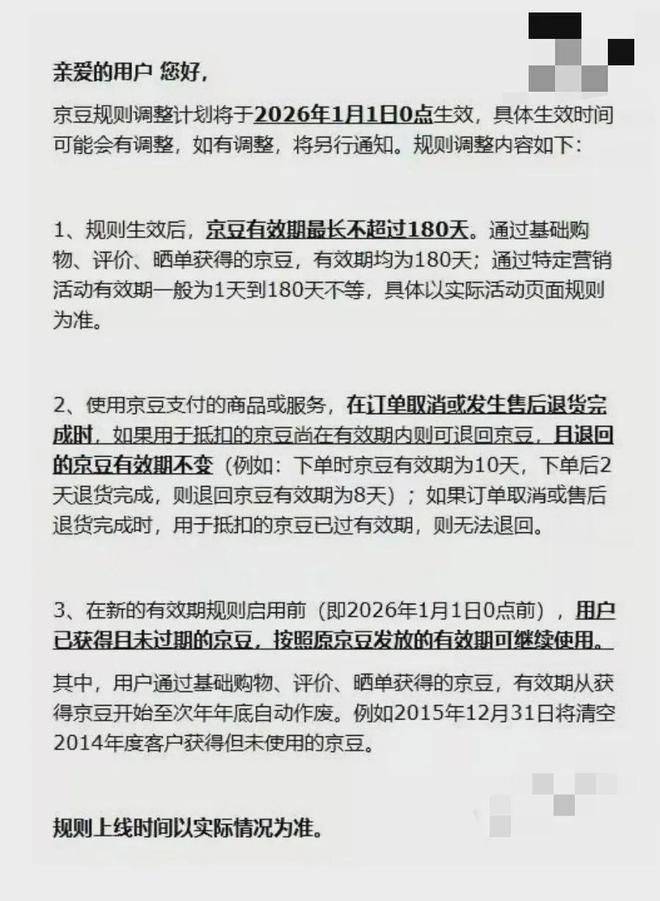
As recently as the official communiqué was issued, the kyoto rules adjustment plan will enter into force at 0:00 on 1 january 2026。
In particular, this adaptation of the kyoto rules is mainly concerned with two main aspects。
First, the validity of kyoto beans has been significantly reduced。
The new regulations set the maximum validity period for the beans at 180 days。
This means that the bean obtained by the users by regular means, such as shopping, evaluation, sun sheets, must be used within six months of the date of arrival。
The period of validity of a given marketing activity may be shorter, according to the campaign page, with a shorter period of 1 day and a longer period of 180 days。
(together, same)
Prior to that, the kyoto protocol had a relatively liberal life cycle。
The previously conventionally acquired bean is usually valid until the end of the following year of the year in which it is acquired, and users have more time to plan for its use。
Second, the policy for the return of beans under the new rules has also become more complex。
The situation is more delicate than before when a user cancels or completes the return of a purchase order paid with a kyoto credit。
Only if the bean used for the credit remains in service will it be returned along the same path and the remaining validity period remains unchanged。
For example, there are 10 days left at the time of the next order, two days after the return, and eight days after the return。
If the order is cancelled or returned, the beans will not be returned if they have expired。
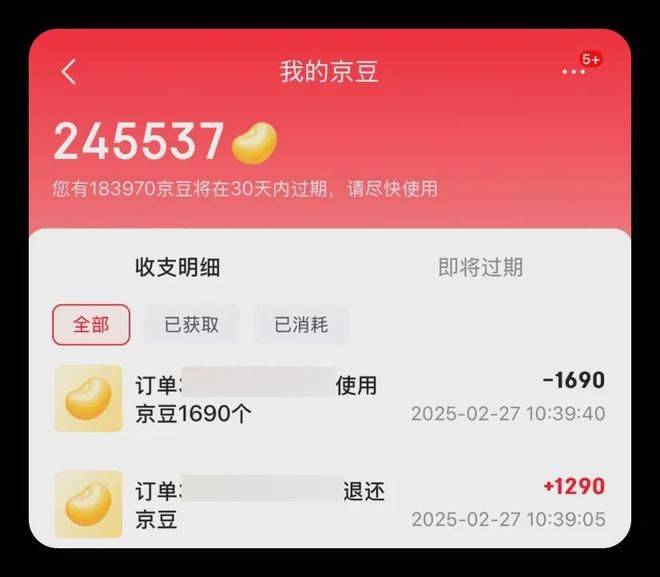
This change has had a particularly significant effect on users who have customarily concentrated their beans towards the end of the year。
However, under the arrangement, the beans that had been acquired prior to the implementation of the new regulations but had not yet been used will continue to be used until the date of natural expiry。
In addition to this change, there are suspected signs of shrinking the rights of members of the pls in kyoto。
In recent days, netizens have reported that kyoto plus membership rights do not normally benefit from super-subsidy, coupons, etc。
When the client is consulted, the explanation is "not recently consumed in kyoto" and the user is advised to order more and develop good shopping habits。
This response has caused some users to repulsion, with internet users saying "to buy something and be educated."。
The difference is on the line
However, while the rights were shrinking, the government announced an update。
In order to deal with the pains of the exchange of goods by users and the resulting dissatisfaction with the exchange of goods, only the option of returning the goods was available。
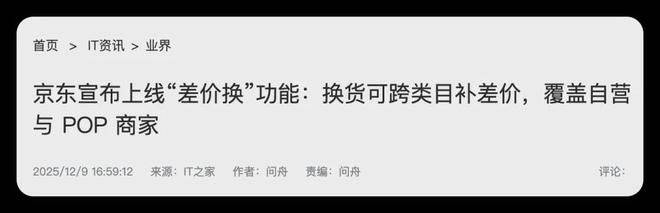
Kyoto announced that it would upgrade the existing process and introduce a "price-for-money" feature。
Source it home
Specifically, the differential function addresses two core pain points。
First, when the user initiates a request for an exchange, if the target commodity is not available, the user may choose to replace the other commodity by filling the difference。
This avoids the awkward situation in the traditional goods exchange process, where a lack of goods leads to only return。
Second, when the user is not satisfied with the goods to be traded, the option is to replace the other goods, just to make up the difference。
The flexibility and user satisfaction in the exchange of goods were greatly enhanced。
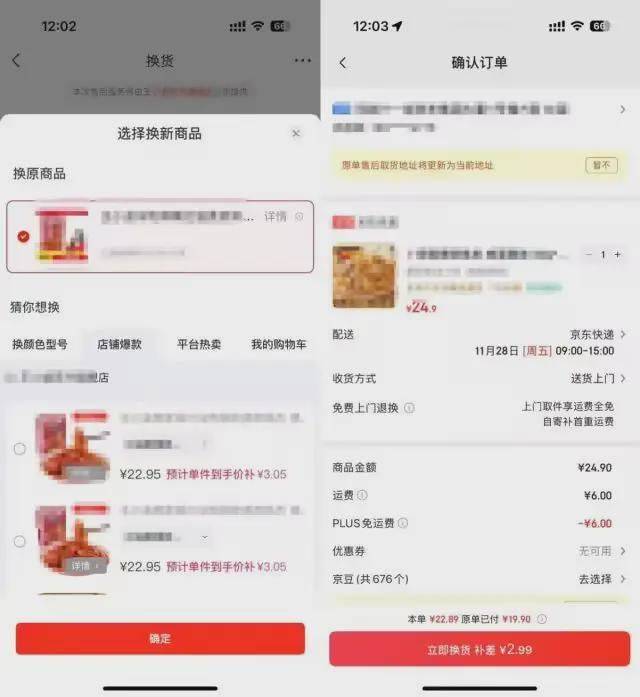
On the operational side, when applying for an exchange, the system automatically recommends repurchaseable goods if the target commodity is not in stock。
(together kyoto)
It is worth mentioning that the price-replacement function also supports "more and less"。
If new commodity prices are lower than the original commodity prices, the difference returns the same to the user account。
If the prices of new commodities are higher than those of the original commodity, users will have to pay only the balance。
This design ensures fairness and enhances user experience。
These are some of the latest operational adjustments in kyoto。
What do you think of these adjustments。
Welcome to the discussion。