As one of the most active internet communities in chinese, it has evolved from the original virtual information town to a cybercity. Today, when content becomes a connecting medium between people and then goods and services, it is known how attractive it is for users and not just for simple convergence of content, and many are even more concerned about how such a large and complete web-based eco-city should be built and maintained。
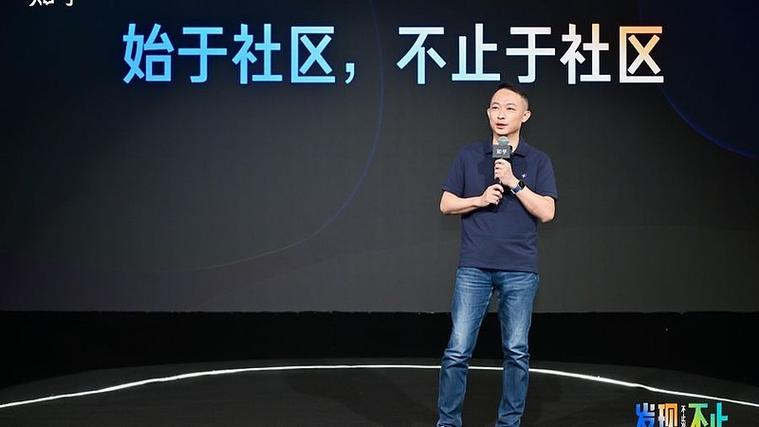
In titanium media 2017 t-edge science and technology life festival, zhou xiangen gave a speech on the theme " from community to city, knowledge-sharing " , sharing views on how to operate and manage the “population” near 85 million virtual cities。
From the perspective of zhou zheng, the operation and management of the virtual community is similar to the management of a city. Zhou zhou said that when it was very small, the known team of administrators played the role of the district chief of the board. When it gets bigger, "we're gonna be like a bunch of cops." now, knowing that it is close to 85 million users, it can no longer be managed by a child police, “it requires a process of principles and legislation to set the rules”。
In developing community rules, it is known that it is judged by its own values, that it is opposed to prejudice and to rumours. And all of us in the future, not only live in cities, are more likely to live in a variety of possibilities, “to connect everything through the knowledge that they are good at, the information that they are exposed to”。
The following is a speech by zhou zhou zhou zhou zhou zhou zhou zhou zheng t-edge science and technology life festival, organized by titanist journalists:
Evolution of knowledge-sharing and the emergence of knowledge cities form
Online communities and real cities can be quite different. I don't know if i've seen a book here, written by jacob, an american writer, called the death and life of america's big cities, which is very interesting in terms of how a city develops in terms of the diversity of street blocks。
From my point of view, it's very much like playing model cities. Now online community communication is part of the city, and now all large-scale communication, not face-to-face, is done online, geographically and time-consumingly。
What's the big connection in this? There are two points. First, online communities, like those known. As a city, he needs to find possibilities. When more possibilities arise, gradually network. If a city cannot produce possibilities and network, it is a dead city。
From 2005 to 2016, this year is 12 years, and we have seen much change in knowledge. In fact, three phases have changed. From 2005, you'll find that all the previous knowledge will be absorbed and used by us. The first thing about that stage of knowledge was that it became a medium, an article that could be consumed. At that time, the strongest medium was the portal, and the central element was traffic。
Then, from 2010 to 2016, with the rise of social networks, all content began to have an opportunity to become a medium. You can meet someone by content. Since the first day on the line, relationships that do not pass through any social products, such as the newsletter book, the twitter, are connected by content. Therefore, content and knowledge began to become a medium in the second phase。
About the second half of last year, there was more talk about paying for knowledge. What's behind the payment? It can be a service from the beginning of the media to the moment of becoming a commodity。
We have been talking about dividends for a long time before, and some talk about the demographic dividend, which, in my view, is the biggest dividend for business and for mobile phones. In 2007, the iphone did that before it came out, and then it changed when it had a smartphone。
Content-generated connections and depositions
Knowledge is the same, and it has special possibilities. Let me give you an example. Early last year, 2016, when deepmind was acquired, google announced last january that it would use alphago. On the day he announced that one user was aware of a question related to alphago。
In january last year, with regard to artificial intelligence and chess, these issues were scattered. It is like a possibility that it has been connecting a wide range of people in the community who are interested in them。
Almost two months later, alphago was invited to answer that question before the war. As a doctor of artificial intelligence, he answered, "can alphago beat lee se-suk?" wang xiaochuan said that alphago could defeat lee se-suk。
When users in different areas, especially the internet, began to engage in discussions, the topic began to gain more attention and spread. It includes the concerns of engineers and academics in the field of artificial intelligence. For example, tanaka, he's the only chinese in the facebook a. I. Lab, who do deep learning algorithms, and how they see it. It also contains a lot of answers from professional chess players。
The competition is over, and on march 14, 2016, this topic has begun to be analysed by a number of multidisciplinary users. Here's a user called breakbridge, who analyses if alphago's artificial intelligence really uses internet surveillance。
By april of this year, we had another count on the subject. When the issue was raised the first month, it received more than 10,000 attention. By april of this year, the issue had generated thousands of questions and was viewed by over 4 million users. The possibilities that arise in this topic are effectively deposited through community approaches。
It was previously unknown between users and users. He doesn't know each other, for example, when he's in love with the internet. For example, there are many amateurs in the world, and people's human networks are created in an interactive manner. What kind of change would that make
And the last data is that this year, when alphago and kerjee fought, the topic was viewed by 5 million uv users. Why did this change not happen at the beginning of last year? Initially, the entire network of communication and user connections did not exist and those individuals were not connected. Over the past year or so, different sectors of the population have been engaged in content production on this topic, building a new network, a network linked to artificial intelligence。
So there is a similar problem today. For example, alphago and corjee were fighting as platforms where we actually did nothing. These connections were created by asking questions early last year. It creates a wide range of possibilities and is understood to serve as a web-based distribution channel, elements that can eventually be deposited on the platform. This process, in our view, is not just directed at alphago, but is very informative on a daily basis, and this connection and deposition can occur。
The prototype of a full virtual knowledge city: multiple themes + multiple scenes
Make a summary. Last year, we defined it as a platform, knowing that our definition is not just a community. In china, on the internet, or on all internet sites, we believe that the value of the community is the value of the land, and we are farmers who go to agricultural land. Land may be agricultural, but it may also be forest land, commercial land。
You're farming in a place like wang jia, and the last thing you have to do is make high-priced products. The community as a whole has been redefined to perform services, counselling, and we have incorporated platforms like e-books into the closed circle。
Why are there many subjects? Questions and answers are not limited to users. Because we find that in real cities, there are strong connections between individual users and institutions. We spent about three months last year looking at a lot of institutions, so today there are a lot of institutions that participate in discussions in online communities in a question-and-answer manner。
For multiple scenes, you can write articles or live, or you can consult for a range of fee-paying services. I believe that as this business dividend expands, the scenes that follow will grow。
Management of virtual knowledge cities
Suppose i'm the mayor of a city, i want the city to flourish. Prosperity development is not the first to attract money, but rather the lowest infrastructure in the city. Have we done better in terms of health systems, policing systems, drainage and disaster resilience? If that's all right, you'll find the city safe. Just as new york has grown from a population of 7 million to a population of 9 million because of the clean-up of criminals, much like online management。
It is known that today we have a wealth of rules and capabilities that are technologically and productically advanced. For example, two robots, two artificial intelligence robots. The first robot is a conscious goku system。
What does goku do? There are elements that you might look at as guidance in advertising. They're here to make small ads. They're small ads of yellow bets or brushes, which can be identified by this “goku” system. By the first half of this year, small ads from countless users were processed through the goku system. It's a vietnam robot, and when it's done with your ad mode, it'll learn by itself, and if you do something like that again, it's hard to fool it。
And the second robot, known as the valiant robot, is a garbage machine. He was screened in the corner of the community's commentary. Did someone produce garbage comment? If found, the contents would be sorted out as garbage. This robot is also an artificially intelligent robot. There is a lot of garbage in the city that can be disposed of in various ways, and that can be responded to by users who have committed malicious acts。
And then, actually, we have a community regulation. Community management norms change each month, adding a lot of new developments each month, and we will summarize them into community-wide management norms。
At a very small time, the entire team of known administrators, especially the neighborhood moms, were very small. As long as there are users fighting, the whole neighborhood can see it, we'll go and say, "stop it." early on was playing this role. Then, when you're big, it's like a sea-dry zone, and we're like little cops. Now, knowing that it is close to 85 million users, this situation cannot be managed through a video police force, which requires a process of principle and legislation to set the rules。
Virtual community rules based on their values
I'm sure a lot of people have seen it, and there's a very controversial question, in the hot opera "happy 2", one of which is from the opinion of duty: "is it wrong to find a virgin?" this was the subject of much discussion, with over 2,000 answers。
There are many users in the community who know what is happening in the community. One of the male users expressed the view that “men's feelings and options are simple, love choices are not virgins, marriage choices are virgins”
By the time i saw it, the question had been endorsed by over 3,000 people. However, at that time, there were more than 10,000 “checks”, “reporting” and “not helping”, which, together with known reporting mechanisms, were dealt with by automatic community management mechanisms and folded over the system。
Does that mean it's over? Then it turns out no. Users have raised many questions on this issue. For example, what do you care about questions like this? What do you care? What if you can't or if you're wrong
I think that's a very good question. We'll take it out for analysis and research. The user's answer was not just a false view, but a form of discrimination and prejudice. The content of such discrimination and prejudice is known to have developed and to have sunk, which can lead to further prejudice and misunderstanding。
So when we make community rules, we follow our own values. We oppose prejudice and rumours. The user later said it would be hard for you to do it, rather than step back and become a pure platform。
It's a difficult choice, but what's right is done. As a platform, there is a need to transform the community's management system into a cornerstone of the functioning of the city and part of the security system。
The future: connecting knowledge to everything
Indeed, from our point of view, it is difficult to draw an analogy between knowledge of the future and cities, which are limited in capacity。
All of us in the future live not only in cities but also in a variety of possibilities. It's the information that connects everything through the knowledge that you know best。
Over the past five years, knowledge has evolved from being open to small knowledge communities to medium-sized knowledge communities, a process of building knowledge platforms for a wide range of knowledge consumers. There will be many new scenes, including the opportunity to work with you. It was to be hoped that, in all possibilities and imagination, knowledge cities that could extend the future indefinitely would be better and better。