In fact, the guizhou large data industries group has set up a network in the field of medical information. According to information from the national intellectual property agency, the company applied for a patent entitled “integrated management system for medical protection cloud services based on distributed cloud structures”, public name cn120106987a, dated january 2025. In addition, publicly available information indicates that it has been awarded the “initiative upgrading project of the medical security information platform 2024”; and that it is based on the “public service platform of the quantum chain” and has also created a health insurance smart reimbursement product。
The two-year procurement cycle was designed to incorporate multiple considerations to prevent enterprises from making a profit
“we estimate the cost at about $3 per person.” a bidder claimed in an interview with a journalist. Another person who did not want to be known pointed out that the cost of the three dollar/person should have been measured only for basic services, but that the procurement was much more than that。
According to the procurement documents, the products to be delivered by the winning enterprise are much larger than the “digital image processing and upload storage services”. For example, the winning enterprise needs to provide, along with the service, a web of images and clouds that are independent of the health-care network, fulfilling the requirements for medical institutions to access the platform and secure and reliable data transmission. “this will require more cost to the winning firm.” one health-care provider said。
The principle of the current procurement cycle is set at two years, after which the rebidding will be initiated. “we must consider the reality of the fact that the winning enterprise has built an image data platform, which has invested a great deal in the first one to two years, and that the next few years may make money.” at the meeting on the same day, the director of the health insurance regulatory information centre of anhui province stated that the winning company should not be allowed to make a loss。
In response, zhao shuqing, a fourth-level researcher at the guizhou health insurance department, indicated that the two-year cycle had been considered in many ways. “if an enterprise's services are not functioning well, the cost recovery time is bound to be extended, which in turn would urge the enterprise to achieve a scale effect as soon as possible, improving the quality of its services and market competitiveness in order to maintain a subsequent competitive advantage.” according to him, a follow-up solution had been considered at the planning stage and new rules would be introduced in the next tender to safeguard the legitimate interests of the enterprise, while also becoming binding。
“in addition, we have developed clear post-service indicator evaluation mechanisms.” according to zhao shuqing, every year, the health insurance board and the health-care institutions carry out a quality check and assessment, focusing on the quality of services provided by service providers, the satisfaction of health-care institutions and the population and the achievement of the objectives。
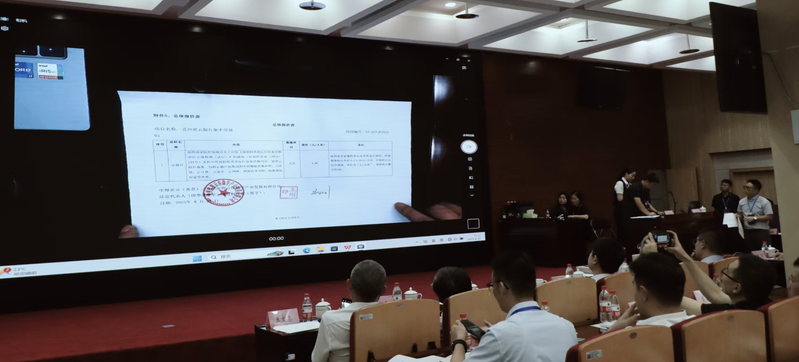
Source: guizhou health insurance department
It is known that the first year of data reported by cloud film collection institutions in guizhou province is estimated at 2,156,000, and that the procurement requirement is based on the demand for cloud film from medical institutions for the coming year, compared with the previous year's number of video screenings of approximately 3,896,000. As a result, this report has been rated as “relatively conservative” by a number of health-care providers。
Even if conservatively reported, it was a very good economic score for all parties。
At the bid opening site, the deputy director of the national health insurance agency, wong huabo, stated that the number of repeated examinations in the medical sector in the country was as high as 20-30 per cent, which not only increased the burden on the population, but also caused enormous waste of resources. “many visits in beijing take a few days to line up and patients are ill waiting.”
The maximum offer of $5/person is limited, with a significant collective price advantage compared with the cost of conventional films of $17 to $18 per person and the price of $12 to $14 per person in uncollected areas. According to data provided by one of the interviewees, the number of monthly radiology examinations in a county hospital, a city hospital and a district central hospital was 8,000, 15,000 and 18,000, respectively. After receiving cloud film services, the annual savings on the purchase of consumables were rmb 1 million, rmb 1. 2 million and rmb 1. 5 million, respectively。
Several health-care providers added that large-scale storage was currently clearly economical and that the cost of storing 1tb data was approximately 80 yuan/year. As information technology advances, storage costs are expected to decline downwards, with 1tb storage costs at least 10 times different over the last 10 years, and are expected to decrease significantly after three to five years。
When the data is clear, can the diagnosis recognize each other
The recognition of “close film” among different medical institutions was also an important point of view in this gathering。
As mentioned during the communication meeting, the embot is now a province-wide video data-sharing facility, which “can be moved between hospitals in the province at any time, not just images, but also medical records, ultrasound reports, etc.”。
On 19 may this year, the health and health information platform of anhui province officially launched the medical image cloud index sharing module, which provides access to targeted medical institutions, local video cloud sharing centres, provincial health information platforms and national health information platforms, making it the first province in the country to have access to digital medical images。
It remains to be seen whether, at the patient level, this means that there can be a complete repetition of the examination。
“the ability of medical institutions to interact with one another's visual data is not exactly equivalent to a patient's need for only one examination, and there is no simple equivalent between the two.” an unnamed health-care provider, speaking to a journalist for daily economic news, stated that, while many provinces and cities currently have a policy of mutual recognition for medical examinations, the patient's condition is dynamic, with an interval of one week, one month and six months showing different visual indications, and different rates of development of different diseases, together with differences in the film effects of filming instruments, whether re-examination is required in practice and based on medical experience。
“it is still in the storage phase, and mutual recognition of hospitals is in the application phase, before infrastructure is completed, which needs to be advanced gradually.” according to this person。
It is understood that the national health insurance agency will move forward with image cloud construction in four steps: data standardization, centralized storage, data sharing, and the establishment of safeguards. “the first thing to be done is to standardize and standardize the results of inspections, which can only be carried out successfully if uniform formats, standards and subsequent storage, sharing and application of data are achieved。
This is not the only point of building a provincial video cloud platform。
For example, at the health-care regulatory level, it will address the lack of standard data resources, integrate accurate data in each province and achieve real integrated monitoring; by concentrating data through the image cloud platform, it will be possible to accurately judge over-diagnostics, inspect abuses, etc., and avoid the inefficient pattern of “on-site inspection, on-site search”. According to the above-mentioned health-care system, the clearance process will also be optimized as a whole。
In addition to health-care supervision and settlement, the video cloud platform has a great deal of outreach, such as “health-care image management”. “the integration of health-care data into the life-management of the insured population throughout the life cycle will in the future enable the insured person to carry his or her past image on his or her mobile phone, supplementing the existing app's lack of access to information on clinical behaviour, reimbursement, disease, etc., and enhance the advantages of access to information on the insured person and the patient.” zhao jiqing indicated。
In addition, the establishment of a province-wide health-image data platform is only the first step towards the further development of an inter-provincial platform to guarantee data flow and stability among health-care institutions at all levels, which is a vision for the future。
As of 20 august, 22 provincial health-care departments nationwide had implemented the deployment of the health insurance video cloud data sharing path software, of which 17 provinces had completed deployment, with video cloud indexing capabilities and provincial platform end-of-provincial access capabilities. At the end of 2027, the national health insurance institute planned to achieve a “one-network” of data from the national health insurance video cloud, “routing”, which would effectively relieve the large number of patients of the time, effort and cost of repeated examinations。
The replacement of traditional film is a trend
The collection of “close film” also raises industry concerns about physical film storage。
In fact, cloud film is not new, and it is now 10 years old。
Tomorrow, in march 2015, the international launch of the country's first cloud film system followed by the launch of a film-free campaign in china, clearly defining the goal of the cloud film as an alternative to traditional film。
In an interview with a journalist for the daily economic news, a deputy general manager in sinoe, the chairman-in-office of the ministry of medicine, concluded that the early dissemination of cloud film in the country was difficult on the one hand because of the mismatch in the construction of hardware for medical institutions, that “the picture of the use of cloud film must have a computer, but at that time not every doctor's office had a computer”; on the other hand, although electronic film was clearer, the group of doctors had become used to physical film on the lightbox and there was a process to change usage。
The turning point begins with the strong involvement of the paying party. In 2020, the national commission for health and human rights, among others, issued guidance explicitly encouraging the sharing of inspection information through, inter alia, cloud film. At the end of 2024, the national health insurance agency issued a " guide to the price of medical services in the form of radiation inspection project (pilot) " , which establishes a clear fee path for cloud film。
“most hospitals now have cloud film available, patients can see their own electronic film via cell phone scans. If electronic film is consulted with other doctors, especially those from abroad, then it needs to be copied to the hospital video section, and i now know that 80 to 90 per cent of hospitals support the writing of cds.”。
Data from the institute for co-industry studies show an overall decline in the prices of medical film products in recent years, from $13. 3 in 2016 to $8. 52 in 2023 on average; the institute also predicts that, although the traditional film market will continue for some time, the spread of cloud film is irreversibly reshaping the whole market pattern。
“entity film will sooner or later be eliminated from the market, and the storage of the material film is likely to be difficult to see, directly affecting the diagnosis, and it is also difficult to carry.” it is only a matter of time before traditional film exits the market as cloud film becomes popular。
It is worth mentioning that the sales logic of real film and cloud film is very different. The real film market follows the sales logic of “hardware + consumables”, while cloud film is essentially stored in cloud-end electronic images that can be accessed by patients at any time through a link or 2-dimensional code. This means that the enterprise's source of income has shifted from one-time sales to ongoing operating costs based on the number of services rendered。
According to previous statistics by journalists, at least 20 companies in the country have introduced cloud film solutions, with participants broadly divided into four categories: professional cloud film manufacturers, image communicators, information fusion manufacturers and cloud resource producers. Who's gonna pull the trigger in the future。
Daily economic news