Pumps, as core equipment for fluid transport, are essential basic mechanical products in modern industrial systems. From municipal water supply to petrochemicals, from agricultural irrigation to nuclear power works, the application of pumps permeates almost all areas of the national economy. With the acceleration of global industrialization and increased levels of urbanization, the pumping industry has gone from simple imitation to autonomous innovation. In recent years, the traditional pumping industry is facing a critical period of transformation, driven by the twin carbon goal and smart manufacturing strategies. On the one hand, growing demand in emerging markets has provided broad scope for industry; on the other hand, higher standards of energy efficiency and more stringent environmental requirements have led enterprises to accelerate technological upgrading。
I. Analysis of current developments in the pumping industry
The current technological development of the pumping industry is characterized by significant diversity. In the field of material science, the application of new types of corrosive alloys and composite materials has significantly extended the useful life of pumps, especially under harsh conditions such as chemical and marine engineering. The widespread availability of advanced simulation techniques, such as hydrodynamics (cfd), in the design methods has led to a significant reduction in product development cycles and a significant improvement in performance forecasting accuracy. In the manufacturing process, enrichment technology has begun to be applied to the formation of complex fluid structures, and traditional foundry processes are being upgraded to precision and automation. It is worth noting that intelligence has become an important direction for technological evolution, with the integration of built-in sensors and material networking technologies, enabling state monitoring and remote diagnosis of modern pumping products。
The global pump market demand structure is undergoing profound changes. Demand has stabilized in traditional industrial areas such as petrochemicals and electricity, while new applications such as desalination and lithium battery production are growing rapidly. In regional markets, developed countries focus mainly on demand substitution, with emphasis on energy efficiency and reliability, while developing countries drive rapid growth in new demand through infrastructure development and industrialization. With regard to the breakdown of products, the market share of special high-value-added pumps is gradually increasing, while price competition for standardized generic pump products is increasing. Increased attention by users to the full life cycle costs has led to a shift from simple product delivery to system solutions and services。
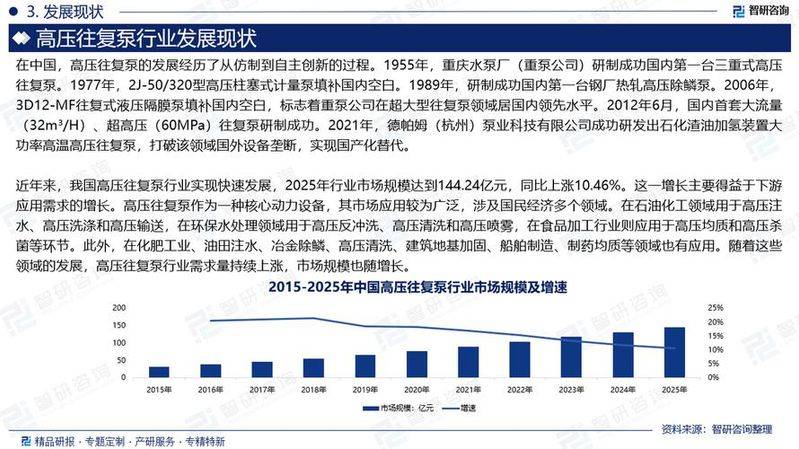
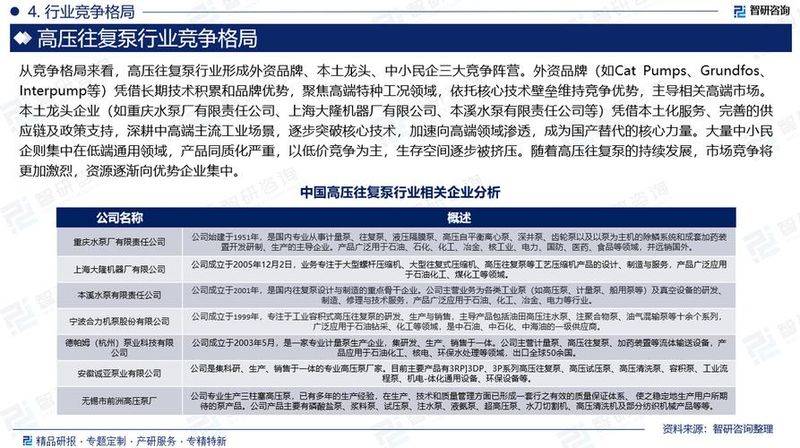
The pumping industry has developed a more complete industrial chain system, with a clear division of labour between the supply of raw materials, the manufacture of spare parts, and the assembly and post-sale services. Industrial concentration has shown an upward trend, leading firms have expanded their strengths through m & as consolidation, and smes have focused on segmenting markets in search of differentiated living space. In terms of regional distribution, production bases gradually shift to areas where factor costs are more advantageous, while local production trends are evident near the end markets. Systems of supporting services are increasingly well developed, and specialized services such as third-party maintenance, energy efficiency assessment and so forth form an important part of industrial value chains。
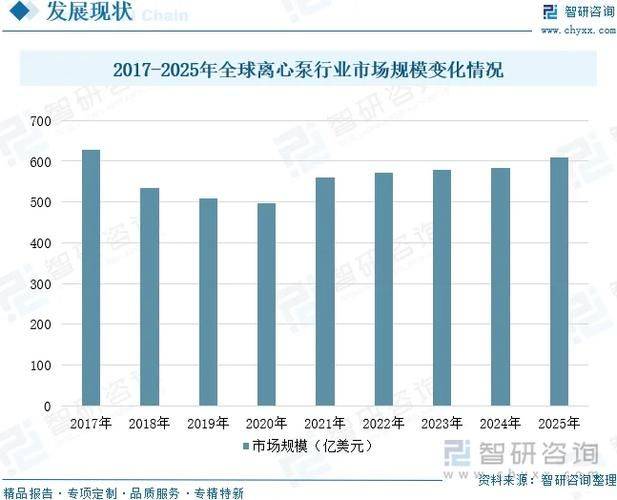
According to the kisr's 2026 analysis of the size of the global pumping market, the share of leading firms in domestic and foreign markets and their rankings, technological breakthroughs and market demand have always been two-wheel drivers of industrial progress. At this stage, the industry is at a crossroads in the transition from traditional manufacturing to intelligent services, facing unprecedented opportunities as well as the challenge of upgrading. On the one hand, global energy restructuring and environmental policies have become more stringent, requiring greater energy efficiency and environmental performance for pumping products; on the other hand, the deep integration of digital technology with manufacturing technology is reshaping product patterns and business models. This change is reflected not only in the technical parameters of the product itself, but more deeply in the way value is created and in the logic of competition throughout the industry。
The traditional profit model, dominated by hardware sales, is unsustainable, and data-based value-added services are beginning to create new profit growth points. At the same time, the integration of cross-border competitors has blurred industry boundaries, and internet platform firms and automated solutions providers are cutting into the pumping industry value chain from different angles. In this context, enterprises need to rethink their positioning by consolidating their technological advantages in core products while actively embedding emerging business areas. The next five to ten years will be a critical period in determining industry patterns, with enterprises that are able to accurately capture technological trends and respond quickly to market changes gaining greater development space, while slow-reactioners risk being marginalized. This tendency towards fragmentation is already emerging in some of the subdivisions and is expected to be more evident as industry changes deepen。
Analysis of future trends in the pumping industry
1. Directions for technology development
The future development of pumping technology will revolve around the three themes of "efficiency, intelligence, green". In terms of efficiency, the continued optimization of hydro models and the application of new materials will bring the efficiency of pumps to a new step, and theoretical efficiency limits for some products may be redefined. Intelligent processes will accelerate, artificial intelligence algorithms will be more deeply applied in failure prediction and operational optimization, and autonomous decision-making smart pump systems are expected to commercialize applications in specific scenarios. Green technologies, including low-noise design, leak-free structures and the use of recyclable materials, will become the norm, and innovative solutions such as biodegradable lubricants may change traditional maintenance. Of particular concern is the spread of the modular design concept, which will give pump products greater configuration flexibility to meet user-specific needs。
Market evolution
The future pumping market will be characterized by a more visible structural segmentation. In the traditional industrial sector, large-scale equipment and system integration demand will drive the growth of the market for high-power special pumps; in the commercial and civilian spheres, however, the demand for miniaturization and silence is more pronounced. In regional markets, capital investment in countries along the "across the road" will create significant demand, and there are huge business opportunities for urban upgrading projects in developed countries. Product serviceability models are likely to make breakthroughs, and innovative business models, such as traffic-based charges and energy efficiency hosting, are expected to be applied to scale in part. In addition, the promotion of the concept of circular economy will promote the development of manufacturing operations and create new industrial growth points。
3. The direction of industrial change
The industry structure of the pumping industry will undergo deep restructuring and restructuring. The trend towards vertical integration has increased, and an increase in the rate of home ownership of core components will be an important means for enterprises to build competitive advantages. The ability to provide integrated solutions for products linked to valves, control systems and so forth is a key success factor. The effects of industrial clusters have highlighted the further refinement of the collaborative system of specialization and division of labour and the increased role of regional industrial innovation centres. There has been a marked change in the structure of talent and a surge in the demand for complex talent, especially among researchers and development staff with a combination of mechanical engineering and information technology. International cooperation models are innovative, moving from simple product trade to global sharing of technology standards, brand values。
Iii. Industry summary
The development of the pumping industry as an important component of the equipment manufacturing industry directly reflects the industrial base and technological strength of a country. After decades of accumulation and development, the country's pumping industry has established a complete industrial system with a full range of products, some of which are internationally advanced. However, it should also be sobered that there is still a gap between high-end market areas and international leading firms, particularly in terms of original technological innovation and brand influence。
Overall, the pumping industry is in a critical phase of transformational upgrading, with challenges and opportunities. As long as the trends of technological change are accurately captured, the proactive adaptation to changes in market demand and the sustained drive for innovation drive development, the country's pumping industry is well placed to make a historic leap from following to leading and to make a greater contribution to the technological advancement of the global pump and industrial development. The future pump will be not just a simple fluid transport device, but a smart system that integrates machinery, electronics and information technology, playing a more important role in the wider field. This process of transformation, while challenging, also breeds infinite possibilities and deserves concerted efforts and expectations from all sectors。
More detailed analysis of the pumping industry can be obtained by clicking on the sino-puerval study, global pumping market size 2026, market shares and ranking of lead enterprises at home and abroad。