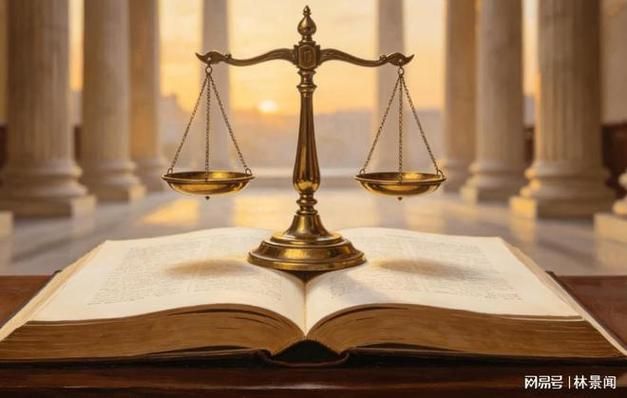
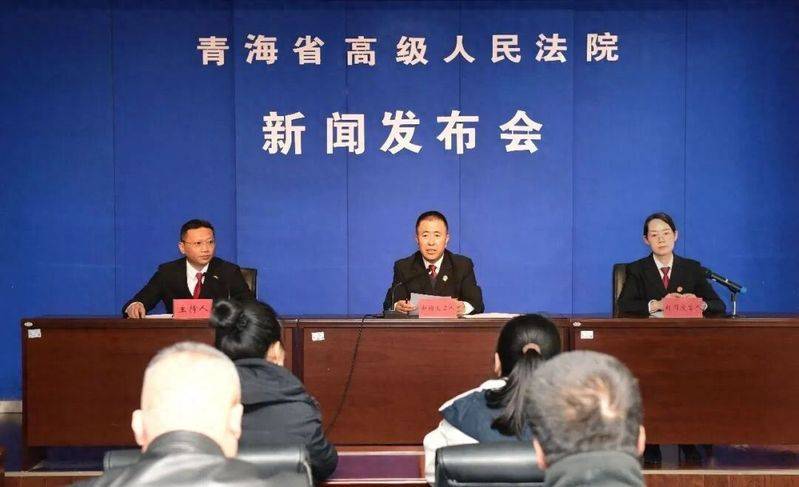
On the morning of 21 april, qinghai high court held a press conference on the 2026 intellectual property awareness week. Qinghai high court member and vice-president song zhongyi published five typical cases of intellectual property. The cases concerned types of cases such as trademarks, copyrights and contracts for the transfer of technology, covering trades such as supermarkets, glasses, art culture, pharmaceuticals, information networks, etc., and were designed to describe the “big truth” in a “small case” of intellectual property。
5 typical cases of intellectual property
Case i: a dispute between li and qinghai eco-cultural corporation over the right to disseminate information on works
[basic case]
On 18 june 2024, mr. Li acquired the right to copyright for a photographic work with the permission of the copyright holder. Having discovered that an ecological culture company in qinghai had made unauthorized use of the photo on its managed website, li filed a complaint with the people's court for violation of his copyright, requesting that an ecological culture company in qinghai stop the abuse, pay an apology and compensate for the damage. An eco-cultural company in qinghai received a petition to change the case-related works in time。
"the decision."
The people's court found that the use of photographic works on websites operated by an eco-cultural company in qinghai, without the permission of the rights holder, li, had violated the rights of the rights holders to the dissemination of information on the productions and that they were responsible for such violations. Qinghai, an eco-cultural company, has been sentenced to compensate li for economic losses and reasonable expenses incurred in stopping the violations。
"specific meaning"
As the digitalization of the internet continues to develop, access to photographic works is becoming increasingly accessible, and a number of internet users download and use web-based photography at will to attract rapid public attention and increase the number of hits, which has led to numerous disputes over the dissemination of information networks against their works. It is important to remind internet users of the need to examine the sources of material when accessing materials such as pictures and photographs on web platforms, to obtain the permission of copyright holders and to avoid the risk of “free downloading” being “free of charge” or otherwise assuming corresponding legal responsibility。
Case ii: a dispute between chen and wynn concerning copyright, tort
[basic case]
In july 2010, chen completed the creation and registration of goat head graphics, which was made public in 2011 and is the only author of the work. In 2014, a company in win applied for registration of a trademark and used the trademark in its network shop, which was highly similar to chen's " goat head graphics " . Chen has filed a lawsuit for violation of the right to modify, reproduce, disseminate and adapt the works of the goat graphics by the trademark of a company, requesting that the company immediately cease its violations, compensate for economic losses and reasonable expenses in defence of its rights, and submit an apology。
"the decision."
The people's court considered that, although the trademarks complained of had been partially altered, they were substantially similar to the layout, structure, etc. Of the goat head graphics by comparison between the whole and the main part. The alleged trademark violation of chen's right to initial writings, such as the signature of chen's painting of the goat head, led to a ruling that a company ceases to violate its rights and compensates chen for economic loss and reasonable expenses。
"specific meaning"
Once a work of art has been completed, the author has the right to the relevant copyright in accordance with the law, and no one may violate the copyright without permission. In the present case, while the company wynn acquired the right to be sued for exclusive use on the trademark, the trademark logo constituted materially similar to the works of art completed and published by chen and infringed chen's first copyright rights. It should be recalled that the successful registration of trademarks does not represent the absence of defects in rights, and that a large number of market subjects should conduct risk checks at all stages of the design, application and use of trademarks, maintain the integrity of their operations, respect the rights of others and avoid legal disputes arising from conflicts of rights。
Case iii: dispute over trademark rights between an investment company and an operating company
[basic case]
An investment company has been granted the exclusive right to obtain a “big-tune” registration trademark, known as the shanghai trademark, a list of protected trademarks that have been included in the shanghai market and have high market visibility. One of the defendant's operating companies operated in supermarkets and, without the permission of an investment company, highlighted the use of the words “large hair” identical to the trademarks involved in the case, in various places, such as its signposts, service desks, elevators and shopping bags. An investment company then appealed to the court, requesting that an operating company be ordered to cease the tort and compensate for the damage。
"the decision."
The people's court considered that the unauthorized use of a trademark by an operating company in the same service category without the licence of the trademark holder constituted a violation. In view of the fact that both the actual loss of the rights holder and the profit of the infringer are difficult to ascertain, the people's court, taking into account, inter alia, the publicity of the case relating to the trademark, the subjective fault of the infringer, the time of the violation, the circumstances of the violation, decided in accordance with the law that an operating company should immediately cease the violation, and awarded compensation to an investment company for reasonable expenses such as economic loss, transportation expenses, etc. Amounting to more than $50,000, which is to be borne by an operating company。
"specific meaning"
The proceedings in this case have highlighted the importance of the people's court's judicial orientation with respect to the protection of intellectual property rights to guide market subjects to operate in good faith and to maintain a level playing field. It reminds a wide range of market owners of the obligation to exercise due diligence in carrying out their business activities and to regulate the use of commercial markings and the corresponding legal liability for any unauthorized use of trademarks registered by others。
Case iv: a dispute between an optical company and an eye-health management company, sun, about violation of trademark rights
[basic case]
An optical company has been authorized to acquire the exclusive right to register trademarks for the “gross” glasses. In august 2024, an optical company discovered the existence of a company for the management of visual health, sun koi, which sold fake “tortex” glasses, and purchased them, which were notarized by notaries. It has been established that the “twilight dragon” glasses sold by a company for the management of visual health and sun-oi are not produced by an optical company and are products that violate the exclusive rights of the twilight to register trademarks. An optical company then filed a complaint for the sum of 40,000 yuan for the cessation of violations, compensation for economic losses and reasonable expenses of a company that manages the health of the vision。
"the decision."
The people's court considered that, in accordance with article 57, paragraph 3 (c), of the trademark law of the people's republic of china, the sale of goods in violation of the right to register the exclusive use of trademarks was a violation of the right to register the exclusive use of trademarks. The sale by a company for the management of visual health, sun yao, of glasses containing the tracoon trademark violates the exclusive right of an optical company to register the trademark and is liable for the cessation of the sale, compensation for economic loss and reasonable expenses。
"specific meaning"
Trademark rights are exclusive rights enjoyed by trademark registrants in accordance with the law to prevent unauthorized use of identical or approximation trademarks and to avoid harm to their business reputation and economic interests. According to the trademarks act of the people's republic of china, the sale of goods that infringe upon the right to register trademarks is an infringement of the right to trademarks and is subject to corresponding legal liability. The people's courts play their full role as adjudicators and punish, in accordance with the law, all types of violations of trademark rights, such as the sale of goods that violate the right to register trademarks, both as a powerful practice of the concept of “protecting intellectual property and protecting innovation”, and as an effective safeguard of the competitive market economy order and the legitimate rights of the right-holders and consumers。
Case v: contracts for technology transfer between a pharmaceutical industry group and a pharmaceutical company case
[basic case]
On 18 may 2020, a pharmaceutical industry group entered into a contract for the transfer of manufacturing technology with a pharmaceutical company, under which a pharmaceutical industry company would transfer exclusively to a pharmaceutical industry group the production technology of a “synthesis capsule”, including all information, such as declarations, prescription processes, quality standards, technical secrets and related intellectual property rights. In the course of the performance of the contract, the parties disputed the production process of the medicine, the sterilization process, the timing of payment, etc. A pharmaceutical company brought an action against a pharmaceutical consortium for non-performance of its obligation to pay the down payment, as contracted, for the transfer of 2. 4 million yuan and interest. A pharmaceutical industry group filed a counter-claim on the grounds that a pharmaceutical industry company had not handed over complete production technology information within the agreed time frame, that there had been a significant deviation between the process of preparation in the protocols delivered and the process preparation process in the statutory standards, that a pharmaceutical industry group had to devote additional resources to research and development for process compliance, process validation, that a pharmaceutical industry company had failed to meet its obligations to provide technical guidance for on-site production on a contractual basis, that a pharmaceutical industry company had failed to certify three batch processes, that it had been forced to pay additional workshop renovation costs and related certification inputs totalling over $5. 3 million。
"the decision."
In the second instance, after numerous conciliations conducted under the auspices of the people's court, the parties voluntarily entered into a conciliation agreement on a package of disputes concerning the transfer of technology between “an zhenyang capsule” and “a capsule of a day” and fulfilled their obligations in a timely manner, in accordance with the contents of the conciliation agreement。
"specific meaning"
Judicial mediation is an effective measure by the people's courts to implement the concept of “win-win” and “win-win” and to bring about an innovative division and escort. In the present case, although only a dispute concerning the transfer of technology to an “impressive capsule” was involved, it was also taken into account that there was a dispute between the parties over the transfer of technology to a “day capsule”. In order to bring the division to a halt and to promote continued cooperation between the two parties, the people's court proposed a one-time settlement of the two disputes, which the parties agreed to. The people's court finds a point of dispute and a balance between the legitimate rights and interests of the two parties to be fully justified in terms of the facts of the case, the legal risks, the effects of mediation, the appointment of technical investigators to participate in the proceedings, the provision of specialized technical expertise, cooperation in the conduct of investigations, mediation and other litigation activities, the successful settlement of disputes by conciliation and the effective fulfilment of the objectives of the judicial process to safeguard the legitimate rights and interests of the parties, the services and the orderly development of the market economy。
Written contribution: icac