There is no trust, no confidence, no confidence, no confidence. Credit has been an important foundation for the orderly conduct of human social activities since ancient times, and in modern societies credit is an important component of market economic and social governance. As innovative entrepreneurship advances and deepens, intellectual property rights have become deeply embedded in social entrepreneurship, their importance has become increasingly prominent, and the building of intellectual property credit systems has gradually become an important component of today's social credit system and institution-building for the market economy。
The intellectual property credit system is based on laws, regulations, standards and contracts, is based on a network of credit records and credit infrastructure that adequately covers members of society, is underpinned by a system of credit information compliance applications and credit services, is based on a system of incentives and disincentives based on trust observance, and is based on a new regulatory system that is intrinsically required by the concept of a culture of good faith and the promotion of the traditional virtues of good faith. Its main purpose is to raise the level of integrity and credibility of various market subjects and to create a social credit environment in which integrity is self-regulatory。
Top-level design and construction of intellectual property credit systems bureau
Credit discipline is one of the key components of the intellectual property credit system, and the national intellectual property strategy framework, issued by the state council in 2008, explicitly provides for “improvement of the management of intellectual property intermediation services, strengthening of industry self-regulation and the establishment of systems for the management of integrity, such as information management, credit evaluation and bad faith discipline”. This programmatic document, which guides the development of our intellectual property industry, for the first time opens the door to credit discipline in the area of intellectual property。
In recent years, in order to strengthen the social credit system, the reform of the “regulator” system has been further advanced and the fundamental role of credit in innovative regulatory mechanisms, improved regulatory capacity and standards has been further developed。
On 27 june 2014, the state council issued the outline for the development of a social credit system (2014-2020), which sets out the objectives for the construction of a credit system in the area of intellectual property rights, including the construction of a credit system, the fight against violations, the strengthening of joint penalties and the exploration of credit for services. This is the first time that we have included intellectual property credit in social public credit-building programmes, and this initiative has clearly opened the way for the construction of our intellectual property credit system and has become a high-profile highlight。
On 6 january 2016, the national intellectual property authority issued a circular on certain matters relating to the construction of a social credit system for the intellectual property system, setting out the objectives for the construction of a social credit system for intellectual property until 2020 and defining the main tasks of credit records, working mechanisms and information development。

With the adoption of documents such as the memorandum of cooperation on the joint punishment of serious derelicts in the field of intellectual property rights (proposals) and the guidance on accelerating the development of a social credit system for the construction of new credit-based regulatory mechanisms, the construction of intellectual property credit systems has gradually moved towards diversification, with common regulatory areas such as patents, trademarks and so forth becoming the main areas of exploration for the construction of intellectual property credit systems。
On 16 october 2019, the national intellectual property authority issued the joint list of distrusted persons in the patent field (preliminary) scheme, which expressly provides that the national intellectual property authority may, on application, share the list of severely discredited persons jointly with relevant trade associations, professional services, platform enterprises, etc., in order to accelerate social co-governance。
On 30 july 2021, the directorate-general for the supervision of national markets issued the measures for the management of serious mistrust lists for the supervision of markets, which set out the criteria for determining serious breach of trust in the area of intellectual property. Deliberate infringement of intellectual property rights; filing of an irregular patent application, registration of a malicious trademark to the detriment of the public interest; engaging in a serious violation of a patent and trademark agent being included in the discretion of a serious breach of trust。
On 24 january 2022, the national intellectual property authority issued the regulations on the management of intellectual property credits of the national intellectual property authority, which further delineates the grounds and criteria for the determination of general and serious breaches of trust, essentially covering the most common types of intellectual property violations in the current social context, and regulates the intellectual property credit system in a multidimensional manner, such as allocation of responsibilities, recognition of nature, relief of rights, supervisory responsibility, etc., which is a landmark outcome of the initial legal norms of our intellectual property credit system, providing a practical basis for the identification and regulation of intellectual property violations。
Pilot layouts to promote intellectual property credit regulation to explore innovation
With a view to strengthening credit regulation, innovative regulatory concepts, regulatory systems and approaches, strengthening social oversight and co-governance, the creation of a broad protection of intellectual property rights has become the main thrust of the current intellectual property credit system。
The programme for building intellectual property power (2021-2035) states that intellectual property credit regulation systems should be improved, intellectual property credit regulation mechanisms and platforms should be strengthened, and serious breaches of trust in intellectual property rights should be sanctioned by law. Relevant documents, such as the opinion on strengthening intellectual property protection, the guidance on accelerating the development of a social credit system, and the development of a new regulatory mechanism based on credit, set out specific building requirements for good faith and social governance。
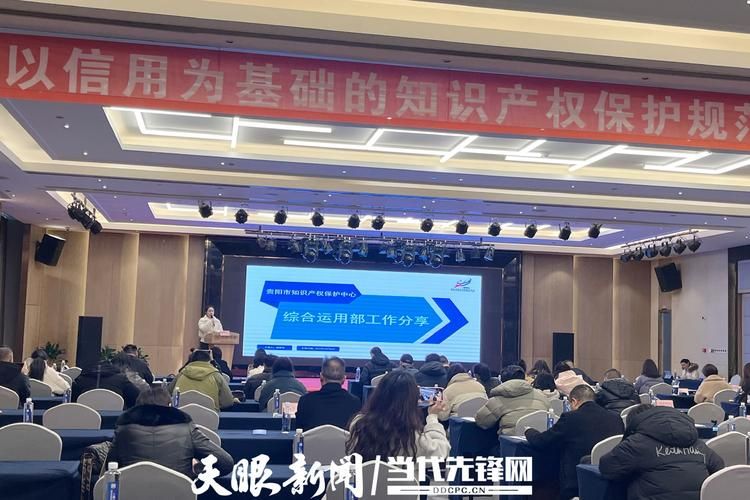
As part of its efforts to strengthen the capacity of intellectual property powers, the national intellectual property agency (inip) has given high priority to the construction of intellectual property credit systems. Since 2020, two series of pilot projects have been carried out in the field of intellectual property rights (iprs) with a view to promoting the strengthening of intellectual property credit systems in the pilot regions, the establishment of scientifically sound classification indicators, the development of credit information records in the field of intellectual property rights and the improvement of credit regulation mechanisms for classification. At the same time, pilot projects have been launched to create an open and efficient platform for the management of credit information, to develop replicable and replicable models of work and typical cases, and to promote the further development of the national intellectual property credit system, the further improvement of the policy environment, the organic integration with local social credit systems and the provision of effective safeguards to improve the level of intellectual property protection and optimize the business environment。
In august 2020, the national intellectual property authority approved the first pilot units in 12 locations, including beijing, shanghai, jiangsu, zhejiang, anhui, fujian, jiangxi, hubei, guangdong, hainan, sichuan and gansu. At present, the first pilot units have been approved, and the results of the survey are excellent in six of them, namely, sichuan, zhejiang, shanghai, beijing, hubei and jiangsu。
In november 2021, the national intellectual property authority approved the second pilot unit, the intellectual property administration of hebei, liaoning, jilin, shandong, chongqing, shaanxi and xinjiang provinces (autonomous regions and municipalities directly under the central government), 12 pilot sites in henan province, zhengzhou, xheng hsu river, hunan province, yanzhou in guangxi autonomous region, guiyang in guizhou province, hangzhou, taizhou in zhejiang province, fuzhou, xiamen in fujian province, guangdong region, huizhou in guangdong province and hainan province, among others。
It is known that the first local pilots that have completed their acceptances have accumulated a wealth of work experience, resulting in replicable work models and typical cases. Among them, beijing has set a reasonable percentage of spot checks on the credit ratings of patent agents; shanghai, jiangsu, zhejiang and anhui have signed a framework agreement to promote credit integration in the area of intellectual property rights, promoting the sharing of information on credit regulation and sharing of experiences with credit regulation; hubei has developed a system of hierarchically regulated indicators for enterprises in the area of intellectual property rights, improving the accuracy of the classification; sichuan has advanced a model of chaining of credit regulation for “front end warning, middle end classification, back end chain punishment”; anhui has guided municipalities to strengthen the management of the list of serious violations of the law and has guided the hoi fats city to explore new models of credit regulation; fujian has advanced the establishment of a “know-how” model for credit evaluation of intellectual property rights, adjusting the loan credit credit lines based on intellectual property credit evaluation; guangdong has focused on piloting in foshan and shenzhen nanshan, and has focused on innovative exploration in areas such as management of credit risk classification, credit commitments, etc。
Iii. Pilot advance to accelerate the construction of an intellectual property credit system in huizhou
The development of intellectual property rights in the city of wheyzhou is well founded, and the creation, protection and management of intellectual property rights have been effective. From 2016 to 2022, the city of whezhou, the city of wheang, the state intellectual property model city, the state intellectual property power district project area and the state intellectual property model park were approved. By the beginning of december 2022, the city had 12,058 active invention patents and 19. 83 10,000 invention patents; 13,930 registered valid trademarks; and 41 enterprises with national intellectual property advantages and 10 demonstration enterprises。
In november 2021, the national intellectual property agency established the second series of credit-based classification pilot units, consisting of 7 provincial and 12 municipal pilots, one of the 12 municipal pilot units and the first to be approved by municipalities。
The pilot project on credit-based classification regulation in the area of intellectual property rights in huizhou will be based on the overall construction of the concept of “a sound linkage mechanism for the protection of intellectual property, the establishment of institutional systems for regulatory regulation, the piloting of credit regulation in the electronic information sector (video display, new energy batteries), the building of a platform to strengthen the management of credit information collection, the application of credit information to enhance confidence-building and discipline, and the development of a culture of public opinion”. Through the pilot project, it will improve the system for monitoring the classification of credits and establish a system for monitoring the classification of intellectual property that is appropriate to the actual performance of the city of huizhou, as well as an incentive for compliance and disciplining, while at the same time enhancing awareness of the integrity of social intellectual property rights and helping the municipalities to improve the level of intellectual property protection and business environment。

The classification of credit-based classifications in the area of intellectual property rights in hueyzhou will be structured around the following priorities:
Establish a framework for pilot work on the classification of intellectual property credits. Coordination of the work of the relevant sections of the municipal intellectual property authority has been undertaken to strengthen communication with municipal and county (district) credit authorities, focusing on the regulation of credit classification in areas such as intellectual property “discharge”, intellectual property project management, the regulation of intermediary institutions, patent and trademark cases。
2. Building intellectual property credit systems. Development of a credit system and standards for intellectual property rights in the city of wheyzhou, strengthening and regulating the collection, integration, openness, sharing, trust-holding incentives and sanctions, credit restoration, credit commitments, credit evaluation, etc. Of credit information in the area of intellectual property in the region。
3. Accelerated deeper application of credit evaluation with industry pilots at its core. In conjunction with the regulation of practical aspects, a system of indicators for the evaluation of corporate intellectual property (ipr) credits has been developed, piloting enterprises in the e-information (video displays, new energy batteries) industry, conducting credit evaluations of enterprises and establishing credit ratings, implementing differentiated controls on different credit rating enterprises based on evaluation results, and strengthening the application of credit evaluation findings in administrative matters such as merit evaluation, project acceptance, qualification and various types of intellectual property financing。
Strengthening the management of intellectual property credit information. Building on the existing platform of the city of huizhou, developing a module on intellectual property credit regulation, studying the establishment of an inventory of intellectual property credit information at the municipal and county (district) levels, ensuring the normative, accurate, complete and effective integration of information, and promoting the development of information on intellectual property credit regulation in huizhou。
5. Strengthening regulatory support. Strengthening the capacity-building of the supervisory workforce, actively participating in the exchange of local experiences and learning, making full use of the channels of communication to inform and educate market actors about good faith, and accelerating the creation of a favourable climate for self-regulation and social co-governance in the industry。
The construction of intellectual property credit systems is an objective need for the continuous development and improvement of social credit systems and an important component of the building of intellectual property power. Following the pilot construction, the city of whezhou will continue to explore innovations, deepen intellectual property credit regulation, bring together the high-quality economic development powers of the city of whezhou, and stimulate “trust” energy for building intellectual property power。