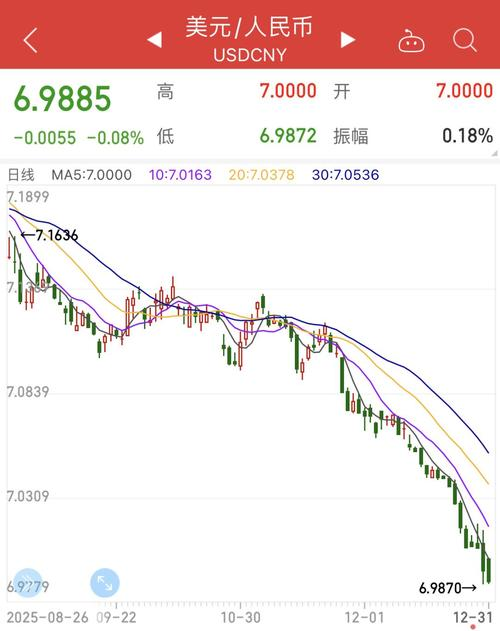
Despite the persistent official emphasis on the fact that the renminbi does not have a basis for devaluation, its performance over the past month has been a source of great concern to many. On the first trading day (10 october) after the renminbi officially entered the sdr basket, the renminbi broke the key point of 6. 70 against the dollar, which was close to 6. 85 yesterday。
In other words, the renminbi has depreciated against the dollar by more than 2 per cent in five weeks, reaching 10 per cent since last year's “811 retrenchment”。
And after the day before yesterday, after hitting 6. 83, the rmb lost all the gains since the current financial crisis - i don't know. Between 2009 and 2010, the central bank of china, under pressure to devalue the renminbi, undertook a two-year defence at the 6. 83 line, a position considered by many to be one of its most important psychological concerns。
In fact, these discussions are no longer of great significance. After 6. 7, there was almost no decent counter-offensive by central banks, which in itself meant that central banks allowed the renminbi to begin to follow market pricing more closely. In terms of the exchange rate of the renminbi against a basket of currencies, since august, the renminbi exchange rate index has remained generally stable, which also means that the renminbi is weak and is a by-product of the strong united states dollar. In other words, as long as the dollar index remains strong in the near future, it is difficult for the renminbi to reverse the current decline。
But it is also clear that the united states dollar index has in fact not been particularly prominent in the past year, for example, at the beginning of this year, when it hit the 100-point mark, the renminbi was near 6. 7 and now stands at 6. 85. Overall, the renminbi is still on the path of gradual depreciation against the dollar。
Why would the renminbi be depreciated
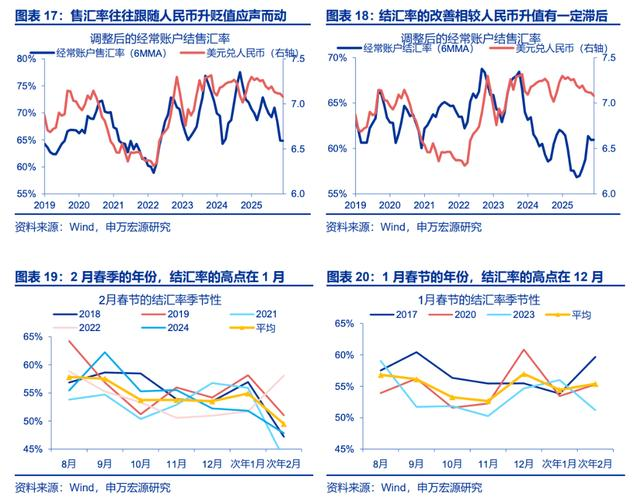
The question is, why did the renminbi depreciate? In short, there is a more pronounced capital outflow in china, which means that the renminbi is exchanged for the dollar, which would result in its devaluation。
Why would there be capital outflows? This is actually two issues。
We would like to understand that so-called capital outflows refer to “net capital outflows”, that is, capital inflows minus capital outflows remain capital outflows and net outflows. The next question is, first, what is the status of capital inflows? In terms of foreign direct investment (fdi), the overall level of inflows is relatively stable, at about $120 billion per year, and china has a trade surplus of about $600 billion per year, which remains relatively stable. From these two figures, the level of capital inflows to china should remain considerable。
However, the situation with capital outflows is more worrying. Foreign exchange reserves reflect capital outflows to some extent, and since mid-2014 china's foreign exchange reserves have slipped from a high point of nearly $4 trillion to the current level of $3. 2 trillion, reflecting to some extent the pressures of net capital outflows。
Of course, in theory, if central banks do not intervene in foreign exchange markets, foreign reserves will not decline, but the rate of exchange depreciation will accelerate. Thus, china’s decline in foreign exchange reserves on the one hand, and the devaluation of the renminbi on the other, on the other, indicate not only that real net capital outflows are higher than the decline in foreign exchange reserves, but also that the central bank is still managing the renminbi’s exchange rate, in other words, that the central bank does not want to see the renminbi crash。
Thus, the recent acceleration of the devaluation of the renminbi reflects, to some extent, the fact that central banks have reduced their intervention in the market, with the benefit that foreign exchange reserves will not decline too quickly, but that, if the renminbi depreciated too fast, the market would fear a sharp devaluation of the renminbi, which could also cause further shocks to the market. Managed devaluation therefore remains a central objective of central banks. As a result, after the recent rapid devaluation, central banks would consider re-managing market expectations。
The exchange rate remains relatively weak
In any case, however, the expectations of a devaluation of the renminbi are difficult to eliminate. This may involve two or three issues, the first being the net outflow of capital that we have mentioned above, and the second being that china’s economy’s attractiveness for foreign investment has declined, while the global economic slowdown has led to slower global capital flows. Moreover, the relatively strict management of china's capital account has led many to worry about “failure”. Thirdly, the high prices of chinese assets have led to large numbers of chinese enterprises and residents seeking opportunities to invest abroad。
From the point of view of asset prices, overseas acquisitions by chinese firms are a typical case in point. Many listed companies have been looking for overseas investment targets in the past few years. One of the purposes of this is to find differences in valuation between chinese and overseas stock markets. For example, many companies have less than 10 times their valuation in overseas stock markets, but by the a share market, sparrows can be transformed into phoenix and assets can be injected into the market at least 20 times, so that the listed companies can double their profits without having to blow up their power。
In the wake of the sharp rise in housing prices in china’s front-line cities, many chinese have found that the prices of overseas real estate markets are more reasonable and have therefore invested in overseas real estate markets, which has in fact led to an outflow of capital。
At the macro level, there is currently a more visible asset bubble in china, and the “de-foam” is likely to be the focus of economic work in the coming year, which means that the exchange rate may become a pressure-relief valve – in other words, if housing prices rise by 10 per cent a year, but the exchange rate falls by 5 per cent, the number of people who fire their homes will decrease relatively。
Thus, the relative weakness of the renminbi's exchange rate will continue for some time, and it is of little interest at this stage to discuss whether the renminbi has broken seven, which, according to many projections, is likely to depreciate by 5 per cent in the coming year. Break seven is an event of generality, and we may have to consider whether it is 7. 2 or 7. 3 by the end of next year。
Nevertheless, for most people, the exchange is not an effective means of circumventing the devaluation of the renminbi. After all, the biggest asset is the house, and the exchange of a cup of water and a car is unlikely to create an effective hedge for the millions of yuan house。
So, without real investment needs abroad, most people do not have to move too fast. In daily life, the real impact of the devaluation of the renminbi is not significant; of course, it has had some impact on overseas tourism, but in fact in the past few years the renminbi has enjoyed that amount of overseas tourism dividends during its appreciation cycle。
In summary, the renminbi is expected to depreciate, but china, the second largest economy in the world, will not experience a disorderly devaluation, with a degree of depreciation, and will slowly recover and appreciate. On the other hand, increasing exchange rate volatility is also a necessary way for economies to mature。