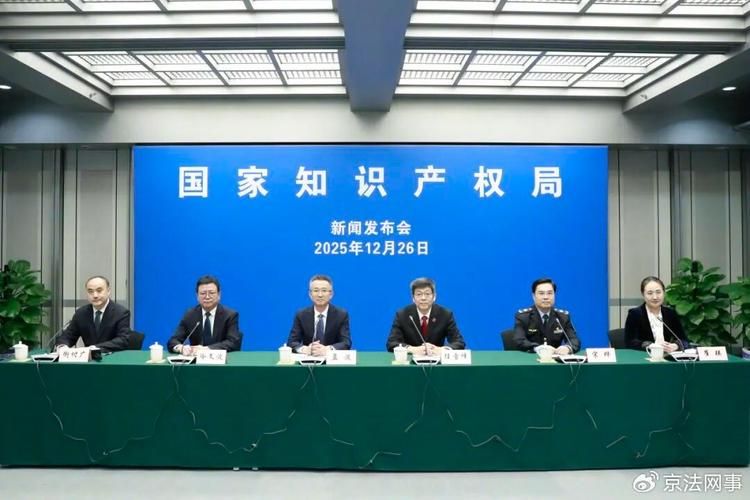
For the first time in 2025, the central economic work conference made it clear that the system of protection of intellectual property rights in emerging areas was being improved. The experts expressed the view that such an arrangement would facilitate the evolution of our innovation from technology accumulation to value creation, rule-making, and would be of great importance for the promotion of technological innovation and industrial development in our new and emerging fields, and would be an important response to international competition in science and technology。
Increased difficulty in applying the rules
Technological innovation is reshaping industry at an unprecedented pace, while the compatibility challenges of intellectual property protection systems are becoming more prominent. The most recent data show that the number of patents for high-value inventions in our country (excluding hong kong and australia) is 2. 292 million, 2. 2 percentage points higher than the overall growth rate. Quantum technology, bio-manufacturing, brain interfaces and sixth generation communications industries have created a number of key core technology patents that have contributed significantly to the country's high level of technological self-reliance。
The rapid development of emerging technologies poses new challenges to the application of traditional intellectual property protection regimes. The inability of traditional intellectual property regimes to apply effectively in the face of new technological features and applications has led to many practical difficulties in the identification of rights, tort determinations and the application of rules。
According to feng xiaoqing, a professor at the chinese university of political science and law and a member of the national advisory committee of experts on intellectual property rights, the various types of results produced in areas such as artificial intelligence, biotechnology, etc., are in conformity with the requirements of the objects of intellectual property protection, as well as the exercise of their rights and limitations, tort determination and legal liability when they meet the conditions for intellectual property protection, all lack the basis of existing law and may lead to problems of inconsistent standards of adjudication and evidentiary determination in judicial practice. In addition, in the face of emerging technologies, traditional intellectual property protection regimes also have issues such as how to expand existing rules and principles, how to define the boundaries of intellectual property protection in emerging areas, and how to construct a balanced mechanism for private rights protection and public interest。
In specific areas, the contradictions of institutional adequacy are even more pronounced. “traditional intellectual property protection regimes are focused on static, human-led and well-defined technological programmes, but the technological characteristics of emerging areas break this logic.” nam yu, a researcher in the economic growth research office of the chinese academy of social sciences, argued that in the field of artificial intelligence (ai), ai could not be an inventor, and doubts arose as to whether the content of the ai generation was copyrighted; that it was difficult to quantify the contribution of a wide variety of creators, including data providers, developers, users, etc.; that the text that trained ai to use big copyright data was controversial as to whether data mining constituted a “reasonable use”; and that, at the same time, the rapid technological iterative cycle, far beyond the patent review cycle, led to a serious delay in protection。
For a large number of innovation subjects, such as enterprises and research institutes, the distribution of intellectual property rights in emerging areas also faces multiple uncertainties. According to feng xiaoqing, many of the key core and common technologies in the emerging field have not yet been marketed, and the lack of clear institutional guidance and practical reference for enterprises in choosing ways of protection (patent applications or technical secrets), determining the timing of applications and selecting the applicant country and region increases the risk of transforming innovation outcomes。
Focus on optimizing ecological protection

In the face of the challenge, improving the intellectual property protection regime in emerging areas requires a combination of normative and flexible approaches, setting rules for technological development, delineating “runways” and leaving enough room for rapid and iterative innovation to break down practical challenges through institutional innovation。
“the improvement of the intellectual property protection regime in the emerging field should be based on existing legal principles and regulations, respect for intellectual property protection laws, and further enrich and develop protection mechanisms, incentives, balance mechanisms, market-based mechanisms, fair competition mechanisms and industrial security mechanisms.” fong xiaoqing suggested that, at the institutional design level, attention should be paid to the special needs of emerging technology scenarios, clarifying the patentability of ai algorithms, the conditions for the generation of technology programmes, and standards for the registration of trademarks for virtual goods and services in a meta-cosm setting; at the judicial practice level, standards for the determination of infringement of intellectual property rights in emerging areas should be improved, the manifestations of violation should be identified, rules of evidence adapted to new technological characteristics should be established, and a special system of judicial protection of artificial intellectual property rights should be established。
Feng xiaoqing indicated that domestic and foreign jurisprudence in areas such as big data, artificial intelligence, biotechnology, etc., were available and could be distilled into intellectual property protection regimes. Foreign legislative experience in new and emerging areas such as data, artificial intelligence and biotechnology can also inform the refinement of our relevant legislation。
Optimization of the review mechanism is a key element in improving protection effectiveness. In its view, there is a need to adapt to the rapidly iterative nature of technology and significantly improve the efficiency of ipr review. At the same time, the quality of delegated authority has been tightened, creative scrutiny has been strengthened, low-quality patent applications have been firmly contained, public resources have been avoided and the level of protection has been matched with innovation。
At the level of protection implementation, strengthening safeguards, reducing the costs of advocacy and increasing the costs of abuse are central points of action. Nam yu indicated that technical means such as block chain documentation, early warning of violations, rapid response mechanisms for intellectual property violations could be introduced to achieve early detection and early cessation of violations, and that, drawing on the practice of the intellectual property tribunal of the supreme people's court, damage could be stopped in a timely manner for innovative subjects through the application of measures such as high compensation and protection of reverse behaviour. In addition, mechanisms for the settlement of intellectual property disputes should be strengthened to encourage non-actional forms of dispute resolution, such as industry mediation, arbitration and other forms of dispute resolution, and to enhance the efficiency of advocacy。
Participation in international rule-making

In the context of increasing global scientific and technological competition, participation in international rule-making on intellectual property rights in emerging areas has become an important initiative to safeguard national interests and safeguard the global interests of innovation agents。
For enterprises and scientific institutions, an internationalized layout requires precision. Nam yu stated that international tools should be used first and foremost to actively expand the scope of international protection of innovative outcomes through the patent layout of globalization through channels such as the pct (property cooperation treaty) and the hague agreement; its secondary in-depth involvement in industry rule-making, encouraging leading firms to join or take the lead in the development of international technical standards, integrating their own core patents into the standard system and becoming important holders of required patents as a key way to enhance the impact of the rule; and, at the same time, providing timely feedback on a line of practice, providing a systematic feedback to government authorities through channels such as industry associations and providing a practical basis for national participation in international negotiations。
Feng xiaoqing stated that, at a time when global competition around strategic and emerging industries and future industries is increasing, our country should further enhance its voice and influence in the field of international intellectual property rights and promote the incorporation of our technical standards in emerging areas into the system of international standards. At the same time, the interests of developing countries should be actively defended in international rule-making, the theory of international protection of intellectual property rights in the new business environment should be improved and equity and justice in the global governance of intellectual property rights should be promoted. "the journalist of the economy"