Let us ask ourselves, brothers and sisters of electricity: are we really just taking a few threads and screws

Ordinary domestic electricians are connected, cut off and locked, and the task is completed as long as the lights are lit and the plugs are powered. But if you want to advance into the industry as a senior technician, even in the areas of maintenance, engineering and control, you have to move from “manual thinking” to “logical thinking”。
The electronic circuit is not a simple physical connection; it is a sophisticated energy flow and information flow system. The following six bottom logics are the “blind zone” that many teachers who have worked hard for 10 years. Read this. Your expertise goes straight up the stairs。
I. Depth resolution: why does the same voltage work without the equipment? (voltage and pressure-down logic)
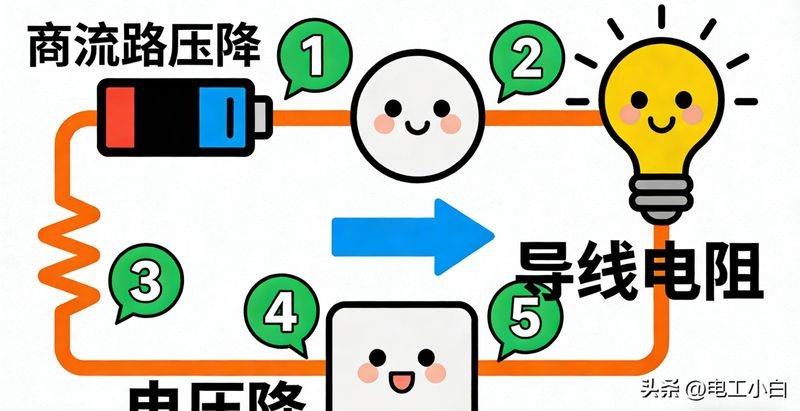
Core logic: pressure-down and load properties of direct current circuits
According to the general electrician, 220 v/24 v of the universal scale was delivered and the equipment was not bad or the line was not bad。
The master knows that voltage is only “potential” and currents are “power”。
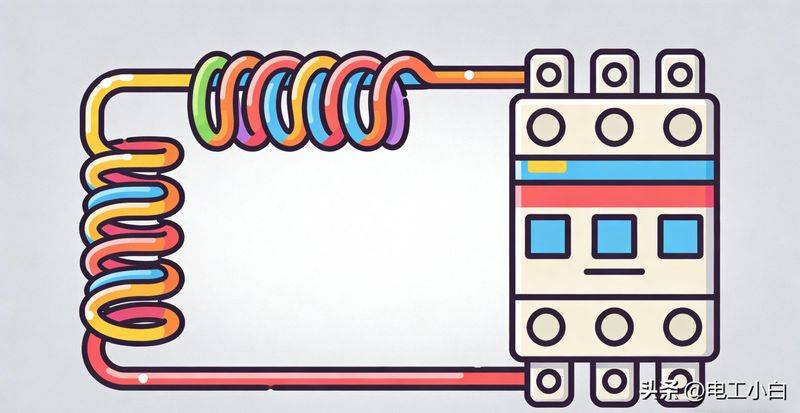
1. The catch-down trap
In direct current control circuits (e. G. Plc, sensor circuits), you not only look at the final voltage, but you also count line voltage。
- rationale: 0. 5 square line, 100 metres long, with a 24v load. End-of-pipe measurements may still have 23. 5 v, but the equipment does not move。
- operational: r = old l/s, copper wire resistance is small, but in micro-angle signal transmission, this is heaven。
- depressive: voltage is power failure, pressure is traffic。
2. Sensory load and reverse electric motion
Exposureors, winders, and electrical wires are out of power in seconds, producing several times the instant excess pressure of the rated voltage。
- wrong zone: many electricians do not understand the principle of acoustic and resistance absorption, resulting in frequent burning of the control plate power module。
- key: during master maintenance, check first-time for failure of an arc/diode tube at both ends of the coil, rather than blindly switching power。
Ii. Progress thinking: “invisible interference” in electronic circuits (printing and noise logic)
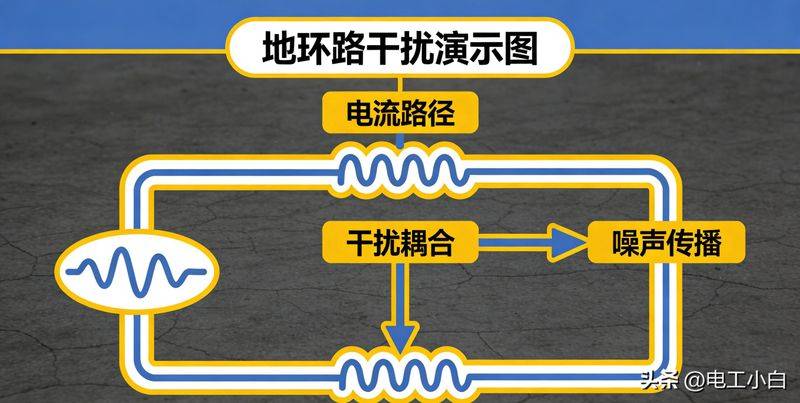
Core logic: textures and rings in communication circuits road
According to the general electrician, as long as the power supply is ready, the equipment is running normally, and nothing happens。
The master knew that 90 per cent of the equipment was bad and bad because **emc ** had not passed。

1. Rippe hazard
Direct currents of power output from the switch are not a smooth line, but rather fluctuate like sawn teeth。
- symptoms: light flash of led lamps, unstable frequency transformers, misreporting of sensors。
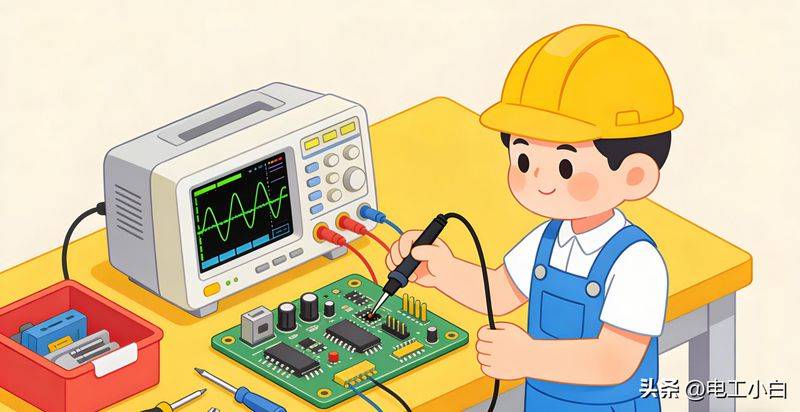
- operation: the master will look at the wave shape with a oscilloscope. Space-borne voltage is normal, with a wave-shaped jump, indicating the ageing of the power filter (e. G. Electrolytic) capacitor, which is not apparent to ordinary electricians。
2. Interference of the ring
The equipment was connected to three ground lines (container floors, shield floors, power source sites) and instead generated electrical circuits that caused signal interference。
- detachment: understand a little bit of the grounding principle and the single end of the shielding line. This is a high-level skill in industrial control maintenance。
Blind zone breakthroughs: what is the difference between “static and dynamic”? (load logic)
Core logic: empty and carrying two full yards yes
The average electrician believes that the load should be normal if the voltage is normal。
The master knows that the empty car is a fake death and that carrying is the real thing。
1. Real or false power generation
- pit: if you get the power first output, you get the 24v. Load the machine and it's broken。
- the truth: it's called a drop in carrying capacity. After the load changes, the voltage collapses severely, as a result of the power transformer's magnetic core saturation or the reduced performance of the mos tube。
Linear area for tripolar and mos tubes
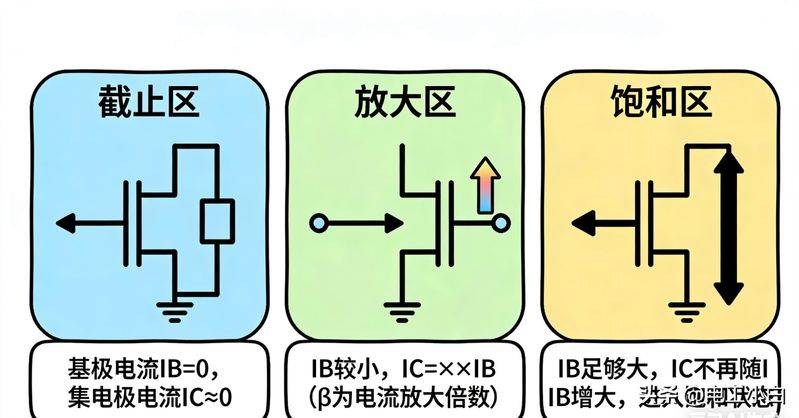
During maintenance, masters view circuit boards analyse whether the tripolar tube is in a terminal, saturated or magnified area。
- the common understanding: ordinary electricians look at it as “out of reach” and masters at it as “out of reach”. This is the key to determining whether electronic components are softly damaged。
Logical escalation: “anti-intuitive” failure of the n and l poles (polar logic)
Core logic: current direction and device characteristics
The general electrician considered that the zero line and the fire line were working back and forth, especially with light control。
The master knew that some circuits were backsliding, and some equipment was backsliding and not working。
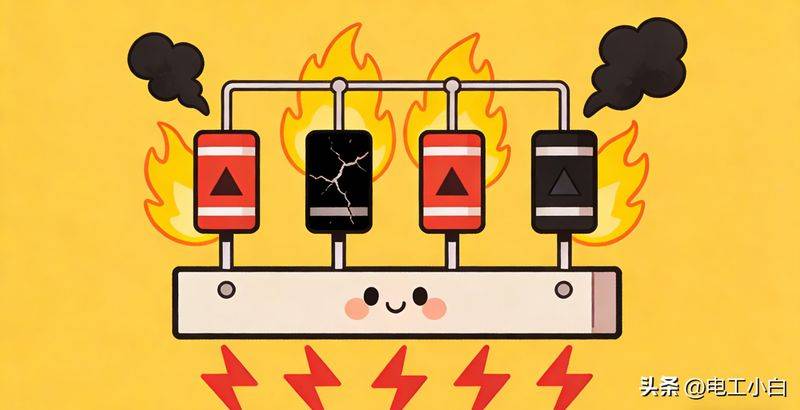
1. Inverse risk of single-control switches
Even though the lights are on, the switch is off zero. When lamps are repaired or replaced, electrical handling is extremely electrical. That is the bottom logic of security norms。
2. Opticality of current bridges and relays
In direct-flow power circuits, whole-stream bridges, contact loops and led lights are both positive and negative。
- extortion site: did you experience an electrical failure and a normal voltage, which resulted in the wire burning the internal protection diodes? This is the most typical high-level failure caused by low-level errors。
V. Hiding masters: “black box” thinking for circuit board maintenance (system logic)
Core logic: signal flow and fault tree analysis
According to the general electrician, the board was changed when it was broken and no cause of failure was found。
The master knows that the circuit is a closed loop system for input-processing-output。
1. Three main links in signal transmission
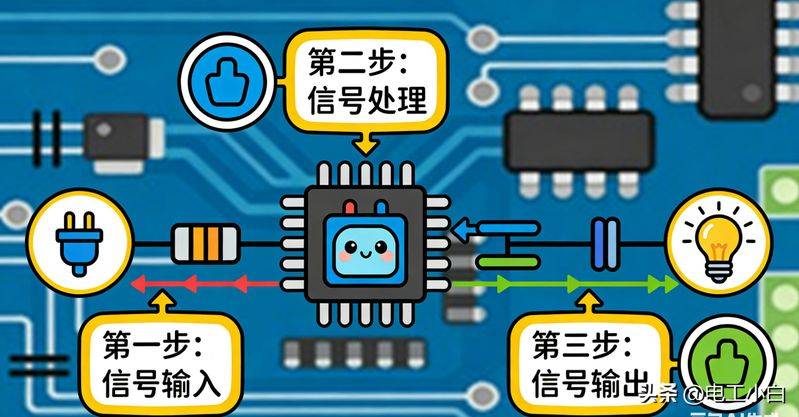
- input: is the sensor (temperature, position) signal normal? (volume voltage, frequency)
- intermediate: is the logical chip (cpu/plc) processed? (see signlights, reset signal)
- output: is the execution component (relay, transistor) action? (see drive currents)
- teaching: the master will follow the signal step by step, as doctors do, rather than blindly changing parts。
2. Physical principles of thermal expansion and cooling
This is the physical bottom of the electronic circuit. The equipment is on, it's hot, it's cold。
- advanced skills: cooling chips with alcohol tampons or heating with hot wind guns, targeting welding and thermal stability of components。
The ultimate core approach: a leap from “repair” to “building”
Core logic: practical application of om and kirhoff's laws
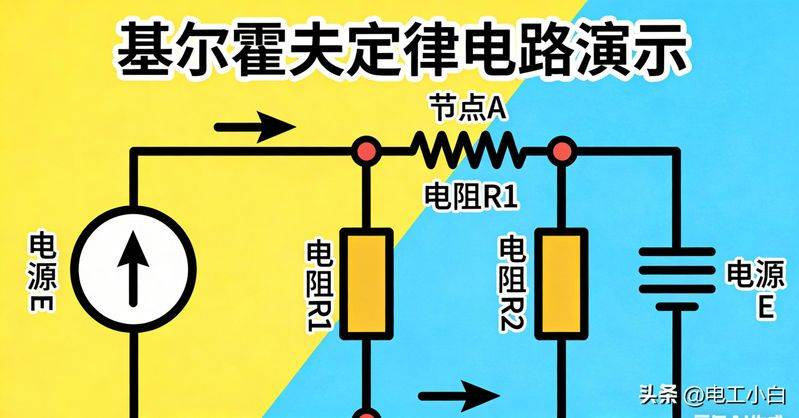
And finally, the bottom, most mathematical logic. Ordinary electricians are afraid of formulas, and masters survive on formulas。
1. Serial and power distribution
It's not guessing, but counting。
- scene: how do you calculate the stress tolerance values for each component by multiple load strings
- application: understand why it is necessary to calculate the flow of line runs (i2r loss) when power is being expanded, which is the bottom logic of electrical design。
2. Three constant laws
- energy is constant: power does not increase in a vacuum。
- resistence of charge: nodal current flow equals outflow。
- consistency of voltage: circuitary voltage is equal to drop。
- summarizing: with these three laws, you can read any complex diagrams, from ordinary electricians to electrical engineers。
Guys, wires are craftsmanship。
These bottom logics, which are described in this article, are areas that many powerful electricians will never meet in their lifetime, nor will they look into. But if you want to be a senior technician, a gold repairer, or even open your own studio, the bottom of these electronic lines is the threshold you have to cross。
Collect it, nothing to look twice. What kind of "hidden failure" did you encounter in your maintenance
# electricist # electronics # electrician # electrician # electrician # electrician # electrical panels # electrical science # electrician journal # hard nuclear technology # electronics # electrician # electrician knowledge # electrician exchange # # electrician # electrician # electrician # # maintenance # electrician # # household electrician # headline # hotspot #