Hello, i'm an electronic line maintenance technician with many years of operational experience. My colleagues, apprentices and even fans often ask me, "how can we do this with such a complex circuit board, with all the pieces? Why is it that some people just fix it and others get worse
Today i'm going to tell you the bottom line of electronic circuit maintenance in the most tangible, earthly and direct words. The theory of no false brain, no unreadable terminology, is a dry product from a line of maintenance. As long as you get through this core pattern, whether it's electrical, industrial, power, circuit boards, most of the failures can be quickly traced。
A lot of people go through electronic circuit maintenance。
A plate in hand, looking at the cylindrical stickers, chips, electric resistance, capacitating, diodes, triodes, instantaneous sizes: from where? Where to find it? Is there a circuit? Do you want to know how high it is
I've been working on it all these years, and i've seen too many people make the same mistake: they go up and down, change and tear。
The chip didn't break the chip, it didn't short-circuit the main panel, it was a small problem and it ended in a major malfunction。
Actually, i can tell you responsibly:
The maintenance of electronic circuits is not based on a dead end, nor is it based on lucky guesses。
All circuits, whether simple or complicated, are small power for a few dollars or tens of thousands of pieces of industrial equipment, and one pattern of failure。
Grab this main line, you're the master; you can't hold it, you'll never turn around the door。
I'm going to split into four blocks, and i'm going to break each of them into four key points, and i'm going to make it clear one step at a time that new players can understand, do what they want, and improve maintenance success。
First, get root clear: electronic circuits, only three. Yes
Many people can't fix it. They're not clumsy. They're wrong from the beginning。
Forget how complicated the circuits are, remember:
Any electronic circuit does only three things: power, signal, control。
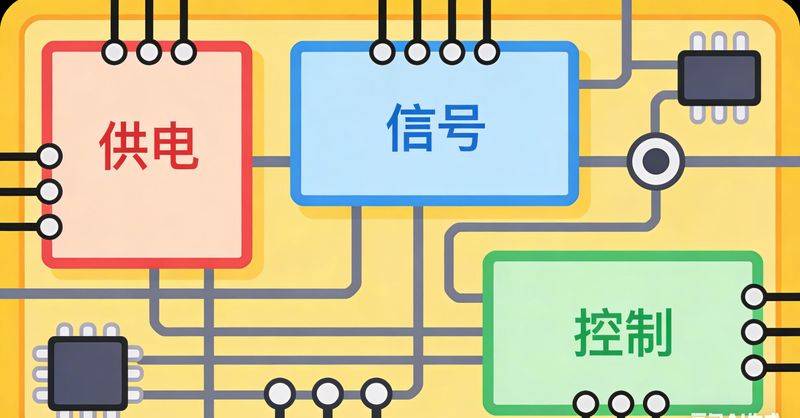
Electricity is “blood”
Without electricity, the equipment is a wasteboard. The voltage was unstable, the voltage was incorrect, the power supply was disrupted and 90 per cent of the malfunctions came from here。
Signal is "neurological"
Electricity is not working, work is irregular, it is good and it is bad。
Control is “brain”
The start does not start, the stop does not stop, the display of disorder, the failure of keys, the failure of remote controls is a matter of control logic。
And the complicated circuits, and the last one, that's the three things that go around。
The maintenance is to find out which ring is broken, broken, gone。
4. Inheritance: simple, complex, public and local
This is the general principle that the maintenance industry is the most practical and the least errors。
It's mostly a waste of effort to get up here and pick up little signals。
First step: power first — 70% failure, death on electricity
The first thing i said to my apprentice was:
We'll fix it first. There's no electricity。
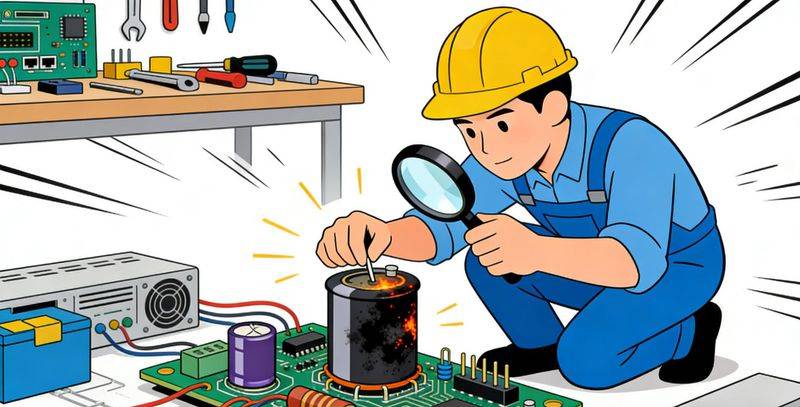
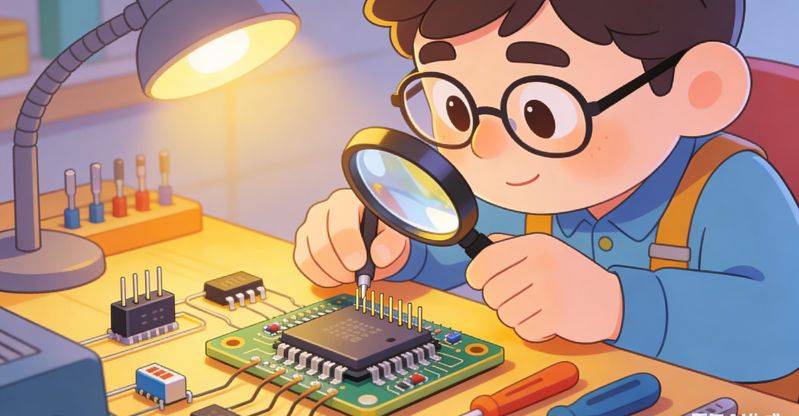
1. Look at the appearance first, then the instrument
The drums contain electric capacitors, burn black electric resistance, crack diodes, burn copper skins, and mold water, many of which can be located at a glance。
Don't come up with anything to mess with, first look, then touch, then smell, and finally measure。
2. Insurance, flow management, filtering, pressure stabilization
This is the four main points of power supply。
There's a short road to the safety bomb。
It's bad。
The filter's capacitation is not working and the voltage is unstable。
The pressure chip output is abnormally wrong。
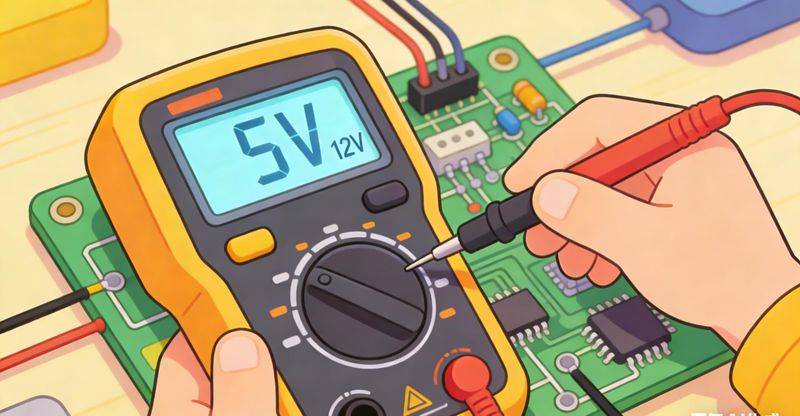
3. Critical point voltage must be measured in mind
5v, 12v, 24v, 3. 3v these are the most common electricity supplies。
As long as there are too many deviations, lock directly into the power supply and do not search the back。
4. Irregular power supply, no trace of signal
It's iron。
The electricity's not normal, and the data from the back is all fake, and it's getting messy。
Step two: checking the signal - power not working, road not working
The power supply is normal, the equipment is still not activated, it is not displayed, it is abnormal, it is a signal problem。
1. A signal failure is just one thing: no coming, no coming
The buttons are non-responsive, the sensor detects no output and the chip does not receive instructions, all of which are such problems。
2. Three points only: input, output, foot control
You don't have to read the whole picture. You only measure key nodes。
The interface, the tip, the chip pull, the plaque, the drop, just grab these positions。
3. The most vulnerable types of components
Electro-retarded circuits, leaks in the capacity, diode blow-throughs, triode break-ups, optic failure。
The patches look a lot, really bad, always those。
4. Contrast is the fastest shortcut for newers
There's a good match, no good match。
Left-to-right, top-down, normal-unusual, difference point is the failure point。
Step three: check control -- no command, no movement
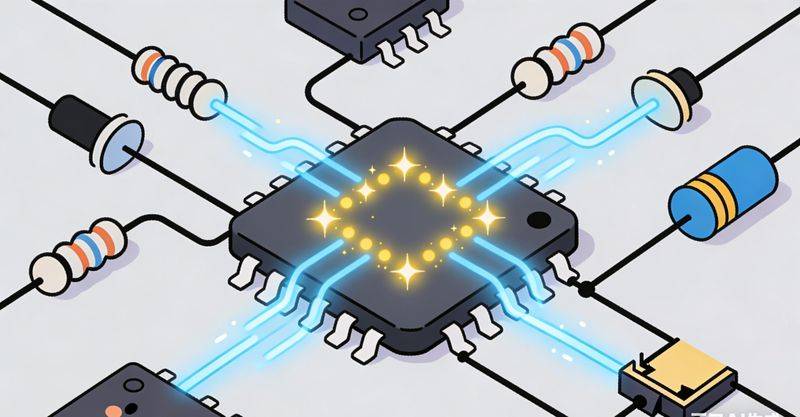
It is a matter of control logic that the power supply is normal, the signal is working, and the equipment is still in disarray。
Look first at the chip "live or not"
Cmu, single machine, cpu, if you want to work, have three conditions:
The power supply is normal, the crystal is vibrating and the repositioning is normal。
These three are not right. The chips are dead again。
Driving circuits as “high-risk areas”
Relays are unsorted, controlled silicon is unguided, the power is unturned, the beeper does not sound, most of them are not chip bad, but the drive level is broken。
Triode, drive chips, electrical resistance, flow-restrictive elements, priority。
“small issues” cross-referenced by human aircraft
Key failure, touch failure, remote non-reaction, and display of missing pens。
Many are not route problems, but:
Decontamination, tide, oxidation, welding, poor exposure。
4. Protecting circuits from neglect
Overflow, overpressure, overheating, overloading to protect an operation, and the equipment is stopped directly。
Many people think it's broken, but it's just protective。
Step 4: processual repair - 90 per cent less turn
Real maintenance masters, not fast hands, but good thinking。
I sum up a simple set of operational processes: one question, two look, three tests, four shifts。
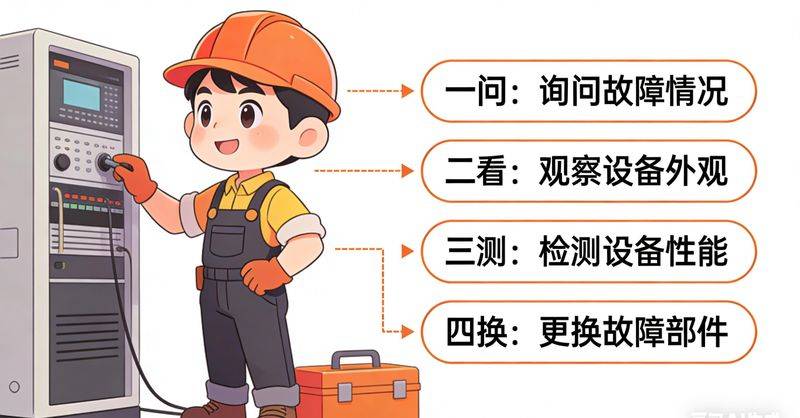
1. Question one: first ask about failure
When was it bad? How was it bad? Did it get in water, lightning, overload
The phenomenon is clear, it's half fixed。
Second look: look first
Are there any burns, drums, leaks, bombs, black, broken, molds, rust。
Old maintenance takes a look, and i'm sure of it。
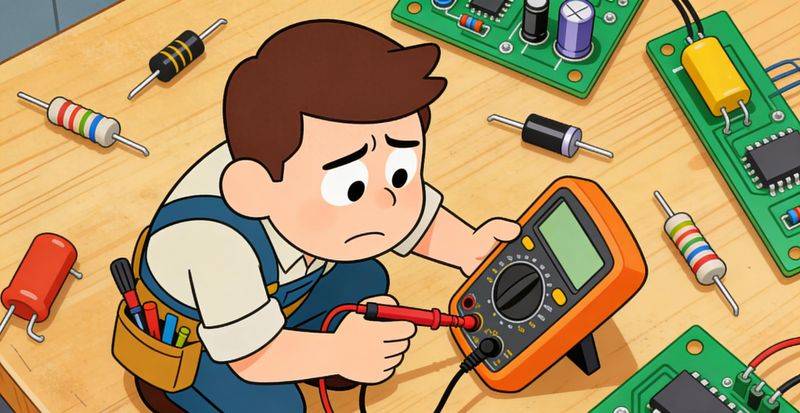
3. Three measurements: critical point voltage, resistance value, wave shape
It's not random. It's vital。
It's basically enough to lock out the failure range。
4. Four: final change
Don't change chips and panels as soon as you get up。
Welds can be welded, cleaned first, and small components can be replaced without large modules。
Four more combat habits:
- public and local
- large power, small signal
- it's more common without a knife
- fixing must be tested: voltage, function, temperature, all back to work

I've been working on dry circuits for years, and i'm getting to know one thing:
The more complicated the circuits, the simpler the rules。
You don't have to carry all the circuits down, you don't need to understand the depth of the theory, and you don't need luck。
Just hold on to one main line:
First power, then signal, then control
One step at a time, no panic, no impatience, no blindness。
Many people find electronic circuits difficult to repair because nobody explains the core of the rule。
Today, i share all the operational ideas at the bottom of the box, in the hope that more maintenance work will be done for colleagues, starters and friends, less bending, less tuition fees and less scrapping。
Remember:
Electronic circuits are not encyclopedia, and maintenance is not guessed。
This is the rule。
And if you have it, you can change from a “newer” to a “gooder” in the eyes of others。