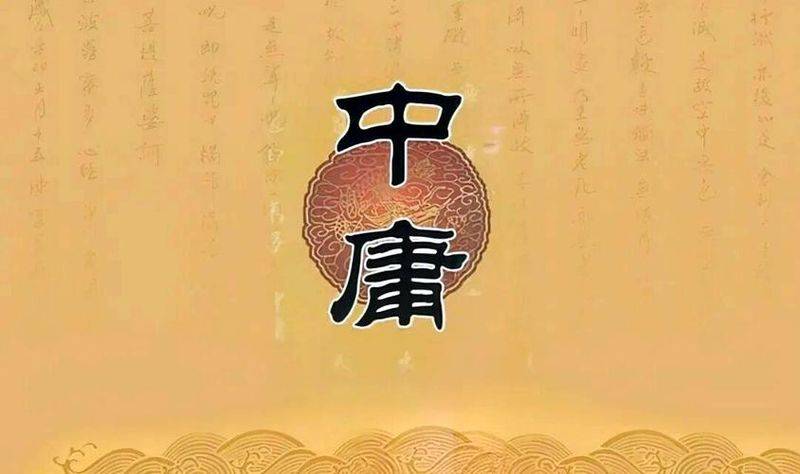
The mediocre approach reflects the common denominator of the core realm of confucian thinking, where the word “middle” can be interpreted in a reciprocal manner, namely, the so-called “middleway”. The word “middle track” refers to the correctness of the process and the fulfilment of the purpose in the practice of human beings, and the word “middle” in the word “presumptuous”, that is, the word “irresistible”, refers to the proportionality, appropriateness and correctness of the actions. In this connection, any political action, military decision-making, productive activity, daily behaviour that is consistent with the “middle” approach is the correct course and purpose of the actor's action. The confucian's “middle” and “middle” categories are therefore linked and can be combined with “middle”。
Confucianism stems from the three generations of rituals documented in the six books, and since the time of the battle, confucian scholars have collated the six books from the royal archives documenting the system of the third orders and raised the middle path as the central dimension of the confucian ideology and established the system's midway philosophy. There is a deep and intrinsic link between the “ceremonial” and the “middle”, and the ideological and cultural characteristics of the “ceremonial” have profoundly influenced the middle ground of the confucian family. As a form of culture, it has the character of a series of dialectical ideas that are informed, interactive, and humanistic. These are the same characteristics that the confucian has been able to lift from the “comfort” of the six books。
First, the confucian medium is a dynamic concept of a process of knowledge, pointing to the changing standards, forms and rules of time, space and itself, so that what can be called a “middle” or rather a unity of certainty and uncertainty, which is clearly different from the “sigs” forms of ancient greek philosophy, which express the static object world and have a definite connotation。
In order to establish a definitive system of intellectual principles and concepts, it is often assumed that the target world is in a static state so as to ensure certainty as to the standards, forms and rules that have been proposed. However, the "middle" of confucian thinking is a dynamic concept that changes over time and space, and that "middle" may be a changing standard, form, rule. “in a static moment” is certain, but as time and space change “in” is uncertain, such “in” is in fact the concept of a dynamic combination. So, the midmedian notes that confucius defines “medium” as “time”. In addition, the core concept of the book is “easiness”, so the meaning of the book is called “temporal”, the meaning of which is “advisable”, and the meaning of “temporal”, the meaning of which is “time”. As can be seen, the confucian pursues the middle way that “middle” is only a standard, form, procedure of certainty for a given time, while “middle” changes its standards, form, procedure as time and space change. This is so because the confucian's “middle” is only appropriate, reasonable and proportionate in practice. Since all human practice is a dynamic process consisting of an infinite moment of staticness, it is appropriate, reasonable and proportionate at a certain point in time that the “middle” is certain, and this appropriate, reasonable and proportionate nature changes and becomes uncertain as time and space change. Thus, the chinese philosophy is based on the dynamic concept of knowledge of the process, which is appropriate, reasonable and proportionate as a unity of certainty and uncertainty, and which is clearly different from the “shuggs” form of the ancient greek philosophy, which has certain connotations。
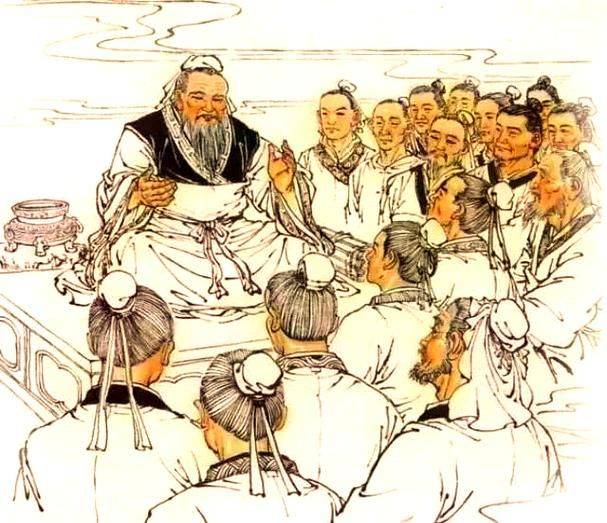
Second, the confucian's “middle way” is a proper, appropriate and proportionate way of interacting with the principal, and the “middle” must appear in the practice of the principal's interaction. Thus, “mid” is neither an external objective thing, nor can it be seen as a subjective, rational perception of the human being, and the mediocre approach of the confucius is not based on that principal's dichotomy, but must be a practice of interaction among principals。
The confucianists' “middle” approach, originally derived from the political practices of the three generations of kings, is reflected in the governance of the state, military action, the correct processes and objectives of everyday life. Thus, confucianism is not intended to establish a logical starting point or a general rationale for knowledge, ideas and philosophical systems, but rather is the appropriate, appropriate and proportionate exercise of human practice. This determines the extent of the “middle” “track” of confucian scholars, which can only be found in the common practice of the principal. If one looks at the historical literature, the word “middle” and “degree” are first and foremost present in production, military and political activities, especially the rituals associated with those activities, which, although the confucian scholars have greatly raised their minds, still retain a strong practical character. In the early generations of confucian scriptures, legends and sons, the word “middle” was always expressed as the word “middle”, meaning that human practice, action was correct and purposeful. Therefore, the word “middle” always exists, is dependent on “walking”, and is reflected as appropriate, reasonable and proportionate. Of course, on the basis of this practice and action, the term “middle” has been abstracted and elevated step by step by confucian scholars as a universal norm of action that has further produced a norm and value based on “middle”. However, this upgraded universal norm and value is still dependent on the line. As jun-yun said: “the way of the first king, the way of the late king, the way of the late king, the way of the first king, the way of the first king, the moral principle of values, the way of the first king, is the way that the latter emphasizes the need to “do the same”, which is seen as an example of the rationality of practice. Thus, “medium” and “degree” are becoming increasingly important in china’s intellectual history, becoming the core values and way of thinking of china’s traditions, and being able to articulate the practical features of china’s intellectual traditions。
Thirdly, the confucian idea of the “middle way” is a concept of one human being, which can be expressed both as a human being and as a ceremonial system of human society, and as a way of heaven and harmony of the cosmos order. So why do you speak so much about human beings in the middle of the world? In the middle east and its early confucian writings, it was emphasized that “middle” is the human approach, that it always links “moderate” to love, desire, heart, sex, and that “moderate” is in fact an emotional desire of the human person, an inner spirit and a physical existence. So, in confucian's view, the “moderate” is both an expression of, and a response to, the emotional desires of the human being and a means of containing them. The momentary, the momentary, says: “a man and a woman, eating and eating, have great appetite. Death is poor, and man is far worse off. And as for him who desires evil, so is the great heart. How can man be humbled when he hides his heart and cannot measure it, nor does beauty and evil appear in it?” the desire of men and women to eat must be guided by a neutral norm that allows them both to be reasonably satisfied and not to destabilize society. This is the specific middle-way criterion that saints have created. And as the deeds of music say, “there is peace in life, the nature of the heavens, the motion of things, the desire for sex. The knower is the knower, then the disgusting. It is evil that is in vain; it is incriminating to the outside; it is not able to bow back; it is the way of great error, where the strong are weak, and the weak, and the weak, and the ignorant, and the weak, and the sick, and the young, alone. It is the king's ceremonial decorum, which is celebrated by men, and the fret of the frets, and the bells of kin, so that they may live in peace, and the bells of marriage, so that no man or woman, and the fire of the land, so that they meet. The king is prepared to do what is right and to do what is right and what is right and what is right and what is right and what is right and what is right and what is wrong with him.” it is clear that we have to satisfy the good and evil emotional desires of human beings without being able to destroy the divine and indulge in the desire of others, so that “the gift of the first king is the gift of man”, which enables people to achieve, in a reasonable order, a variety of emotional desires, such as weeping, peace, men and women, and eating. In this way, we can understand why the title of the midmind says: “the joy of anger and sorrow is in the middle; the word is in the middle.” in fact, “mid-sum” is always associated with the emotional desire of human beings for joy and sorrow, and if they are in a “still” state, they will always be reasonable and fair, and when they are in a “all-embracing” state, they will be reasonable。
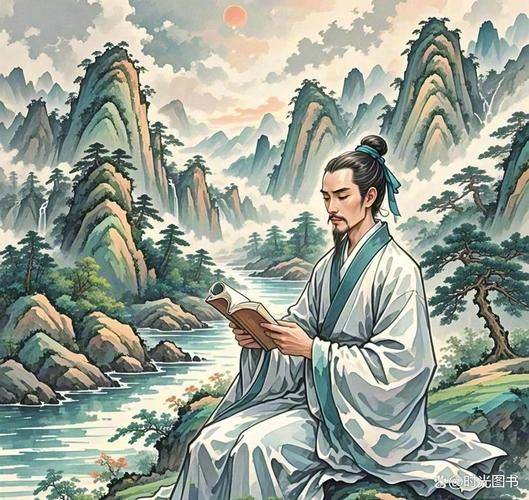
But, on the other hand, the word “middle” is the way of heaven. It is the law of the universe, which is the rule of heaven and earth. So, in the confucian philosophy, the term “mediocrity” is indistinguishable from the day of life, and it is “must not be separated”, and it is in the daytime; it is in the man's “near of anger and sorrow” so that the inner nature of the man is as follows: “true must not be alienated, but must not be alienated. He is the one who guard himself from what he does not see, and from what he does not hear. There's nothing to hide, nothing to lose. So the gentleman was careful of his independence." but the middle way is also a transcendent physical existence and the law of the universe, as the middle word says: “the middle, the great of the world; and the other, the way of the world. Peace, the heavens, the earth, and everything.” here, the word is the word of moderation. This mediocre approach is entirely physical. It is not only an expression of the “unusual, unobserved” character, but also of the sense of domination of the world. It also fulfils and completes the ultimate goal of the universe and its ultimate meaning: “strategic peace, the status of the heavens and the earth, the diversity of all things.” it is clear that the “mediocrity of the world” is, in fact, a kind of a world where, through humane refinement and practice, the heavenly people finally reach and realizes it。
The daily light (1907, 11th edition, 2025)