On 12 may 2023, our fifteenth national day for disaster prevention and mitigation, and from 6 to 12 may, our week of advocacy for disaster prevention and mitigation, the theme of this year's day of disaster prevention and reduction was “preventing disaster risk and protecting quality development”。
Disaster is nothing but a timely prevention. For example, in early summer, while the weather is warmer, the climate is still volatile, with heavy winds and heavy rains and volatile temperatures, how to increase awareness of disaster prevention and mitigation throughout society and minimize the damage caused by natural disasters in the context of complex climatic and environmental conditions。
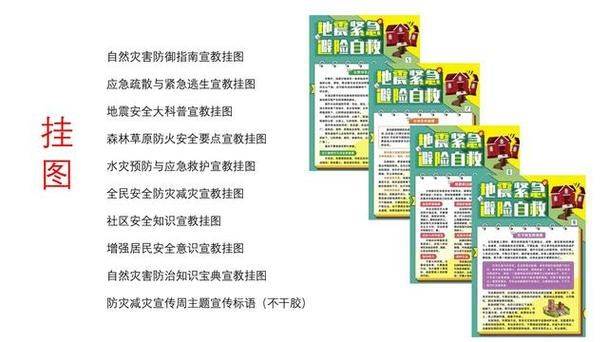
Earthquake protection
I. What are the types of earthquakes? What kind of earthquake is most dangerous to humans
Earthquakes are a natural phenomenon of great seismic activity, including natural earthquakes (tectonic earthquakes, volcanic earthquakes), earthquakes (earthquakes triggered by mines, reservoirs, etc.) and artificial earthquakes (earthquakes caused by blasts, nuclear explosions, falling objects, etc.)。
An earthquake, commonly referred to as a tectonic earthquake, may cause the collapse of houses, damage to structures, landslides and loss of human life when it is large enough and takes place in places that endanger human survival. Earthquakes are also the first of many natural disasters that pose a threat to human economies and societies。
Ii. Standard self-help postures in earthquakes
The body shuffled as much as possible, fell down or crouched down; protected the head with a solid shield, covering the mouth and nose with one hand and holding a fixed object with the other hand。
If there is no uncapable fixed object or protection of the head, self-protective position should be taken: the head is as close as possible to the chest, closed, with hands crossed behind the neck and focused on the head and neck。
Iii. Whether to run or hide during an earthquake
Most experts now believe that the immediate escape from the earthquake and the rapid evacuation of the earthquake to a safe location are better ways to respond to the earthquake。
1. In flats: the 12-second self-help time may be fully utilized, as the case may be, to run out of the room and quickly to hide under a solid table, under a bed, next to furniture and immediately next to the root of the wall, under the ground, closed eyes, breathing through the nose, using cushions, covered things to protect critical parts of the neck, etc., and covering mouths and noses with towels or clothing to prevent the dust from entering. The person who is using the fire should immediately put out the fire, turn off the gas or power switch with his hand, and then escape quickly. Stay away from objects that may fall and stay away from windows。
2. At the top: a window or balcony away from the upper building. During the earthquake, the wall of the upper building facing the road was unstable and the windows of the upper building were far away. When an earthquake occurs, the elevator is never used. Once the power's out, it's stuck in there. In the event of an earthquake in the elevator, the buttons on the operating disks on the floors could be pressed and, once stopped, the elevators could be moved quickly。
3. In public places: personnel in stations, theatres, classrooms, shops, subways, etc., are extremely reluctant to escape, remain calm, hide in place (detainees, cabinets, tables, stools, etc.) and wait until they are determined, then follow command and leave in an orderly manner。
Outside: far from building areas, trees, street lights and cable cables. Do not be near explosive, chemically toxic plants or facilities such as petrochemicals, gas, etc. Don't be in the wind of the open fire。
Within vehicles: to park in the open area as soon as possible, while ensuring safety, be careful to keep distance and remain in the vehicle. Do not park under buildings such as junction bridges, high buildings, trees or cable cables。
6. Schools: while attending school, students are required to hold their heads quickly under the direction of their teachers and to hide under their respective desks. Or an organized and rapid evacuation of classrooms to safety. While in the playground or outdoors, you can stay down and have your hands on your head. Be careful to avoid large buildings or dangerous materials. It is important that schools organize more exercises in order to be able to evacuate quickly and be prepared。
Iv. Seismic self-help and mutual rescue knowledge
The rapid and timely access to treatment of those under pressure following the devastating earthquake is of great importance in reducing the number of earthquake deaths. The survival rate of persons rescued within half an hour of a major earthquake could reach 99 per cent. Self-help is thus one of the main measures to reduce casualties。
Self-help: people use their own conditions to remove danger and preserve life. After the earthquake, aftershocks continue to occur, and your environment is likely to deteriorate further. You need to improve your environment as much as possible, expand your space, stabilize, try to escape, stay awake when you cannot save yourself, not cry out for help, keep your strength, call for help with banging, and wait for help。
Mutual rescue: a person who has survived in a disaster area and who has been subjected to torture. The principle of saving lives: saving lives before saving lives; saving lives after saving lives; saving young adults and medical personnel to increase help. Methods of rescue: excavating the person under pressure should maintain the support in order to prevent further collapse; first expose the victim to the head, remove the alien from his or her mouth, nose and nose, and keep his or her breathing open and, if he or she is asphyxiated, provide immediate artificial breathing; when the person under pressure is unable to climb out of his or her own way, he or she must not be forced in order to cause further injury, the person with a spine damage, or the person with a porter or a hard stretcher should be applied; and when a surviving person who cannot be rescued is found, he or she should be marked for rescue。
Fire prevention
The early summer season, dry and dry, is a fire-prone period in which special fire safety checks are performed, both at home and at work。
I. The basic concept of fire prevention
The formation of a fire requires the following three conditions: a combustible substance, air and source of fire, without which the fire cannot be formed。
Fire recovery is usually carried out by asphyxiation (insulation of air), cooling (reducing temperature) and dismantling (removal of flammable material)。
Ii. Family awareness of fire prevention
1. Do not throw cigarettes. There are plenty of combustible materials in the home, especially in case of fires caused by smoking。
Do not let household appliances and wires “work with disease”. The use of electric stoves, electric thermal blankets, electric ironing and heating equipment, etc., requires pre-use inspection, after-use maintenance and avoidance of fire accidents due to the ageing of the circuit。
3. Do not burn waste. It is not safe for families to burn their own garbage。
4. Do not let children play with fire。
To prevent gas leaks. Households using liquefied gas tanks or pipe gas are well ventilated and regularly inspected. Leakages were observed, lights were not to be turned on, telephone calls were not to be used, and windows and windows were to be opened quickly to remove fire hazards。
Family fire-fighting methods
1. The fire was detected rapidly calling the fire alarm number 119. The police are required to provide details of the address, the location of the fire, the substance of the fire, the size of the fire, the name and telephone number of the person calling the police, and to send someone to meet the fire truck at the intersection。
2. In the event of a fire, do not panic. If the fire is not so serious, use promptly the improvised fire-fighting equipment available at home and take effective measures to control and extinguish it。
3. The boiler is on fire and cannot be extinguished with water. It shall close the stove gas valves, cover them directly by covering them directly or with wet rags, so that the fire may suffocate and cool the fire with good vegetables。
4. The gas canisters are on fire and shall be extinguished with fire extinguishers, and the valves shall be promptly closed。
Domestic appliances or circuits are on fire, the power is cut, then the fire is extinguished with dry powder or gas fire extinguishers, and no direct water is poured into the fire to prevent electrical or electrical explosions from causing injury。
6. Do not open windows when fighting the fire in such a way as to accelerate the spread of the fire by air currents。
Iv. Fire self-help measures
1. The fire shall be fought in a swift escape and shall not be greedy of property。
2. Family members are expected to know about fire escapes, to have their homes equipped with fire extinguishers, blankets, safety ropes, etc., and to be familiar with escape routes。
3. The threat of fire shall be accompanied by wet clothing, bedding, etc., which shall run out of the direction of a safe exit。
4. Wet towels or clothing when escaping through smoke shut up, keep your body as close to the ground as possible, crawl and avoid inhalation of toxic smoke。
There shall be a fire on the body, and never run, either rolling in place or crushing the flame with heavy clothing。
6. No elevator may be used in case of fire and escape to a safe exit。
7. When there is fire outside the house and the door is hot, do not open the door in order to prevent the fire from entering the room. Wet bed, clothes
They're stuffed with windows and they're pouring down。
8. If all escape routes are blocked by fire, they should be returned to their homes immediately and a call for help should be sent outside the window with flashlights, colourful clothes, shouts, etc。
9. Do not jump blindly on the third floor and above, and may use evacuation stairs, balconyes, water pipes, etc. To save their lives. They can also use ropes or strip sheets, bedding into strips, tied to fixed things such as window frames, with towels and cloths to protect the heart of the hand and slide down the rope。
Drowning
I. Prevention of drowning
1. No swimming in the open
2. Infringement of water and failure to carry out rescue operations
3. No swimming in unfamiliar waters
4. Not to swim with others without permission
No swimming in waters without safe facilities and without rescue personnel
Children do not swim without teachers or parents。
Ii. How to save oneself when drowning
1. Stay calm and save your strength
2. Head back, nose out
3. Take a deep breath and relax
4. Prevention of water choke and inhalation with mouth
5. Facing drifting material and taking it as far as possible
6. Call for help out loud at the right time
7. Rescued and under command。
Iii. Rescue measures after drowning
1. When rescued to shore, if the drowning person is found to have stopped breathing, he shall immediately clear the mud, weeds, foams in his nose and mouth and keep the breathing channel open, and thereafter wrap his tongue with a towel or a handkerchief, pull it out, and wrap his tongue with a clamp in order to prevent it from retracting。
2. An artificial respiration of the mouth-to-mouth is carried out quickly by: the drowning person is lying on his back, the ambulance shall cover the drowning person's mouth with a thin towel, one hand shall hold the drowning person's nose in order to prevent the breathing from leaking when he breathes, the other hand shall drag the drowning person's jaw, the air shall be blown into the mouth of the drowning person, the mouth shall be blown and the mouth shall leave at the same time as the squeezing of the nose, then the breast of the drowning person shall be strangled with his hand to help breathe. So it happened again and again, until the drowning breathed. Artificial respiration normally breathes about 20 times a minute into the mouth of the drowning。
Flood prevention
Floods are natural phenomena such as the rapid increase in the volume of rivers and water levels as a result of heavy rains or reservoir dykes. Emergency response measures include:
1. In the event of a sudden flood, be calm and move safely and with maximum speed, and securely transfer the property, first the sick, the old and the sick and the sick, and others
2. Those who are besieged by flooding, those who are in communication condition and can seek help using means of communication, and those who do not have means of communication are able to find a way to send a distress signal to the outside world, while those who are able to find larger floats, etc., can take voluntary measures to save themselves
3. In the event of a flood siege on a home, family movements to the roof should be arranged promptly and a distress signal should be found
4. In the aftermath of floods, which often accompany outbreaks, attention should be paid to post-flood vaccination。
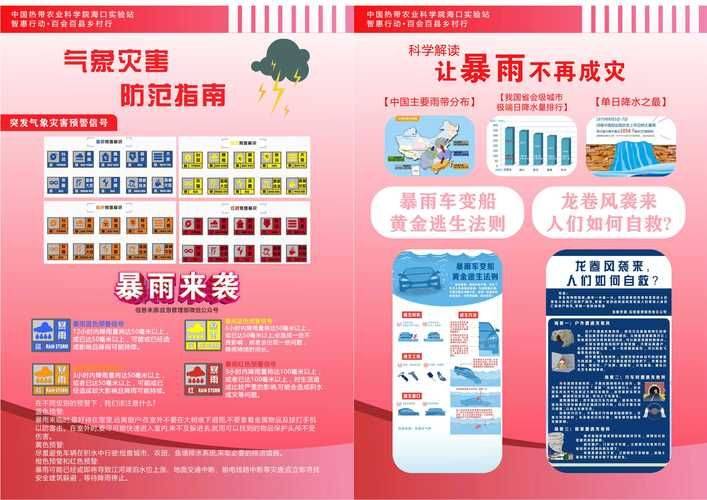
The storm
In low-lying residential areas, “small siege” measures, such as the construction of walls, the placement of water panels at the gates and the configuration of small pumps, may be taken as appropriate。
2. Do not throw garbage, groceries, etc. Into sewers in order to prevent congestion and cause water to accumulate during heavy rains。
3. Electrical outlets, switches, etc., should be moved to a safe place located more than 1 m from the ground. Once the external water is spilled into the house, the power should be cut off in time to prevent exposure。
4. Walking in water accumulation is observed. Prevention of falling into pits or pits or holes。
5. Riverways are important drainage routes in cities and waste and waste are not allowed to be dumped at will to prevent siltation。
It's mudproof
1. Do not stop or walk in a ditch when it rains。
2. The sound of continuous thunder shall immediately be transferred to the slope。
3. When crossing the valley, it shall be observed and safe before crossing。
Don't take off your shoes, run up high, cross the river, and stay out of the water。
A proper escape from the mudslides should go to a higher ground, far from where the mudslides occur, and must not stand by the banks of the mudslides to see or hide behind the big rocks next to the valley。
Mine-proof
In the rainy weather, thunderstorms, and sheltering from the rain from the trees, the poles of the towers will be far away, and the house of the thunderstorms will also be protected, the doors and windows will be closed and the power will be cut to avoid the thunderstorms。
Close at home and away from metal doors and windows, and keep distance from power outlets and stay away from the balcony. Do not touch metal pipes such as pipes and gas pipes. If the house does not have a mine-protective device, no computer, television, telephone are used。
3. Do not hide under the trees, do not panic, do not try to find a place to avoid mines, but do not approach the mine avoidance devices; do not approach the vicinity of metal objects such as electrical installations, vehicles, etc.; do not draw as much distance as possible between people in thunderstorm weather, do not collide, and do not lay umbrellas with metal pillars; do not swim and do not hide in sheds or posts in open space areas; try not to run on motorcycles; do not use communications equipment such as mobile phones, radios with antennas in open areas。
The storm
1. The road must be known in advance. As the blizzard often leads to traffic conditions and many roads may be blocked or closed, in order to avoid such situations, you need to be informed in advance of the road you are about to follow, and if that happens, your travel plans should be reformulated。
Drives for smoothing. First, it would be better not to go out on a snowstorm day, but if the situation was urgent and had to go out, it would have to be smoothed, and the road would be easy to slide. Second, mastery of driving techniques in the snowstorms, such as slowness on ordinary roads, avoidance of brakes, opening of the corresponding light, etc。
3. Watch the billboards on the street. The blizzard walks in the streets, and we not only observe traffic rules, we pay attention to incoming and outgoing vehicles, but also to billboards. Because of the particularly heavy storm, some billboards can easily be blown down and may be smashed without attention。
Both indoor and outdoor heating measures are required. If the snowstorm weather is to go out, it must be warmed, wearing a hat, a hood, a mask, a scarf, a velvet dress, warm pants。
(this edition consolidated)