“there is no right without remedy” and any right should be entitled to a remedy, otherwise it cannot be called a right. The twenty-first century was an era of knowledge, and the protection of intellectual property rights was a necessary requirement for social development. If the law simply regulates the enjoyment of intellectual property rights by the rights holder and lacks a system of remedies in case of infringement of intellectual property rights, it is difficult to say that the rights holder has full intellectual property rights. It is therefore intended to explore remedies for violations of intellectual property rights from the perspective of violations。
Intellectual property is defined as “the right of a citizen, a legal person or an organization of illegal persons to work in accordance with the law on the basis of intellectual (mental) labour”. Depending on the nature of the object, intellectual property may be divided into literary and artistic property and industrial property. Literary and artistic property rights include copyrights and neighbouring rights, and industrial property rights include patent rights, trademarks, business titles, tagging of origin, trade secrets, anti-improper competition rights, etc. In addition, intellectual property rights can be divided into rights to creative outcomes and rights to identifiers. As specific remedies regimes for intellectual property rights vary greatly from object to object, the remedies for patent rights, copyright rights and trademark rights vary. This paper cannot be discussed in isolation from space. The present paper therefore explores the remedies regime for intellectual property rights only from the perspective of the general protection of intellectual property rights, i. E. The overarching provisions of intellectual property protection。
(i) identification of intellectual property violations
Article 106 of our general civil code stipulates that “citizens and legal persons who, by their fault, infringe upon the property of the state, collective property, property or person of others shall be liable”. On this basis, violations are acts by which the perpetrator wrongfully infringes the legitimate rights and interests of others. Violations of intellectual property rights are one of the violations, so it can be said that violations of intellectual property rights are committed by the perpetrator against the intellectual property rights of others. The finding of a violation generally has two elements: the wrongful act and the wrongful act that infringes the legitimate interests of others. By analogy with tort, the identification of an infringement of intellectual property rights can begin with the unauthorized exercise of the rights or other interests of the owner by the perpetrator and the wrongfulness of the act。
(ii) principle of attribution of violations of intellectual property rights
The system of principles of accountability for human rights violations in my country is one-istocratic, dualist, triadist and so on. Among them, the monist doctrine asserts that the principle of attribution of torts should be the single principle of responsibility for fault; the dualist doctrine asserts that the principle of attribution of torts in our country should be the principle of responsibility for fault and presumption of fault, or the principle of responsibility for fault and responsibility without fault; and the doctrine is divided into two factions, one claiming that the principle of attribution of torts should be the principle of responsibility for fault, the presumption of fault and the principle of fair liability, while the other arguing that the principle of attribution of torts in our country should be the principle of responsibility for fault, the principle of responsibility without fault and the principle of equitable responsibility。
In accordance with the principle of responsibility for fault, responsibility for violations should be attributed to the following elements: first, the violation; secondly, the consequence of the injury; thirdly, the causal link between the breach and the result of the injury; and fourthly, the subjective fault. Subject to the above-mentioned elements, if the perpetrator is not exempt from responsibility, the court may hold the perpetrator responsible for the violation. The principle of responsibility for fault does not apply to the attribution of infringement of intellectual property rights in terms of their character. This is because, first of all, in the field of intellectual property rights, there is a general situation of abuse of intellectual property rights by others without fault. Second, the burden of proof on the wrongs of the rights holder in an ipr tort is more onerous than in the case of ordinary violations. In other words, it is often difficult for the rights holder to prove that the perpetrator was wrong in a dispute over intellectual property rights, and it is relatively easy for the perpetrator to prove that he was not. Thirdly, it would also be difficult for the court to determine whether the perpetrator had a subjective fault. Indeed, it is more difficult to determine the subjective fault of the perpetrator in disputes over intellectual property rights than in other tort disputes. In the light of this, some scholars have argued that the principle of responsibility for fault should be eliminated。
The principle of fair liability and the principle of no fault are used in our country and are strictly restricted by law. Article 132 of our general principles of civil law provides that: “if the parties are not at fault for the damage caused, they may, depending on the circumstances, share civil liability”. Article 122 of the general code of civil law states that: “in the event of damage to the property or person of another person as a result of the poor quality of the product, the manufacturer or seller of the product shall be liable in accordance with the law. (c) article 124 of the general civil code provides that “in violation of the state's provisions for the protection of the environment from pollution, the manufacturer or seller of the product shall be legally liable for damage caused by another person”; article 125 of the general civil code provides that “in the case of digging a grave or repairing a underground facility in a public place, by road or by a corridor, which does not bear clear signs and security measures causing damage to another person, the builder shall be liable for civil liability; in the case of damage caused to another person by animal breeding, the third person shall be liable for damage caused by the injury to the person by a third person, as a result of a breach of the state's obligation to protect the environment from pollution”; an analysis of the above-mentioned articles shows that violations of intellectual property rights are generally excluded. That is why we do not consider here the application of the principle of equitable liability and the principle of responsibility without fault。
Similar to the principle of responsibility for fault, the presumption of fault is equally one of the constituent elements of attribution of fault. The difference, however, is that the presumption of fault is based on a reversal of the burden of proof. That is, it is for the perpetrator himself to prove that there was no subjective fault in the act, and if the perpetrator is unable to prove that there was no fault in the act, the court may hold the perpetrator responsible for the violation. In disputes involving infringement of intellectual property rights, the application of the presumption of fault is more favourable to the protection of intellectual property rights holders, given the difficulties faced by rights holders in proving the fault of the perpetrator。
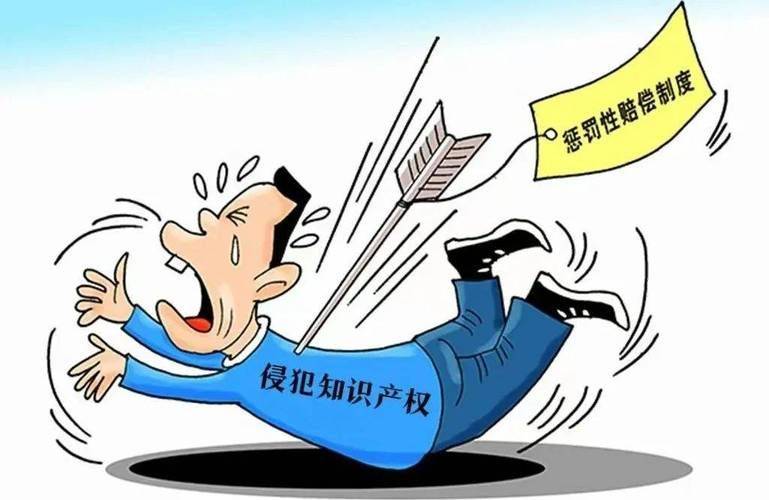
The above can be combined, and there are disadvantages to the principle of fault responsibility, the principle of equitable liability and the principle of no fault liability in relation to violations of the rules governing intellectual property rights, which are either difficult to operate or too narrow in scope. In order to fully protect the rights of intellectual property rights holders, it would be appropriate to apply the presumption of fault。

(iii) legal liability for infringement of intellectual property rights
Legal liability arising from violations of intellectual property rights includes civil, administrative and criminal liability. Here we take a look。
1. Civil liability
As discussed above, the principle of attribution in cases of infringement of intellectual property rights should be appropriate in the case of the presumption of fault. Thus, in determining civil liability for infringement of intellectual property rights, the following should be considered: first, the perpetrator committed the offence; secondly, the rights holder suffered damage; secondly, there was a causal link between the damage and the act committed by the perpetrator; and finally, the perpetrator had a subjective fault. Thus, in order to claim civil liability, the right-holder had to prove that the perpetrator had committed an offence, that he had suffered damage, that there was a causal link between the right-holder's loss and the perpetrator's breach. At that point, the perpetrator was responsible for proving that he had no fault. If the perpetrator cannot prove that he or she was not guilty, the court may hold the perpetrator civilly liable for the violation in the absence of grounds for exemption。
Article 137 of our general civil code provides for ten main forms of civil liability. They are cessation of the violation; removal of the impediment; elimination of the danger; return of the property; restitution; compensation for loss; repair, reconstruction and replacement; elimination of effects and rehabilitation; payment of damages; apology. In particular, there are five types of civil liability for violations of intellectual property rights, namely cessation of violations, compensation for damages, apology, removal of effects and restoration of reputation。
2. Administrative responsibility

The right-based nature of intellectual property rights makes the acquisition, protection and administration of intellectual property closely related. Therefore, the administrative responsibility of the perpetrator in a dispute over an infringement of intellectual property cannot be ignored. Under the provisions of our current legislation, there are three main types of administrative liability for infringement of intellectual property rights: cessation of infringement, confiscation and fines. Article 47 of the copyright act, for example, provides that anyone who violates the copyright of another person, while at the same time undermining the public interest, may be ordered by the copyright administration to cease the infringement, confiscate the illegal proceeds, confiscate and destroy the tort replicas, and may be fined, while the copyright administration may also confiscate materials, tools, equipment, etc., which are primarily used to produce copyright replicas. This provision also reflects three types of administrative liability for cessation of infringement, confiscation and fines。
Criminal responsibility
Violations of intellectual property rights, which are significant and serious, may also constitute a violation of criminal law and entail criminal liability. For example, our criminal code provides for the offence of false registration of trademarks, sale of goods known to be fraudulently registered trademarks, forgery of patents, reproduction and distribution of works of writing, music, film, television, video, computer software and other works without the permission of copyright holders。